

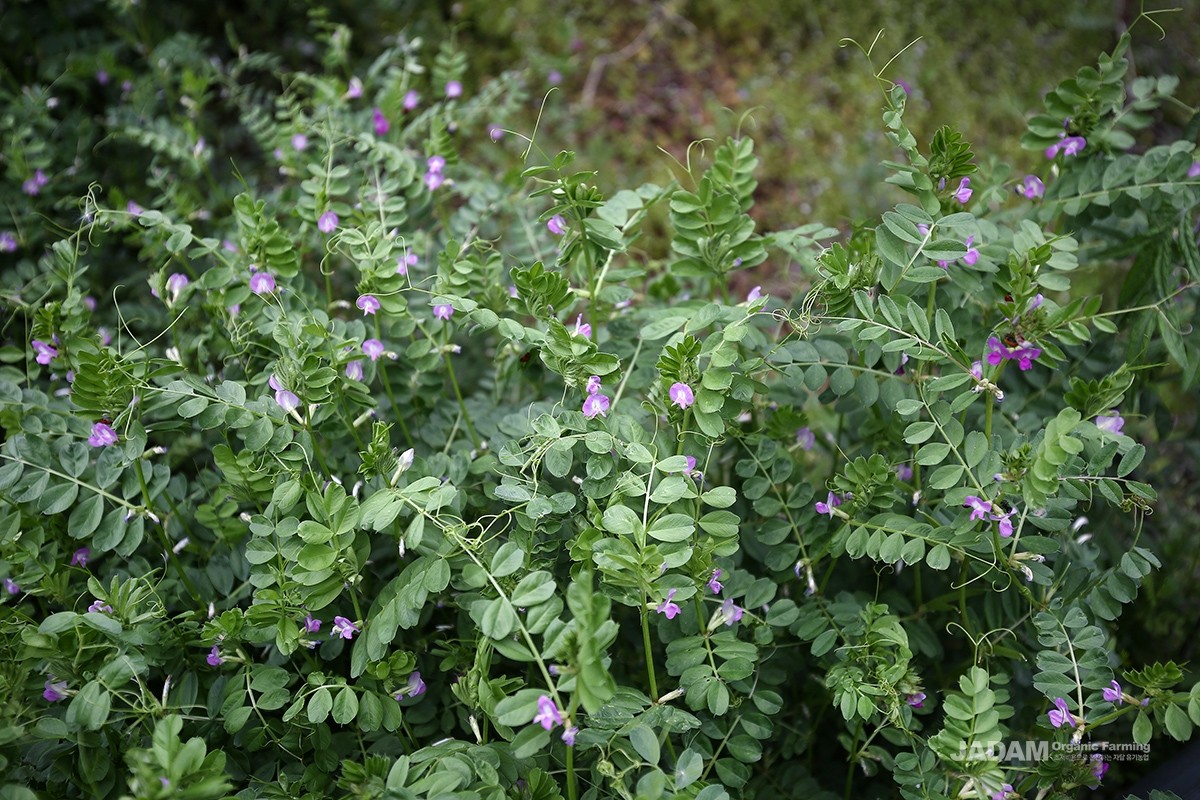
A winter annual legume commonly found in open fields, along roadsides, forest edges, woodland tracks, field margins, and orchards. It typically germinates in autumn and produces reddish-purple flowers, singly or in pairs, in the leaf axils from March to May. Its pinnately compound leaves generally consist of 4-6 pairs of leaflets, and its seed pods turn black as they mature.
Narrowleaf vetch (Vicia angustifolia var. segetilis) is a winter annual belonging to the legume family (Fabaceae). It grows in open fields, along roadsides, forest edges, woodland tracks, field margins, and orchards. It generally germinates in autumn and begins flowering as early as March in the warmer southern regions of Korea.
Its stems are square in cross-section and branch extensively near the base. Although it is a climbing plant, it has a relatively upright growth habit compared with related species such as smooth tare and slender vetch. It grows to approximately 60-150 cm in length.
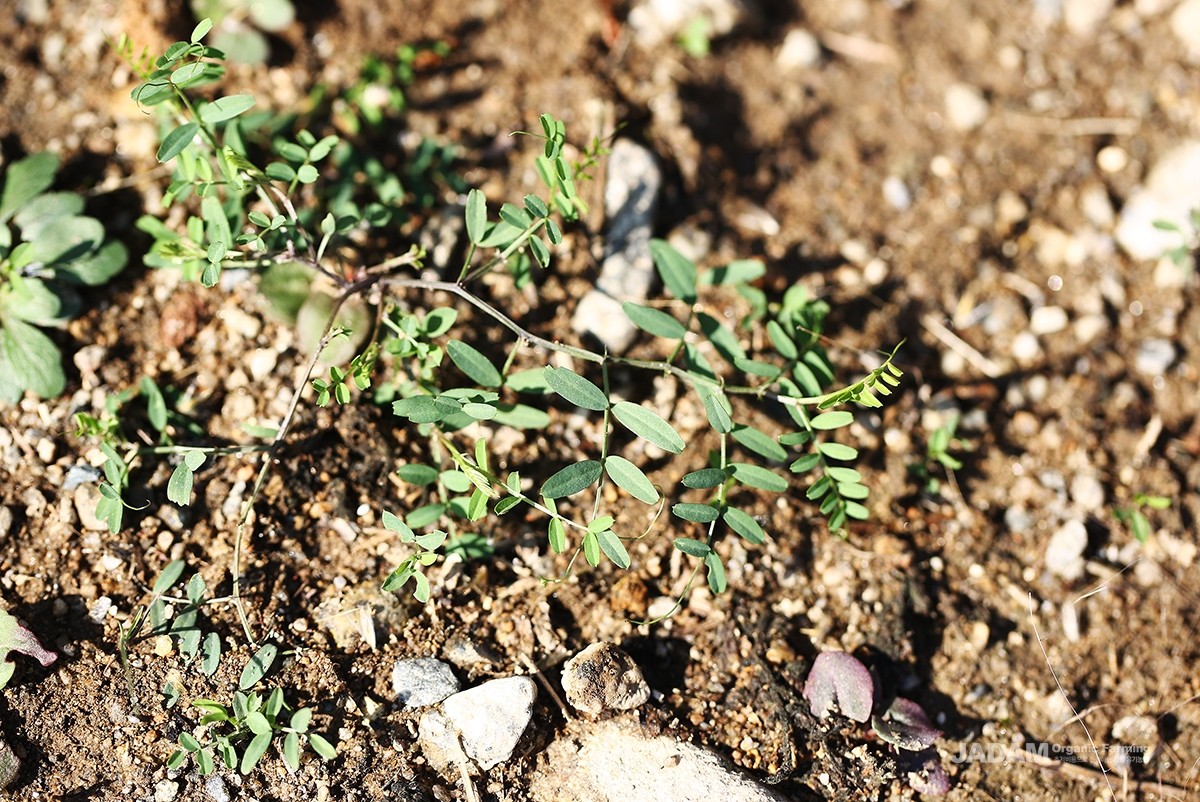
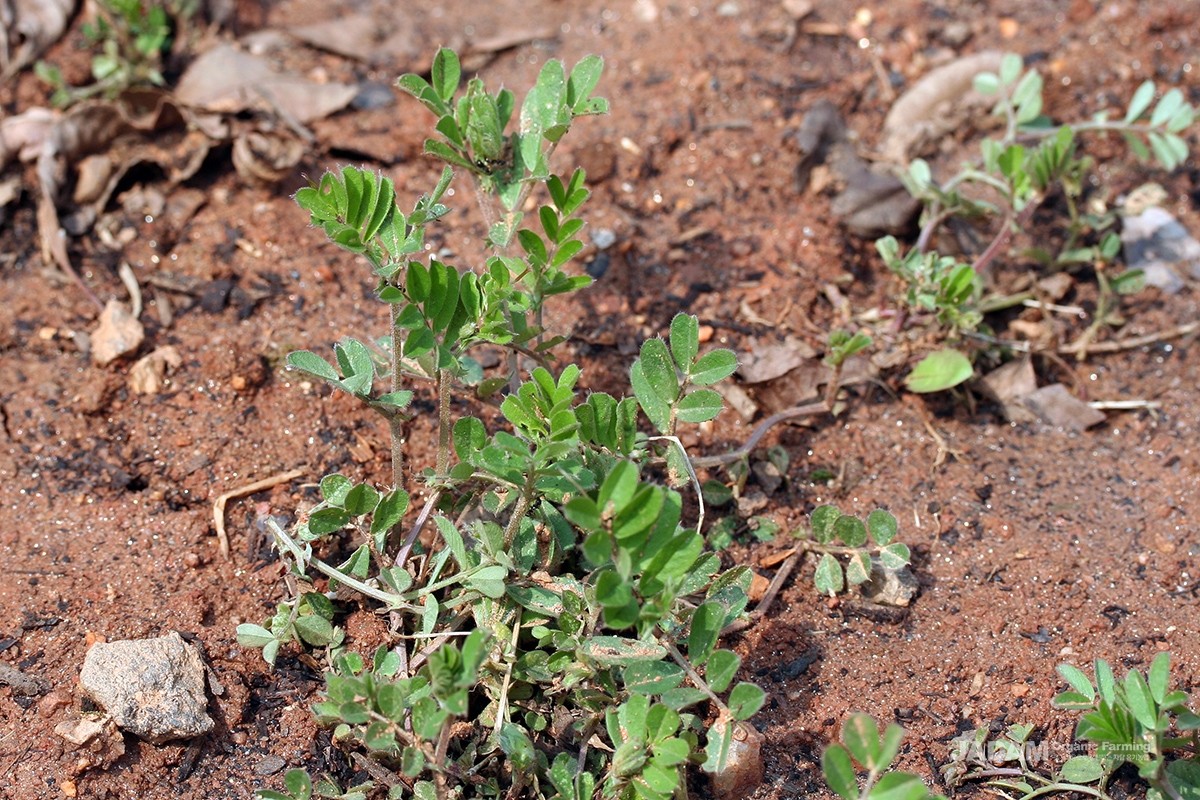
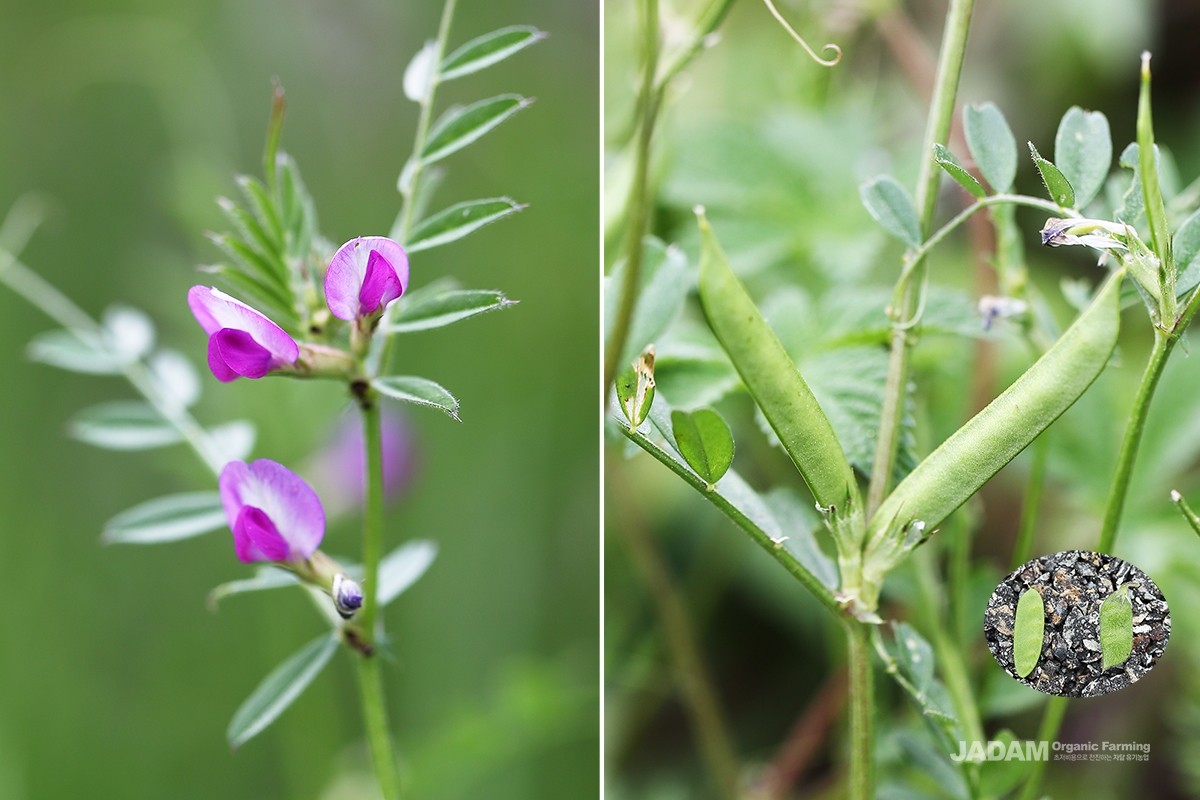
The leaves are arranged alternately along the stem and are even-pinnately compound. The tip of each leaf develops into a tendril divided into 2-3 branches. Each leaf generally consists of 4-6 pairs of leaflets, measuring 2-3 cm in length. The leaflets are obovate, meaning they are shaped like an inverted egg, with slightly notched tips.
The stipules are divided into 2 lobes with toothed margins and bear brown glandular spots. These glands function as extrafloral nectaries, secreting nectar that attracts ants, which in turn help protect the plant against insect herbivores.
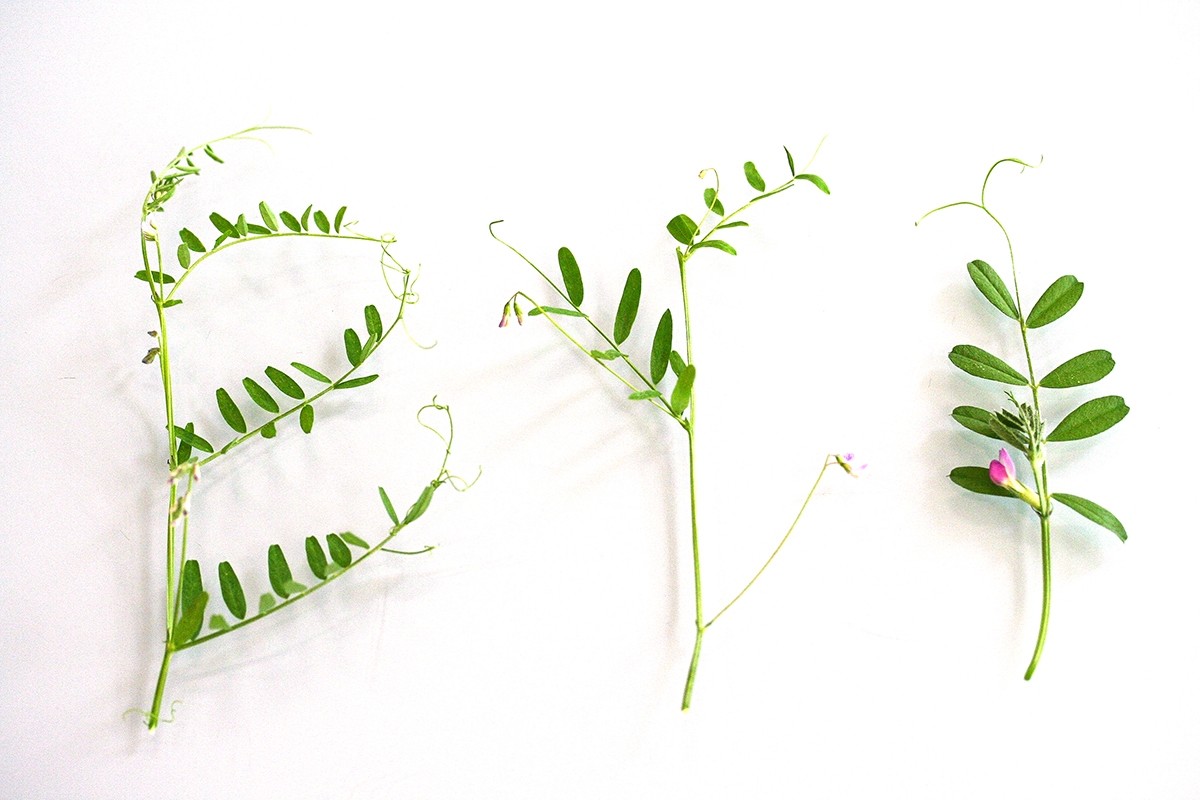
From March to May, reddish-purple flowers appear singly or in pairs in the leaf axils. The flowers measure approximately 1.2-1.8 cm in length, with whitish centers. The calyx is deeply divided into 5 lobes, and the flower stalk is almost absent.
The fruit is a slightly flattened pod measuring 3-4 cm in length, which turns black as it matures. Each pod contains 5-10 seeds. When fully mature, the pods split open and forcefully scatter their seeds.
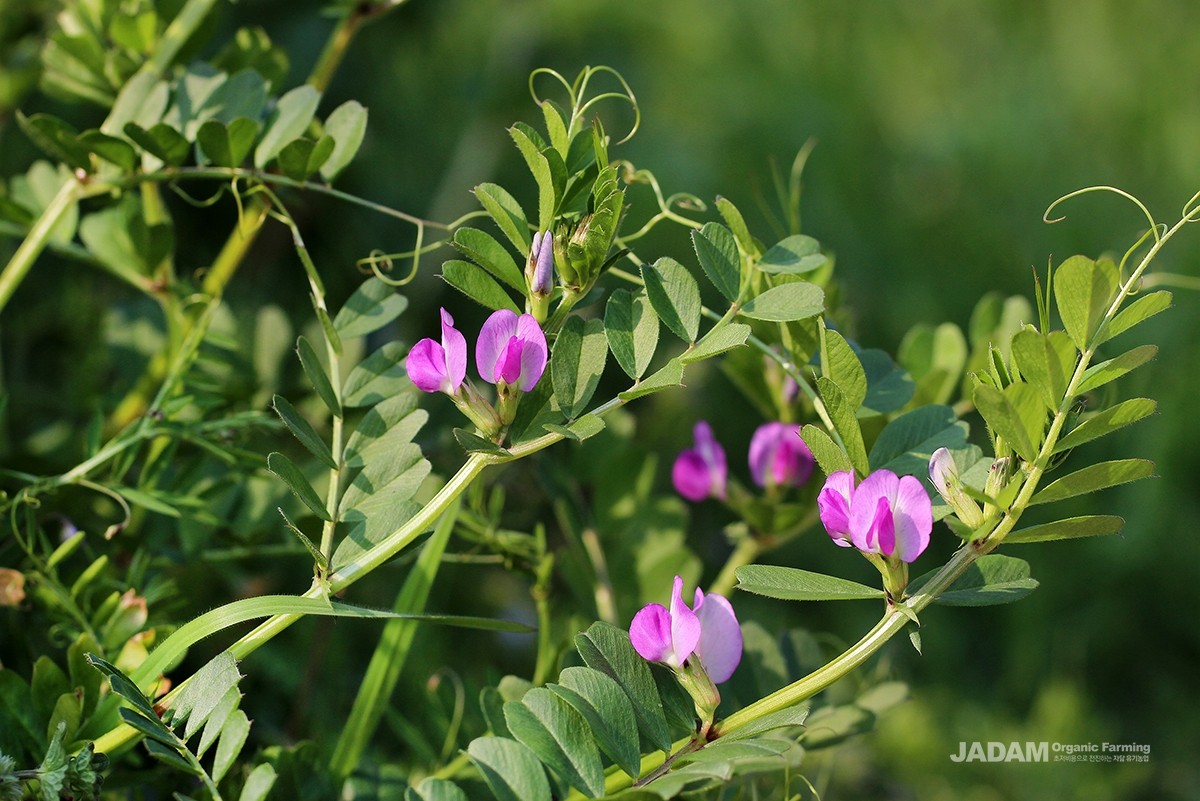
Tiny vetch (Vicia hirsuta, also known as hairy tare) and slender vetch (Vicia tetrasperma, also known as smooth tare) are frequently found growing alongside narrowleaf vetch. Both have more delicate stems and a stronger climbing habit than narrowleaf vetch.
Tiny vetch produces small flowers measuring only 3-4 mm in length, arranged in clusters. Its leaflets have blunt tips, and its tendrils are divided into several branches.
Slender vetch produces flowers approximately 5 mm long, intermediate in size between those of tiny vetch and narrowleaf vetch. The flowers generally appear in pairs. Its leaflets have pointed tips, and its tendrils are usually unbranched.
Narrowleaf vetch, tiny vetch, and slender vetch are all legumes that form root nodules containing nitrogen-fixing bacteria capable of converting atmospheric nitrogen into forms that plants can utilize.
Like Chinese milk vetch (Astragalus sinicus) and hairy vetch (Vicia villosa), these plants are sometimes cultivated as green manure crops to improve soil fertility or as livestock forage.
Although narrowleaf vetch is now generally regarded as a weed, archaeological evidence suggests that vetches were cultivated as food crops during the early development of agriculture.
Uses and Medicinal Properties
The young shoots are sometimes eaten as namul (Korean-style seasoned wild greens), although the plant is primarily used as livestock forage or green manure.
In traditional herbal medicine, narrowleaf vetch is believed to strengthen kidney function in the traditional East Asian medical sense, regulate menstruation, relieve phlegm, and alleviate coughing.
It has traditionally been used for lower back pain attributed to kidney deficiency, involuntary seminal discharge, irregular menstruation, excessive phlegm, and persistent coughing. Its taste is classified as sweet and pungent, and its medicinal nature is considered warm.
These medicinal applications reflect traditional herbal practices rather than clinically established therapeutic effects. The traditional consumption of young shoots should not be interpreted as evidence that all parts of the plant are safe to eat.
Weed Management
In orchards, narrowleaf vetch can be utilized as a green manure crop, much like hairy vetch. In cultivated fields and greenhouses, it can be incorporated into the soil or removed at the beginning of the spring growing season.
Origin of the Korean Name and Similar Species
The exact origin of the Korean name salgalgwi is unknown, but it is believed to refer to the rake-like appearance of the branched tendrils at the tips of its leaves. The Korean word galgwi means a rake.
Tiny vetch and slender vetch are more delicate and have a stronger climbing habit than narrowleaf vetch. Their flowers are considerably smaller, and their seed pods are also smaller and flatter.
FAQ: Quick Fact
Q: Is narrowleaf vetch edible, and what are its main uses?
A: Young shoots of narrowleaf vetch have traditionally been eaten as wild greens. The plant is primarily valued as a nitrogen-fixing green manure crop and livestock forage, while traditional herbal medicine uses it for menstrual irregularities and respiratory symptoms.