

Rice field pests, Rice pests
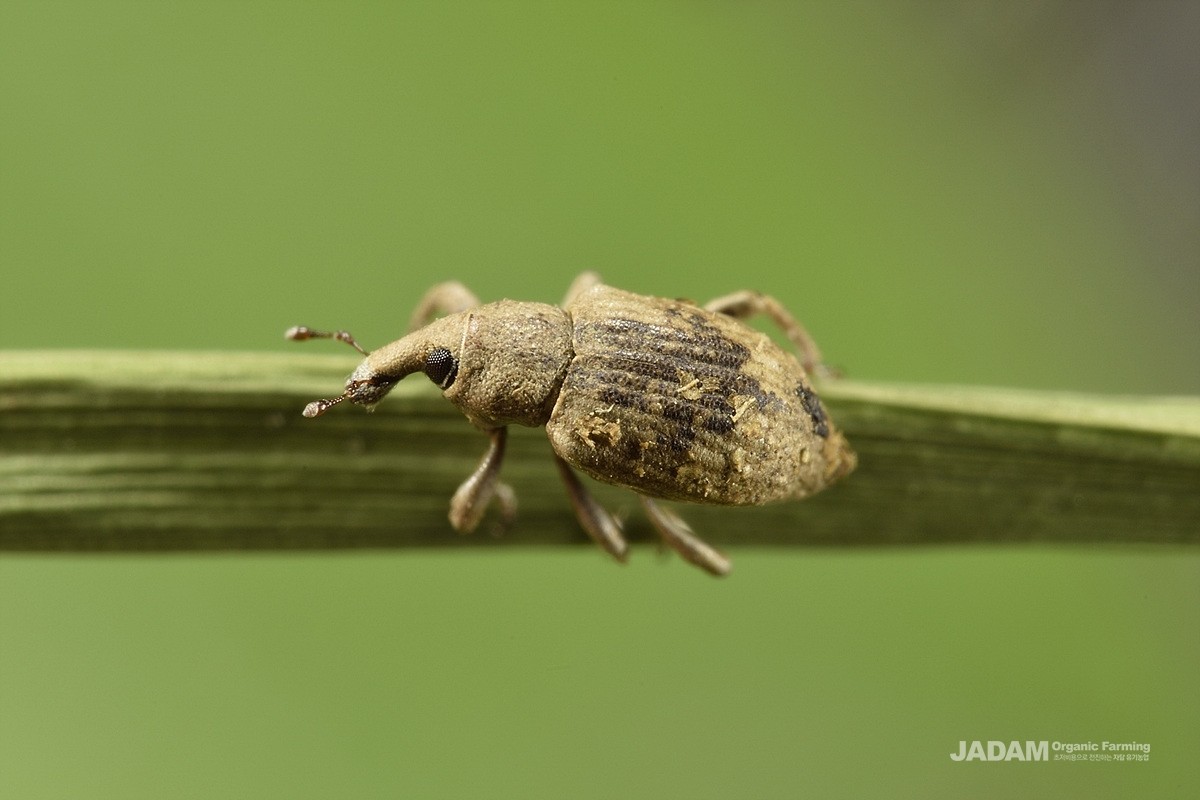
Rice Water Weevil
Order: Coleoptera, Family: Curculionidae
▶Scientific name: Lissorhoptrus oryzophilus Kuschel
▶Size: Adult body length 3-4 mm
▶Host plants: Rice and other grasses
▶Distribution: Korea, Japan, China, and worldwide distribution
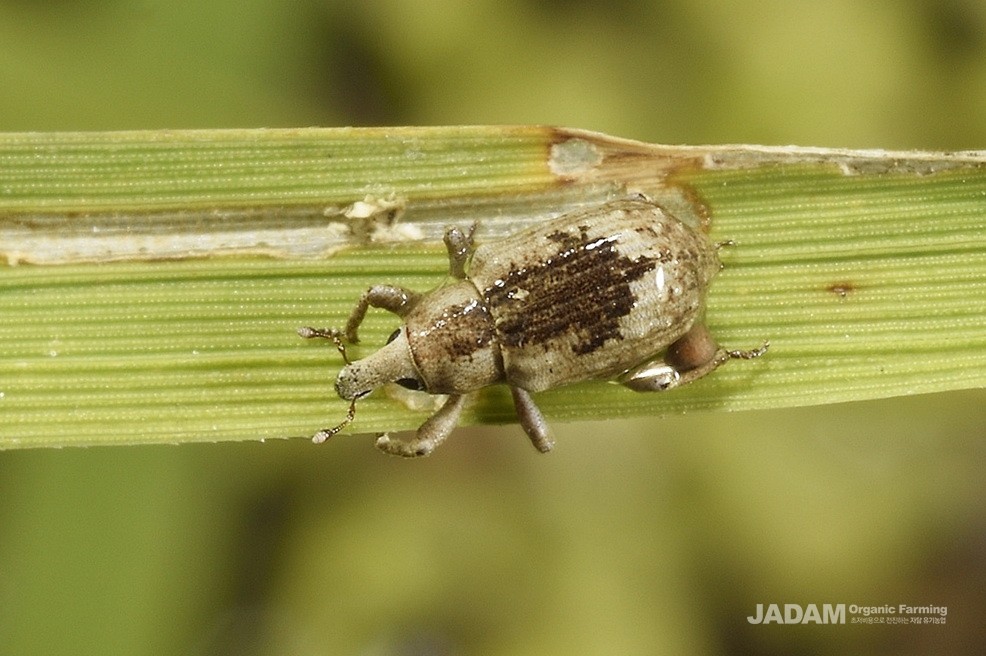
The adult measures about 3-4 mm in length, with a dark gray body and an irregular large black marking in the center of the back. Its snout is elongated forward like an elephant’s trunk. The antennae consist of six segments, ending in a club shape.
The larvae attach to rice roots and have a milky-white body color. Pupation occurs in a bean-shaped soil cell built around the root, and pupae are the same color as the larvae.
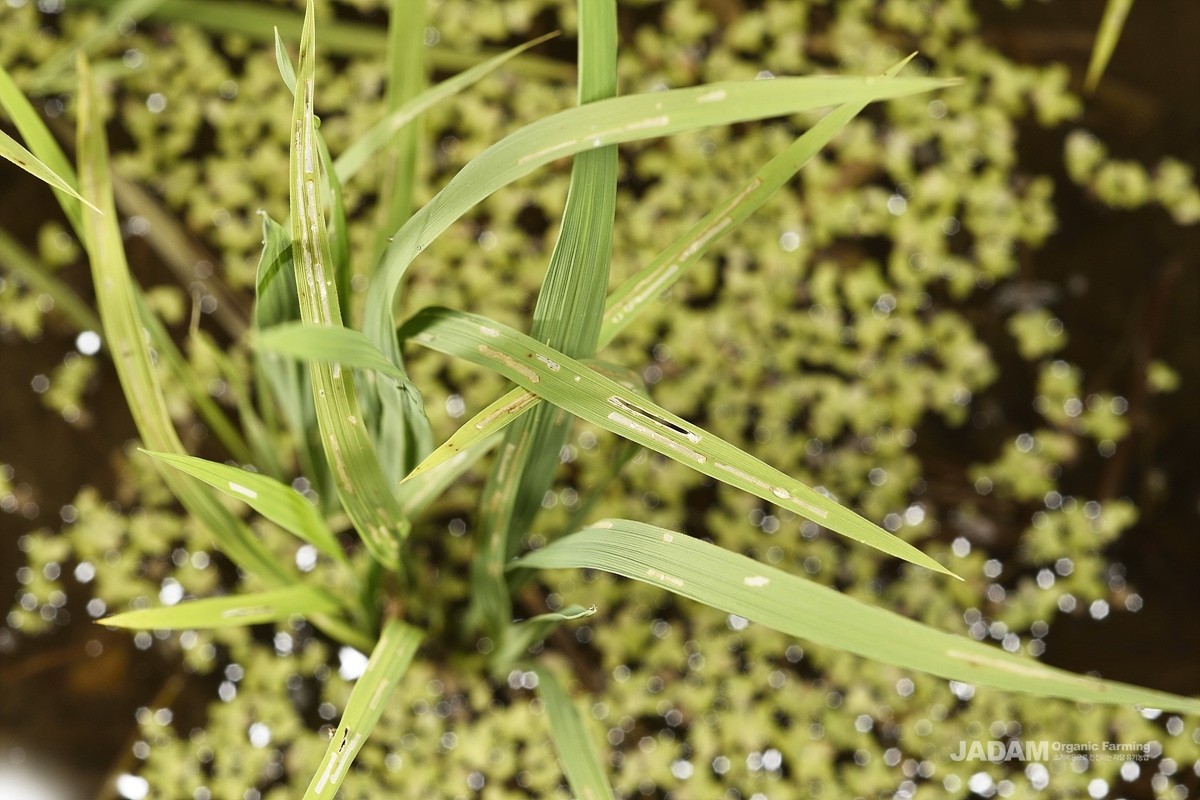
This species has one generation per year. Adults overwinter in soil near levees, banks, or mountain slopes close to paddy fields. Around late May, they move into newly transplanted rice paddies, where they feed on rice leaves both above and below the water surface and lay eggs inside leaf sheaths below the waterline.
The larvae that hatch from these eggs feed on rice roots while growing, and then pupate. The larval stage lasts about seven weeks at 25℃, and the pupal stage lasts 1-2 weeks. New adults emerge from early to mid-July, with the peak occurring in early August, after which they move back to overwintering sites.
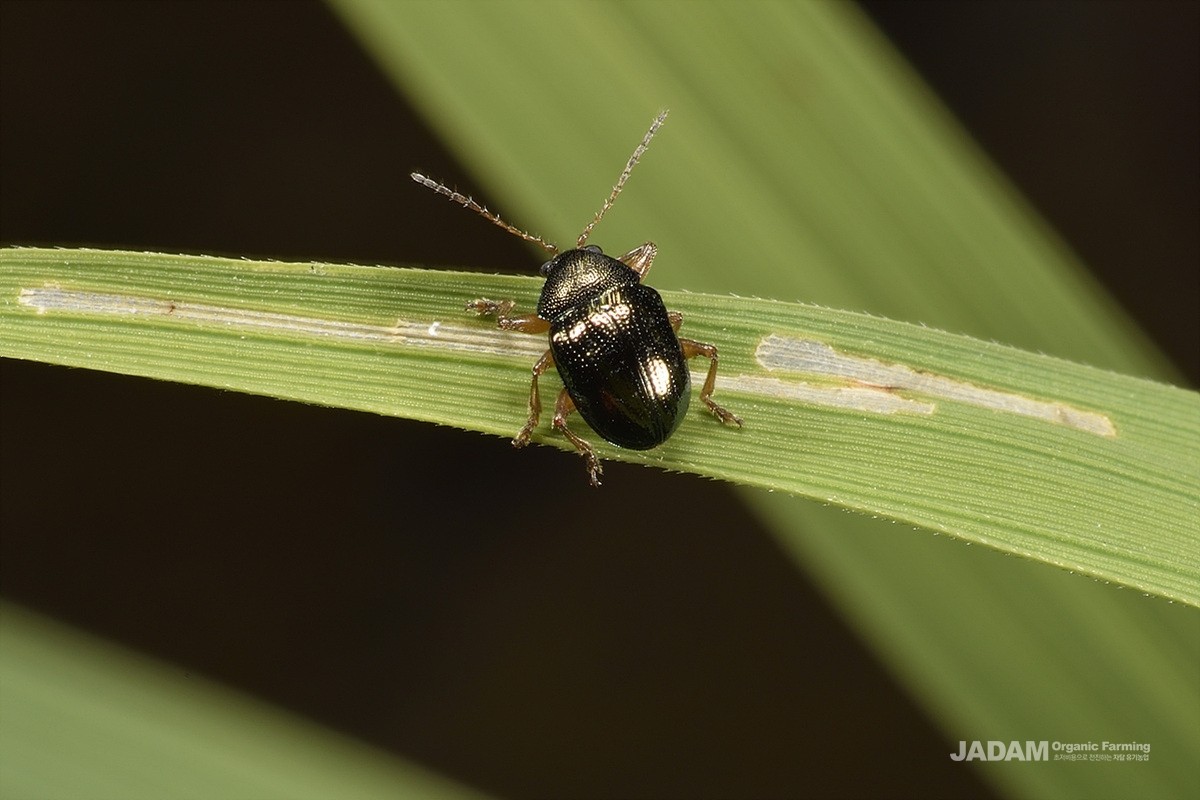
The rice water weevil is thought to have originated in the United States and to have entered Korea via Japan. It was first discovered in Hadong, Gyeongnam Province, in 1988, and has since spread nationwide. It is now considered one of the most important early-season pests of rice in Korea.
[Text source: National Crop Pest Management System]