

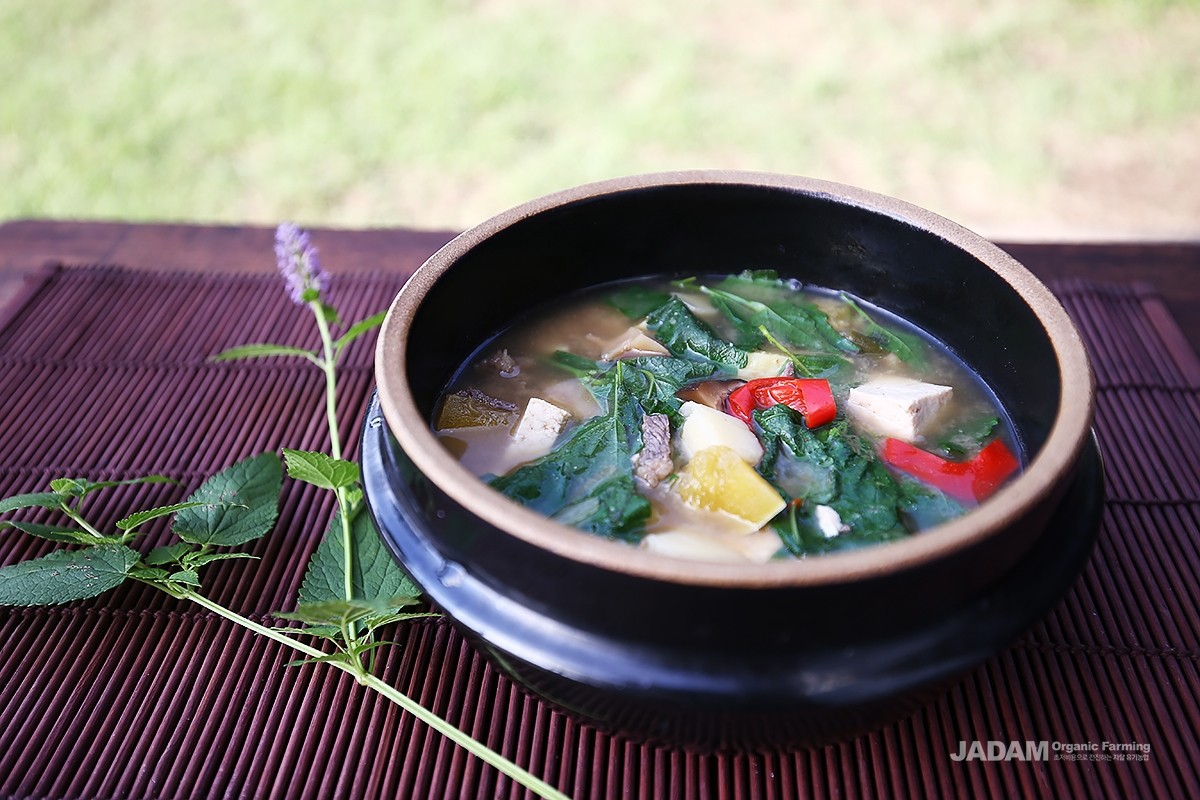
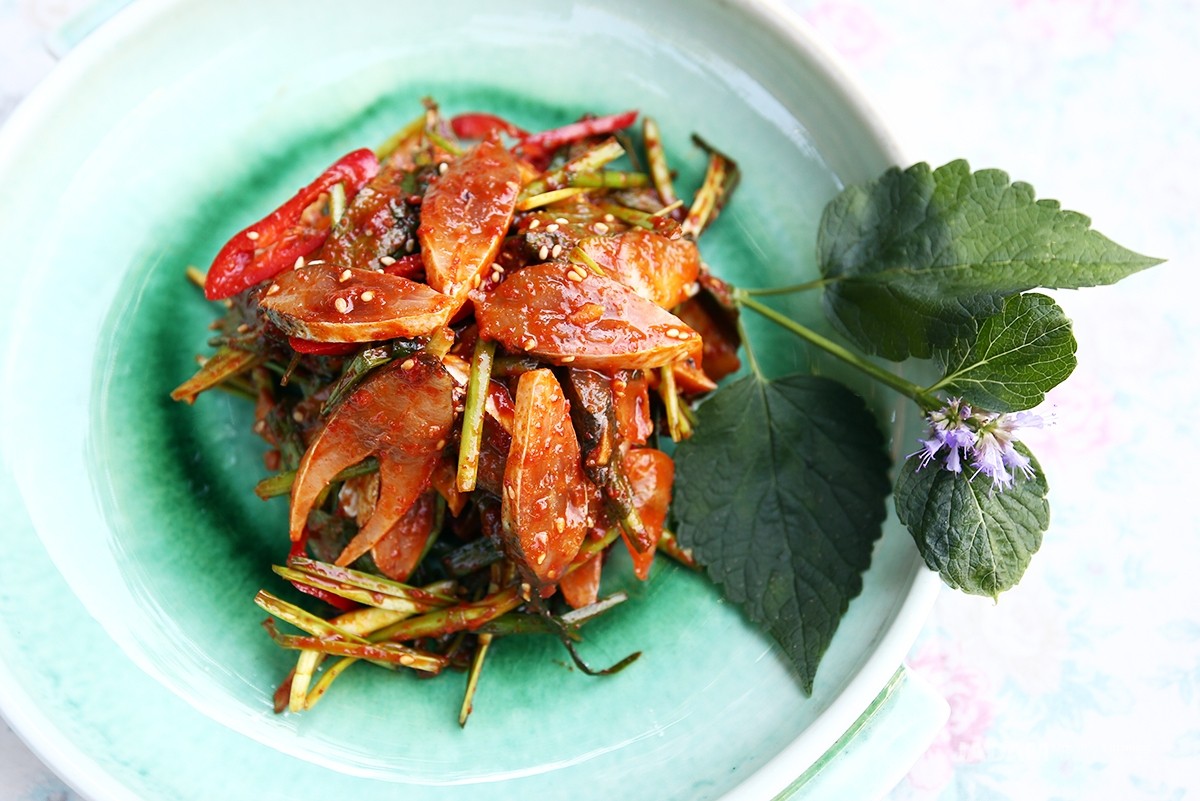
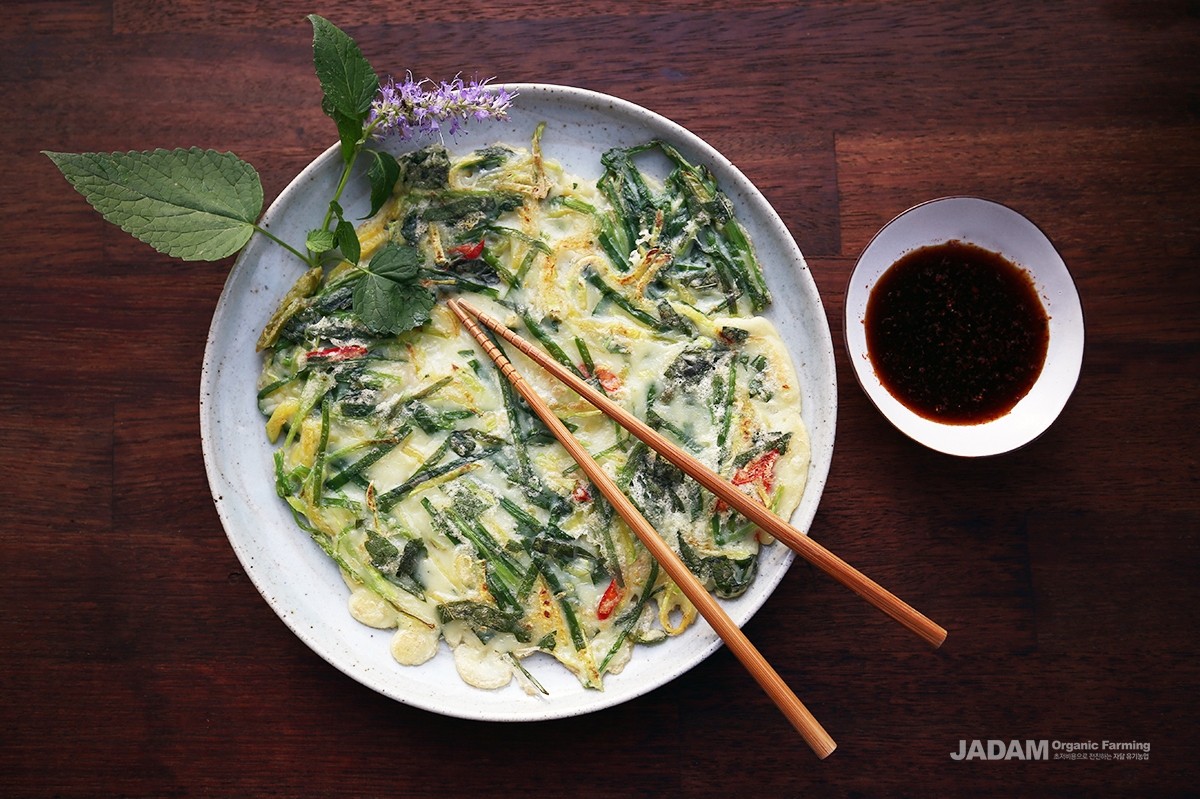
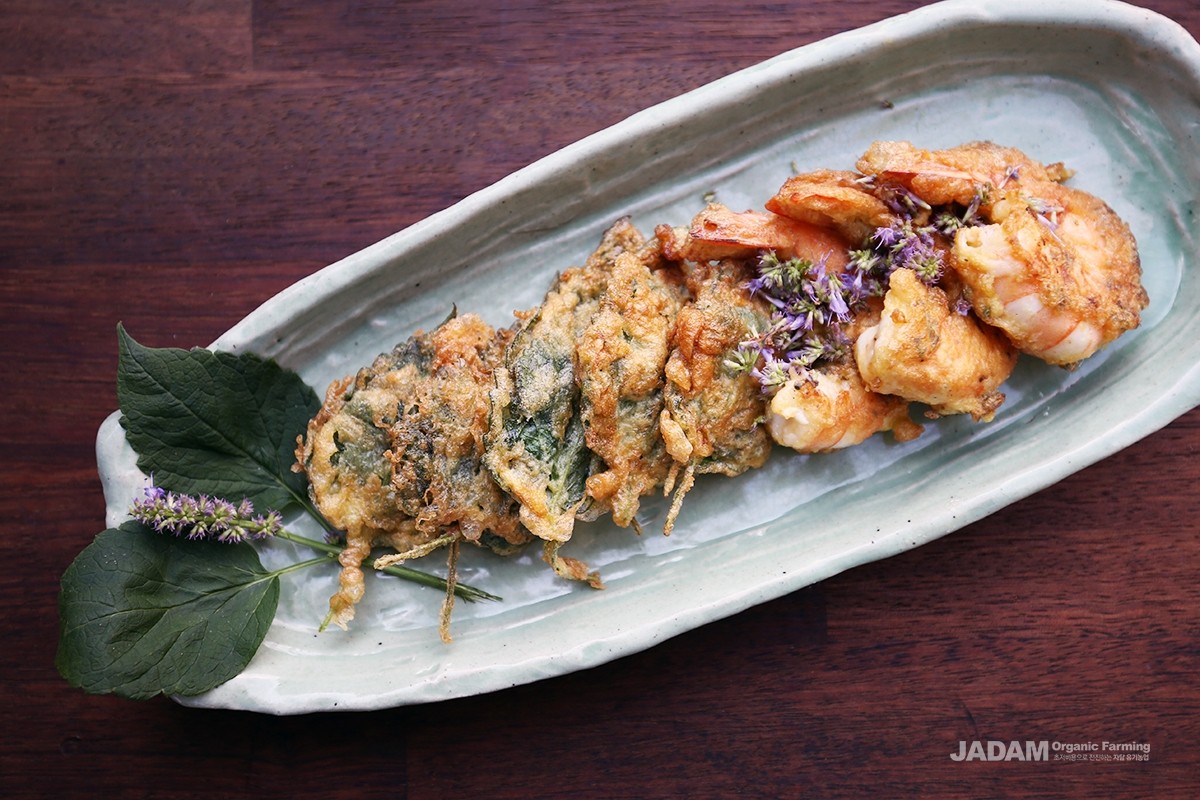
It is used as a spice in various stews such as jjigae, spicy fish stew, and loach soup, which are popular summer dishes. When grilling meat or eating raw fish, it can be used instead of perilla leaves to wrap the food. It can also be used in pancakes or fried dishes, and when dried well, it makes a pleasant herbal tea. The taste is pungent, and its nature is slightly warm. It helps to treat dampness stagnating in the spleen and stomach, thus relieving abdominal distension, poor appetite, nausea, vomiting, diarrhea, and thick tongue coating.
Korean Mint (Agastache rugosa) is a perennial herb in the mint family, commonly known in Korea as bang-a leaves. It grows widely in fields and mountains across the country. When fully grown, it reaches up to 1 meter in height, branching profusely from the upper part of the stem. The opposite leaves are sharply pointed at the tip, rounded or heart-shaped at the base, and have blunt serrations along the margins.
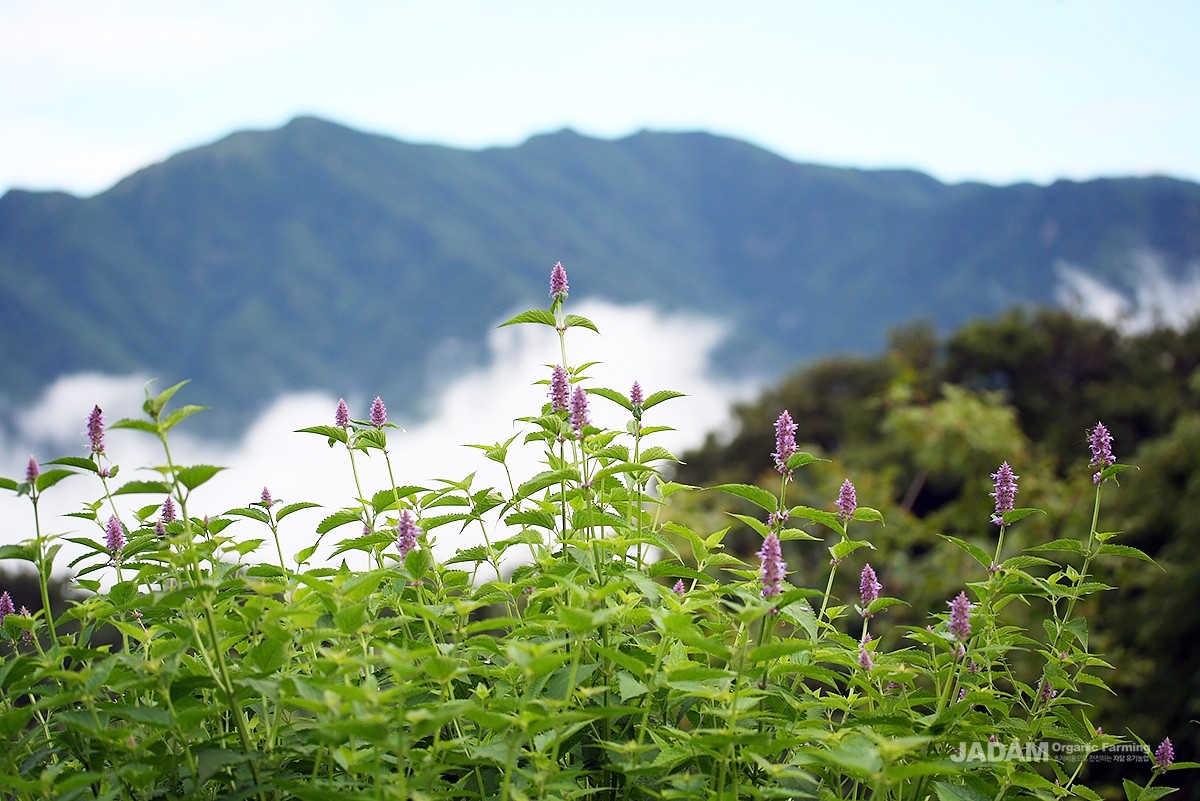
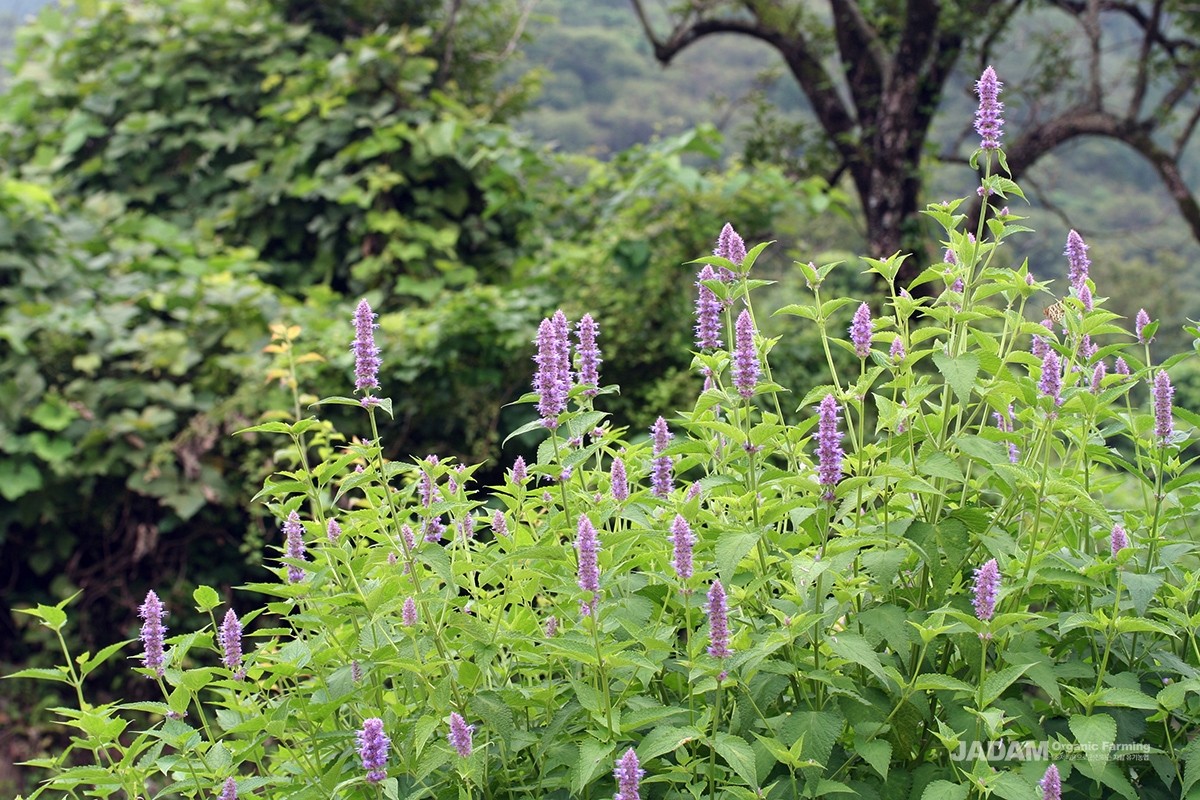
From July to September, light purple flower spikes form at the tips of stems and branches. These spikes, measuring 5-15 cm, are densely packed with small lip-shaped flowers. The upper lip of the corolla is short, while the lower lip is larger and divided into five lobes. Of the four stamens, two are long. The fruit is an oval-shaped, flattened nutlet.
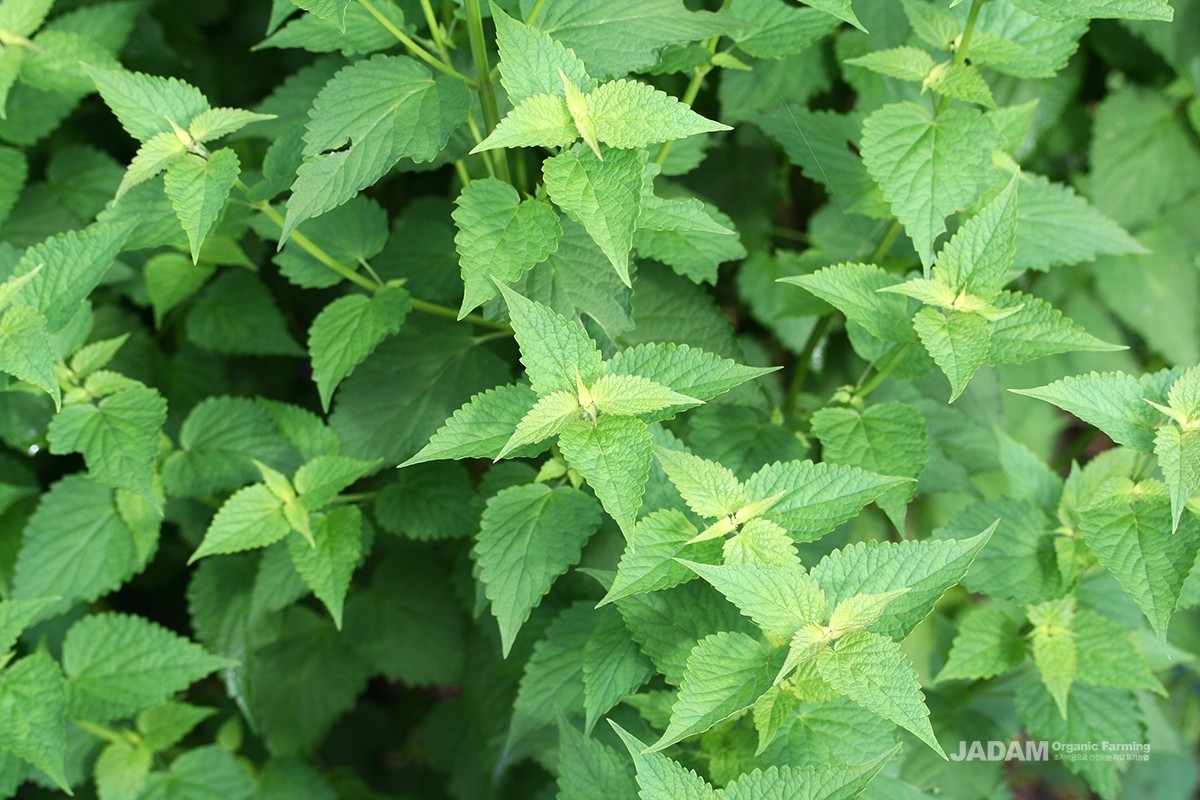
As a native Korean herb, it gives off a distinctive aromatic fragrance from both flowers and leaves. It is widely used as a seasoning for summer specialties such as stews, spicy fish soups, and loach soups. When grilling meat or eating raw fish, the leaves can be used as a wrap instead of perilla leaves. They can also be made into pancakes, deep-fried, or added when making kimchi. Dried leaves and stems are commonly brewed as tea. In North Korea, the plant is used as a natural flavoring for soy sauce and soybean paste, with the added benefit that it repels insects.
In traditional Korean medicine, the dried aerial parts are called Gwakhyang (藿香) and are used as medicinal herbs. Harvested when flowering, they are dried for later use. The taste is pungent, and the nature is slightly warm. It is said to dispel dampness stagnating in the stomach and spleen, treating abdominal bloating, poor appetite, nausea, vomiting, diarrhea, and a thick tongue coating. It is particularly effective for summer vomiting and diarrhea. Taken regularly as tea, it is believed to help prevent summer heat exhaustion.
The essential oil of Agastache rugosa contains over 80% methyl chavicol (estragole), along with anethole, anisaldehyde, d-limonene, p-methoxycinnamaldehyde, α-pinene, 3-octanone, and p-cymene.
According to the Dictionary of Oriental Medicine, “Korean Mint induces sweating, promotes qi circulation, strengthens the spleen and stomach, expels summer dampness, and stops vomiting. It is used for summer colds, indigestion, loss of appetite, nausea, vomiting, and diarrhea. The dried herb is decocted in doses of 6-12 g, made into pills or powders, and the decoction can also be used as a gargle.”
Propagation is done by seed or cuttings. Seeds are sown in autumn or spring, while cuttings are usually taken in mid-April, cutting young stems to about 15 cm and planting them in soil.
[How to Enjoy Korean Mint]
1. Add leaves and stems to stews, spicy fish soups, or loach soups as a
seasoning.
2. Use the leaves as wraps for grilled meat or raw fish, as an alternative to
perilla leaves.
3. Make pancakes or deep-fry the leaves, or add them when
preparing kimchi.
4. Harvest and dry the aerial parts during flowering to brew as tea or
use as medicinal herbs.