

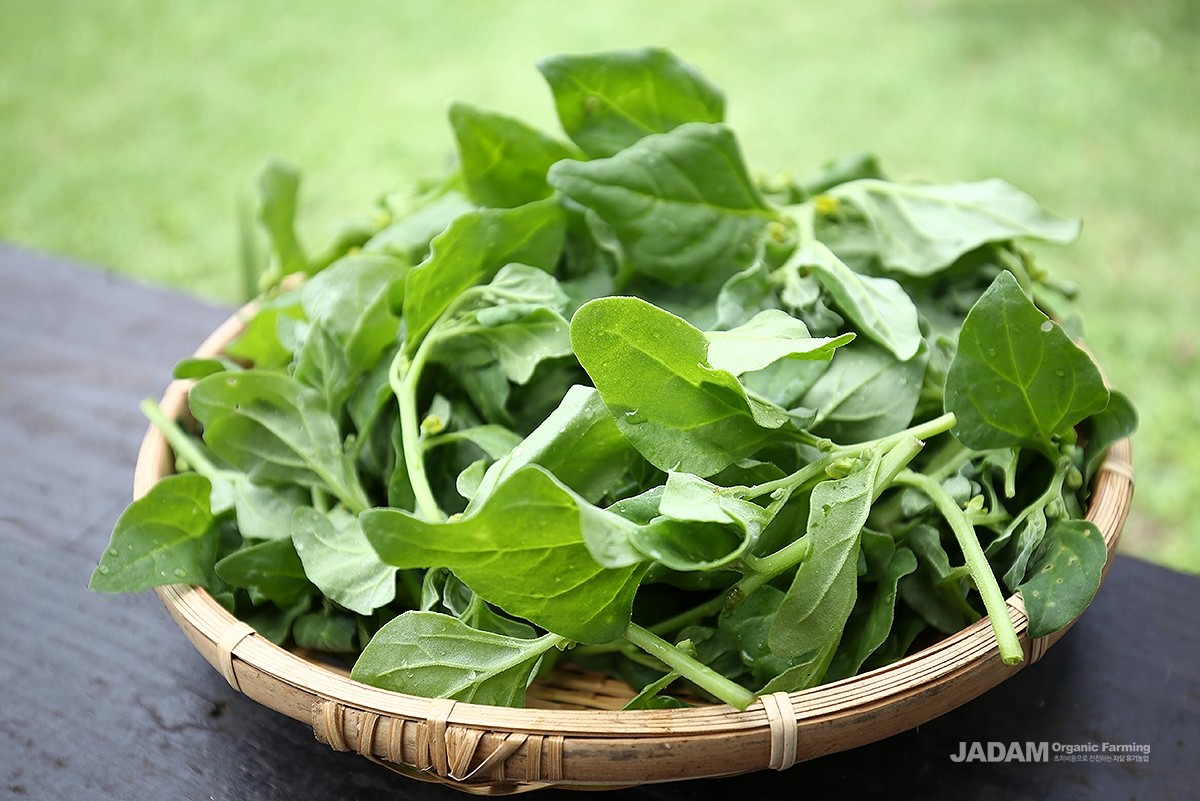
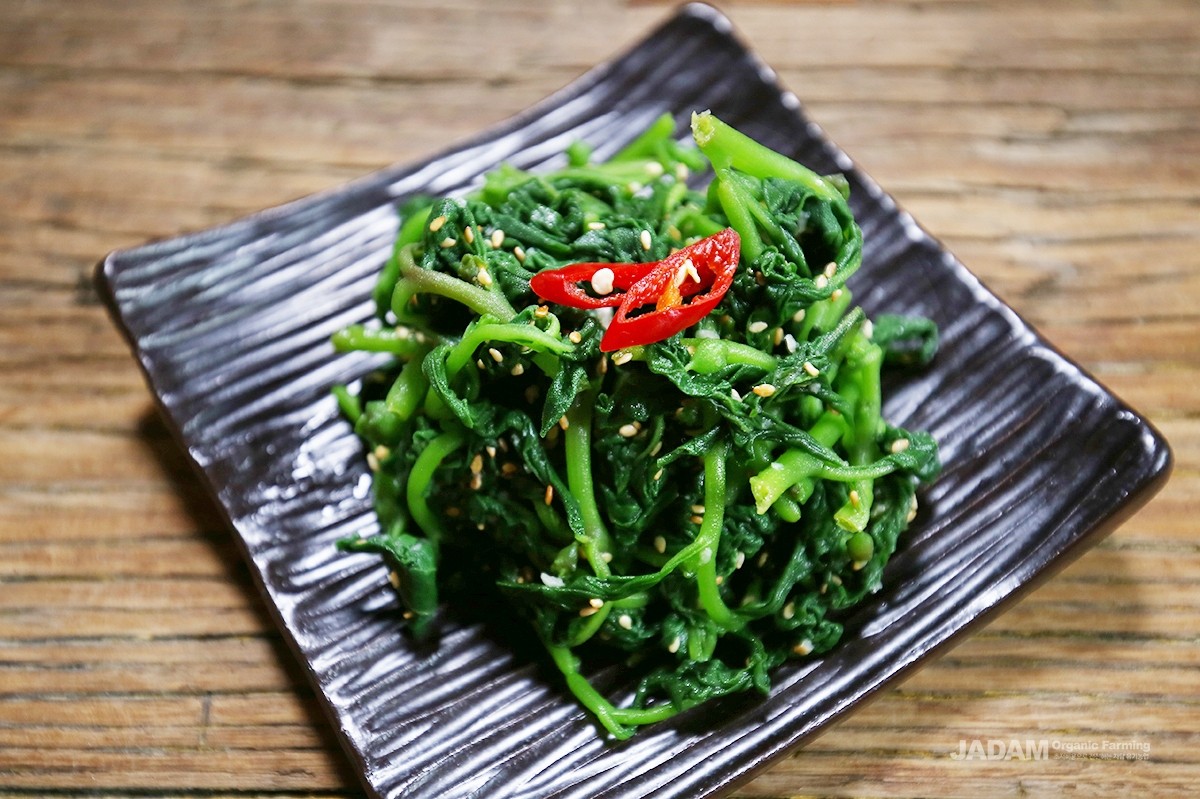
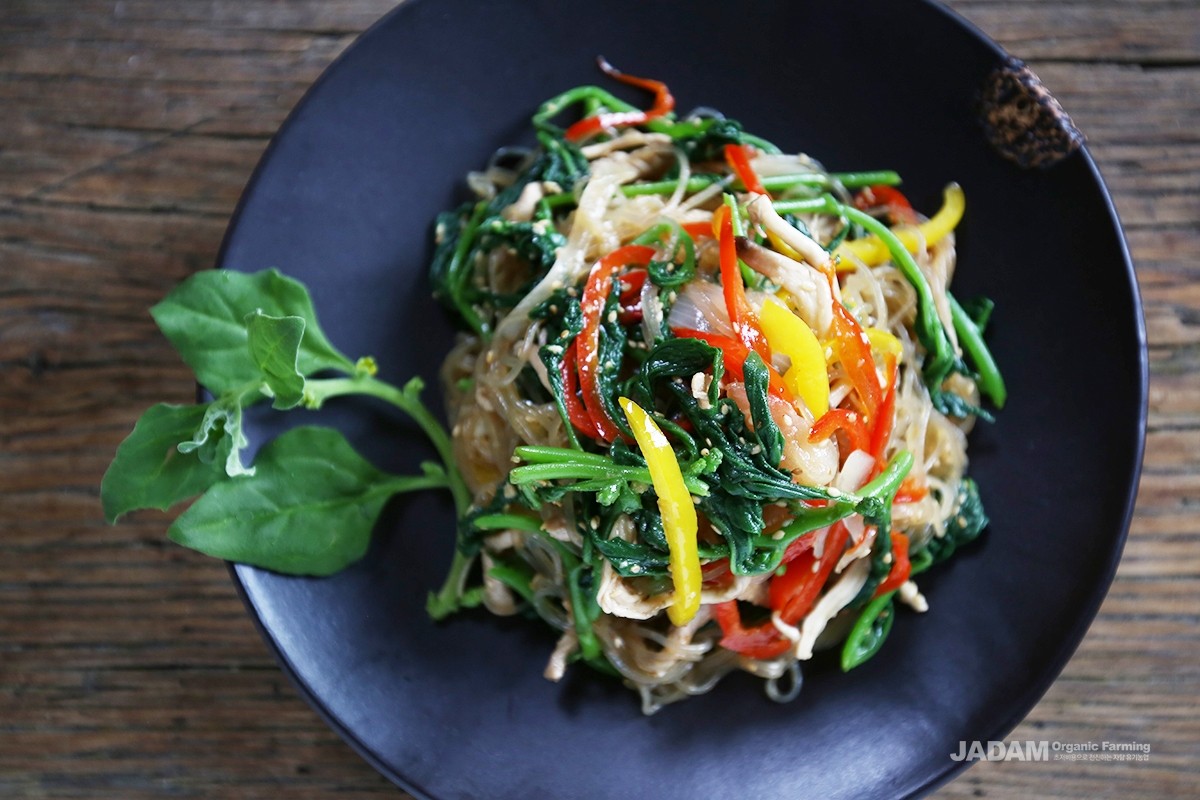
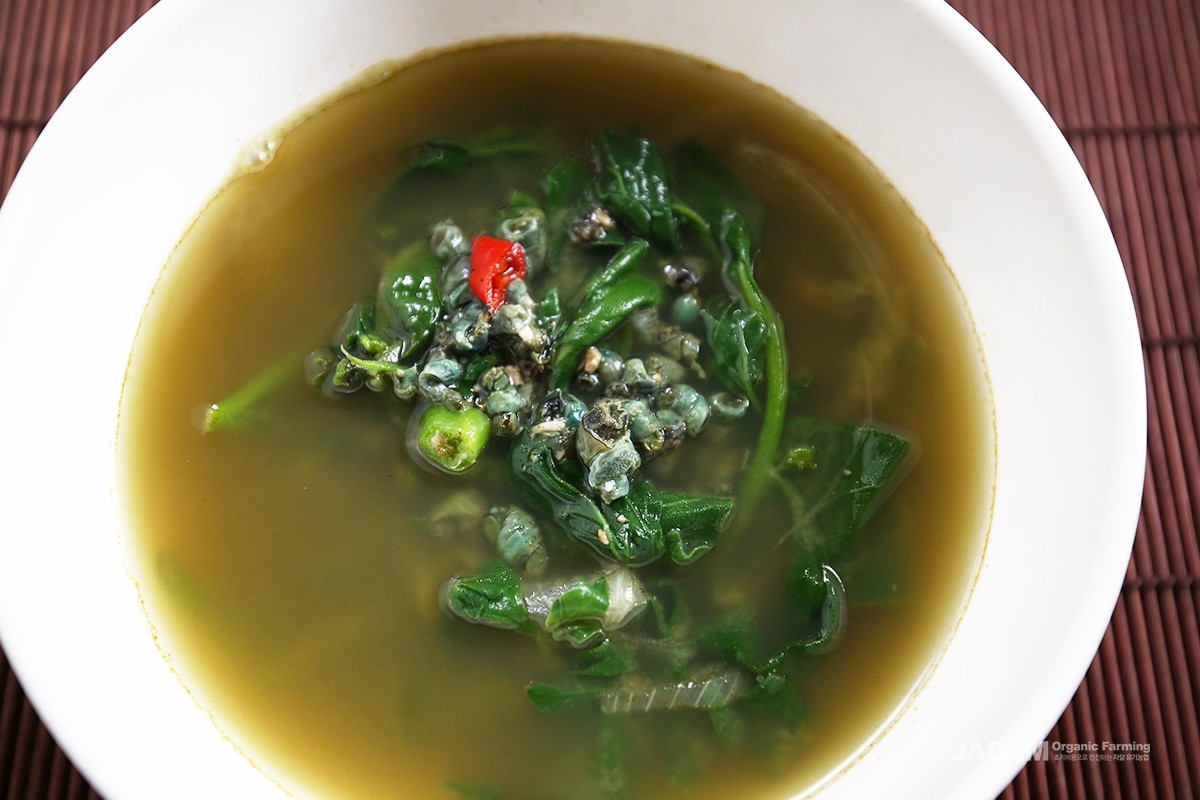
In the West, it is commonly called New Zealand spinach, and it is also known as seaside spinach. The leaves can be eaten fresh as a salad or blanched lightly and seasoned as a side dish. Like regular spinach, it can be used in stir-fries or mixed with noodles and vegetables. It is also delicious when deep-fried or added to soybean paste soup.
This plant is rich in iron, calcium, vitamin A, and carotene. In folk medicine, the whole plant has been used to help treat gastritis, stomach ulcers, hyperacidity, and certain uterine disorders.
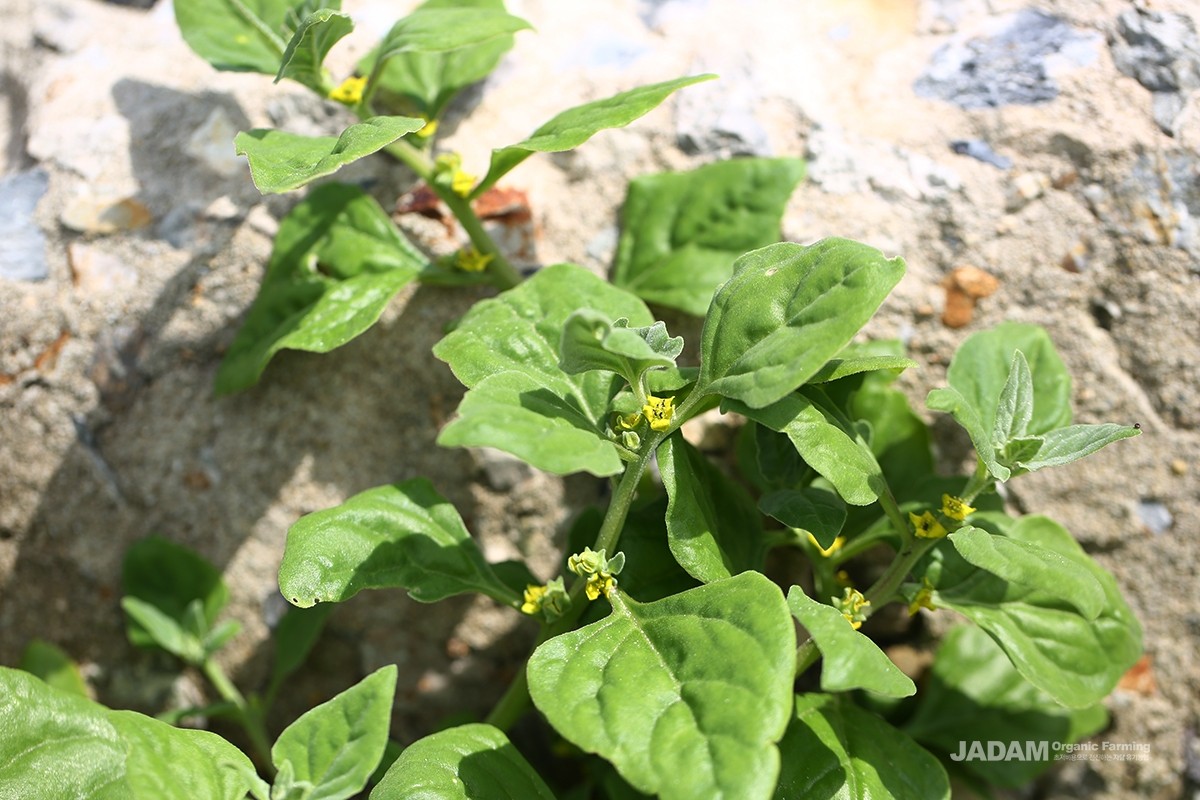
New Zealand Spinach (Tetragonia tetragonoides) is a perennial herb that grows along sandy coastal areas. The plant creeps or spreads obliquely, branching like a vine. Though hairless, its entire surface is covered with small protrusions. The leaves grow alternately, thick and spade-shaped with smooth margins. When the stems or leaves break, a sticky white sap exudes.
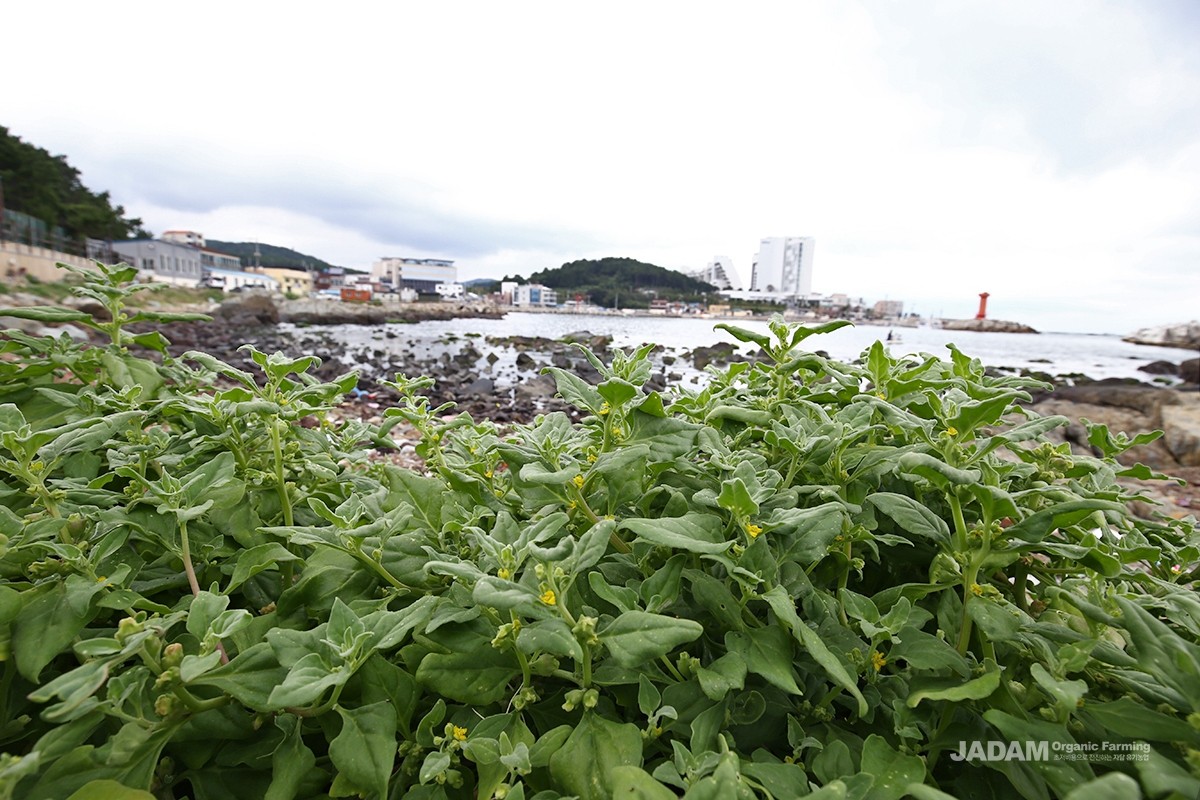
From spring to autumn, small yellow flowers bloom in the leaf axils, usually 1-2 per node, without stalks. The calyx, green outside and yellow inside, has 5 lobes acting as petals, with 4-5 spiny projections. After flowering, the plant bears oval fruits with similar spines.
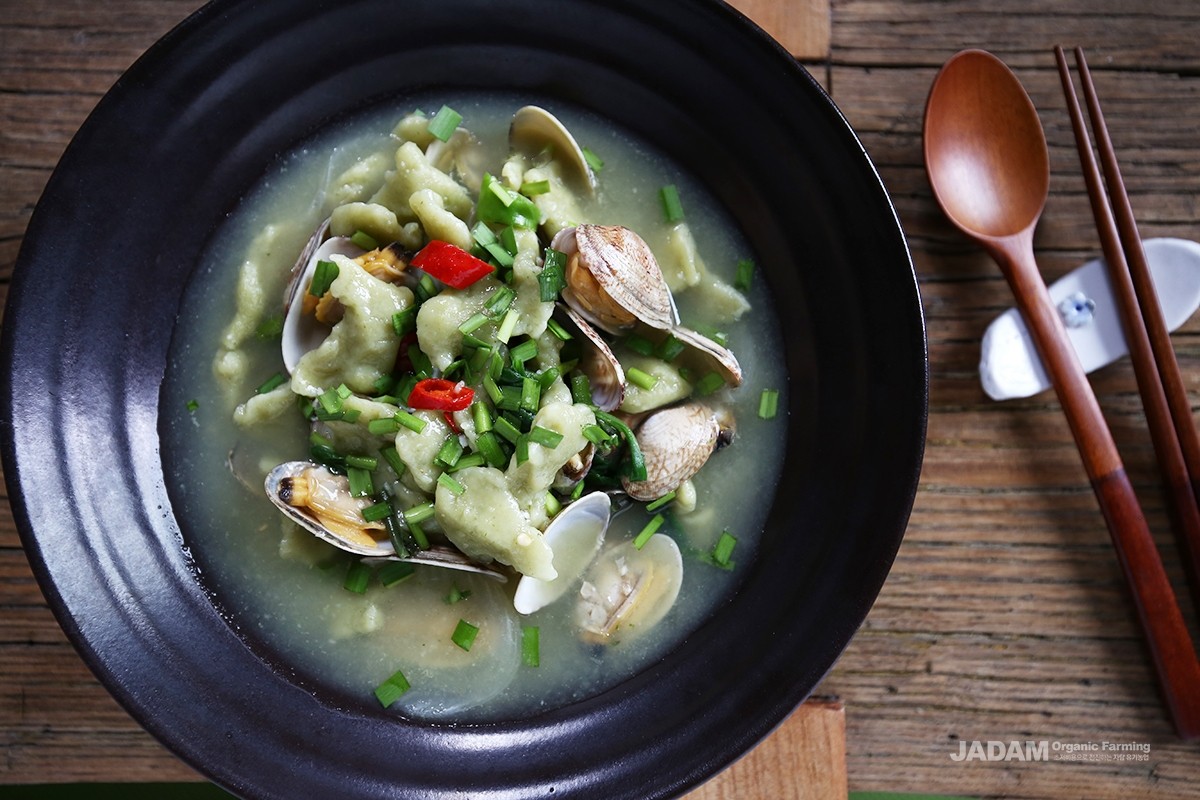
In the West, it is commonly cultivated and eaten as New Zealand spinach. The leaves can be eaten raw with mayonnaise or in salads, lightly blanched and seasoned as a side dish, or stir-fried like regular spinach. They can also be added to japchae (glass noodle stir-fry), soups such as soybean paste stew, or deep-fried. The juice can be kneaded into flour dough to make various noodle dishes. Dried or roasted leaves may be brewed as tea, and the plant can also be fermented into a health enzyme drink.
New Zealand Spinach is nutritionally rich, containing iron, calcium, vitamin A, carotene, and various B vitamins. In folk medicine, the whole plant has been used for gastritis, stomach ulcers, hyperacidity, uterine disorders, inflammation relief, detoxification, anemia, and postpartum recovery. Its mucilage is believed to coat the stomach lining, reducing irritation.
According to the Chinese Materia Medica, it has properties of clearing heat and toxins, reducing swelling, treating enteritis, septicemia, boils, eye inflammation, and skin rashes.

The young shoots contain abundant saponins and oxalates. Because of the high oxalate content, people with kidney stones or sensitive constitutions are advised to blanch the plant and soak it in cold water before eating, rather than consuming it raw or juiced.
Propagation is easy through seeds, cuttings, or division. Even slightly hardened stems or branches that have rooted along the ground can be cut and replanted in sandy soil to establish new plants.
[How to Enjoy New Zealand Spinach]
1. Eat raw in salads or lightly blanched and seasoned as namul.
2. Use in stir-fries, japchae, or soups such as soybean paste stew.
3. Extract juice to mix into flour dough for noodle dishes.
4. Dry or roast the plant to make tea, or ferment into an enzyme drink.