

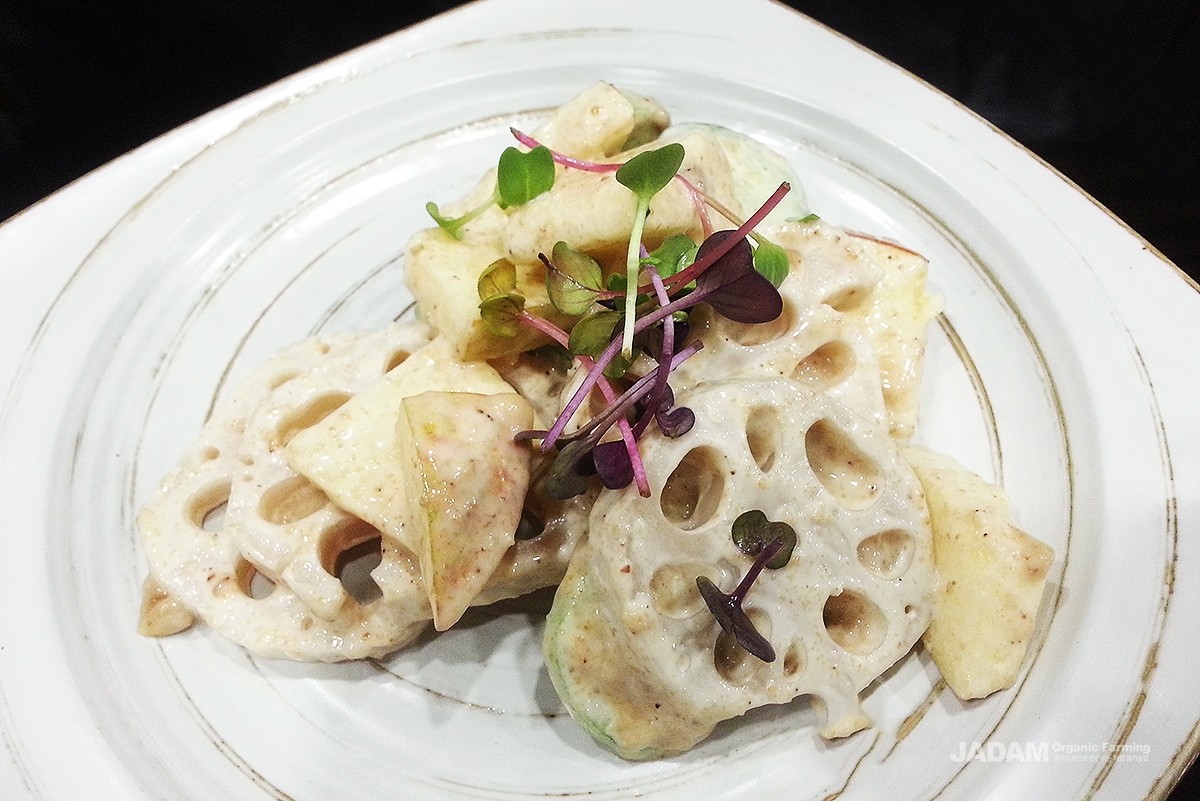
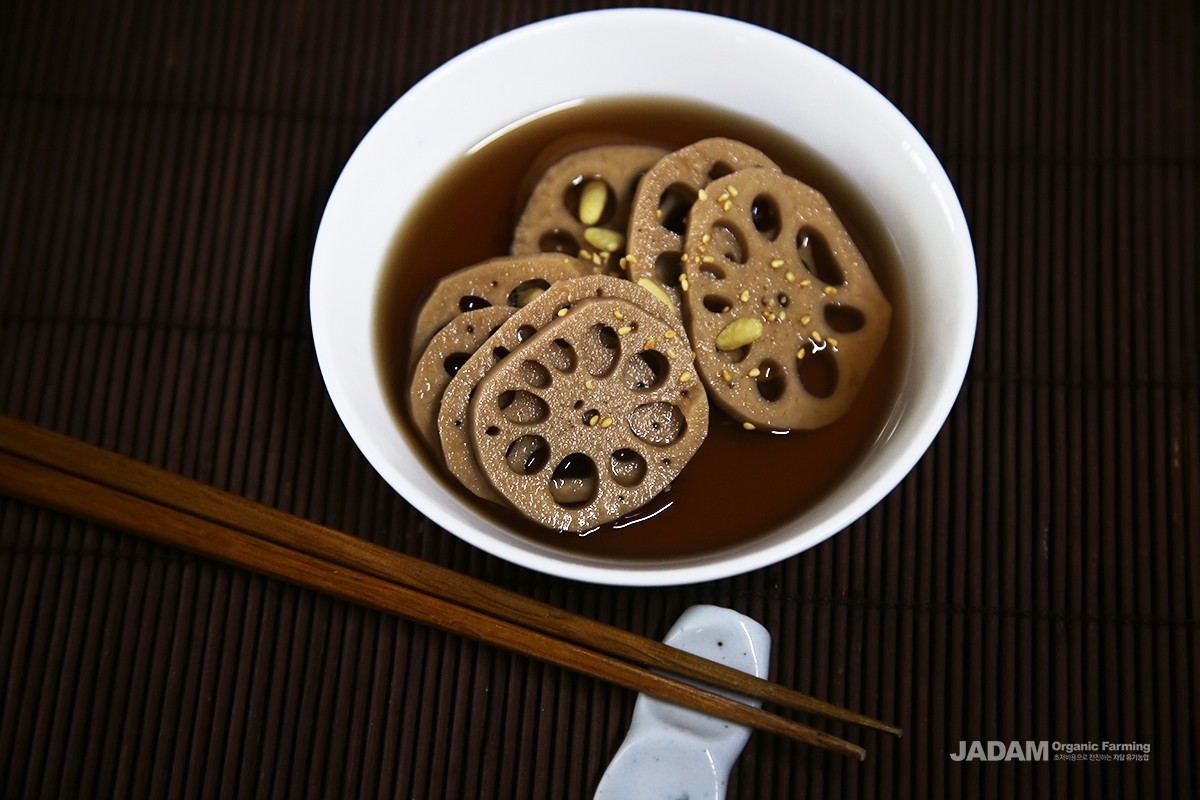
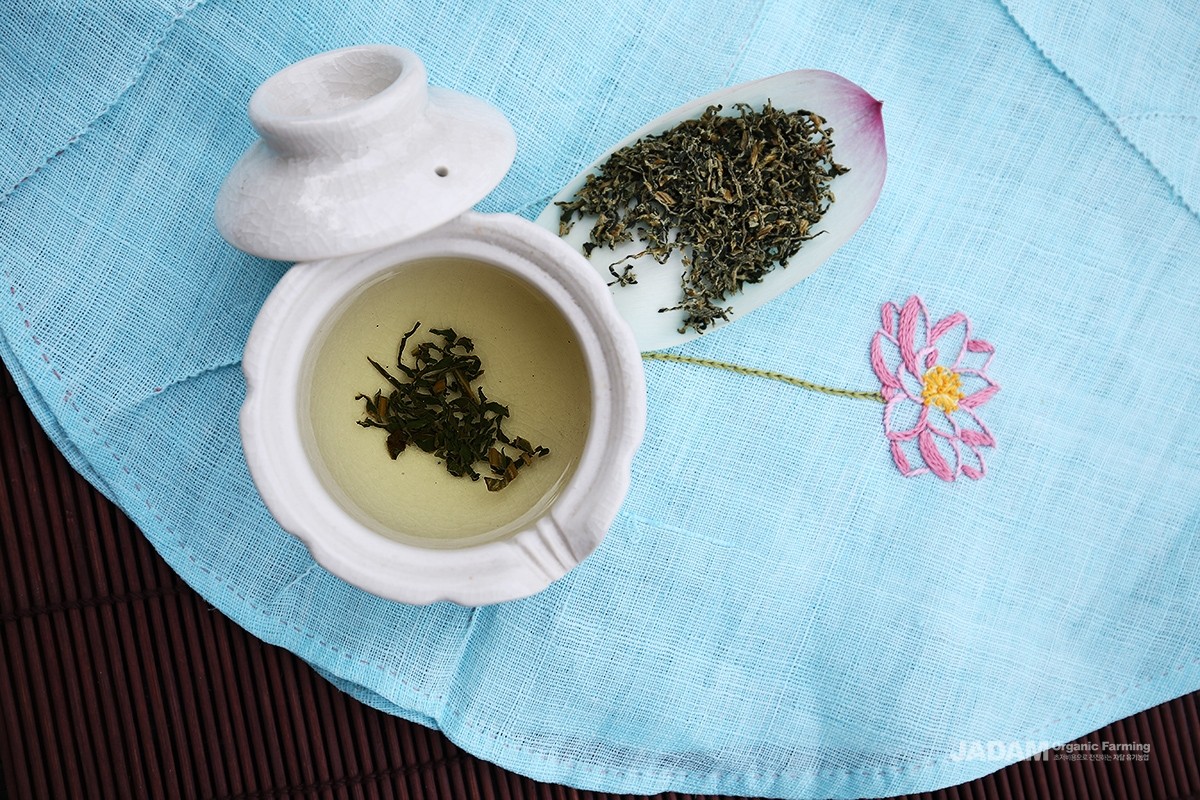
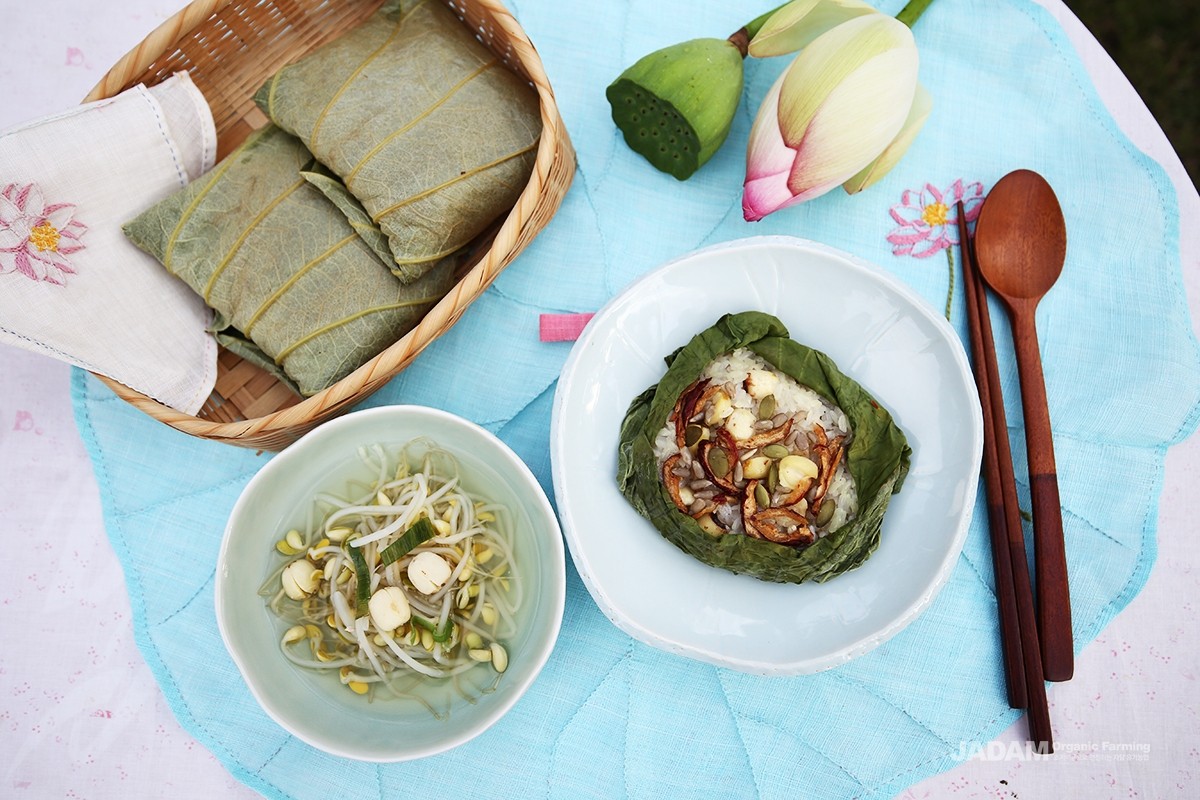
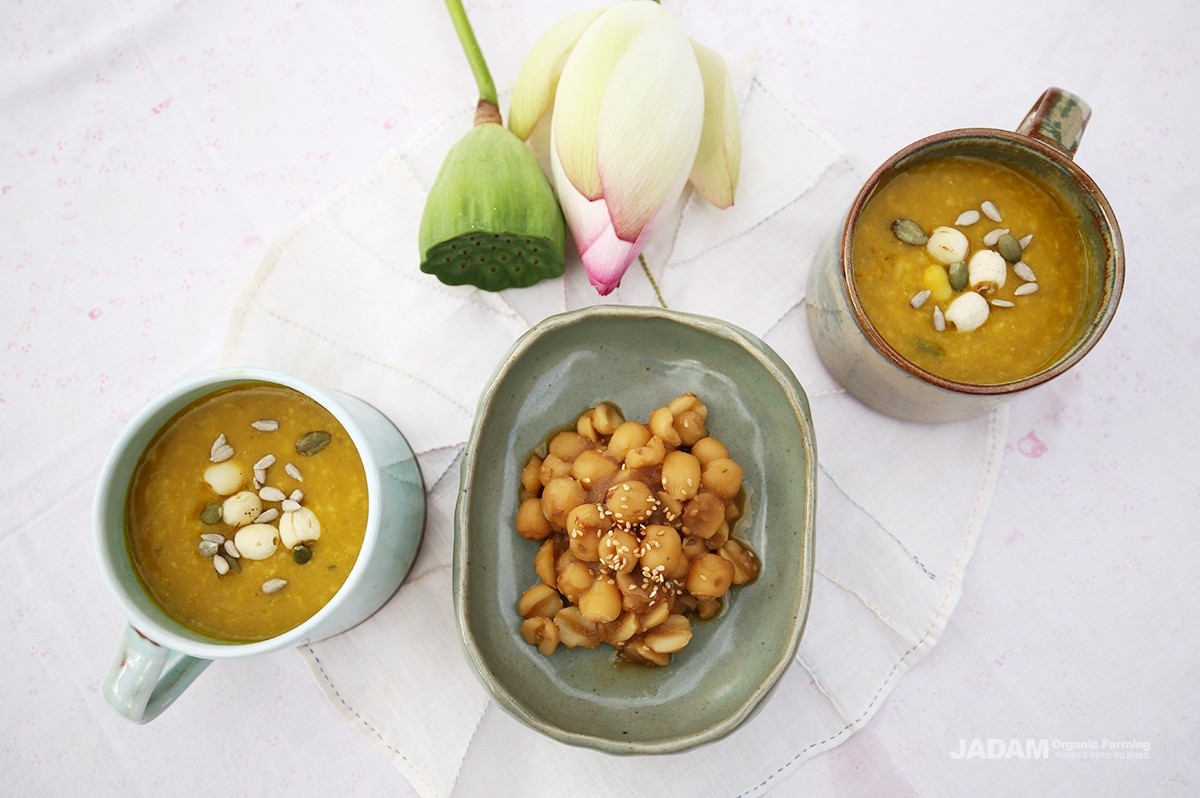
The root can be lightly blanched and used in salads, simmered, fried, or pickled. The seeds can be simmered, added to rice, or cooked into porridge, while the leaves can be roasted to make tea or used to wrap rice or meat for steaming. Steamed and cooked roots strengthen the spleen, stimulate the appetite, and nourish the blood, while the seeds calm the mind, tonify the kidneys, support the spleen, and have an astringent effect on the intestines.
Scared Lotus (Nelumbo nucifera) is mainly cultivated in ponds or paddy fields. Its rhizomes extend laterally and thicken from autumn. The rhizomes have nodes with several hollow chambers inside. From these rhizomes grow long petioles bearing large round leaves about 40 cm in diameter. The petioles are covered with spines, and the leaves have radiating veins and are water-repellent.
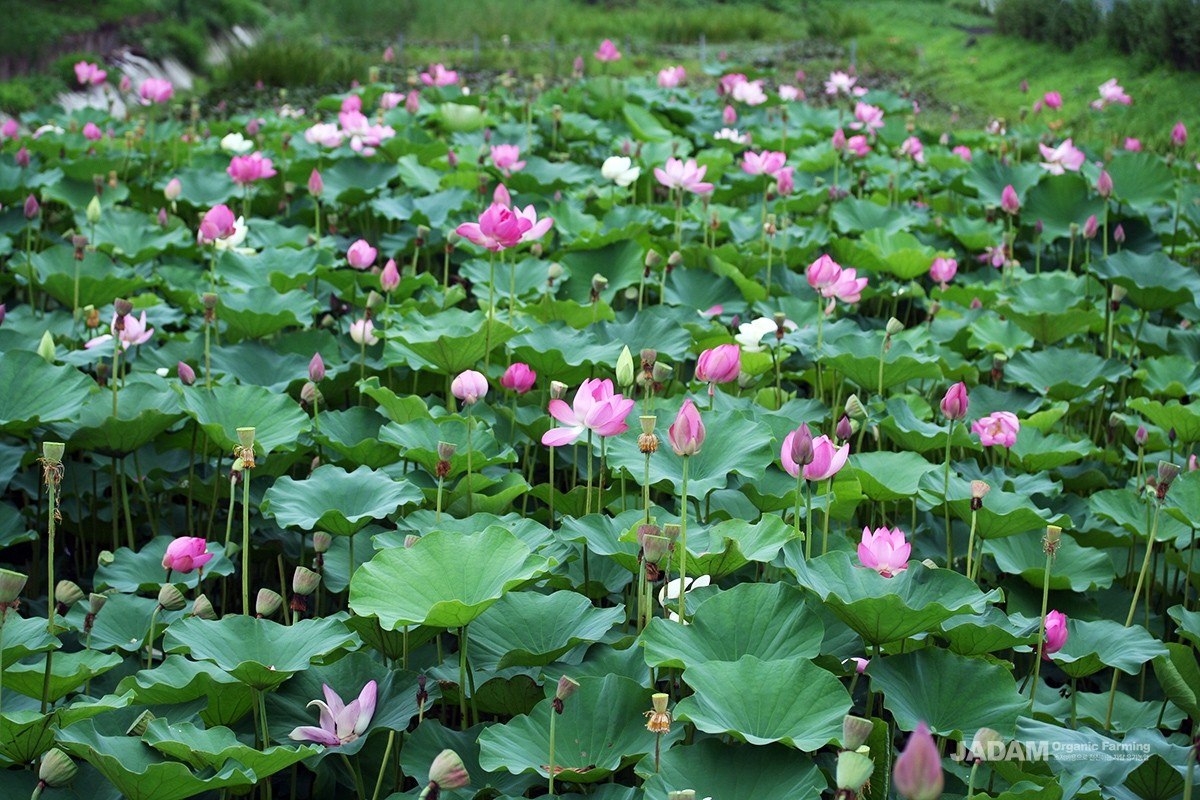
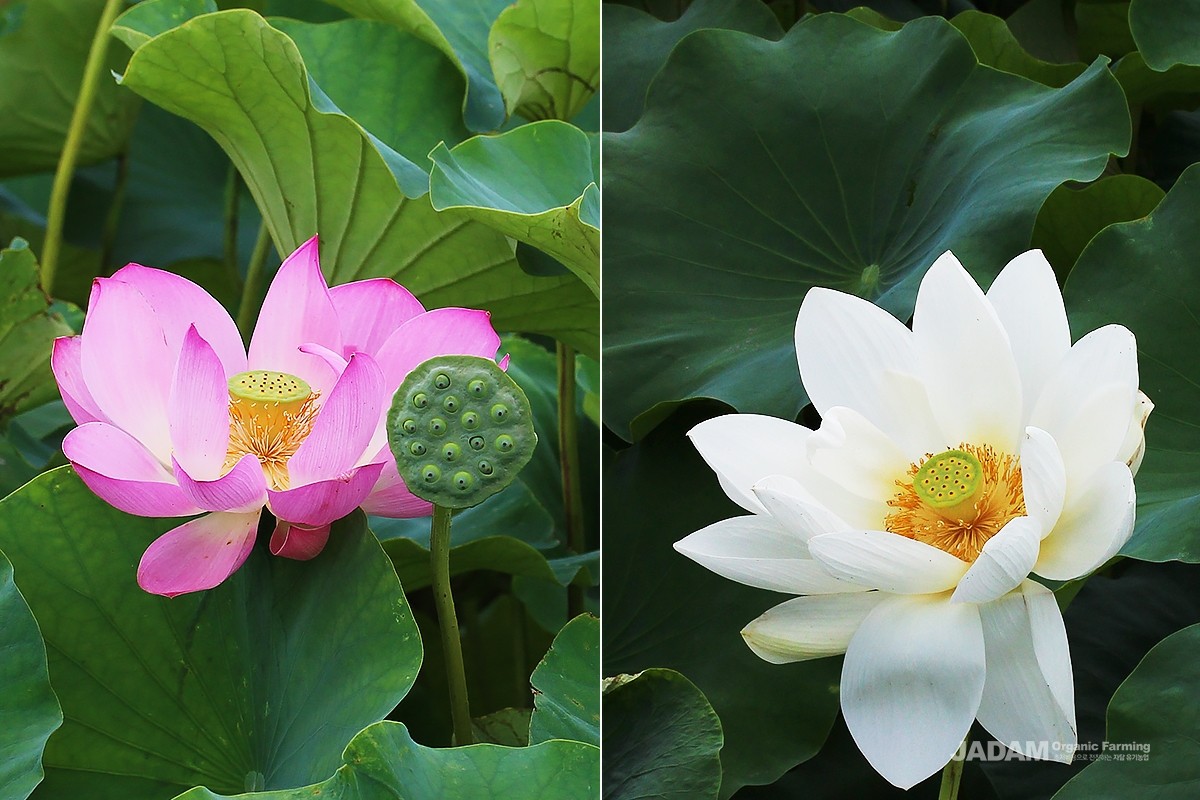
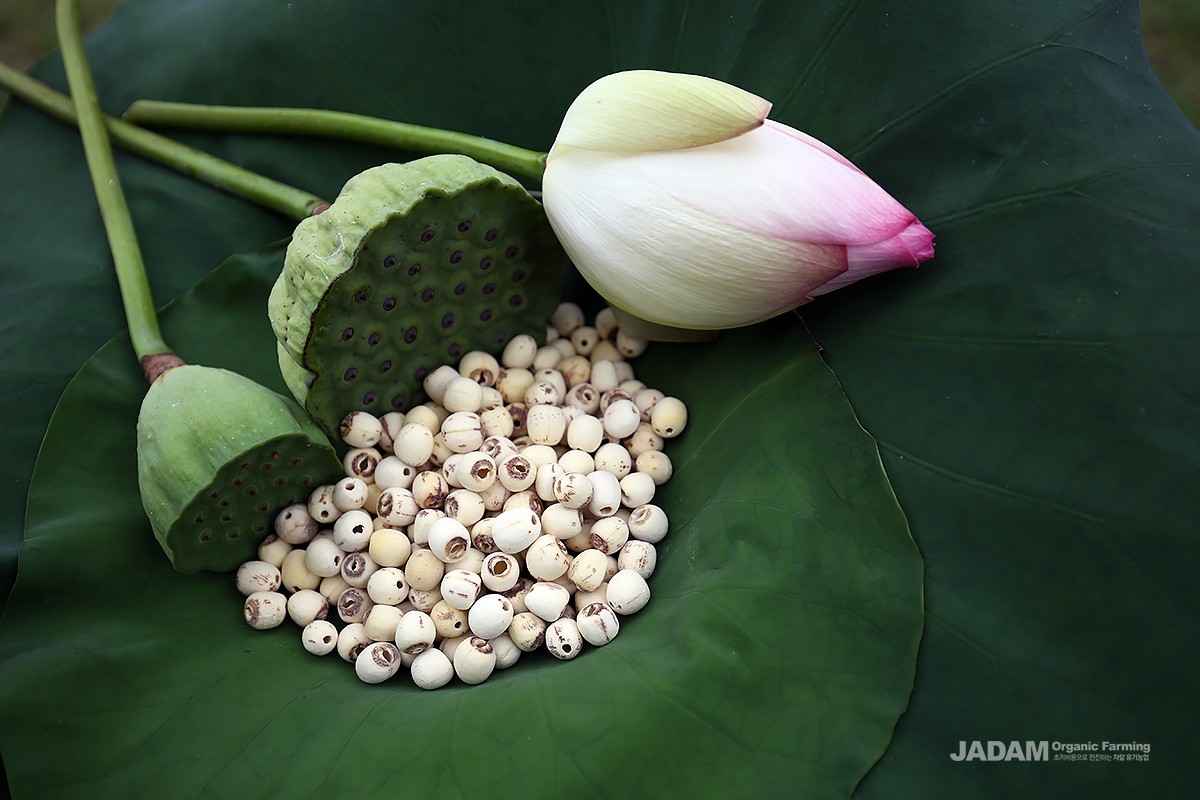
In July and August, pink or white flowers bloom singly at the ends of flower stalks, which are also spiny. The flowers have multiple whorls of petals attached to a cone-shaped receptacle, with numerous stamens. After flowering, the receptacle remains, with a flat top containing multiple holes that later reveal oval seeds about 2 cm across.
The rhizomes, leaves, and seeds are all used for food and medicine. The rhizome, commonly called lotus root, can be lightly blanched and used in salads, braised, deep-fried, or pickled in vinegar or soy sauce. The seeds, known as lotus seeds, can be eaten raw, simmered, added to rice, cooked into porridge, or pickled. Young leaves may be blanched and used as wraps, while larger leaves are roasted to make tea or used to wrap rice and meat for steaming or boiling.
Rhizomes are harvested from late autumn to early spring, after the leaves have fallen. They are rich in starch, protein, vitamin C, asparagine, polyphenolic compounds such as catechol, and enzymes like peroxidase. The taste is sweet, the nature cooling, and it is considered non-toxic. According to the Chinese Materia Medica, fresh lotus root reduces heat, cools the blood, and removes blood stasis, helping conditions such as fever, nosebleeds, and hematuria. Steamed or cooked root strengthens the spleen, improves appetite, nourishes the blood, promotes tissue regeneration, and stops diarrhea.
Leaves are harvested from June to September and contain alkaloids such as roemerine, nuciferine, and armepavine, as well as organic acids (tartaric, malic, gluconic). The leaves are bitter, astringent, slightly pungent, and salty in taste, neutral in nature, and non-toxic. They help clear summer heat, eliminate dampness, raise clear yang, and stop bleeding. They are traditionally used for diarrhea due to dampness, dizziness, edema, nosebleeds, metrorrhagia, and postpartum blood stasis.
Seeds are harvested in late autumn to early winter and sun-dried. They contain starch, raffinose, and proteins. The seed coat contains nuciferine and oxoushinsunine, the latter noted for inhibiting tumors of the nose and throat. The seeds are sweet and astringent in taste, neutral in nature. They tonify the heart, kidneys, and spleen, and astringe the intestines. They are used for excessive dreaming, seminal emission, chronic diarrhea or dysentery, uterine bleeding, and leukorrhea.
Because lotus root contains polyphenols such as chlorogenic acid, it browns easily, especially when in contact with iron. To prevent discoloration, it should not be cut with iron knives or cooked in iron pots. Blanching with vinegar also helps preserve its color.
The plant is propagated by seeds or rhizome division. Mature seeds are collected in August–September, nicked at both ends, and planted directly. In early spring, sprouting rhizomes are divided and replanted.
[How to Enjoy Lotus]
1. Lightly blanch the rhizome and use it in salads, or cook it as braised dishes, tempura, or pickles.
2. Simmer the seeds, pickle them, or add them to rice or porridge.
3. Blanch young leaves for wraps; roast mature leaves to make tea.
4. Use large leaves to wrap rice or meat for steaming or boiling.