

Buyeo, Chungnam | Farmers: Sook-ja Lee, Jin-hyung Kim | Crop: Goji berries | Area: ≈ 1.31 acres (1,600 pyeong in greenhouses) | Experience: 7th year practicing Ultra-Low-Cost (ULC) organic farming
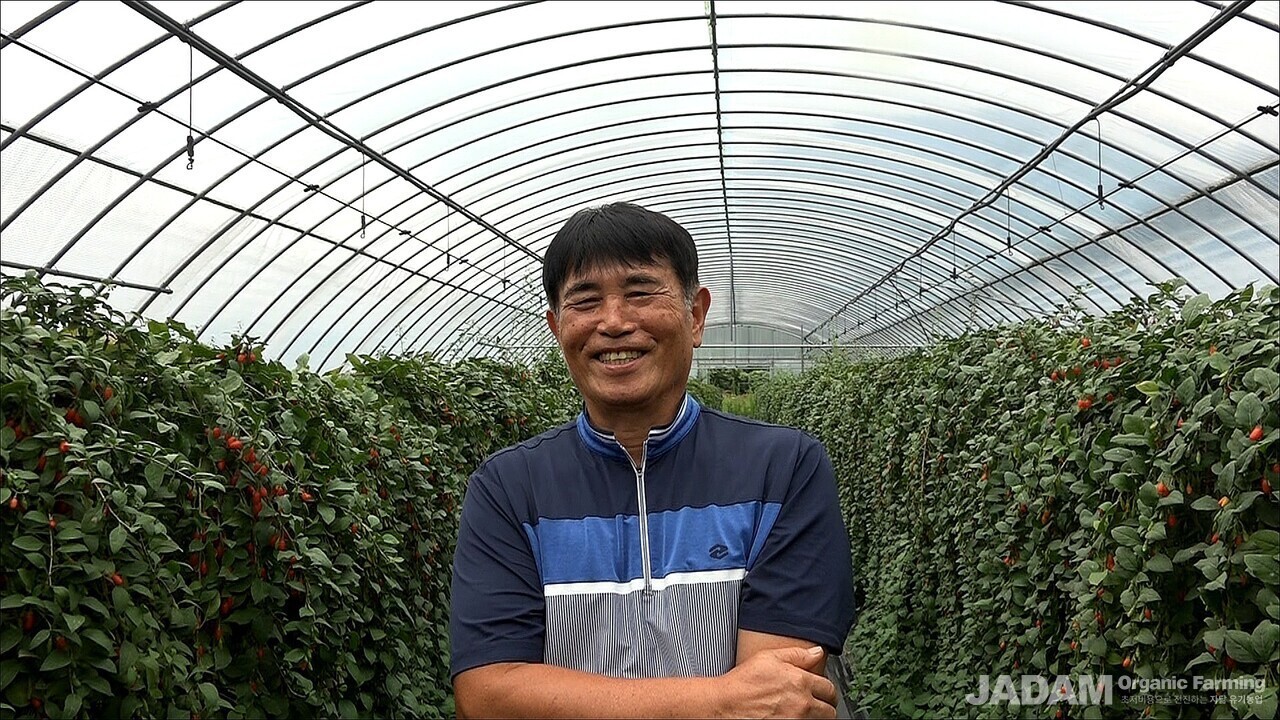
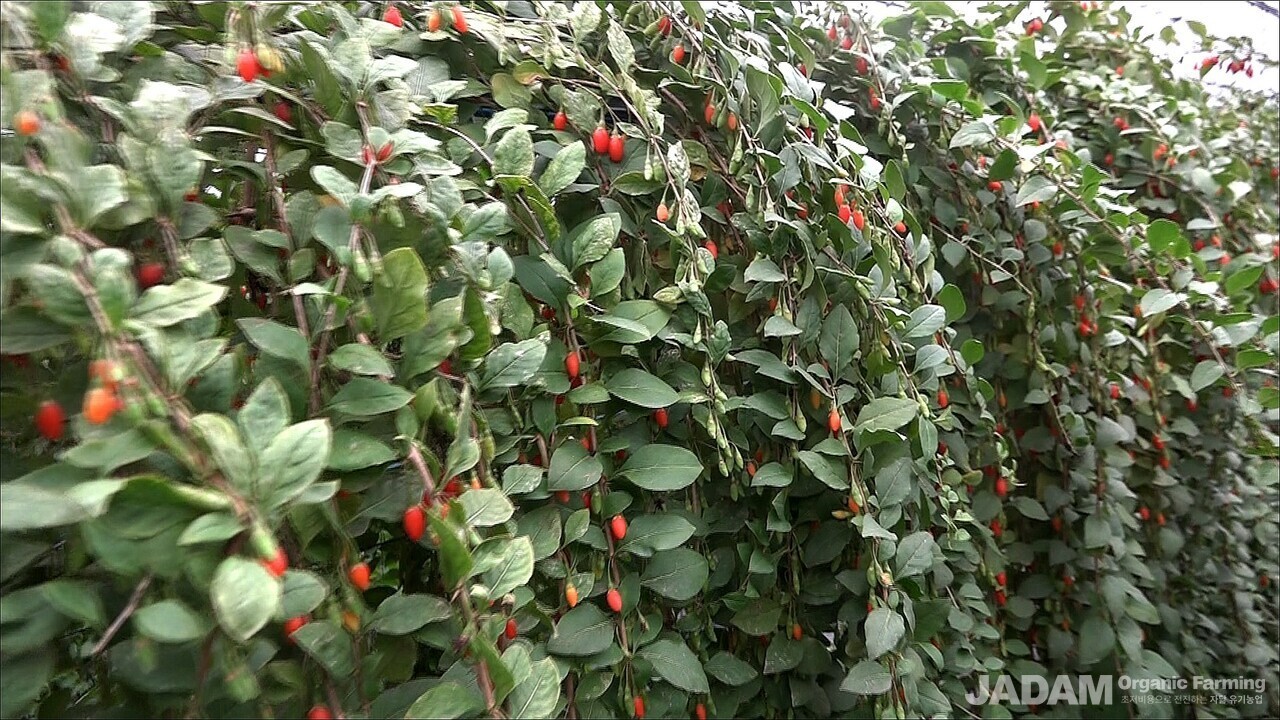
In conventional goji berry cultivation, farmers typically harvest around 120 to 180 g per plant. However, grower Jin-hyoung Kim confidently expects to harvest 1.2 kg to even 1.2 to 1.8 kg per plant. This represents more than a ten-fold increase compared to standard yields. Mr. Kim considers soil management, continuous microbial applications, and synchronized flowering and fruiting management crucial for success.
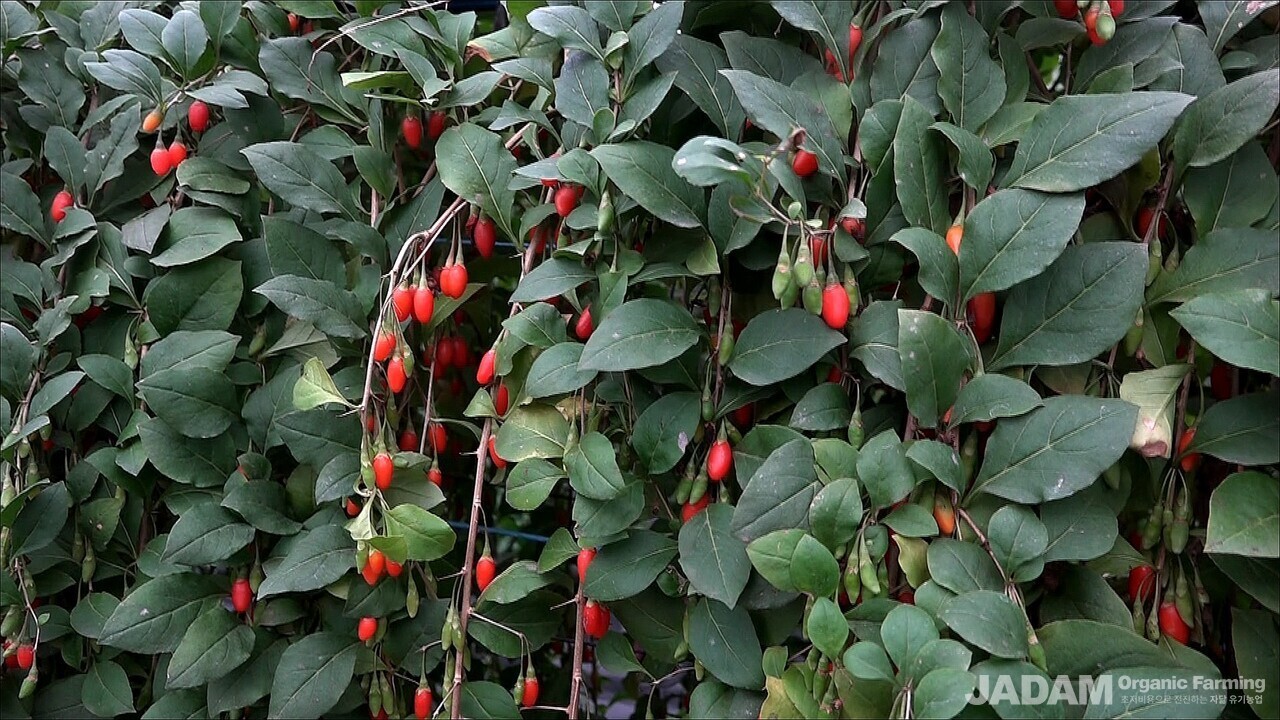
Building Soil Health Before Crop Transition
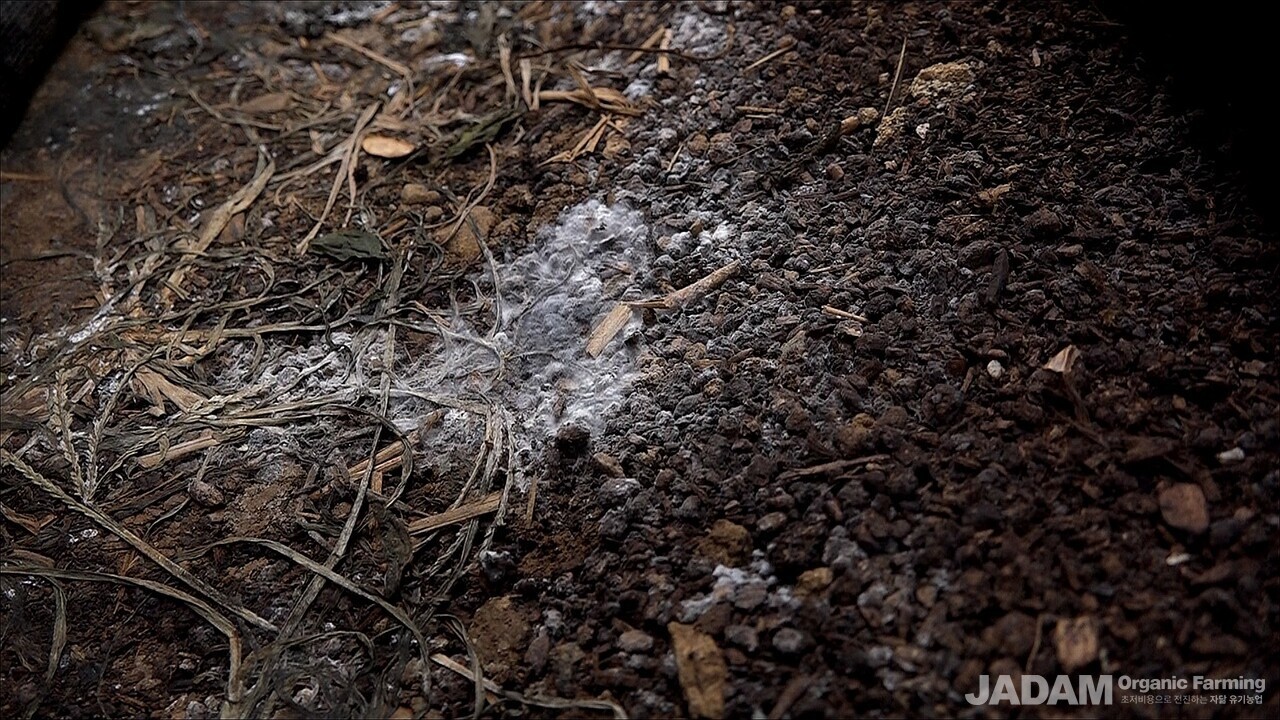
When transitioning to goji berries, Mr. Kim revitalized his soil from the ground up. Per 0.08 acres of greenhouse space, he applied 32 bags of Heuksari soil conditioner, plowed the field, and formed raised beds. He then broadcast an additional 16 bags of Heuksari directly onto the bed surface as base fertilizer.
Bed preparation began in February. From that point, he applied JADAM Microorganism Solution (JMS) via fertigation every 10 days before planting saplings in April. Fertigation with JMS continued uninterrupted until late October. Mr. Kim emphasizes that thorough soil preparation and consistent microbial enrichment provide the essential foundation for stable growth and high yields.
Synchronized Flowering for One-Time Harvesting
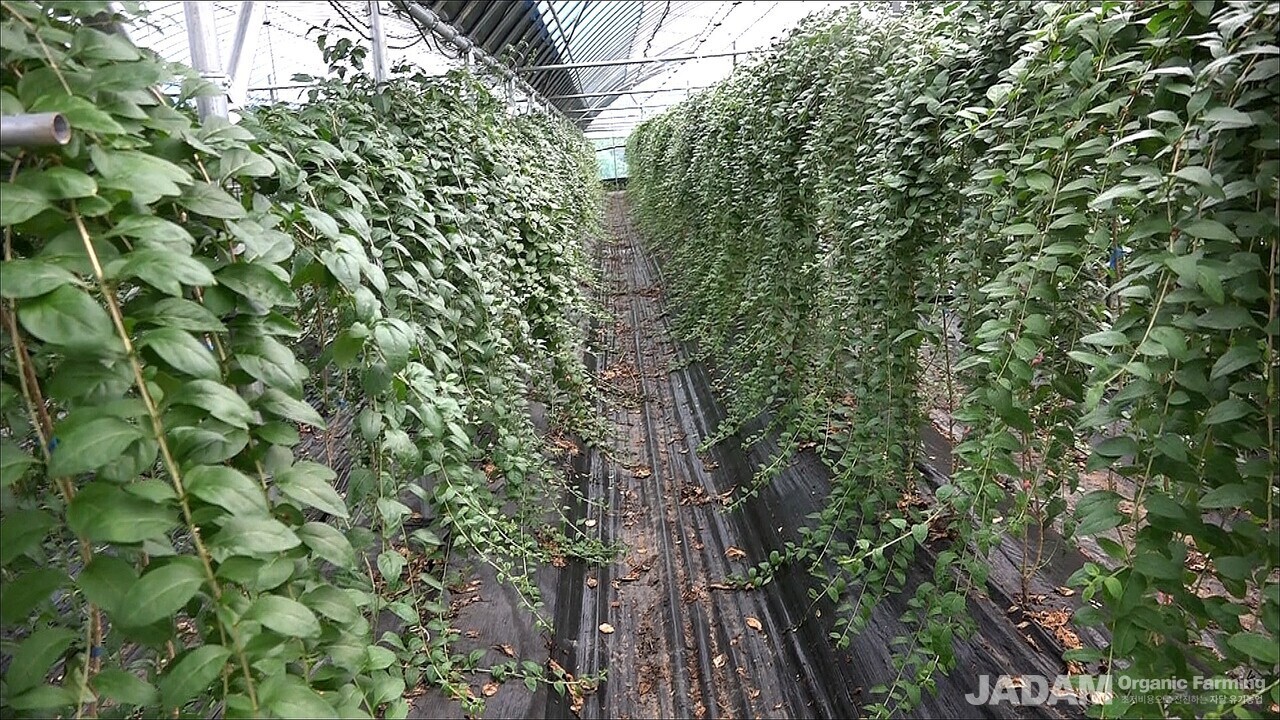
Unlike standard crops, goji berry growth must be managed with harvest efficiency in mind. Mr. Kim uses a leaf blower to shake the berries loose and harvest the crop all at once. Achieving uniform flowering and fruit set across the canopy is therefore essential.
The core technique lies in managing the transition from vegetative growth to reproductive growth. As soon as the first few blossoms appear, irrigation is completely cut off, and monopotassium phosphate is applied as a foliar spray. The solution is applied three times at 3-day intervals, increasing in concentration from 1:1000 to 1:800, and finally 1:500. This procedure successfully induces simultaneous flower bud formation.
Dawn Application of JMP.S: Eliminating Pests While Protecting Pollinators
One of Mr. Kim's most satisfying outcomes is pest management using JADAM Microbial Pesticide with Sulfur (JMP.S). Spraying JMP.S around 4 AM targets thrips, aphids, and mites. The treatment provides effective control, thoroughly eliminating pests. Remarkably, pollinators remain completely unharmed, with massive numbers of bees returning to the blossoms by early morning.
"It is incredible that thrips and aphids are killed while the bees remain completely safe," notes Mr. Kim. "Watching swarms of bees arrive shortly after spraying is remarkable." This outcome offers a practical model for organic farms seeking both pest management and pollinator preservation during flowering.
Drastically Reduced Labor and Higher Profitability
Comparing goji berries to chili peppers, Mr. Kim notes a significant advantage in labor and returns. Chili peppers require annual replanting and near-daily hand-picking during harvest. Goji berries, once established, only require routine pruning, removing the burden of annual planting.
Harvesting efficiency is also unmatched. Laying down landscape fabric and using a leaf blower to drop ripe berries at once reduces harvesting labor to roughly one-tenth of traditional hand-harvesting.
Profitability further highlights the advantage. Chili peppers yield approximately 600 g per plant, fetching around $14.80 per 600 g when grown organically. Goji berries yield 1.2 to 1.8 kg per plant and command over $29.60 per 600 g. Beyond higher yields and market value, Mr. Kim secures stable distribution through bulk purchasing contracts.
- How to make JADAM Microbial Pesticide (JMP): https://www.jadam.kr/news/articleView.html?idxno=16765
- Watch Video (9 min)
|
HD
|
Q: What key field observation did the grower note when using JMP.S for pest control in goji berry cultivation?
A: The grower observed that applying JMP.S at dawn effectively controlled thrips, aphids, and mites while leaving pollinating bees completely unharmed and actively foraging by morning.