

A winter annual grass of the family Poaceae, most commonly found in rice paddies from early spring until the planting season. It also grows in moist fields, meadows, and along ditches. From April, long cylindrical flower spikes form at the tips of the stems, with anthers changing from white to yellowish-brown.
Shortawn foxtail (Alopecurus aequalis) is a winter annual grass belonging to the family Poaceae, most commonly observed in rice paddies from early spring until the rice-planting season. It germinates in autumn after the harvest, overwinters as small, downy plants, and rapidly sends up stems and expands its footprint starting in early spring. Beyond paddy fields, it also grows in moist fields, open meadows, and along ditch edges. It usually grows in dense tufts, often forming large colonies.
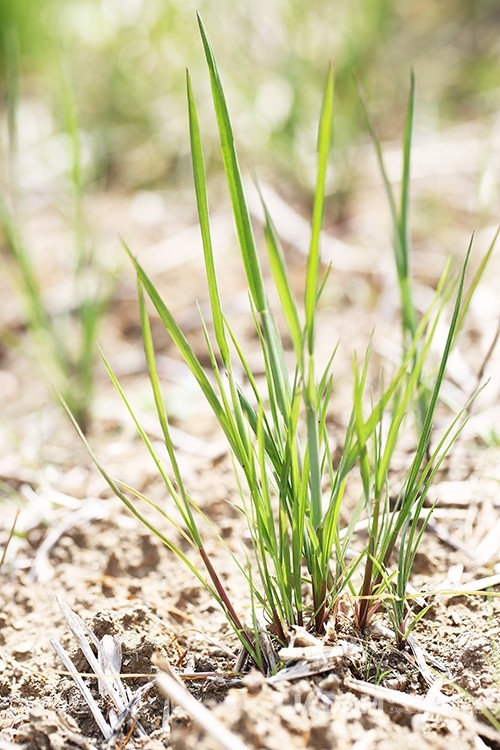
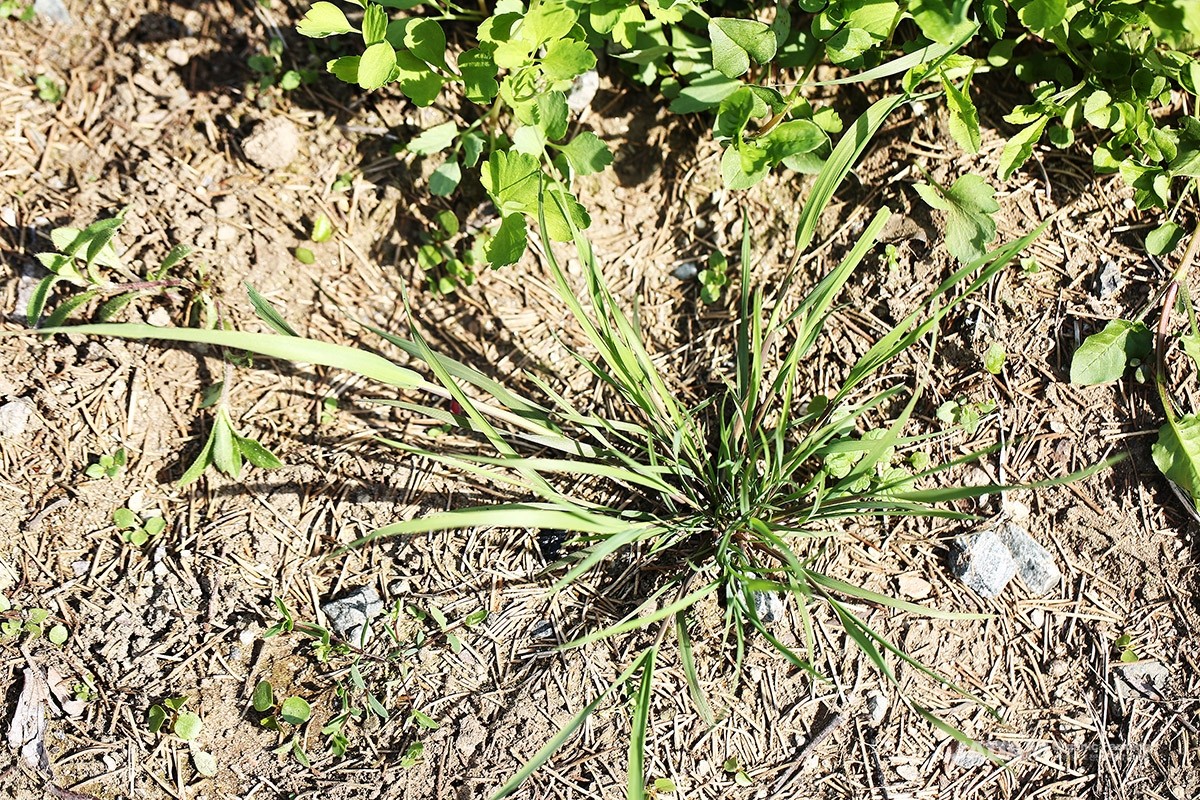
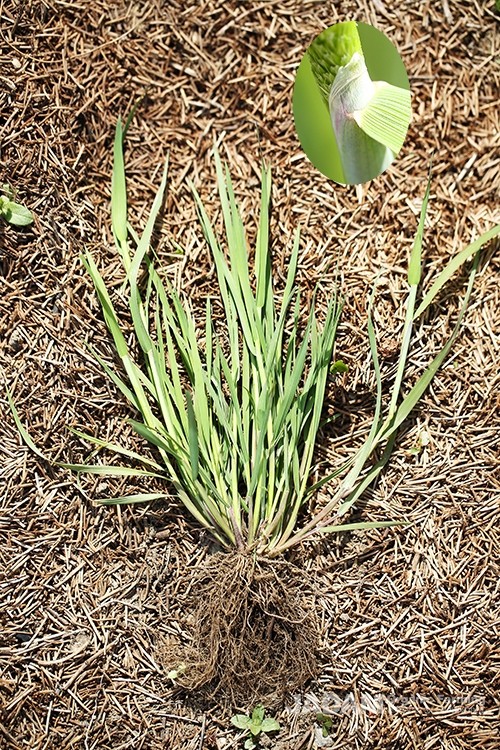
Stems branch out multiple times near the base and grow upright, reaching heights of approximately 20 to 40 cm. The rounded, hollow stems feature several nodes. The linear leaves extend from leaf sheaths that wrap around these nodes, exhibiting a powdery bluish-green hue, and alternate along the stem. At the base of the leaf lies a membranous ligule, which is white, crescent- or egg-shaped, and measures 2 to 5 mm in length.
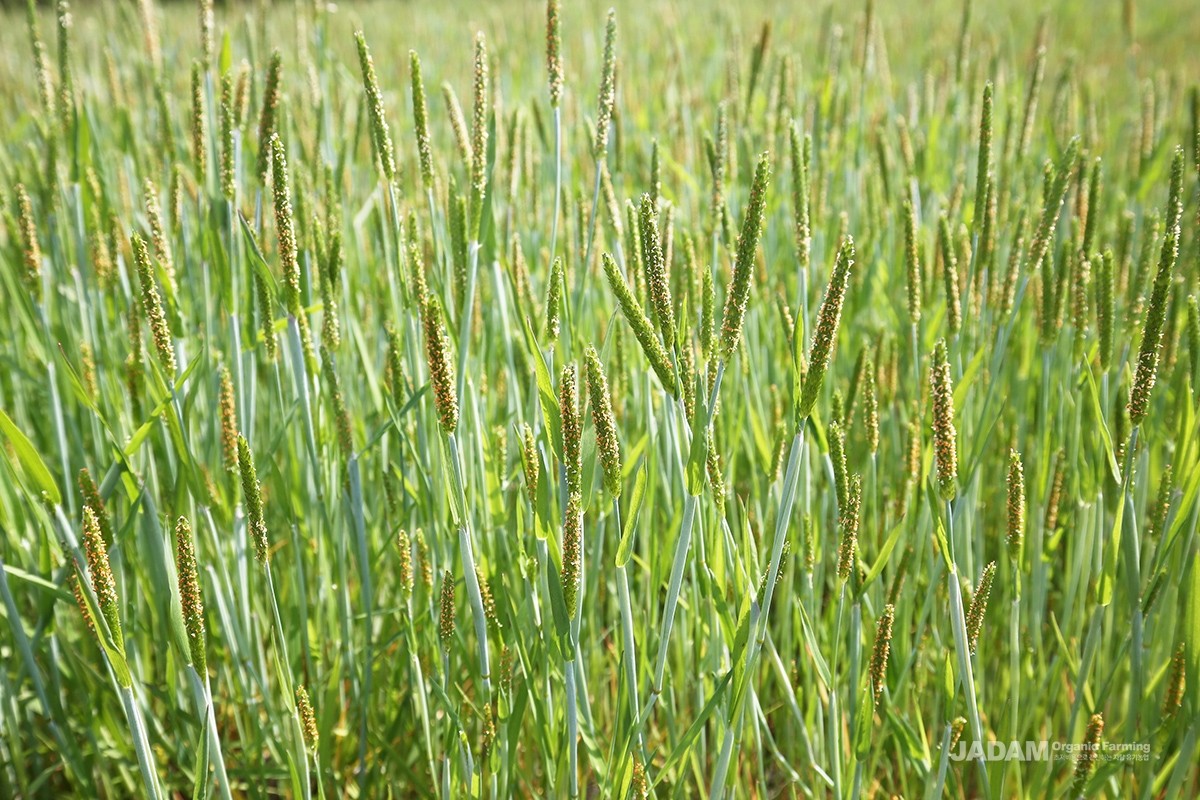
Starting in April, soft green flower spikes form long cylindrical heads at the ends of the stems. Spikelets are densely packed along these flower heads. Each spikelet resembles a rice seed, measuring roughly 3 mm long and containing a single floret. A short awn projects slightly outward. The flower has three stamens, with anthers that shift from white to yellowish-brown as they mature. While shortawn foxtail is traditionally used as livestock fodder, cattle reportedly avoid consuming it once it flowers.
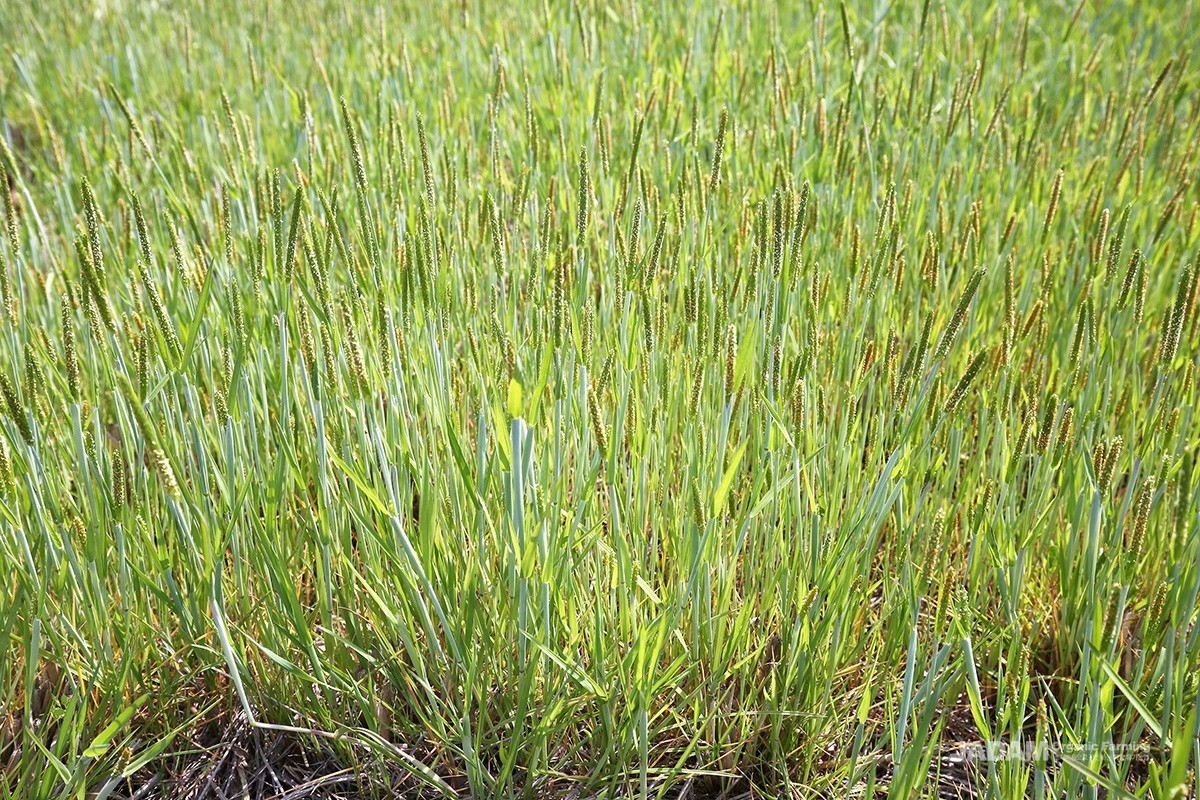
Research indicates that populations inhabiting paddy fields display different reproductive traits compared to those growing in dry upland fields. Paddy-dwelling populations, benefiting from regular farming cycles and stable habitat conditions, tend to favor self-pollination and larger seed production. Conversely, populations in dry fields face irregular farming schedules and unpredictable environments; to manage these variables, they lean toward cross-pollination, producing a higher volume of smaller seeds.
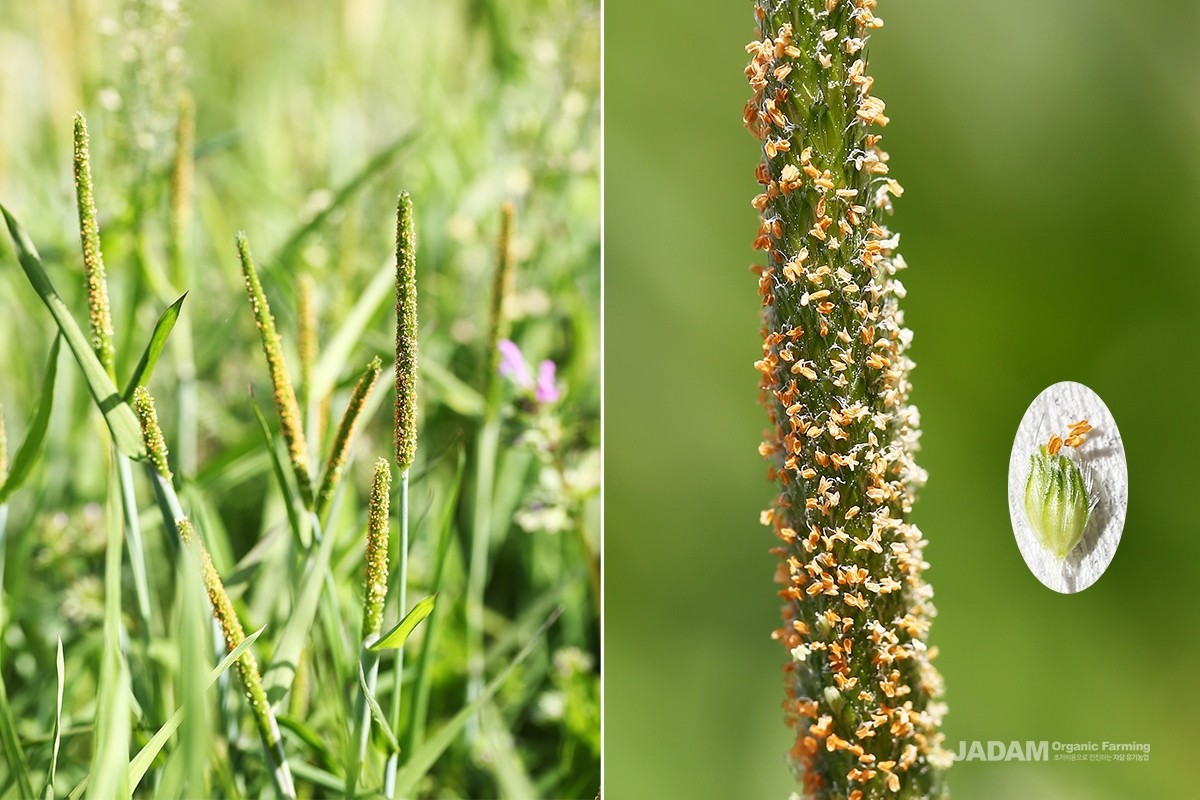
Medicinal Uses and Applications
Shortawn foxtail is primarily used as animal feed. In traditional herbal medicine, it is noted for promoting fluid regulation to relieve swelling (isu-sojong), stopping diarrhea, and detoxifying the body. It has been used to alleviate edema and treat conditions such as chickenpox, diarrhea, jaundice, hepatitis, eye redness, and venomous snakebites. It has a mild taste and cool herbal properties.
Management Methods
Because its main growth and reproductive window coincides with the early spring off-season, it rarely presents a major hindrance to crop farming. In rice paddies, farmers simply plow it under during the spring planting season to serve as green manure. In dry fields, it can similarly be tilled into the soil when spring field preparation begins.
Etymology and Related Species
This grass is locally known by alternative Korean names such as duk-sae-pul, dok-sae-gi, or dok-sae-pul. Although its exact linguistic origin is unconfirmed, the name is presumed to stem from a grass (sae-pul, a general term for Poaceae species) that grows in wetlands or along embankments (duk). Related species include water foxtail (Alopecurus arundinaceus), which features white anthers and spikelets more than twice as large, and orange foxtail (Alopecurus aequalis var. amurensis), which features anthers over four times longer.
FAQ: Quick Fact
Q: Is shortawn foxtail edible, and what are its primary characteristics and medicinal uses?
A: Shortawn foxtail (Alopecurus aequalis) is a non-toxic winter annual grass primarily used as livestock fodder or green manure; in traditional medicine, it is recognized for reducing edema, stopping diarrhea, and relieving inflammation.