

Buyeo, Chungnam | Farmers: Sook-ja Lee, Jin-hyung Kim | Crop: Goji berries | Area: ≈ 1.31 acres (1,600 pyeong in greenhouses) | Experience: 7th year practicing Ultra-Low-Cost (ULC) organic farming
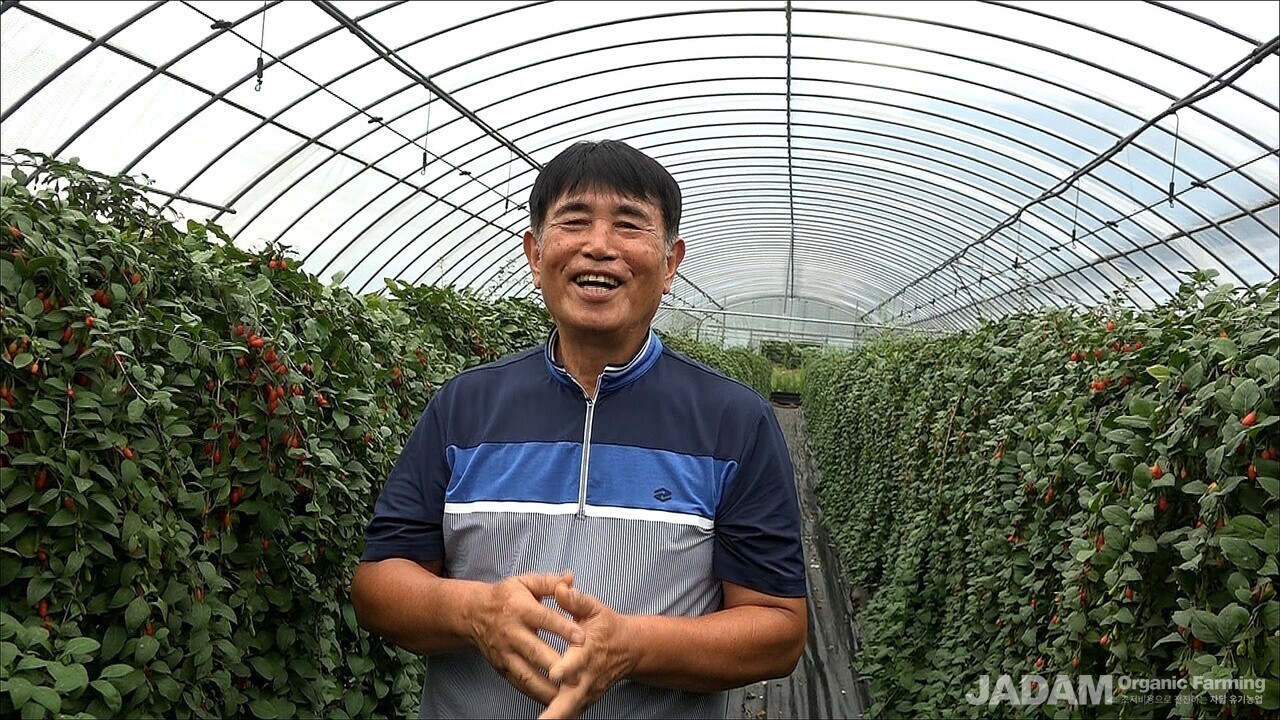
Goji Berry Blossoms Thriving with Bees, Transforming Crop Yields
For Mr. Jin-hyung Kim, JADAM Ultra-Low-Cost Organic Farming has been a true blessing. The practice is straightforward yet yields undeniable results, most notably a drastic reduction in pest damage. The benefits become even more pronounced during the goji berry flowering stage. Because synthetic pesticides are completely excluded, honeybees swarm the goji berry field in dense, stunning numbers during full bloom. This flourishing bee activity ensures high pollination rates. Mr. Kim notes that his harvest yields overwhelmingly surpass those of neighboring conventional farms.
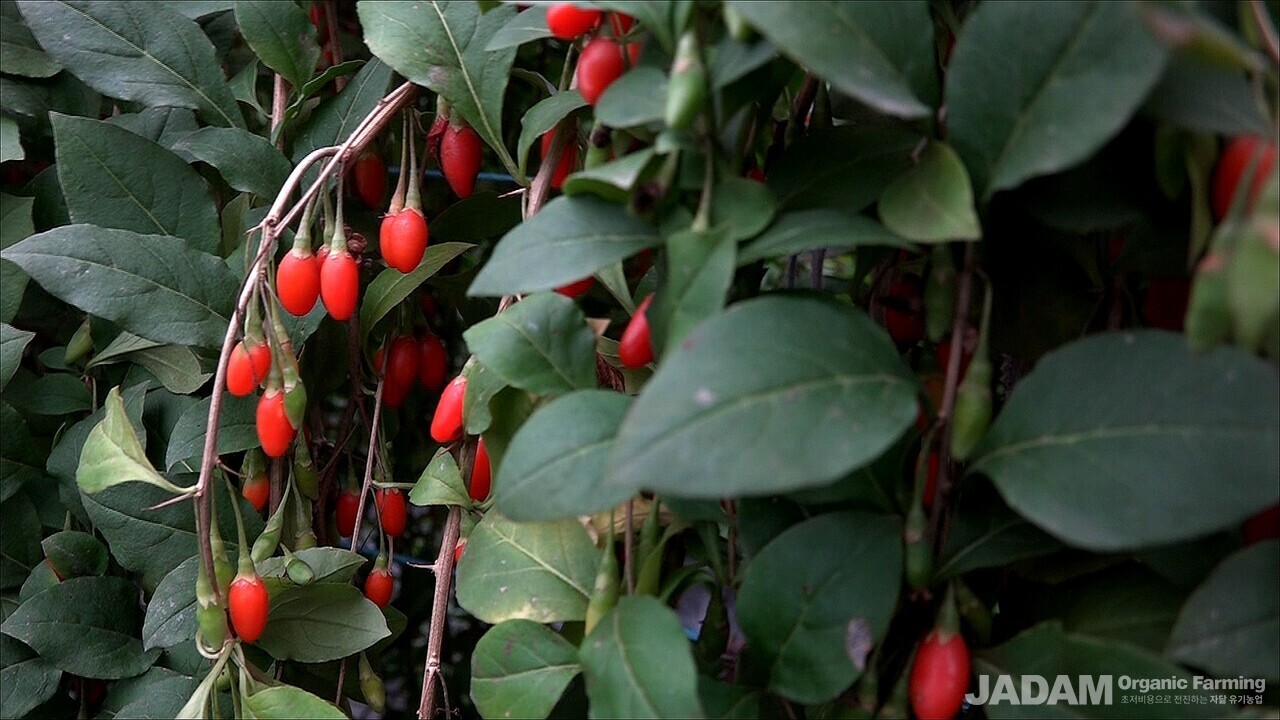
Thrips and Aphids Eradicated Even with Half the Decyl Glucoside
While preparing his control spray on one occasion, Mr. Kim miscalculated the formulation ratio. He added only 500 mL of Decyl Glucoside along with JADAM Sulfur (JS) to 500 L of cultured solution to prepare JADAM Microbial Pesticide with Sulfur (JMP.S), effectively halving the intended dose of Decyl Glucoside.
Despite the reduced rate, thrips and aphids were entirely cleared from the field. Members of the local research association, who had been struggling with severe thrips infestations, visited his farm in disbelief, asking how he managed to make every single pest vanish overnight. Even though half the recommended Decyl Glucoside proved effective, Mr. Kim now strictly adheres to the standard recipe of 1 L of Decyl Glucoside per 500 L of microbial solution when preparing JMP.S.
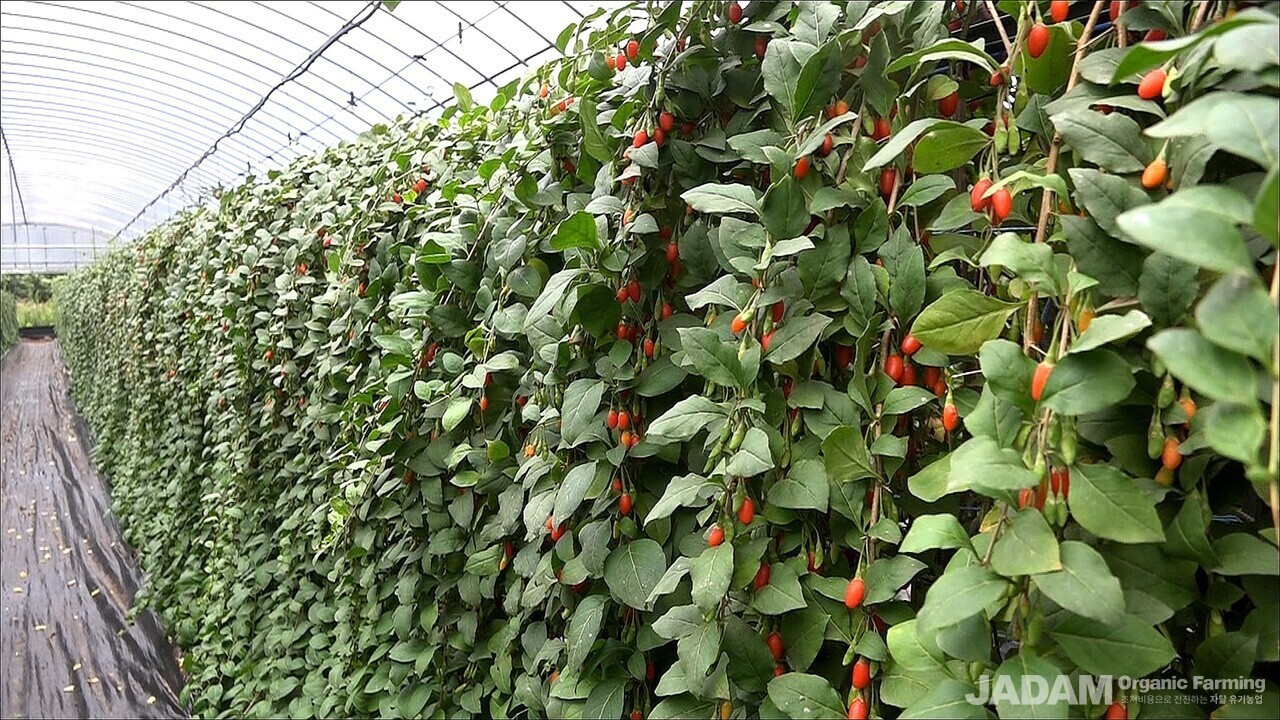
Seven Years of Culturing Microorganisms Yields Guaranteed Success
Mr. Kim first adopted JADAM methods 7 years ago after attending a JADAM lecture. Since then, he has cultured microorganisms continuously, applying JADAM Microorganism Solution (JMS) via fertigation 3 to 4 times a month without fail. Years of repeated practice have made microbial culturing second nature, resulting in consistent, flawless runs.
He employs a specialized gathering technique to maximize microbial diversity. Rather than gathering leaf mold soil from a single location, he harvests leaf mold soil from four distinct environments, taking soil from under turf grass, pine trees, chestnut trees, and oak trees. Combining these distinct sources ensures a rich, multi-strain microbial culture.
Immediate Reculturing Post-Spraying Ensures a 36-Hour Ready Cycle
Mr. Kim integrates microbial culturing directly into his application workflow. On the evening after applying JMP.S, he immediately sets up the next microbial culture. He heats the culture water to 32 °C (89.6 °F) and lets it run for 36 hours until the morning of the day after tomorrow, at which point he adds Decyl Glucoside to prepare the spray.
This fixed routine prevents missed applications and keeps his pest defense timeline precise. Through continuous execution, the exact timing for starting and finishing the solution has become pure instinct.
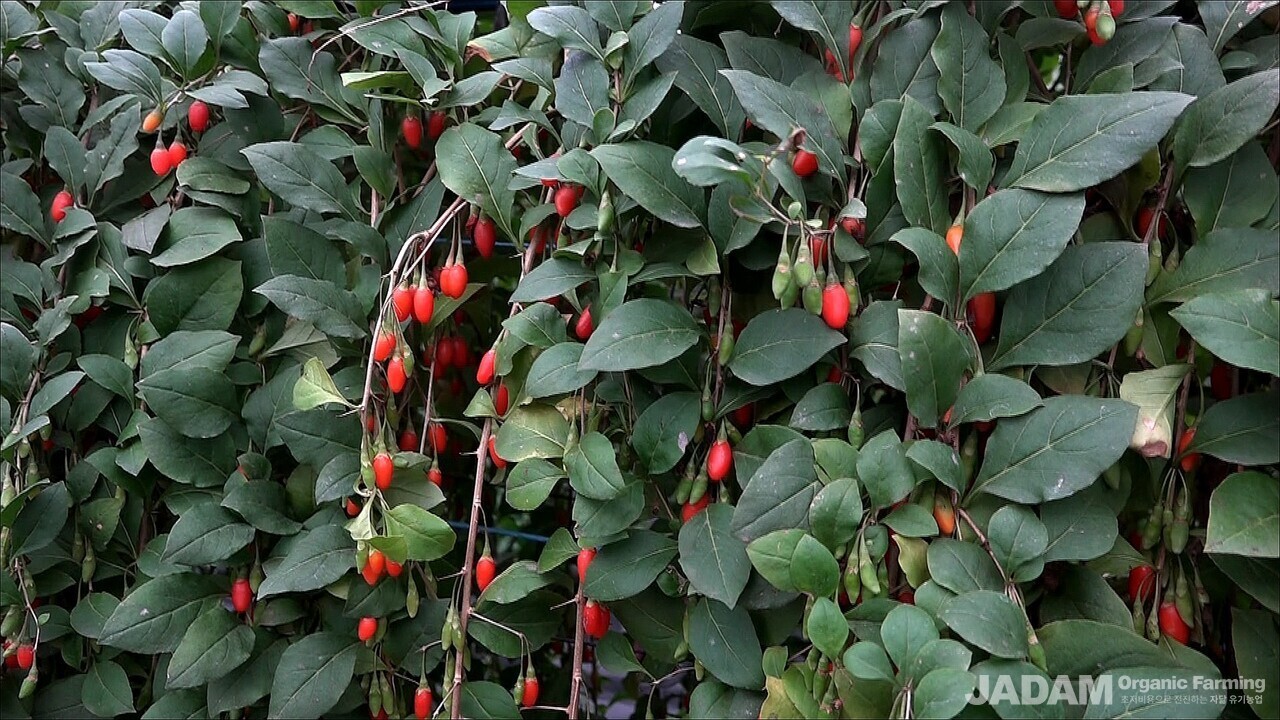
Next Frontier: Experimenting with Potassium Hydroxide Ratios
Building on his extensive experience with JADAM, Mr. Kim is preparing for his next trial. He plans to incrementally adjust the amount of potassium hydroxide used when making JMP.S to observe its effects on performance.
For Mr. Kim, JADAM inputs represent a central farming philosophy rather than a quick pest control fix. By culturing indigenous microbes and formulating inputs on-site, he slashes input costs while actively regenerating crop health and soil ecology.
I honestly wonder if farming could get any better than this, Mr. Kim says, offering unreserved praise for JADAM solutions. Over 7 years of proven field results, JADAM methods have become his most trusted foundation for farming with no synthetic pesticides used. The bee-filled goji fields, healthy crop growth, and exceptional yields relative to neighboring farms remain the driving forces behind his commitment to JADAM practices.
- How to make JADAM Microbial Pesticide (JMP): https://en.jadam.kr/news/articleView.html?idxno=16765
- Watch Video (5 min)
|
HD
|
FAQ: Quick Fact
Q: What key transformations did Jin-hyung Kim observe after adopting JADAM Ultra-Low-Cost Organic Farming for his goji berries?
A: Replacing synthetic chemical pesticides with JADAM methods drastically reduced thrips and aphids while boosting honeybee pollination, resulting in crop yields that significantly outpaced neighboring conventional farms.