

: Location: Buyeo, Chungnam | Farmer: Myung-kyu Park | Crops: Chili peppers, sweet green mini pumpkins | Area: ≈ 0.65 acres (800 pyeong) | Experience: 4th year practicing Ultra-Low-Cost (ULC) organic farming
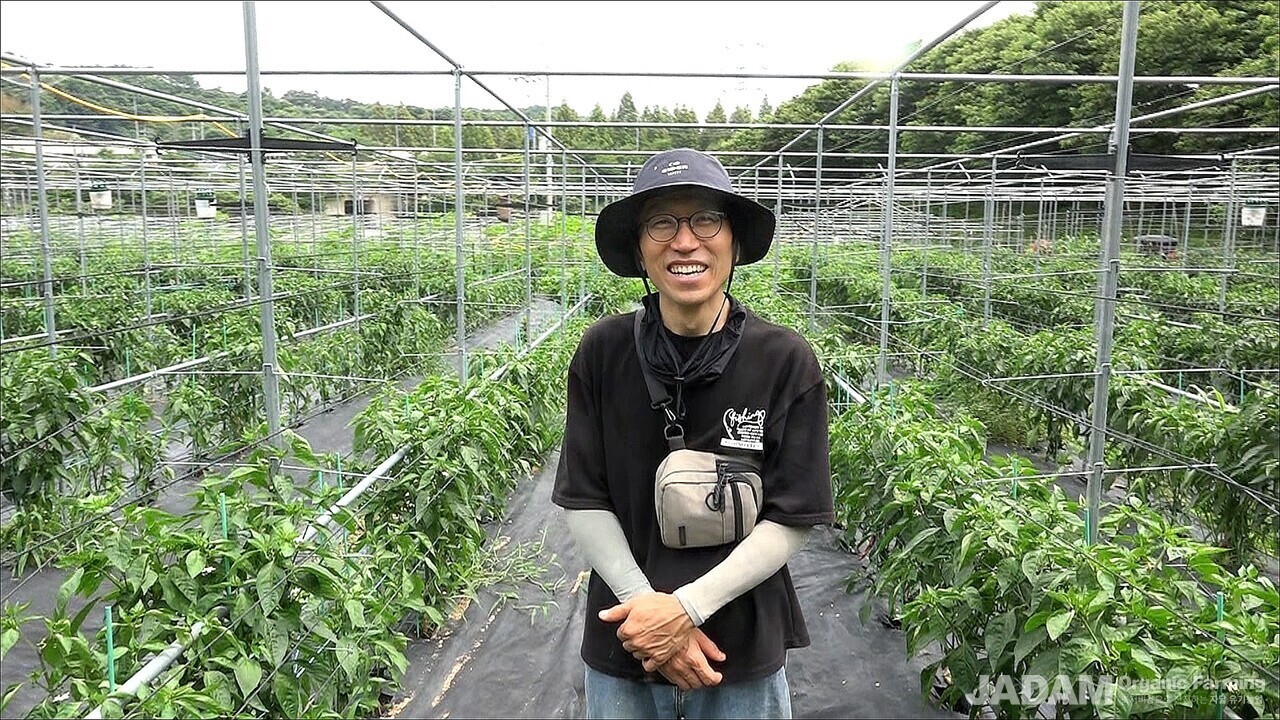
When a routine soil test revealed that his pepper field was deficient in organic matter, Mr. Park turned to barley cover cropping. After the pepper harvest concludes in late September, he broadcasts barley seeds across the furrows in late October or early November. About 1 month before transplanting pepper seedlings in the spring, he mows the barley in the furrows with a weed trimmer and hand-pulls the barley growing on the ridges, laying it down neatly as surface mulch. After 2 consecutive years of incorporating barley biomass alongside recycled pepper residues, recent soil tests confirmed that organic matter levels had reached the optimal target range. Consequently, he plans to reduce commercial compost applications from 90 bags per 400 pyeong (≈ 0.33 acres) down to 60 bags.
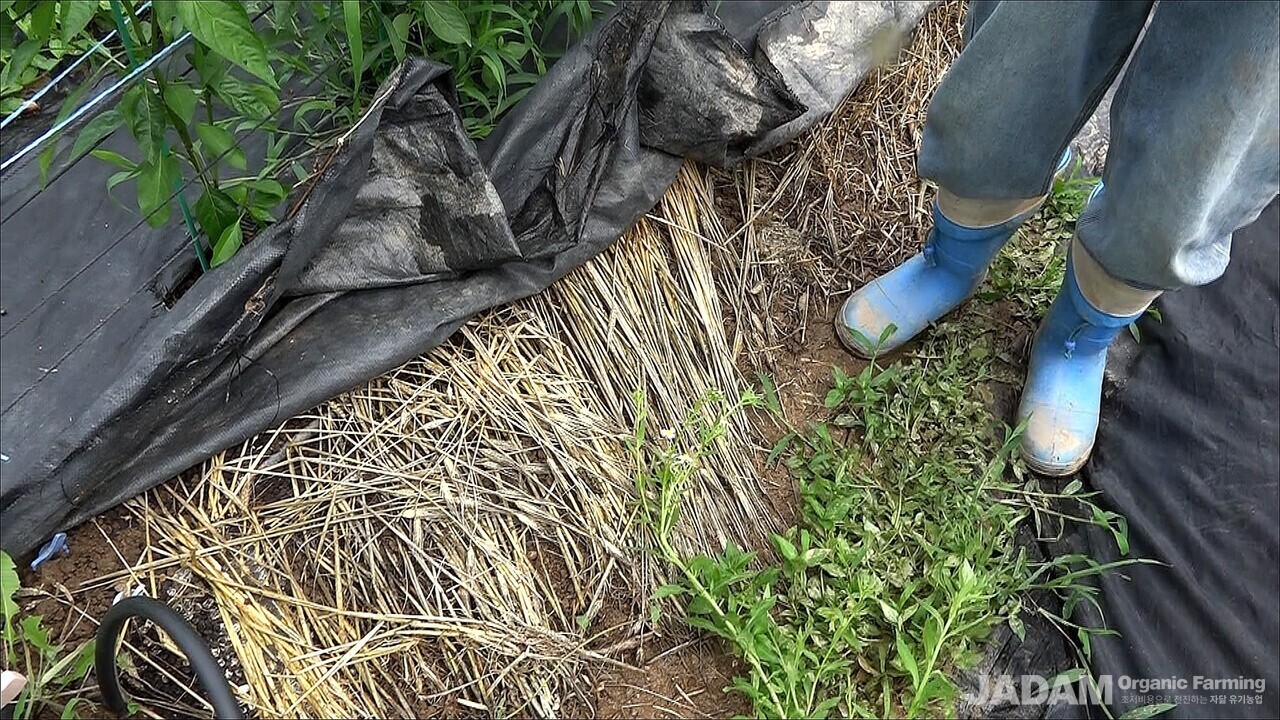
One challenge Mr. Park encountered was extensive tunneling by moles near the barley root systems. Moles hunting for earthworms created subterranean air pockets beneath newly transplanted pepper seedlings, causing several plants to wither and die. To resolve this issue, he is modifying his sowing strategy this year. While continuing to broadcast barley in the furrows, he will line-sow barley exclusively along both sides of the ridges, keeping mole paths away from the transplanting line to prevent root damage.
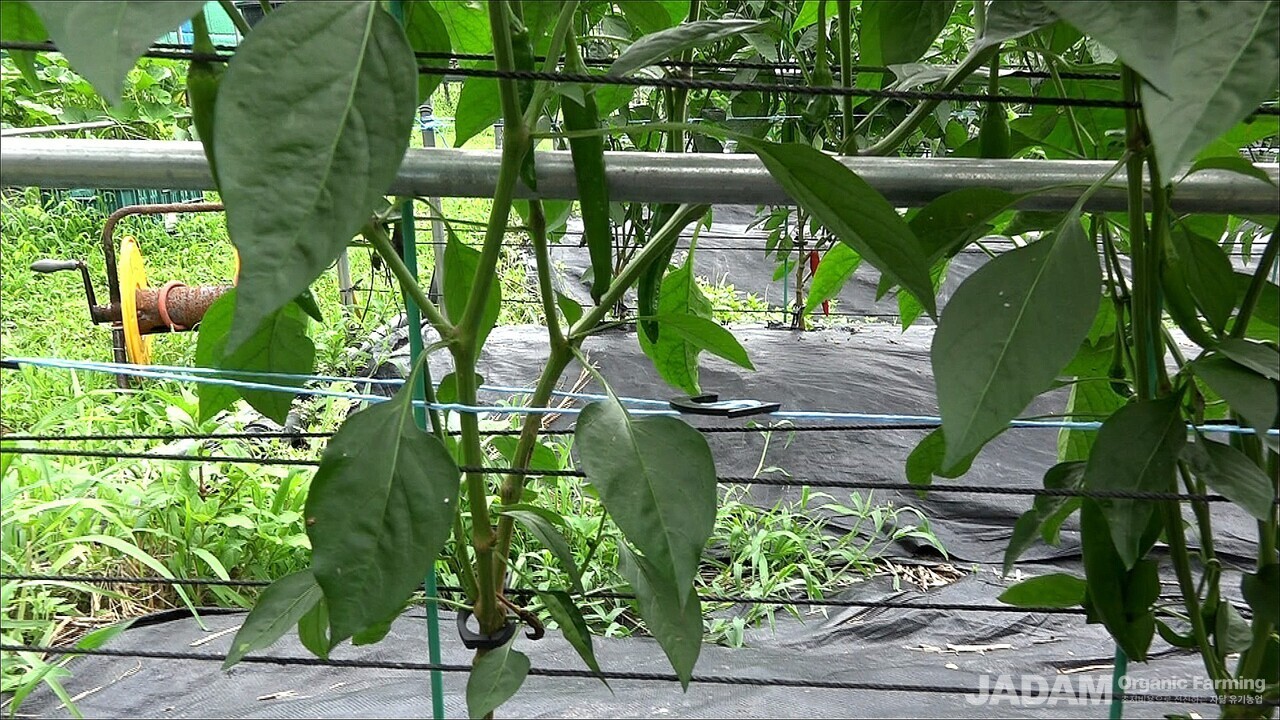
Another major difficulty in pepper cultivation is preventing lodging as plants grow heavy. Mr. Park manages this by applying traditional support methods, tying horizontal support strings 2 to 3 times between plants to keep the stems firmly anchored and upright throughout the season.
- How to make JADAM Microbial Pesticide (JMP): https://en.jadam.kr/news/articleView.html?idxno=16765
- Watch Video (5 min)
|
HD
|
FAQ: Quick Fact
Q: How does combining barley cover cropping with crop residue recycling reduce compost inputs in pepper farming?
A: Incorporating barley biomass and pepper residues into the soil over 2 years restored organic matter to optimal levels, enabling the grower to reduce commercial compost from 90 bags to 60 bags per 400 pyeong (≈ 0.33 acres).