

A winter annual herb of the borage family (Boraginaceae). In southern regions, it usually germinates in autumn and overwintering as a basal rosette. In spring, multiple stems emerge from the base. The inflorescence is rolled at the tip of the stem and uncoils like a watchspring, blooming sequentially from the bottom. The fruit splits into four nutlets.
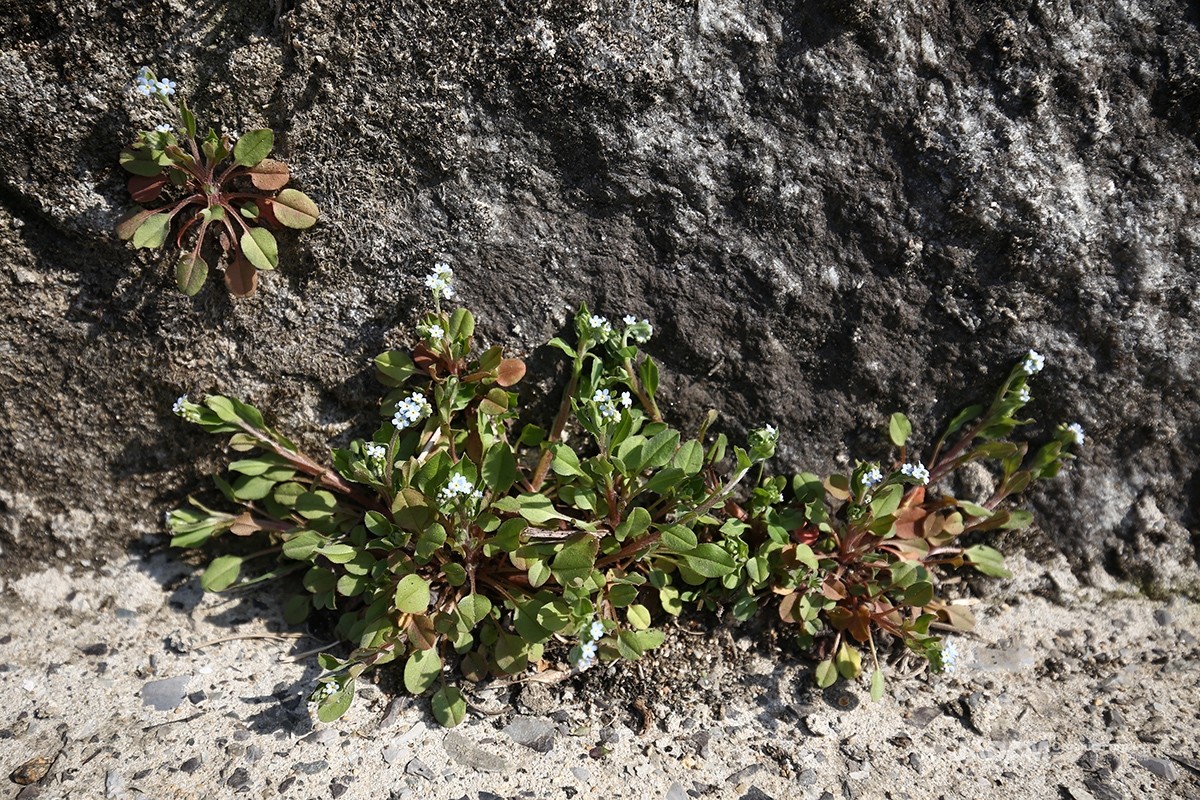
Cucumber herb (Trigonotis peduncularis) is a winter annual herb belonging to the borage family (Boraginaceae) that commonly grows in cultivated fields, field ridges, paddy levees, orchards, roadsides, and open fields. In the southern regions of Korea, seeds usually germinate in autumn, allowing the plant to overwinter in a flattened, rosette form. The basal leaves are egg-shaped or elliptical with relatively long petioles. By varying the lengths of these petioles, the leaves are arranged radially to maximize spatial efficiency so that each leaf receives even sunlight.
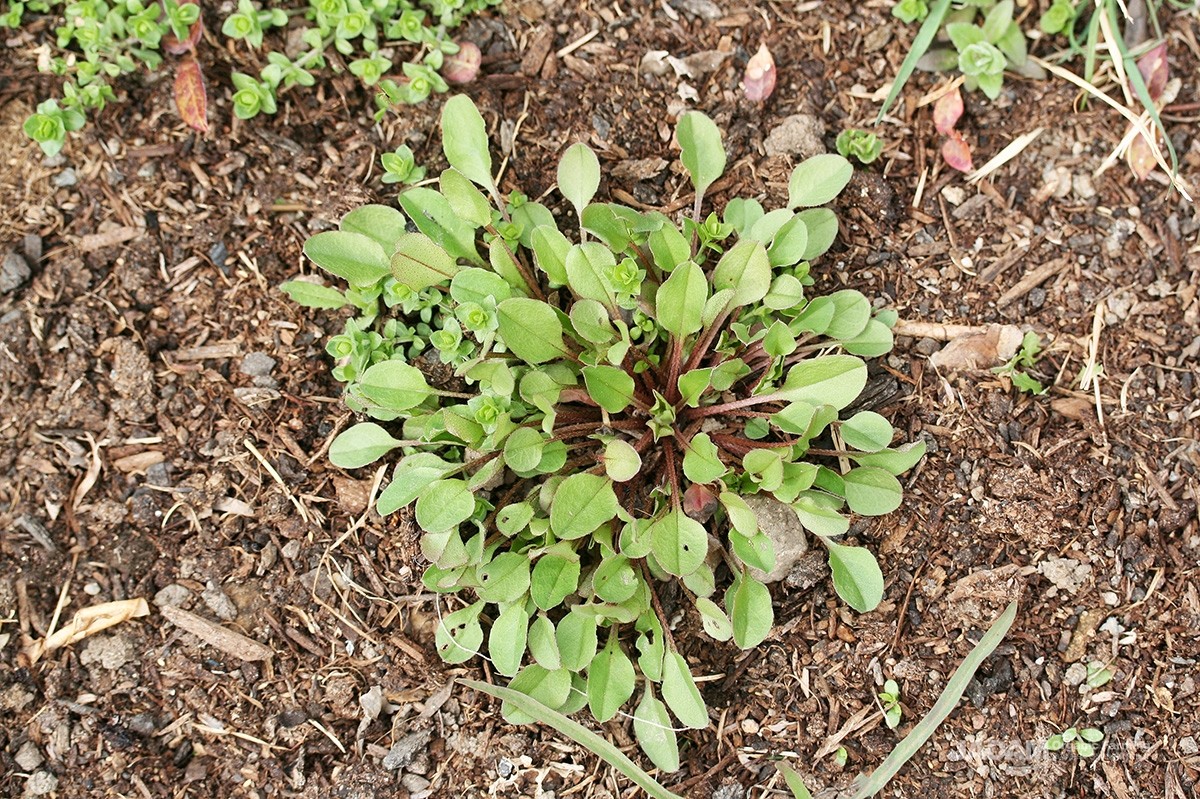
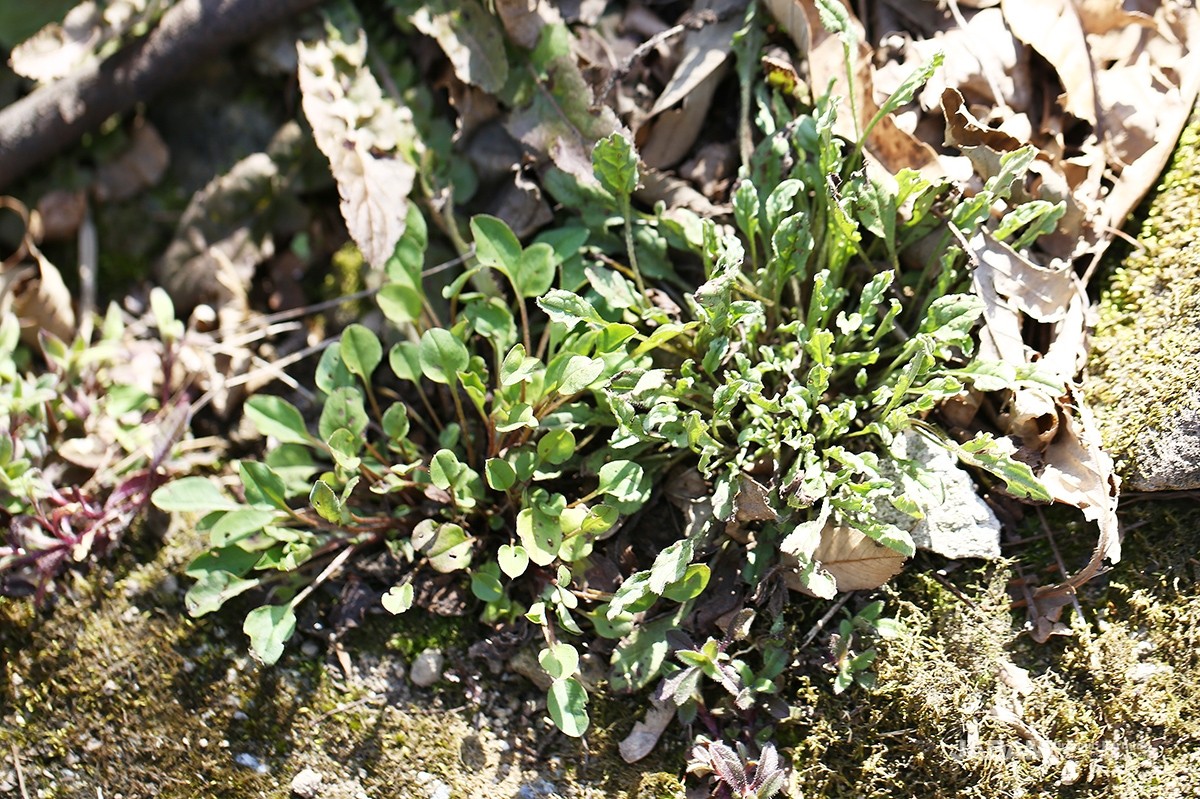
In spring, multiple stems branch out from the base, initially creeping along the ground before standing upright to a height of 10 to 30 cm. The entire plant is covered with short hairs. The stem leaves are arranged alternately, elongated-elliptical, and lack petioles. The inflorescence formed at the tip of each stem is coiled at first, gradually uncoiling like a watchspring to bloom sequentially from the bottom. Its Korean name, Gkotmari, originated from Gkotmal-i (meaning "coiled flower"), referring to this coiled inflorescence.
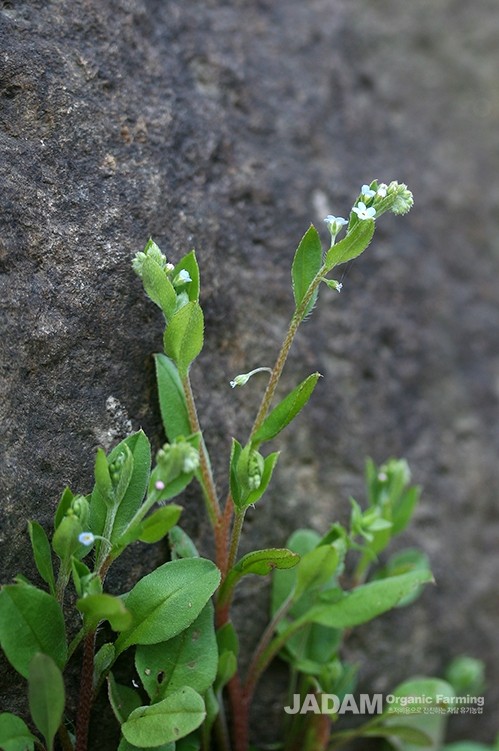
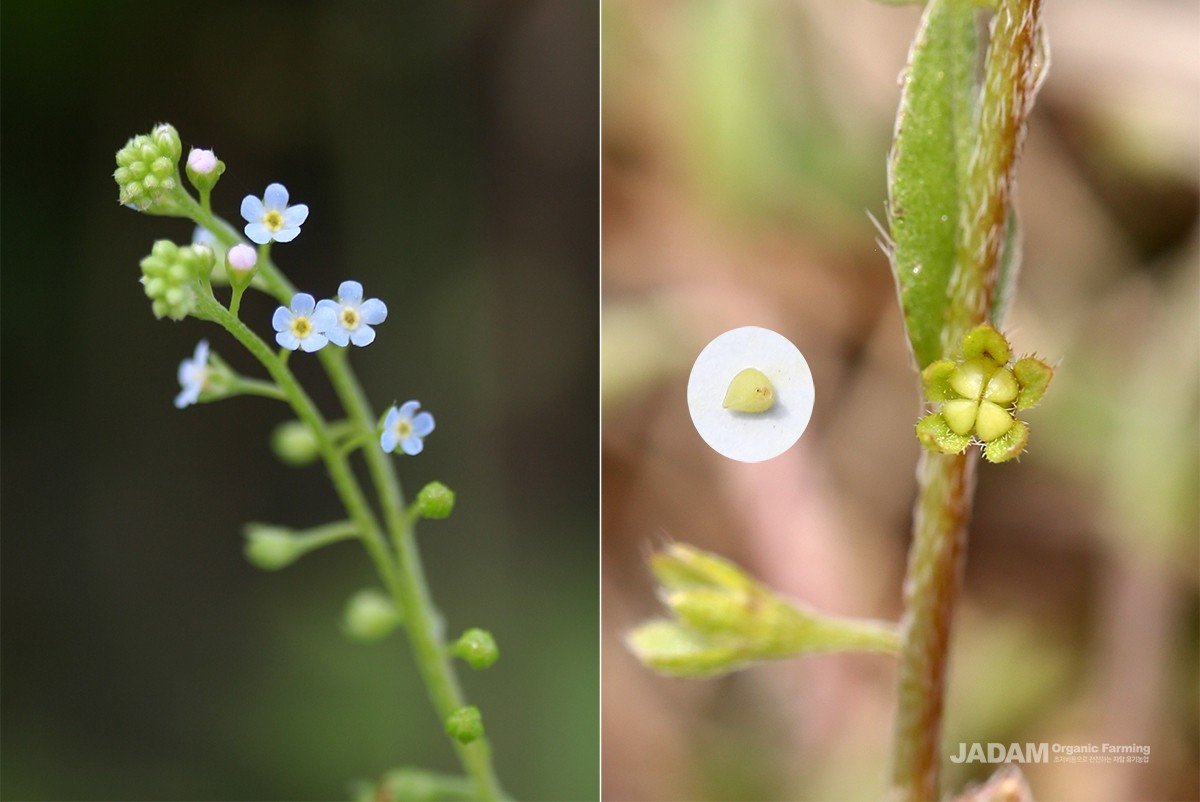
The flower buds display a pink hue, but open into light sky-blue flowers. Measuring about 2 mm in diameter, the corolla is divided into five lobes. The center of the corolla forms a urn-shaped tube below, housing five stamens inside. The thick center entrance exhibits a bright yellow nuptial color at first; once pollination is successful, it turns white, signaling that it no longer needs to attract insects. The calyx is also divided into five hairy lobes.
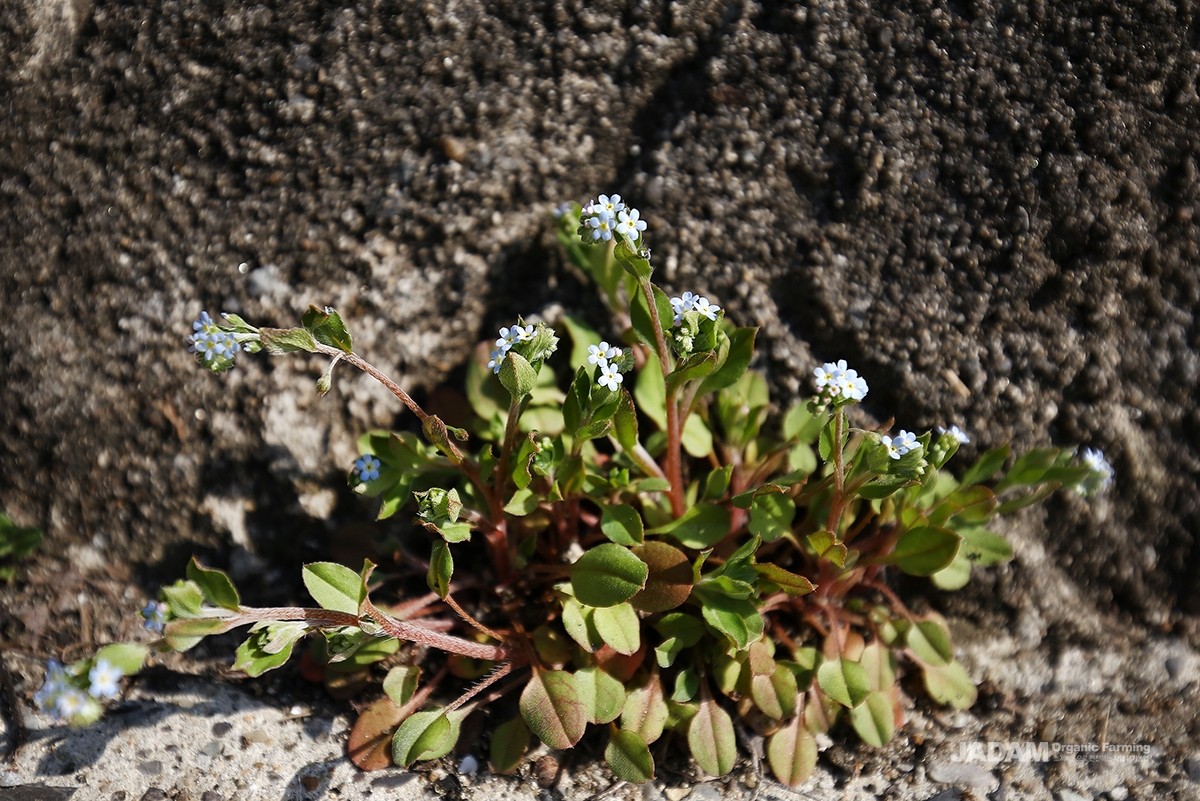
The inflorescence continues to elongate into early summer, producing new blossoms at the top while fruits mature lower down. The fruit is a schizocarp that splits into four nutlets, borne on short stalks and enclosed by the calyx. The individual nutlets (seeds) are smooth with pointed tips. A closely related species is Bothriospermum (Bothriospermum tenellum). Bothriospermum differs by having wavy basal leaves and single flowers growing individually from the leaf axils.
Traditional Uses and Medicinal Properties
When young leaves are rubbed, they emit a fresh cucumber fragrance. Tender shoots can be blanched and seasoned as namul (seasoned herbal side dish) or cooked in doenjang-guk (soybean paste soup).
In traditional medicine, it is recognized for its actions in reducing swelling, relieving pain, and stopping bleeding. It has been used to treat enuresis, dysentery with blood and mucus, carbuncles, boils, and numbness or paralysis in the limbs. Its flavor is pungent and bitter, and its property is cooling.
Weed Management Methods
Because the plant remains low-growing and naturally dies off after summer, it poses little concern in orchards. In cultivated fields or greenhouses, it can be easily managed by hand-weeding or tilling at the start of the farming season.
Name Origin and Similar Species
The name Gkotmari comes from the phrase describing its coiled flower heads. The similar species Bothriospermum (Bothriospermum tenellum) can be distinguished by its wavy-margined basal leaves and individual flowers borne singly in the leaf axils.
FAQ: Quick Fact
Q: Is cucumber herb (Trigonotis peduncularis) edible, and what are its primary health benefits?
A: Yes, the tender young shoots are edible and commonly prepared blanched or in soups; medicinally, it is traditionally used to reduce swelling, alleviate pain, stop bleeding, and ease limb numbness.