

Preferring brassicaceous plants such as cabbage, radish, rapeseed, and shepherd's purse, the caterpillar—commonly known as the green caterpillar—is one of the most troublesome pests for kimjang (traditional winter kimchi-making) radishes and cabbages. The adult butterfly has a lifespan of two to three weeks and typically emerges four to five times from spring to late autumn. The larvae feed on leaves over a two-week period before pupating.
The cabbage white butterfly (Pieris rapae) is an insect belonging to the white butterfly family (Pieridae) within the order Lepidoptera, featuring a medium-sized wingspan of 45 to 60 mm. Female wings are a bright milky white tinged with yellow. The fore-margins of the wings are dark gray, typically with two black spots on the forewings and one on the hindwings. Males appear whiter than females, with smaller and fainter black spots.
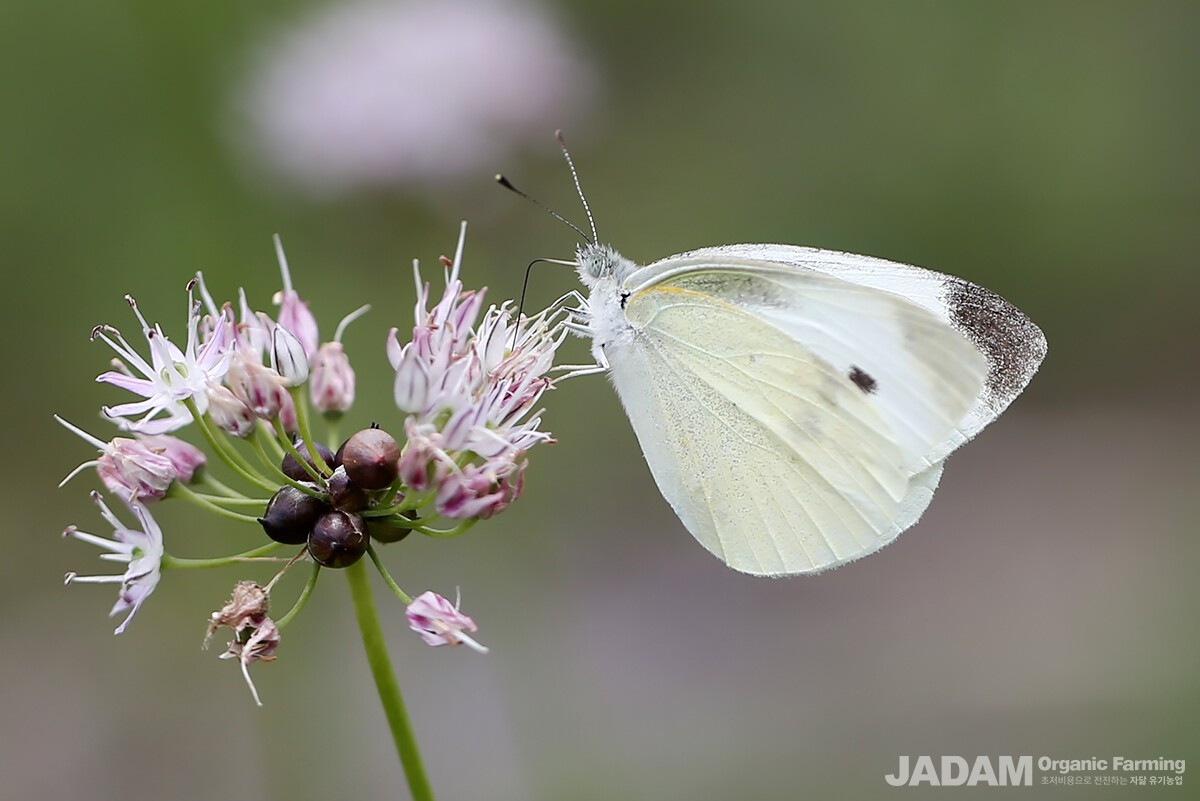
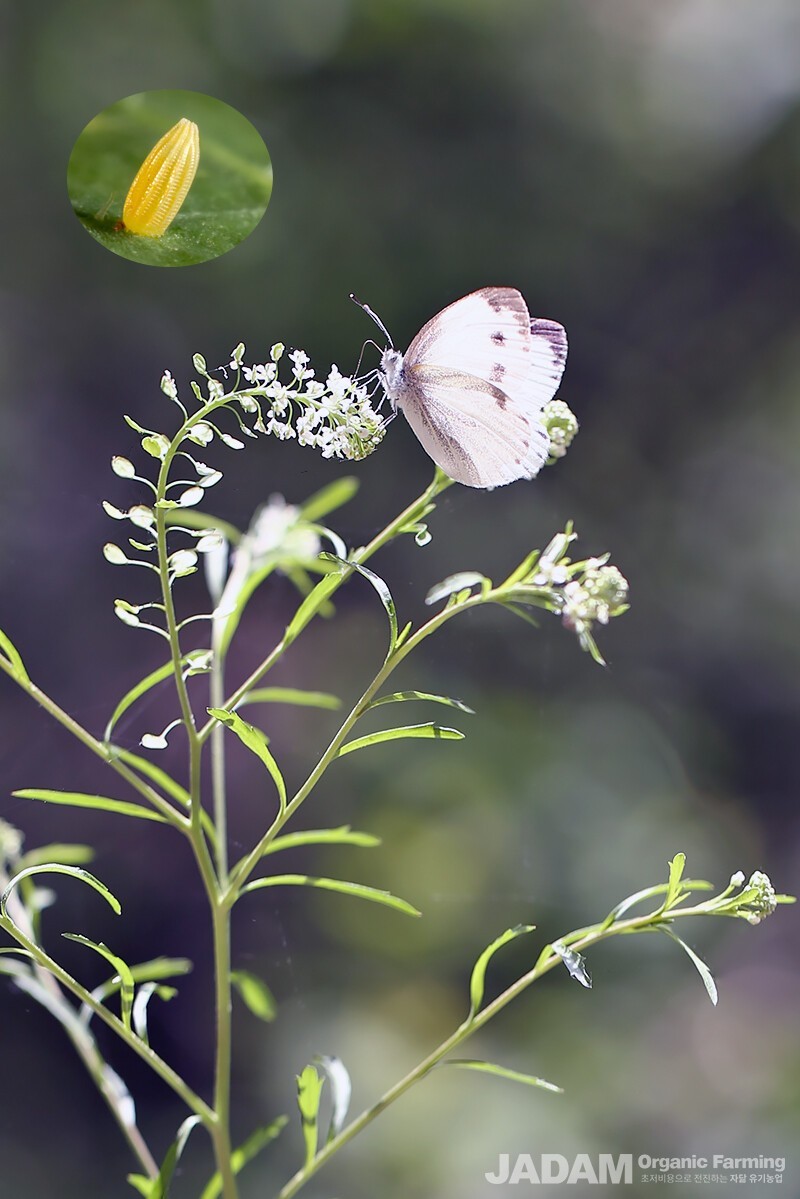
Adult butterflies live for two to three weeks, with four to five generations typically occurring from spring to late autumn. Male butterflies can frequently be seen chasing females to mate. Once mating is complete, the female flies primarily over plants in the mustard family (Brassicaceae), laying eggs individually on the undersides of the leaves. Each egg is yellow, bottle-shaped, about 1 mm long, and features ribbed ridges on its surface.
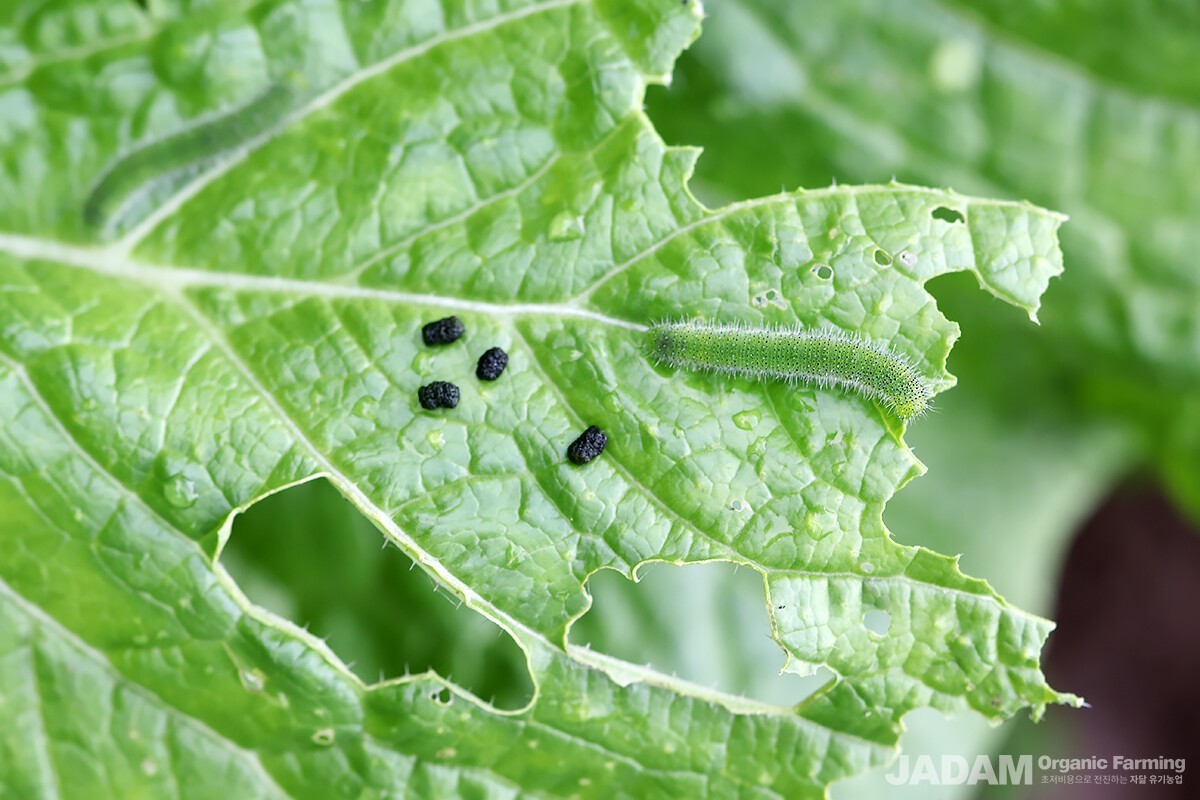
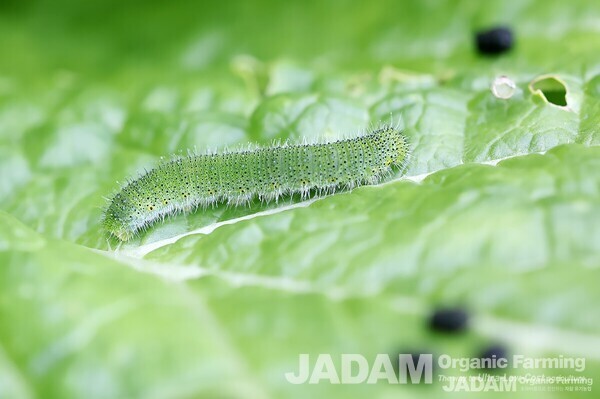
After five to seven days, the caterpillar hatches, consuming its own eggshell upon emergence. The newly hatched larva is a translucent yellow but gradually shifts to a protective green coloration as it feeds on leaves. Its entire body is densely covered with fine hairs. To evade natural predators, the caterpillar moves around actively while feeding on the foliage. It grows to a length of 3 to 4 cm over two weeks, molting four times before spinning a cocoon to pupate.
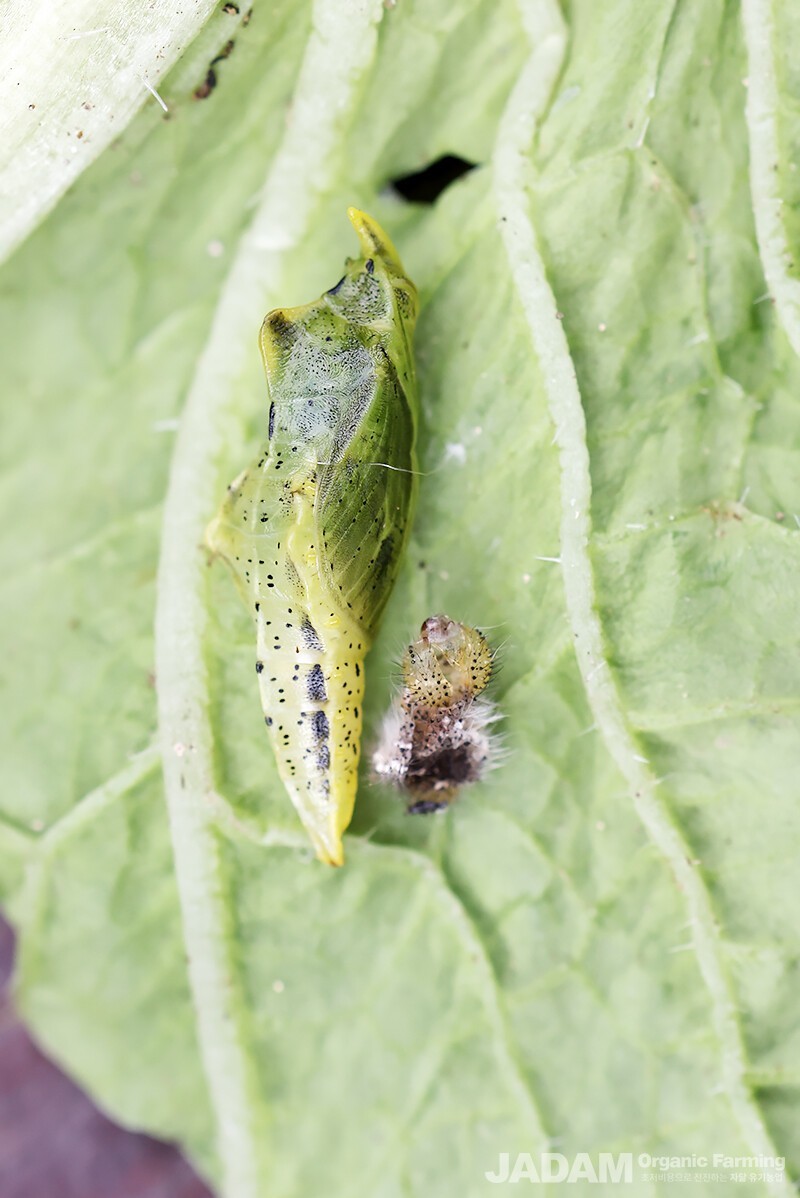
In late autumn, they overwinter in the pupal stage, but from spring through autumn, they shed their pupal case and emerge as adult butterflies within seven to ten days. They prefer host plants from the Brassicaceae family, including cabbage, radish, rapeseed, and shepherd's purse. The larvae, commonly called cheongbeolle (green caterpillars), are one of the most problematic pests for autumn radishes and cabbages grown for kimjang. While they can be hand-picked and removed in small-scale home gardens, they can be effectively controlled using JADAM Microbial Pesticide (JMP).
FAQ: Quick Fact
Q: What damage does the cabbage white butterfly cause to crops, and how can it be managed organically?
A: The larvae of the cabbage white butterfly, known as green caterpillars, voraciously consume the foliage of Brassicaceae crops like cabbage and radish, making them severe agricultural pests that can be successfully managed in organic farming using JADAM Microbial Pesticide (JMP).