

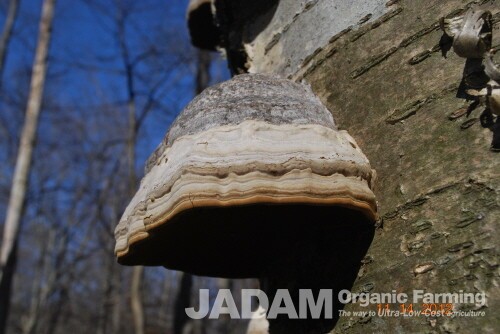
Hoof fungus (Fomes fomentarius), also known by the English common names true tinder polypore, surgeon's fungus, or amadou, derives its scientific and common designations from historical utility. The terms fomes and foment both signify "tinder." The common name amadou originates from a northern French dialect meaning "loving" or "burning life," which refers to the spongy material prepared from the mushroom to catch sparks or stanch blood.
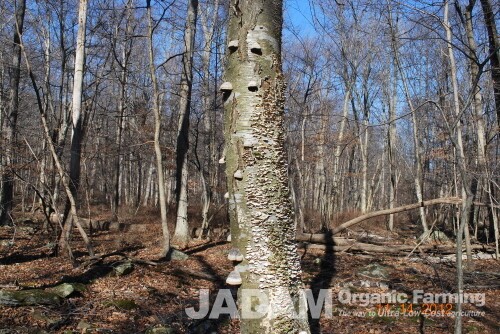
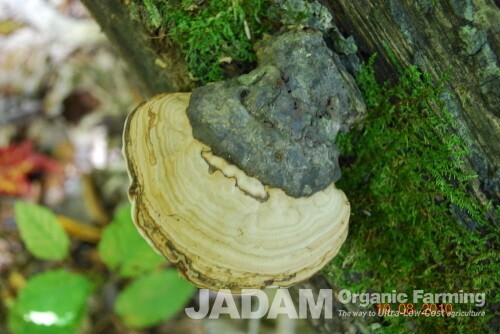
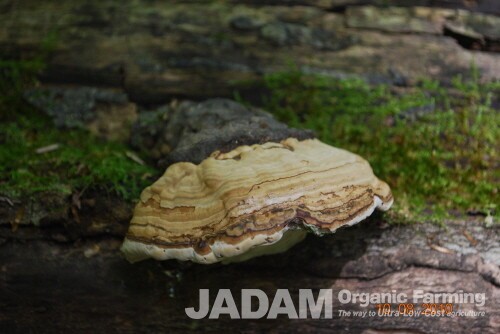
True to its name, hoof fungus closely resembles a horse's hoof in shape. It is thick, hard, and ranges in color from gray and grayish-brown to grayish-black. This wood-decaying fungus grows on both living and dead hardwoods, showing a strong preference for birch, though it also frequently occurs on maple and poplar. It is globally distributed and relatively common depending on the region.
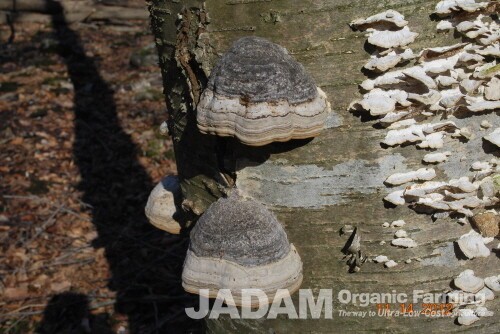
Hoof Fungus and Folklore
The Khanty tribe of Siberia historically combined hoof fungus with the bark of silver fir (Abies alba) to burn as incense during funeral processions until the casket was completely moved. This practice aimed to prevent the deceased or supernatural entities from exerting negative influences on the living. A similar ritual existed in northern Japan to ward off malevolent spirits during times of disaster. In Western traditions, the fungus was occasionally placed on altars as a symbol of life transitioning from the physical world to the afterlife.
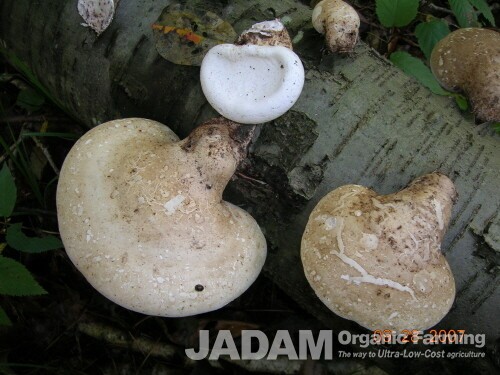
Traditional and Folk Medicine
The relationship between humans and hoof fungus extends deep into prehistory. Remnants of the fungus discovered in Mesolithic settlement sites dating back to 8000 BCE represent what may be the earliest recorded human utilization of any mushroom. Around 400 BCE, Hippocrates applied the smoldering fungus to wounds for cauterization and to manage inflammatory conditions.
The Laplanders of northern Europe adopted the mushroom for identical purposes. In central Canada, the Cree indigenous people applied powdered hoof fungus to treat frostbitten skin. They also sliced the mushroom, placed it directly on the skin, and ignited it as a form of moxibustion to stimulate blood circulation and relieve arthritic pain.
The famous "Ice Man" mummy, discovered in the European Alps in 1991, carried a pouch containing birch polypore (Fomitopsis betulina) and hoof fungus. Researchers deduce that the birch polypore was intended to treat intestinal parasites, while the hoof fungus was kept as tinder for fire-starting.
In broader European folk medicine, small pieces of the mushroom were wedged between the flesh and the nail plate to treat ingrown toenails. Hot decoctions were consumed to treat kidney disorders, and the mushroom served widely as an astringent for hemostasis (stopping bleeding), as a moxibustion material for rheuma, and as a treatment for cystitis, dysmenorrhea, hemorrhoids, and esophageal, gastric, and uterine malignancies. In a historical study, a researcher identified the primary active constituent responsible for these properties as fomitin (Killermann, 1938).
In ancient Chinese medicine, hoof fungus was characterized as mild in taste with a slight bitterness. It was documented to support vitality, relieve indigestion and localized congestion, warm the lungs, resolve abdominal masses, and alleviate asthma.
In Japan, where the mushroom is called tsuriganetake, it was historically utilized to stop bleeding from deep wounds and brewed into a tea to treat colds, influenza, bronchitis, and physical frailty. Traditional practitioners in India utilized the fungus as a diuretic, laxative, and nerve tonic, as well as an astringent wash for external wounds and burns.
Modern mycologists have observed that the mycelium of hoof fungus actively preys upon Escherichia coli bacteria. Noted mycologist Paul Stamets suggested that this specific antibacterial action explains why historical societies added the mushroom to broths and porridges to prevent spoilage. Because the mycelium colonizes grain substrates efficiently, it holds significant potential for large-scale agricultural cultivation.
Modern Medical Applications
Chemical Composition: Hoof fungus consists of approximately 15% protein, 3.5% lipids, and 70% carbohydrates. Every 100 grams of the mushroom yields 66 IU of Vitamin D and 760 milligrams of potassium. It also contains niacin, copper, iron, selenium, Vitamin B5, blood-type-specific lectins (targeting types B, O, and A), benzotropolones, anhydrofomentariol, fomentaric acid, glucose oxidase, polyporic acid C, ugulinic acids, alkaloids, fungisterol, and ergosterol peroxide.
Medicinal Properties: In modern Chinese clinical practice, hoof fungus is prescribed alongside hongseoki (red rock tripe, Umbilicaria caroliniana) as a water-extracted decoction to resolve indigestion and visceral stagnation, particularly in patients undergoing treatments for esophageal, gastric, or uterine cancers.
The lignin extracted from the fungus demonstrates complete in vivo inhibition of the Herpes Simplex Virus. Research identified specific antiviral components within the mushroom (Aoki et al., 1993), building upon earlier work that established ergosterol peroxide as its most potent active constituent (Lindequist et al., 1989).
Methanol extracts of the mushroom display pronounced anti-inflammatory and antineoplastic capabilities. Notably, it exhibits antimicrobial activity against antibiotic-resistant bacterial strains and common nosocomial (hospital-acquired) pathogens in the United States. In animal models, tumor inhibition rates reached 80% against sarcoma 180 and 70% against Ehrlich ascites carcinoma, alongside documented febrifuge (fever-reducing), diuretic, and Gram-positive antibacterial effects.
Cosmetic Applications
Hoof fungus contains various essential oils, aromatic compounds, and constituents that mitigate signs of cutaneous aging. Its diverse mucopolysaccharides and flavonoids function as effective free radical scavengers, while its saponins provide topical anti-inflammatory benefits. The presence of cyclic adenosine monophosphate (cAMP) helps prevent cellular senescence in skin tissue. Consequently, extracts are incorporated into ultraviolet-blocking sunscreens, facial lotions, hair care formulations, and moisturizing creams designed for rough or irritated skin. Its distinctive aroma is attributed primarily to beta-phellandrene and beta-myrcene.
Textile Industry Applications
Although highly flammable when dry, the fibrous inner layer of hoof fungus provides excellent thermal insulation. This property allows it to be blended into specialized clothing fabrics and blankets. In Romania, Hungary, and other Eastern European nations, the pliable inner tissue is processed into a felt-like material to manufacture hats, purses, and traditional garments.
To create this material, the tough outer rind is removed, and the inner context is soaked in a hot lye bath made with wood ash before being beaten repeatedly with wooden mallets. This mechanical processing expands the material up to ten times its original surface area, resulting in a textile traditionally known as "German felt."
Natural Pesticides and Insect Attractants
Paul Stamets noted that hoof fungus may act as an endophyte within host trees, enhancing the tree's natural defense systems against pathogenic fungi during periods of environmental stress. Long-term field observations reveal that once hoof fungus establishes itself on a tree trunk, other fungal species rarely emerge nearby, indicating a competitive exclusion mechanism.
The mushroom naturally synthesizes rac-oct-1-en-3-ol, a volatile aromatic compound that acts as a powerful pheromone mimic for wood-boring beetles. Because of this, the fungus is utilized as a biological field attractant for saproxylic beetles. Research conducted in Norway indicates a mutualistic relationship where these attracted beetles inadvertently help disperse the mushroom's spores throughout the forest ecosystem.
Miscellaneous Traditional Uses
In parts of Germany and historical Bohemia, the hard exterior of the mushroom was hollowed out to serve as rustic flowerpots. The dense, felted interior has also been utilized to manufacture pincushions, as the natural oils within the fungus prevent sewing needles from rusting. In the United States, patents were successfully filed to utilize the processed fibers as natural cigarette filters. Additionally, the soft, velvety layers of the processed fungus can be mixed with fine sand to create traditional strops for sharpening straight razors.
Dosage and Administration
For supportive care in esophageal, gastric, and uterine malignancies: Decoct 15 to 20 grams of dried hoof fungus in water and administer twice daily.
For pediatric indigestion and food stagnation: Decoct 9 grams of hoof fungus alongside 13 grams of hongseoki in water and administer twice daily.
References
Hobbs, C. (1996). Medicinal Mushrooms: An Exploration of Tradition, Healing, & Culture (3rd ed.). Loveland, CO: Interweave Press.
Park, W. H., & Lee, H. D. (2003). Illustrated Book of Korean Medicinal Mushrooms (2nd ed.). Seoul: Kyohaksa.
Rogers, R. (2011). The Fungal Pharmacy: The Complete Guide to Medicinal Mushrooms and Lichens of North America. Berkeley, CA: North Atlantic Press.
FAQ: Quick Fact
Q: Is hoof fungus edible, and what are its primary medicinal uses and physical characteristics?
A: No, hoof fungus is too woody and tough to be consumed as food, but it is highly valued when brewed as a medicinal tea or extract for its anti-inflammatory, antiviral, and tumor-inhibiting properties. It is easily recognized by its hard, greyish, horse-hoof-shaped growth on hardwood trees like birch.