

It is a polyphagous (feeding on various plants) pest that damages over 60 species of fruit trees and landscaping plants, including citrus fruits (Citrus spp.), Japanese camellia (Camellia japonica), tea plant (Camellia sinensis), persimmon tree (Diospyros kaki), apple tree (Malus domestica), pear tree (Pyrus spp.), and maple tree (Acer spp.). Adults are hemispherical, feature a horn-like protrusion on the anterior portion of their back, and are entirely covered in a soft, sticky white wax coating. When massive outbreaks occur, tree vigor drops rapidly, frequently accompanied by secondary damage from sooty mold infections.
The Indian wax scale (Ceroplastes ceriferus) is a highly polyphagous pest that feeds on a wide range of hosts, damaging over 60 species of fruit trees and landscaping plants. Its targets include citrus fruits (Citrus spp.), Japanese camellia (Camellia japonica), tea plant (Camellia sinensis), persimmon tree (Diospyros kaki), apple tree (Malus domestica), pear tree (Pyrus spp.), and maple tree (Acer spp.). Adult insects are hemispherical and feature a distinctive horn-like protrusion on the anterior portion of their back. Their entire body is enveloped in a soft, sticky coating of white wax. When a large outbreak occurs, tree vigor drops rapidly, frequently accompanied by secondary damage from sooty mold infections.
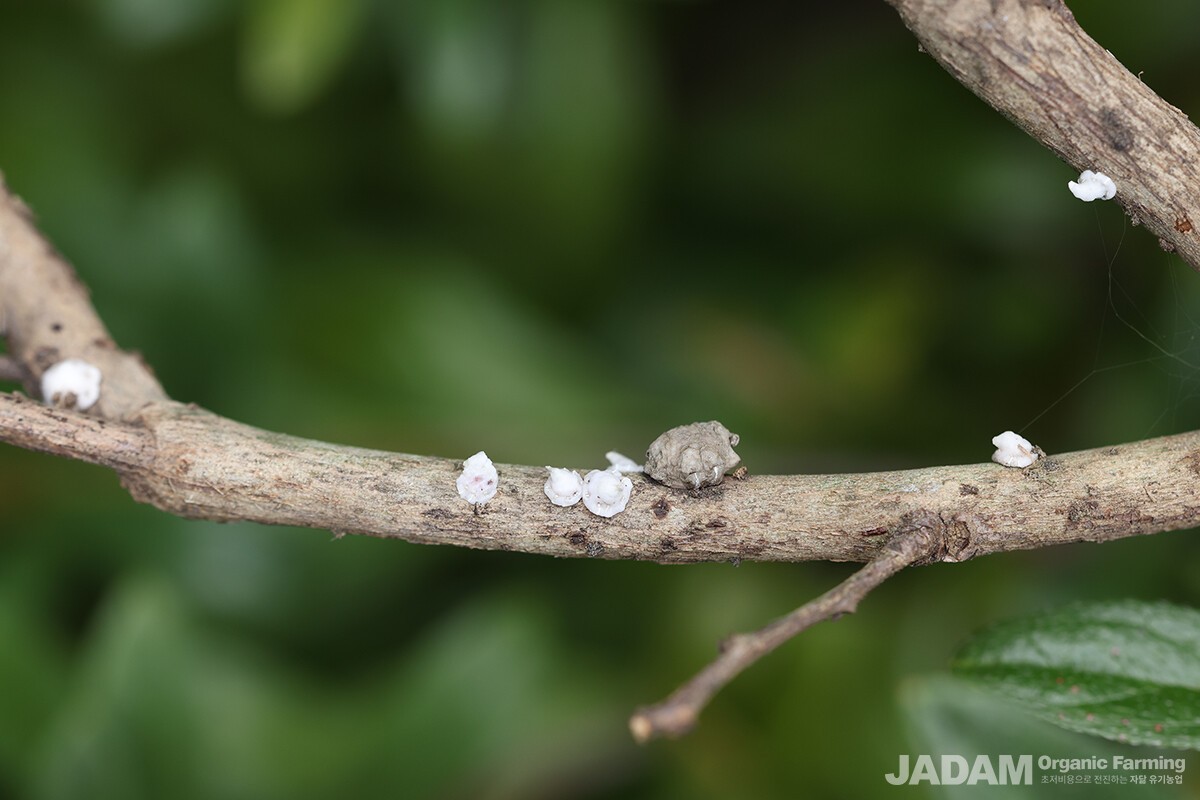
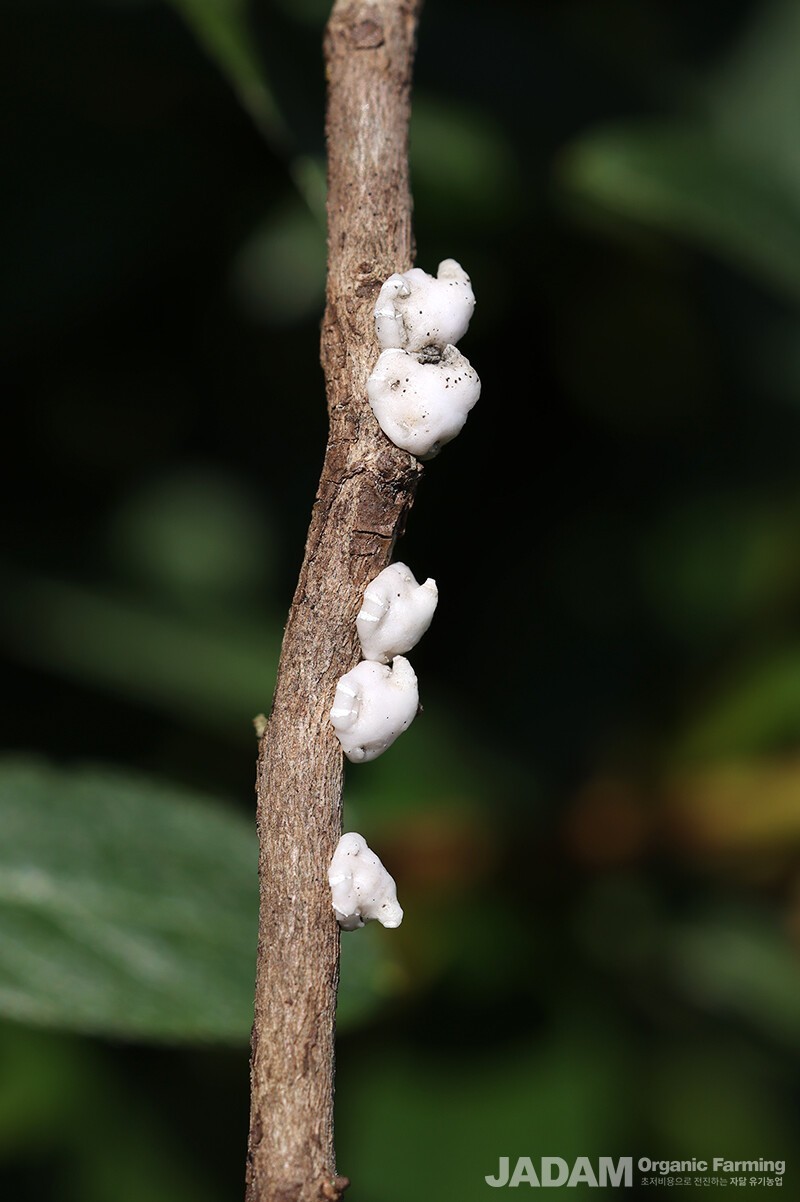
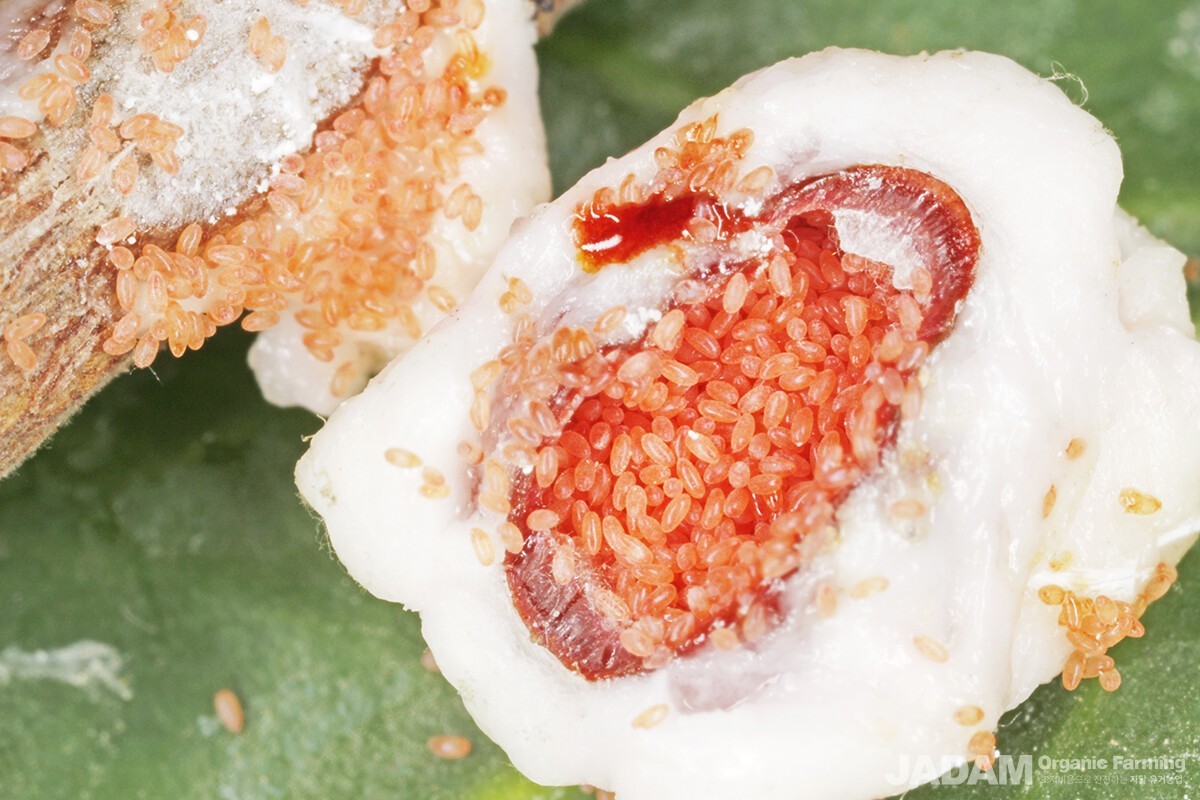
Adult females are hemispherical, measuring roughly 3.5 to 7 mm in diameter, and bear a prominent horn-shaped structure on their upper back. The underlying body is a glossy reddish-brown, but the entire insect—with the sole exception of its ventral side—is completely shielded by a thick, pliable layer of white wax. This protective wax shield is continuously secreted from the dorsal horn and eight specialized pores arranged along the body margins. Once settled on a host plant, the insect drives its piercing-sucking mouthparts deep into the twigs or leaves to drain the plant sap.
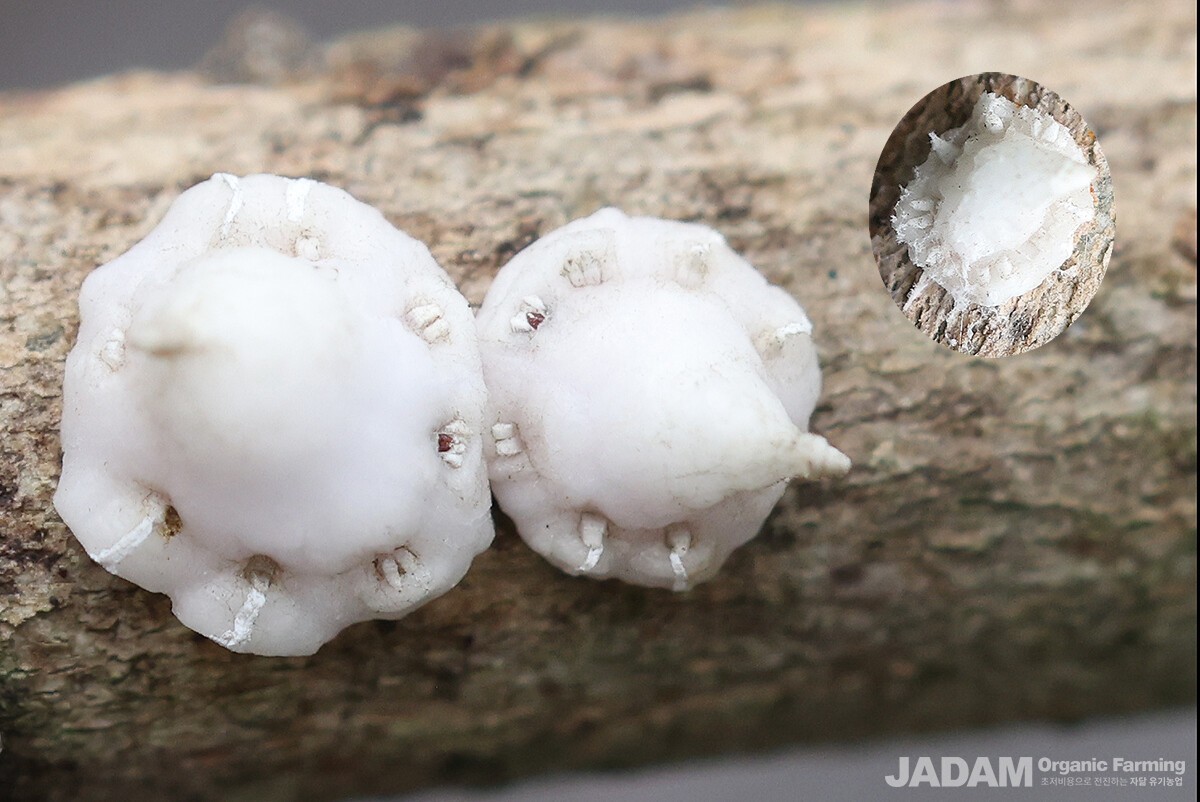
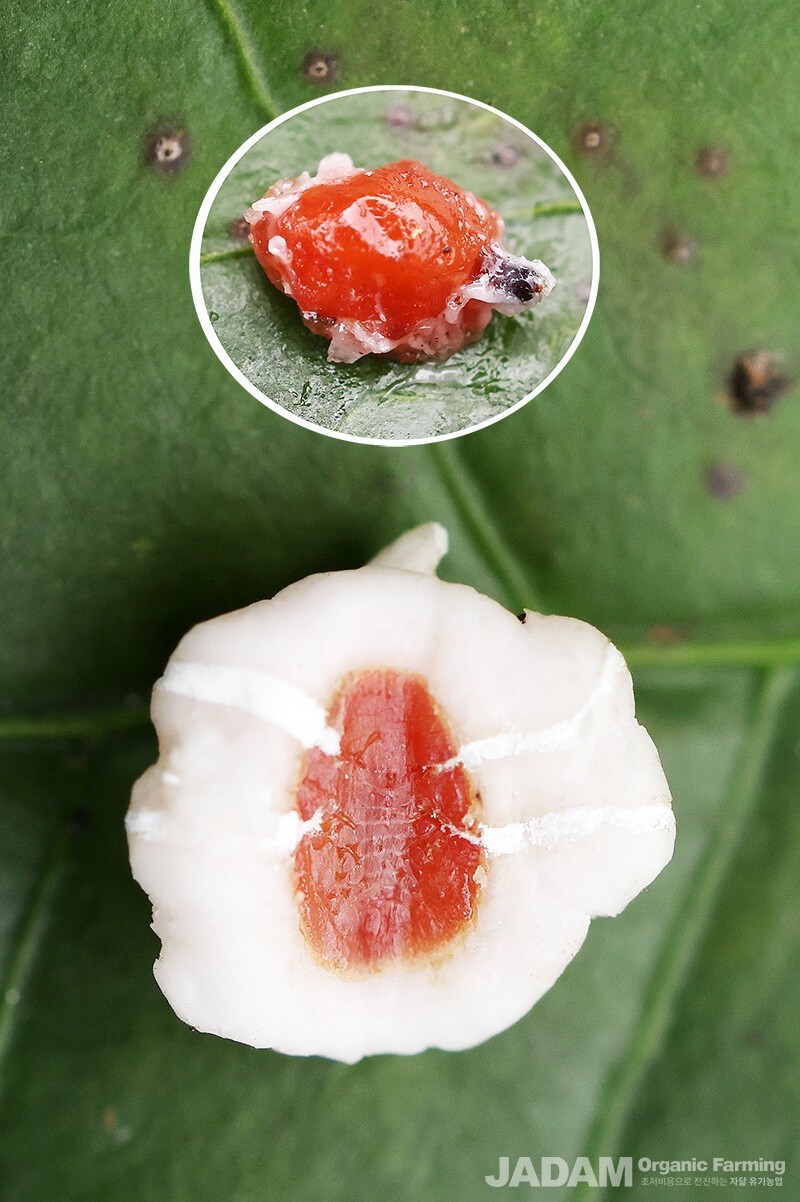
The Indian wax scale overwinters in this immobile adult state. Between late May and mid-June of the following year, the females reproduce independently through parthenogenesis (asexual reproduction), laying around one thousand eggs without requiring fertilization by males. These eggs hatch in approximately one week. The newly emerged first-instar nymphs are red and possess functional legs, enabling them to crawl actively or ride wind currents to disperse onto neighboring branches. Once they select a permanent feeding site, the settled nymphs begin secreting their own waxy armor, progressing through second and third instar stages before fully maturing into adults between late August and mid-to-late September.
Mass infestations severely deplete plant resources, causing branches to wither or the entire tree to die back. Because these pests excrete excess plant sugars in the form of sticky honeydew while feeding, they heavily promote the growth of secondary sooty mold, which blankets leaves and hinders photosynthesis. For effective management, chemical controls should be applied intensively around June during the peak nymph migration period, before the protective wax layer hardens. Any surviving adults can be removed during winter pruning by cutting away infested twigs or physically scraping the scales off using a plastic spatula.
FAQ: Quick Fact
Q: What are the primary characteristics and agricultural impacts of the Indian wax scale?
A: The Indian wax scale is a non-edible insect pest identifiable by its soft, sticky white wax coating and a dorsal horn-like protrusion. It acts as a severe agricultural pest by draining sap from over 60 varieties of fruit and ornamental trees, while its honeydew excretions trigger highly damaging secondary sooty mold infections.