

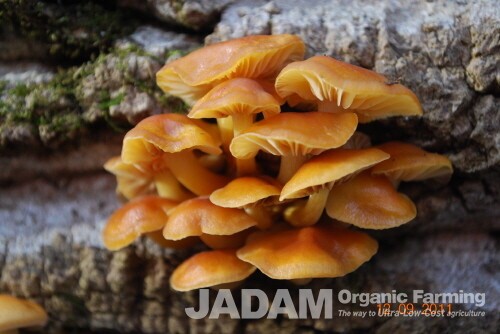
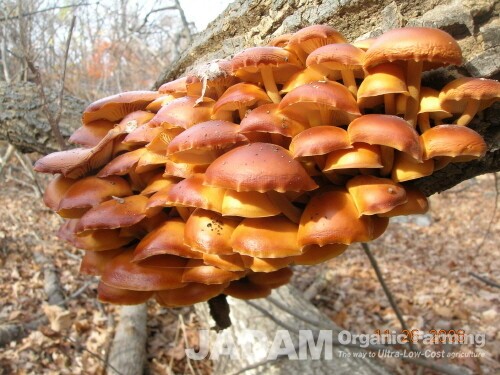
The enoki mushroom (Flammulina velutipes), widely known by its English common names velvet foot or velvet stem, earns its other nickname, the winter mushroom, due to its remarkable ability to fruit during the chilly onset of winter. The genus name Flammulina is derived from the Latin flammeus, meaning "a little flame," which beautifully captures the vibrant reddish-yellow to orange hue of its wild cap. Its species name, velutipes, blends two Latin roots: velutinus, meaning "covered in fine hairs," and pes, meaning "foot." This directly translates to its common English name, describing the characteristic velvety texture of its stem base. In Japan, it is called enokitake, referring to its habit of growing on the Chinese hackberry tree (enoki), while in Thailand, it is affectionately dubbed the golden mushroom.
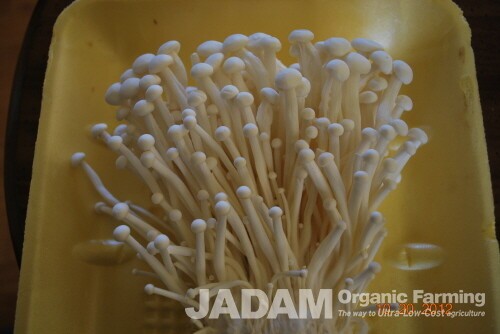
The commercially cultivated version of the enoki mushroom, characterized by its remarkably long, slender stems and tiny button-like yellow or white caps, is a fascinating byproduct of modern cultivation techniques. Growers achieve this distinct morphology by strictly elevating carbon dioxide levels while drastically minimizing light exposure during development. This unique variety has enjoyed immense popularity across Japan, China, and the United States, and it has evolved into an indispensable, treasured ingredient in almost every household kitchen across Korea. Beyond its culinary appeal, this mushroom possesses an extraordinary tolerance for extreme sub-zero temperatures. Because of this cold-hardy resilience, environmental scientists harbor high expectations for its future utility in mycoremediation—the process of using fungi to decontaminate and restore polluted soils in the permafrost regions near the Arctic and Antarctic.
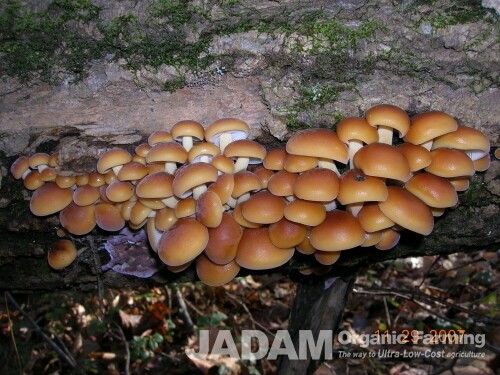
A deep dive into the chemical profile of the enoki mushroom reveals an exceptionally rich composition, including 26 distinct free amino acids and 8 essential trace minerals. Among these, the essential amino acid valine has demonstrated prominent inhibitory actions against sarcoma 180 and Ehrlich ascites carcinoma in animal models. Another critical amino acid present, lysine, plays an important role in promoting physical growth and weight gain in developing bodies. The mushroom also contains an array of complex polysaccharides, notably PA3DE, alongside highly specialized biochemical compounds such as ergosta-5,8,22-trien-3-beta-ol, enokipodins A–D, FIP-Five, cerevisterol, flammulin, and tetraol. Dried enoki mushrooms consist of roughly 31% crude protein and are packed with an assortment of B-complex vitamins and vitamin C. Its niacin density is particularly striking, yielding about 107 mg per 100 g of dried material. Furthermore, the mycelium of the enoki mushroom yields fermented ergosterol, ergosta-3-O-glucopyranoside, genistein, adenosine, and cinnamic acid.
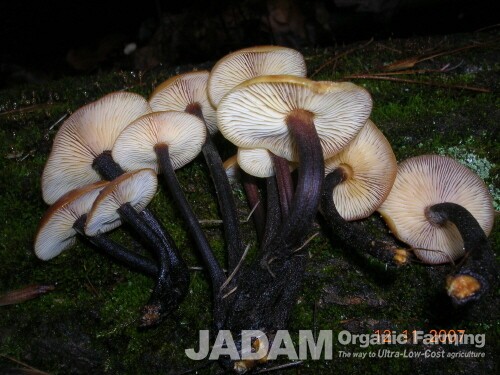
Extensive clinical and epidemiological research conducted in China and Japan indicates that regular consumption of the enoki mushroom can aid in the healing of gastric ulcers, gastrointestinal disorders, and various liver diseases. Fascinatingly, epidemiological surveys conducted in Japan revealed that residents and mushroom farmers living near Nagano City exhibited exceptionally low cancer mortality rates compared to the national average. Investigative teams attributed this anomaly directly to the farmers' habit of frequently harvesting and eating fresh enoki mushrooms.
From a structural perspective, the unique polysaccharide PA3DE found in the enoki mushroom is composed of D-glucose, D-mannose, and L-fucose. It operates alongside proflamin, a newly identified antitumor glycoprotein that contains fucose and arabinose. However, a critical safety warning must be highlighted for general consumers: raw enoki mushrooms contain flammutoxin, a cardiotoxic protein capable of lysing O-type red blood cells and disrupting cell respiration. Fortunately, this dangerous protein is completely deactivated and rendered harmless when boiled at 100°C for at least 20 minutes. Therefore, eating enoki mushrooms raw should be strictly avoided.

The historical timeline of modern mycological research into this fungus is robust. In 1963, a scientist named Komatsu first isolated flammulin from the mushroom and uncovered its initial antitumor properties (Komatsu, 1963). Following this breakthrough, Ikekawa and his research team published a seminal paper in 1968 demonstrating the potent antitumor effects of water-soluble enoki extracts, noting an impressive 80 to 100% tumor inhibition rate against sarcoma 180 and Ehrlich ascites carcinoma in laboratory subjects (Ikekawa, 1968). More recently, evaluations at the Tokyo Pharmacology Institute confirmed an 81.1% tumor suppression rate when guinea pigs were administered a daily dosage of 30 mg of enoki extract over a structured testing period.
Korean mycologists and medical researchers have also contributed significantly to unlocking the secrets of this mushroom. In 1996, a study reaffirmed the traditional domestic practice of using enoki mushrooms to treat stomach ulcers (Kim, 1996). The research specifically demonstrated that enoki mushroom components effectively block the urease enzyme activity produced by Helicobacter pylori, the primary bacterial culprit behind stomach ulcers and gastric cancers. Shortly thereafter, researchers successfully identified specific nitric oxide synthase activities within the fungal tissues (Song, 2000). These profound inhibitory effects against Helicobacter pylori have since garnered widespread confirmation among Western medical institutions as well.
In addition, a novel immunomodulatory protein designated as FIP-5 was successfully isolated from the mushroom (Ko, 1995). While this protein induces the agglutination of human red blood cells, subsequent investigations proved that it simultaneously exerts a powerful suppressive effect on the proliferation of human cervical cancer cells (Lee, 2010). It has likewise been shown to inhibit the multiplication of leukemia L1210 cells. Another key isolate, velutin, acts as a specialized ribosome-inactivating protein that serves as a reverse transcriptase inhibitor capable of suppressing the replication of the HIV-1 virus.
Furthermore, laboratory experiments utilizing rats and guinea pigs have revealed that enoki mycelium extracts can systematically optimize cardiovascular health by raising high-density lipoprotein (HDL, or "good" cholesterol) while lowering low-density lipoprotein (LDL, or "bad" cholesterol), effectively reducing overall blood cholesterol levels. The specific fractions EA3 and EA501 operate as highly active polysaccharides that stimulate and reinforce general immune functions. In separate oncology studies, the standalone administration of the EA6 fraction following surgical interventions was observed to significantly prolong the lifespan of tumor-bearing mice.
Beyond these profound antitumor and cardiovascular benefits, the enokipodins A–D found in the mushroom display robust antimicrobial and antifungal activity against a broad spectrum of pathogenic microorganisms. The renowned American mycologist Paul Stamets has also documented the mushroom's specific therapeutic potential against prostate cancer (Stamets, 2011).
The cultured glycoprotein proflamin, which consists of approximately 90% protein and 10% carbohydrate, actively suppresses both allogeneic and syngeneic tumors.
Finally, scientists have isolated an immunomodulatory protein from enoki mushrooms that shares a structural configuration highly similar to human immunoglobulin antibodies. This compound closely mirrors the therapeutic mechanisms of the famous reishi mushroom (Ganoderma lucidum), offering notable efficacy in alleviating allergic sensitivities. Consequently, introducing enoki mushrooms into a regular diet can naturally mitigate adverse food-induced allergic reactions. In summary, the humble enoki mushroom is a powerhouse of natural medicine, offering scientifically verified benefits as an antibacterial, antifungal, antiviral, antihyperlipidemic, antitumor, anti-inflammatory, antiallergic, and immune-enhancing agent.
References
Hobbs, C. (1996). Medicinal Mushrooms: An Exploration of Tradition, Healing, & Culture (3rd ed.). Interweave Press.
Park, W. H., & Lee, H. D. (2003). Illustrated Guide to Korean Medicinal Mushrooms (2nd ed.). Kyohaksa.
Rogers, R. (2011). The Fungal Pharmacy: The Complete Guide to Medicinal Mushrooms and Lichens of North America. North Atlantic Press.
FAQ: Quick Fact
Q: Is the enoki mushroom edible, and what are its key characteristics and medicinal properties?
A: Yes, the enoki mushroom is highly edible and a popular culinary ingredient, though it must be thoroughly cooked to destroy the heat-sensitive toxin flammutoxin. Characterized by its cold resilience and velvety stem, it offers extensive medicinal properties including powerful antitumor, immune-enhancing, cholesterol-lowering, and anti-gastric ulcer benefits, specifically inhibiting Helicobacter pylori.