

This insect mainly attacks Solanaceae (nightshade family) crops—chili pepper, Chinese lantern, tomato, paprika, bell pepper, goji berry, and potato—as well as Convolvulaceae (morning glory family) plants such as sweet potato, field bindweed, and morning glory. The adults fly in during early June and lay 10–30 eggs on the undersides of leaves. Both adults and nymphs cluster on the stems, inserting their mouthparts to suck out plant sap. Affected crops grow poorly, become infected with anthracnose, or lose much of their market value.
The squash bug (Acanthocoris sordidus) is an insect of the leaf-footed bug family (Coreidae) in the order Hemiptera (true bugs). It mainly occurs on nightshade-family (Solanaceae) crops—chili pepper, Chinese lantern (kkwari), tomato, paprika, bell pepper, goji berry, and potato—and on morning-glory-family (Convolvulaceae) plants such as sweet potato, field bindweed, and morning glory. Along with the brown marmorated stink bug and the brown-winged stink bug, it is one of the major pests of chili pepper farming, and of these it causes the most severe damage.
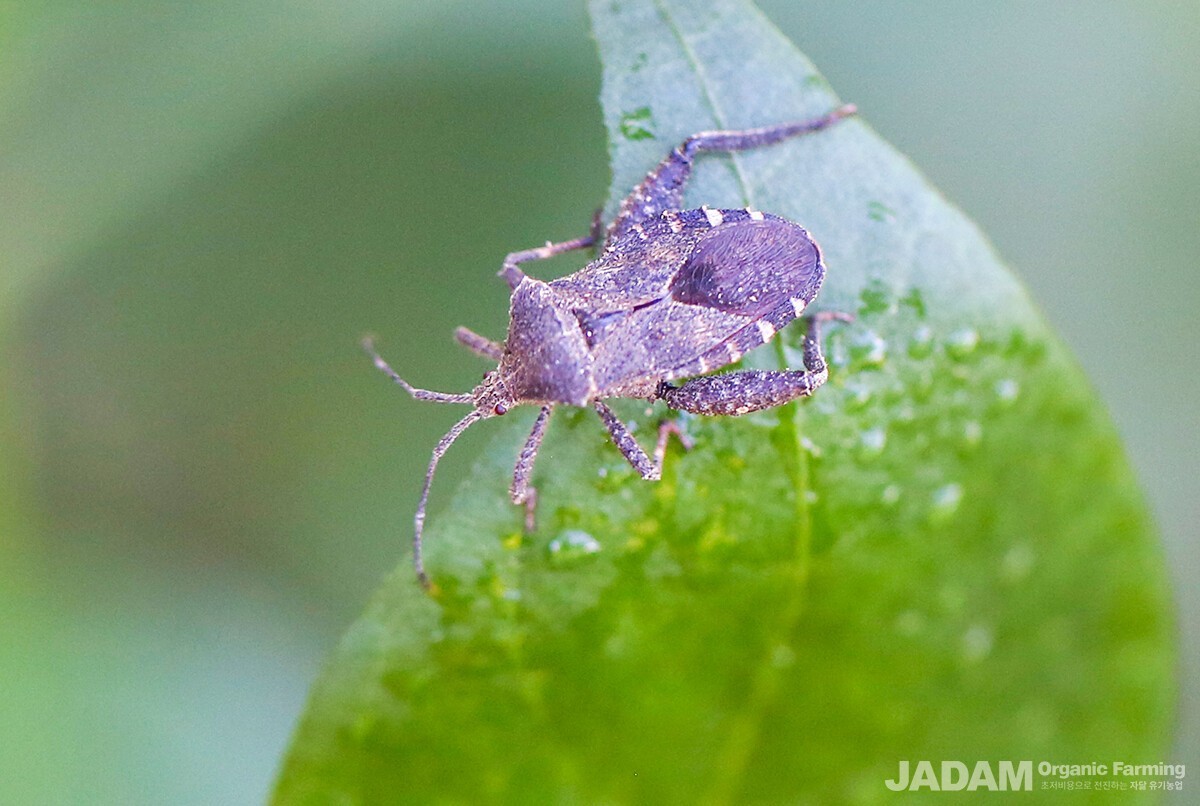
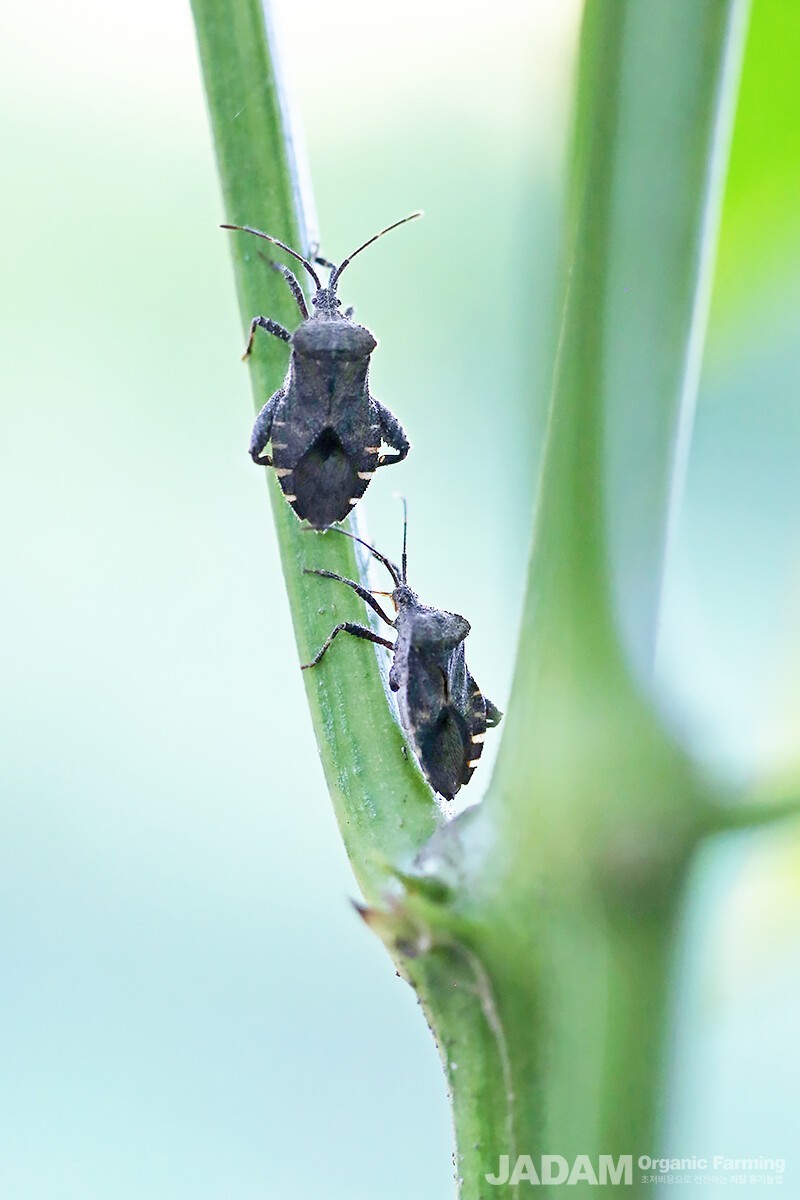
After overwintering in nearby grassy areas, the adults fly into chili pepper fields in early June to mate and lay eggs. They attach jewel-like, purplish eggs to the undersides of leaves in clusters of 10–30. The eggs hatch in about ten days, releasing the nymphs. The nymphs are covered in a white powder and, together with the adults, gather in groups to feed on chili pepper stems. By mid-August, the fully grown nymphs transform into adults.
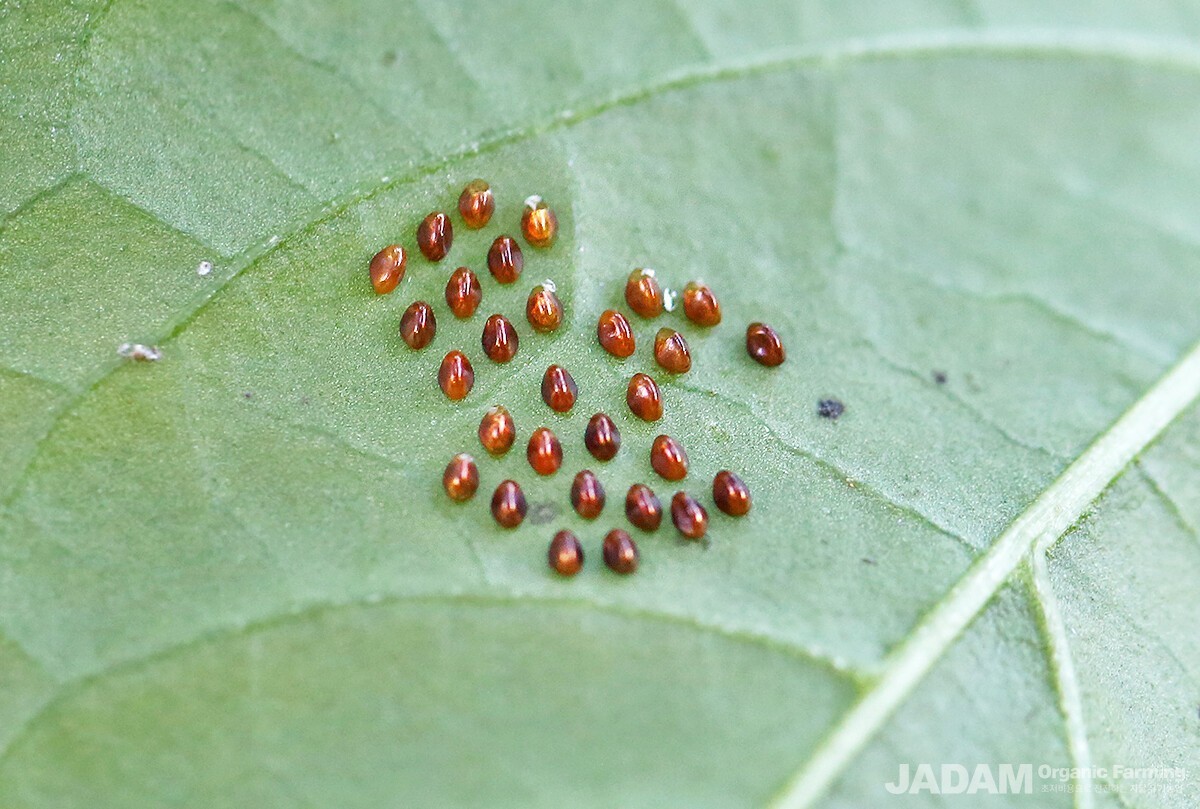
The adults are dark brown, measuring 10–13 mm in body length, with a surface densely covered in fine hairs. The head is small, with a faint lengthwise line down the center of the back. The thighs are thick and bear spiny bristles. When the wings spread open, the vivid reddish-brown underside of the abdomen is revealed. The population peaks in mid-September, and from late October the bugs move to their overwintering sites. They tend to occur in large numbers when hot, dry weather persists through the summer.
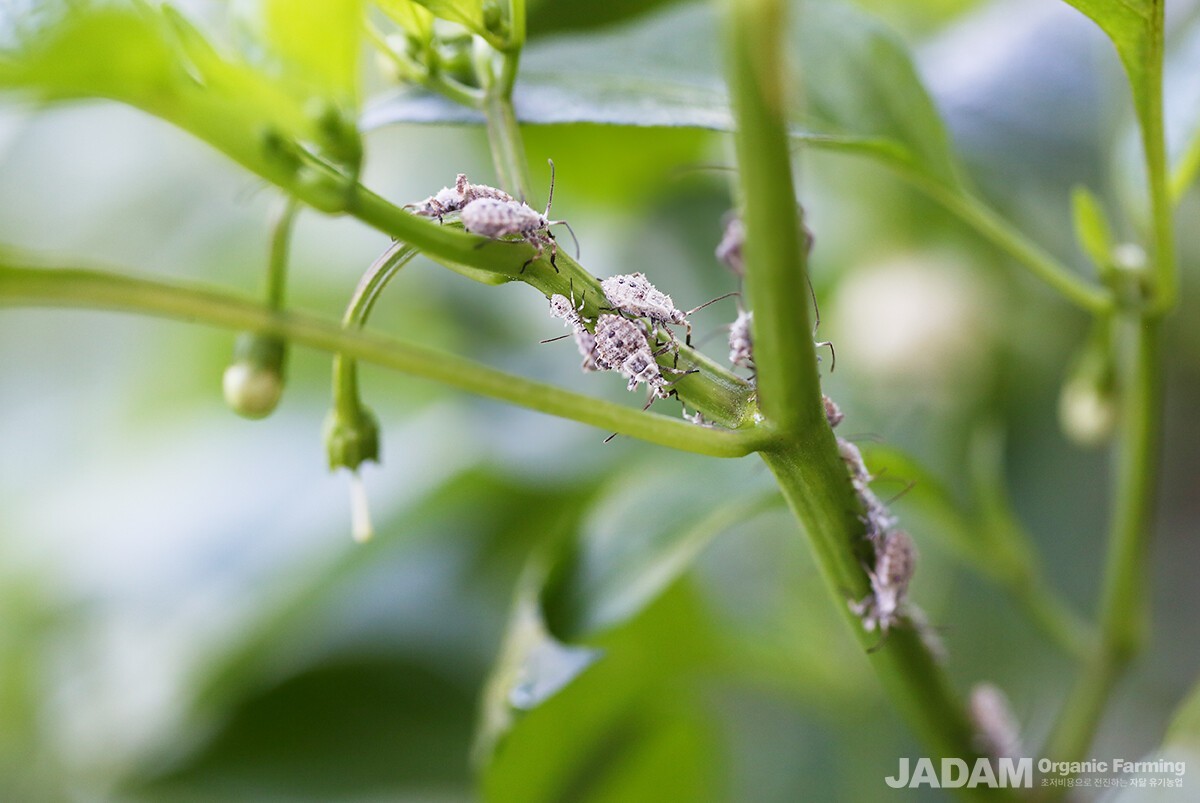
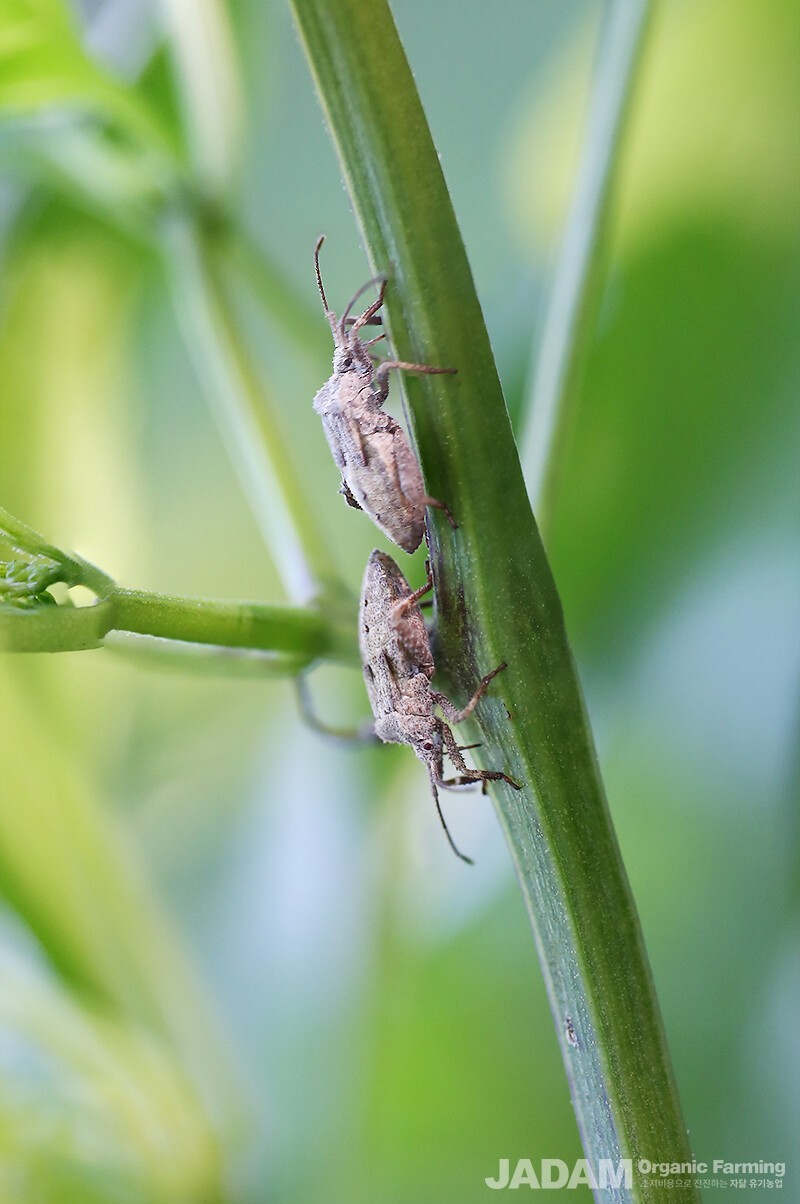
Both adults and nymphs cluster on the stems and feed by piercing the plant and sucking out its sap. The affected crop grows poorly, and during feeding it can become infected with anthracnose, leading to secondary damage. Fruit pierced by the mouthparts also suffers tissue damage and a sharp drop in market value. Because the bug is highly mobile, effective control calls for intensive spraying before sunrise or after sunset, repeated at two- to three-day intervals.
FAQ: Quick Fact
Q. What does the squash bug attack, and why is it a problem?
A. It is a sap-sucking pest that targets nightshade crops—especially chili pepper—and morning-glory-family plants. By piercing stems and fruit it stunts growth, spreads anthracnose, and ruins the appearance and market value of the harvest, making it one of the most damaging pests in chili pepper farming.