

A winter annual grass of the family Poaceae, annual bluegrass (Poa annua) is a cosmopolitan weed found across the globe. It grows in both cities and countryside—on vacant lots, in fields and rice paddies, in orchards, along roadsides, and even in the cracks between paving blocks. It typically germinates in autumn, stays green through winter, and flowers from early spring through fall.
Annual bluegrass (Poa annua) is a winter annual in the grass family (Poaceae) and a common weed that grows nationwide, in both urban and rural settings. It is famous as a worldwide weed, found not only in Korea but across the entire globe. It springs up on vacant lots, in fields and rice paddies, in orchards, along city roadsides, and even in the gaps between paving blocks. It is especially common in lawns and on golf courses, where it grows mixed in with turfgrass.
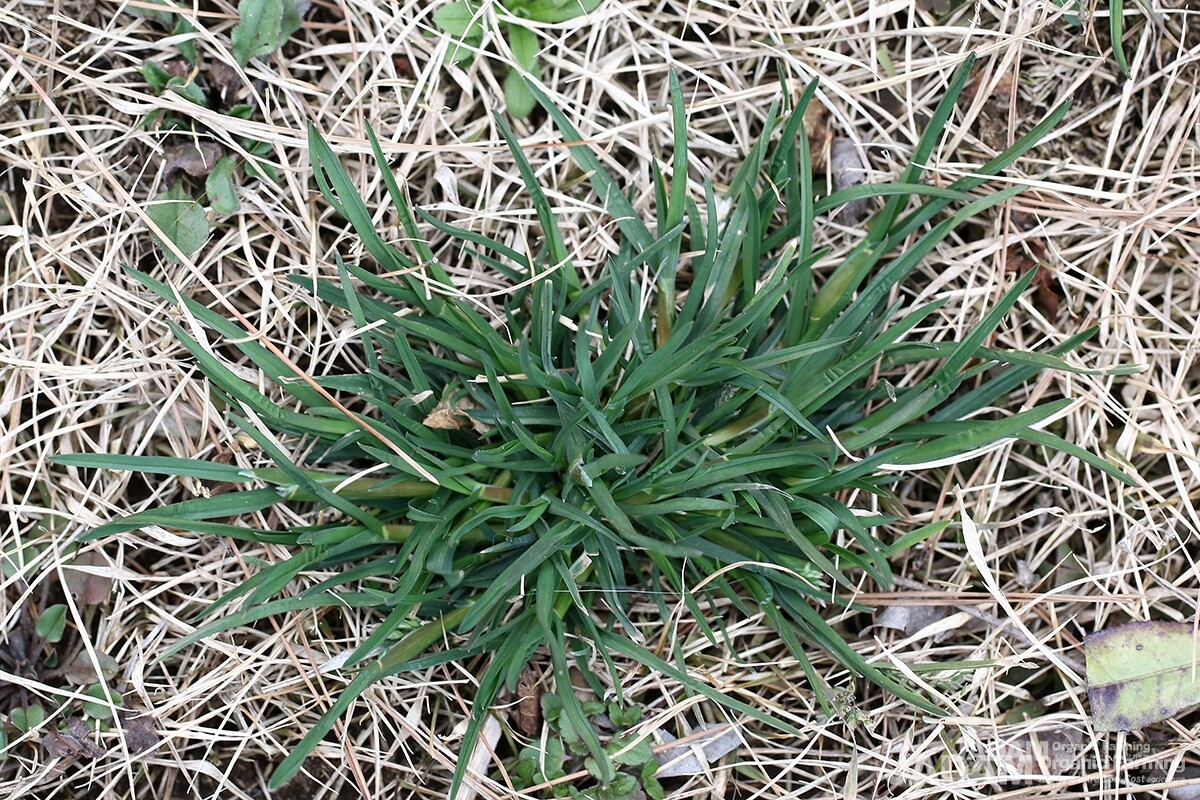
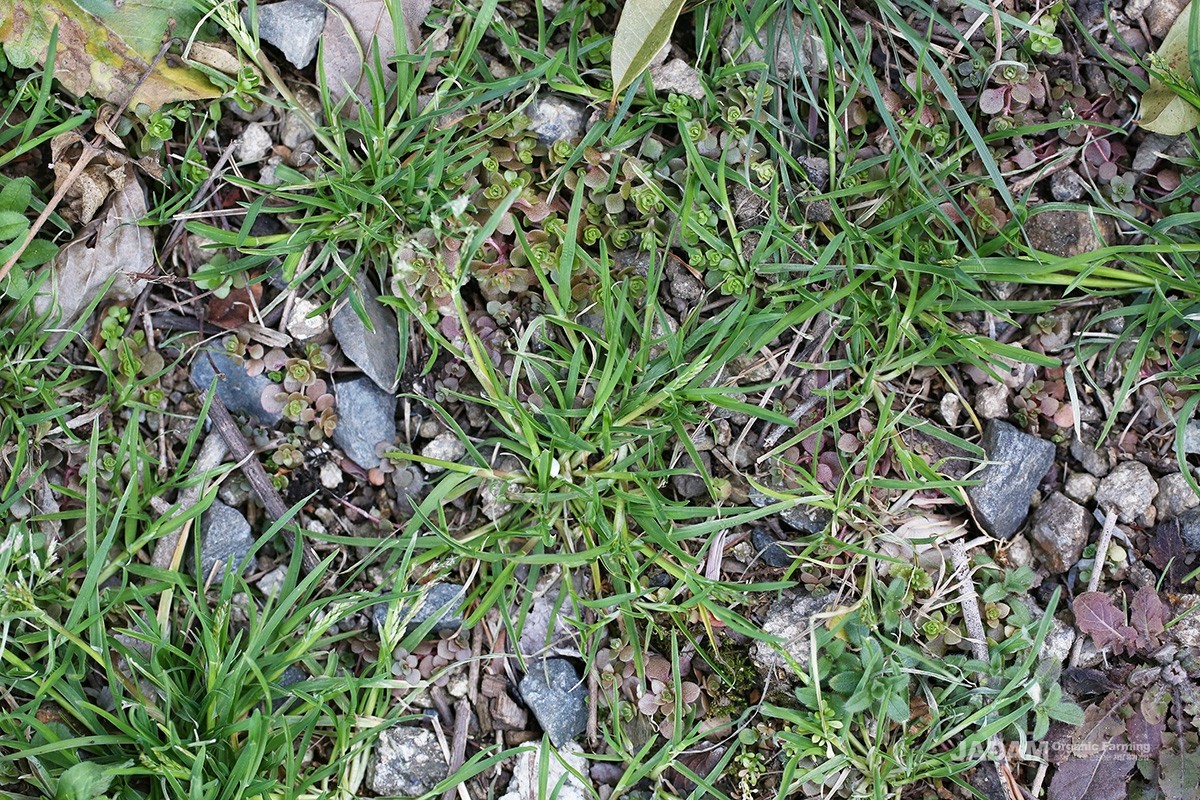
It generally germinates in late autumn, remains green through the winter, and flowers from early spring into fall. Given favorable conditions, however, it can germinate almost year-round. The stems grow in clumps, bending at the base and spreading sideways. At a height of just 10–25 cm, it is the smallest of the bluegrass species. The leaves are linear with blunt tips and fold slightly inward along the midrib, giving a shallow boat shape.
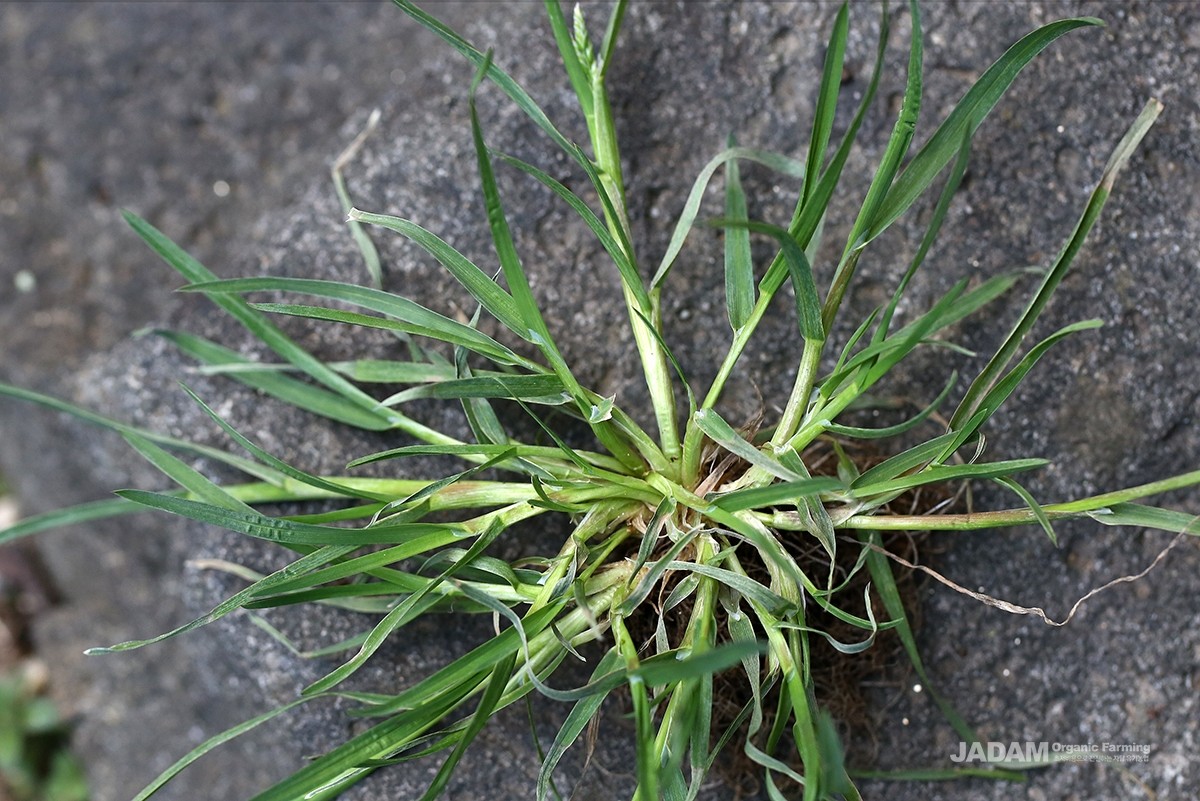
Because it resembles turfgrass, it is easy to overlook when growing within a lawn. It reveals its true identity only at flowering time. When a lawn is mowed repeatedly to a fixed height, annual bluegrass stops growing taller at that height and instead spreads sideways to flower. According to research, when plants taken from the green, fairway, and rough of a golf course were replanted under identical conditions, each flowered at a different height depending on where it had originally lived—clear evidence of its remarkable adaptability.
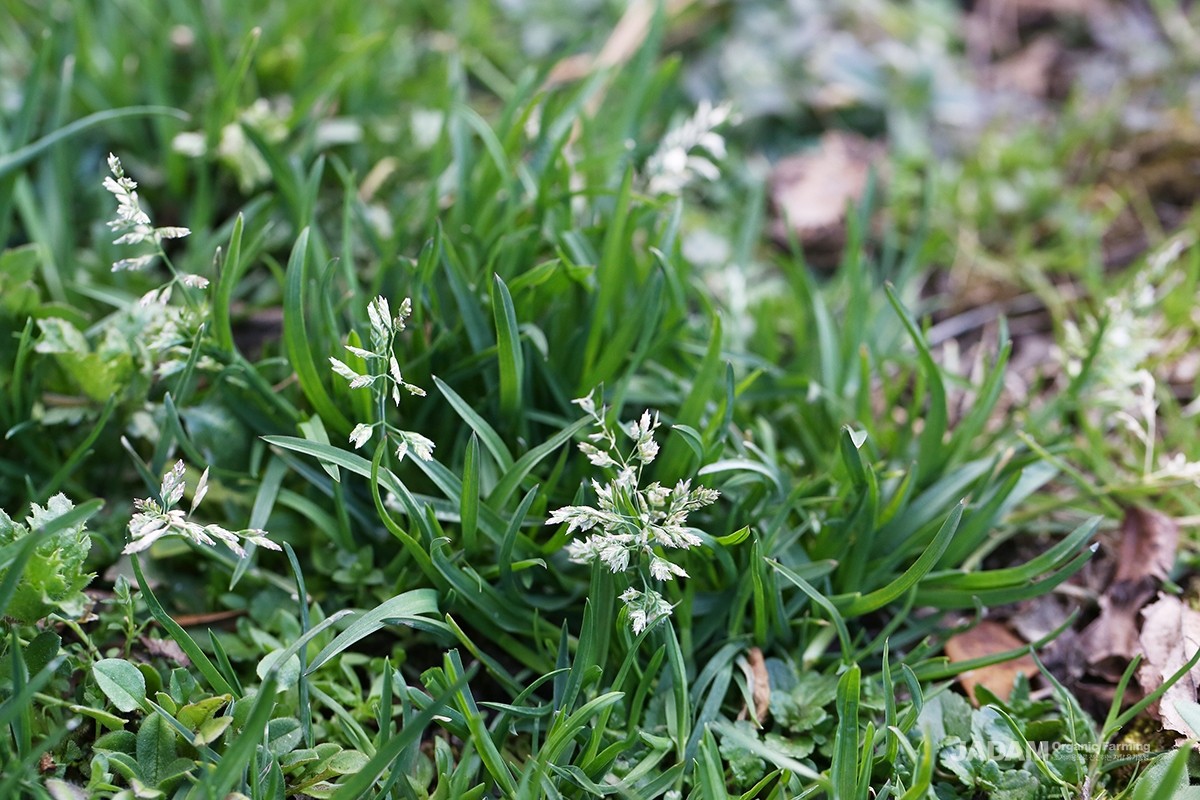
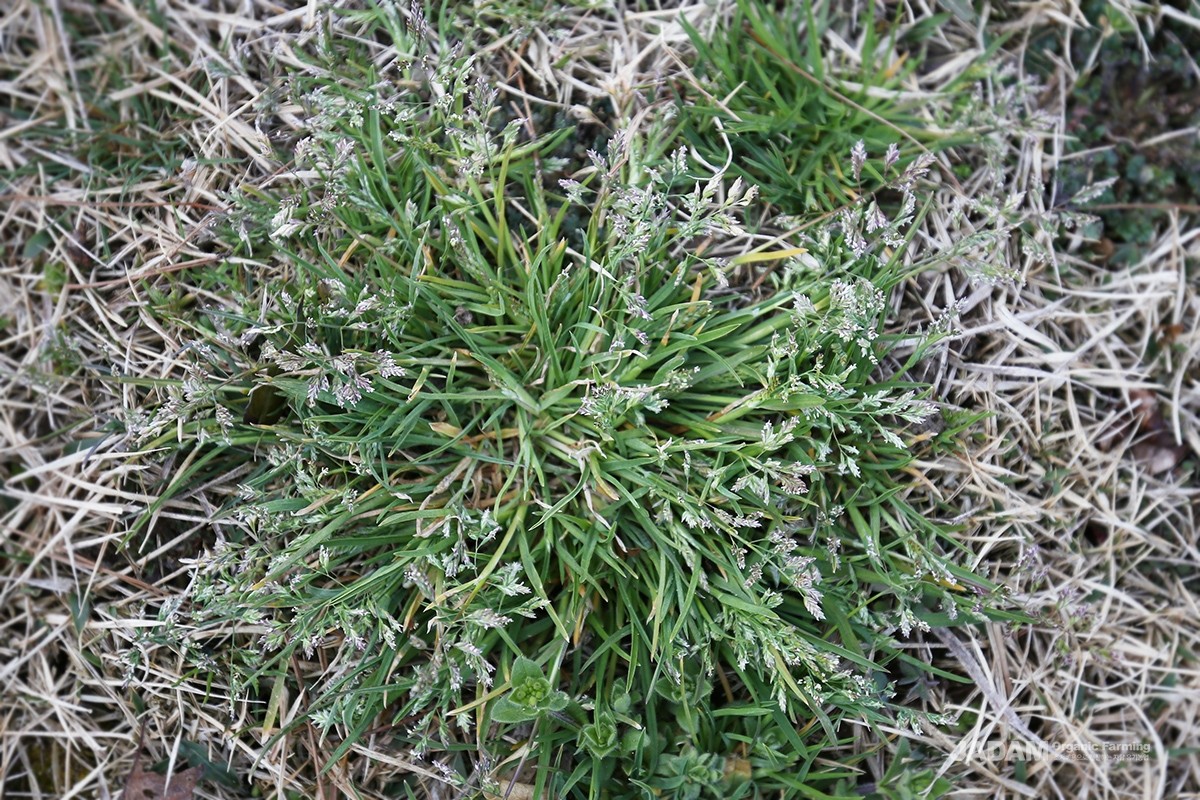
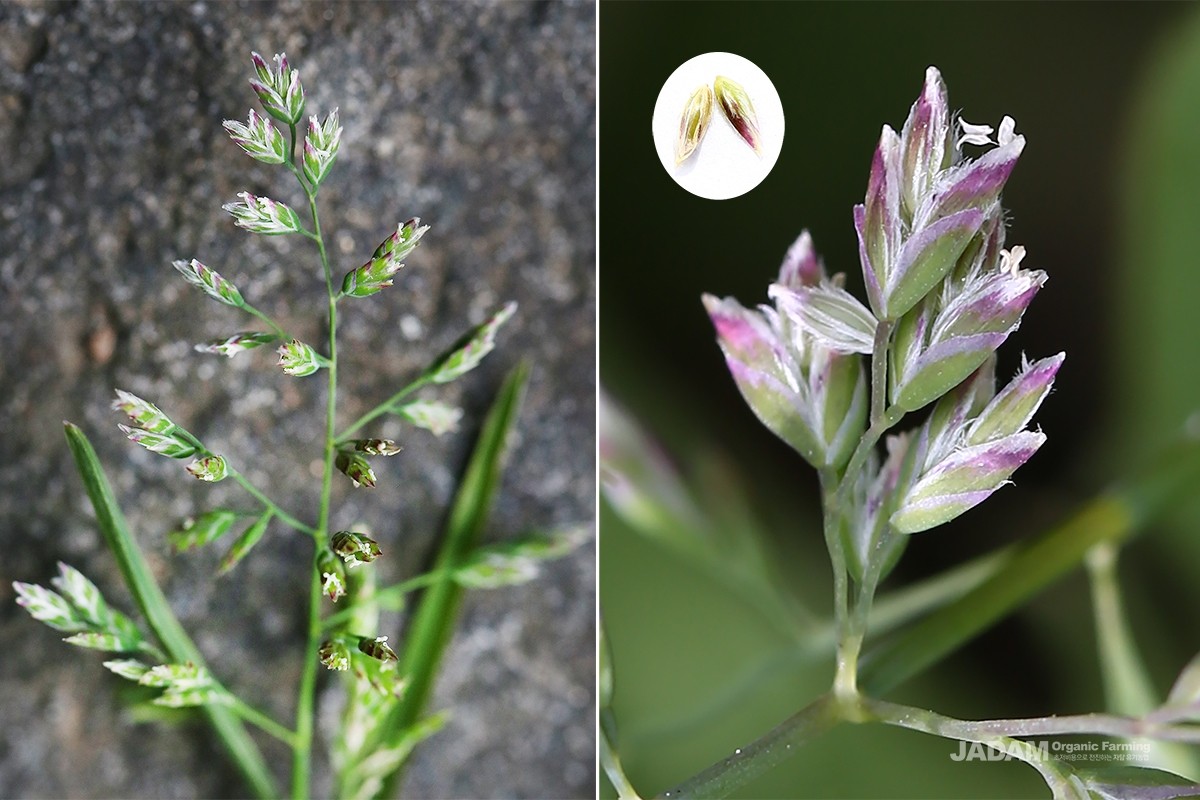
The flowers are arranged in a panicle (a branched, pyramid-shaped flower cluster). They are pale green, though some take on a reddish-purple tinge. At each node, two branches emerge and spread horizontally. The spikelets (small flower clusters) are elongated and egg-shaped, each containing three to six florets. Its life cycle is strikingly short—as little as six weeks from germination to flowering and seed set—and it can keep flowering throughout its life, both traits that have helped it become a worldwide weed.
Uses and Medicinal Properties
There are no known culinary or medicinal uses. However, because its leaves are tender, it can serve as forage (livestock fodder).
Control Methods
Because it resprouts and flowers again even after repeated mowing, it must be removed roots and all. The dense root system makes it hard to pull, so removal is easier after rain. Where it has already spread widely, or in lawns, a bluegrass-specific herbicide is another option.
Name Origin and Similar Species
In Korean, the name attaches the prefix sae ("small") to poa-pul (bluegrass), meaning "little bluegrass." A related species, narrow-leaved bluegrass (Poa acroleuca), grows 25–50 cm tall, slender and upright. In addition, about 15 bluegrass species grow in Korea, including rough bluegrass (Poa trivialis), Kentucky bluegrass (Poa pratensis), and spreading bluegrass (Poa palustris).
FAQ: Quick Fact
Q. Is annual bluegrass edible, and what is it good for?
A. It has no recognized edible or medicinal use, but its tender leaves make it usable as livestock forage. It is best known as one of the world's most adaptable and widespread lawn and turf weeds, with a life cycle short enough to go from germination to seed in about six weeks.