

It grows along roadsides, fields, rice paddy ridges, orchards, gravesites, forest roads, and mountain foothills in the southern regions of Korea. Similar to winter annual weeds, its basal leaves typically emerge in autumn to survive the winter, blooming from early spring with purple or pink flowers that form a vibrant floral cushion. The fruit is oval-spherical and features a large hilum.
Decumbent bugle (Ajuga decumbens) is a perennial herb belonging to the mint family (Lamiaceae). It thrives along roadsides, fields, rice paddy ridges, orchards, lawns, gravesites, forest roads, and mountain foothills in the southern regions. Like a winter annual weed, its basal leaves typically spread radially in autumn, staying flat against the ground to endure the winter cold. Due to low temperatures and limited sunlight during this period, the entire plant develops abundant white hairs and takes on a distinct purplish tint.
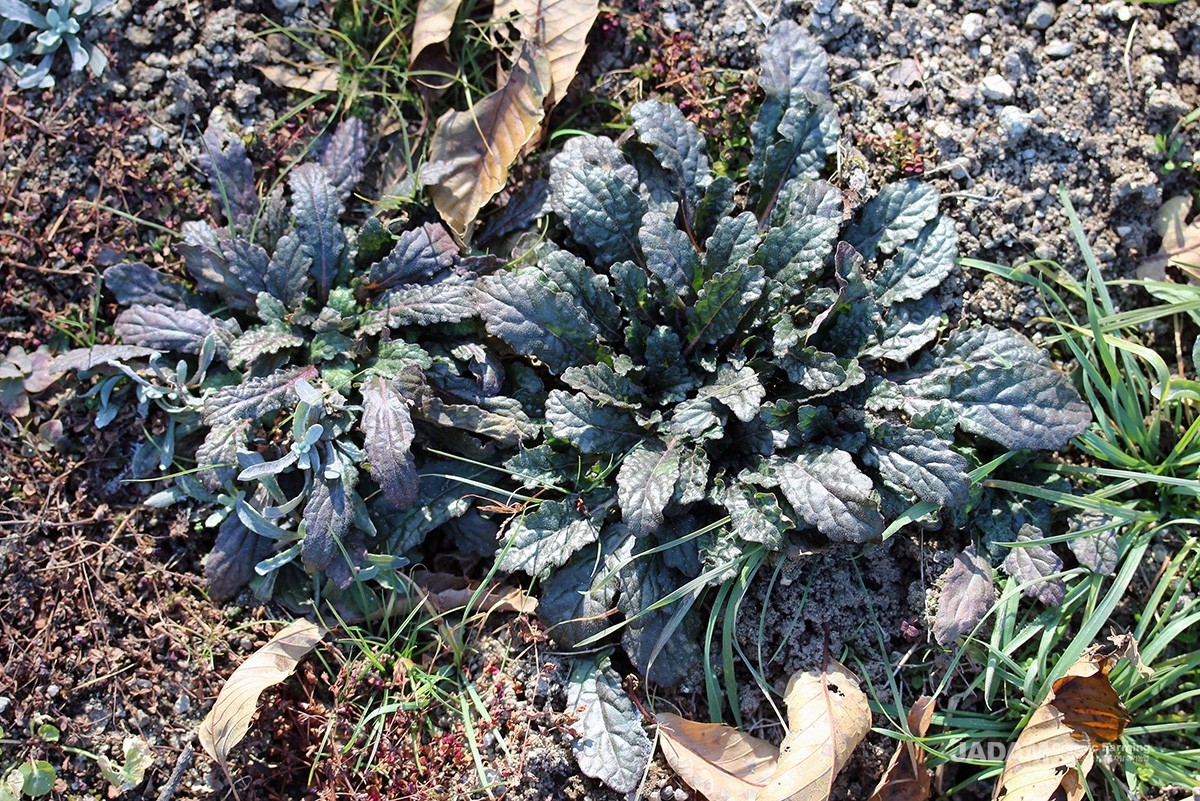
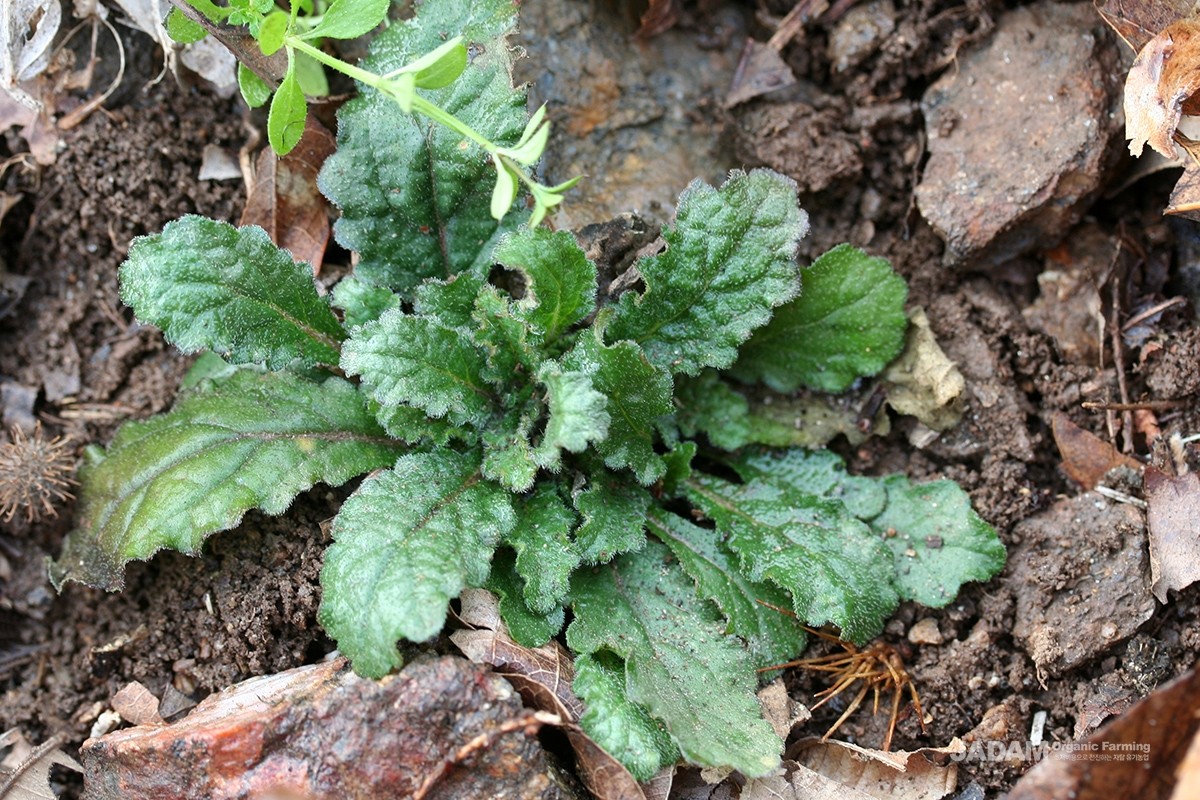
The upper part of the leaf is broadly elliptical, gradually narrowing toward the base, with wavy serrations along the margins. The stems creep horizontally along the ground, and the leaves grow in opposite pairs. The leaves, which once carried a purplish tint, turn a deep green as spring arrives. Fully grown, the plant reaches a height of only about 10 cm, forming a low, cushion-like shape. This contrasts sharply with the closely related Korean bugle (Ajuga multiflora), which is characterized by its upright, erect stems.
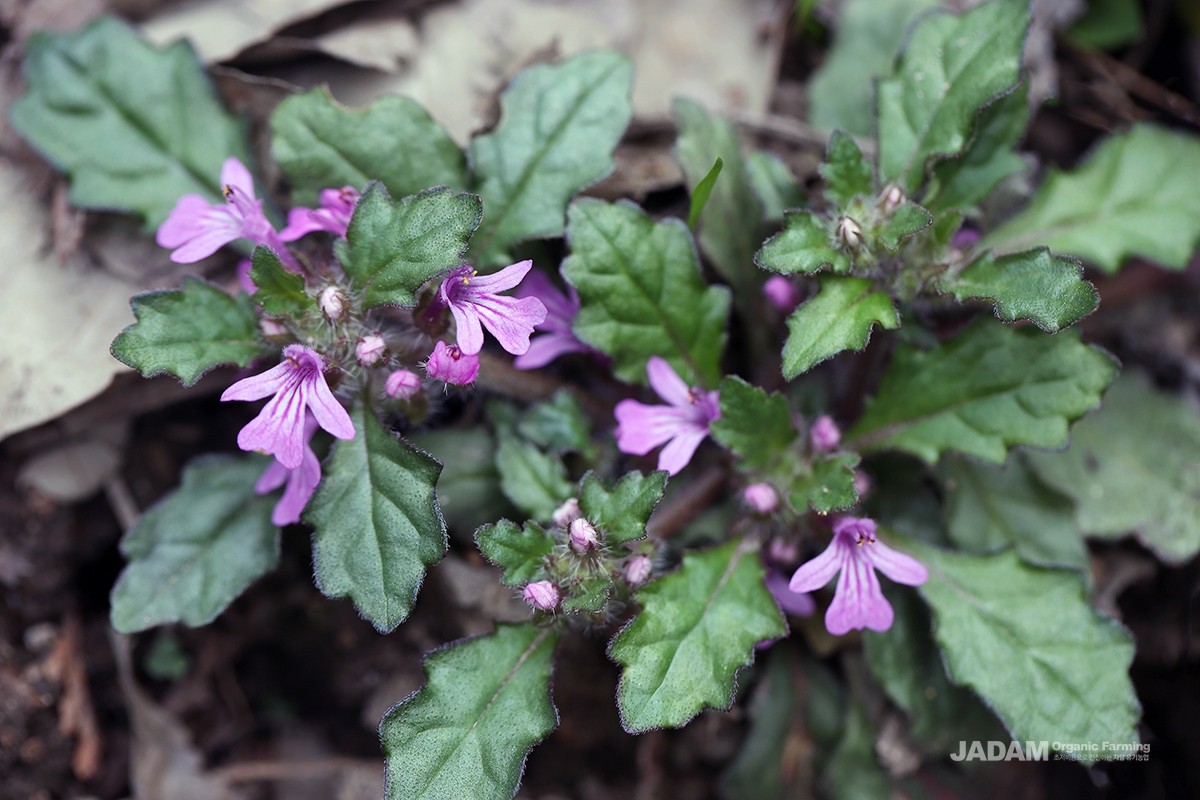
The reason why the perennial decumbent bugle sprouts in autumn despite the harsh winter cold is aligned with the survival strategy of winter annual weeds. In early spring, there are fewer competing plants, so it does not need to grow tall to access sunlight. Furthermore, because flowers are scarce during this early season, pollinators will readily visit even if the blossoms are positioned low to the ground. Consequently, the decumbent bugle successfully creates an enchanting floral cushion from the very start of spring.
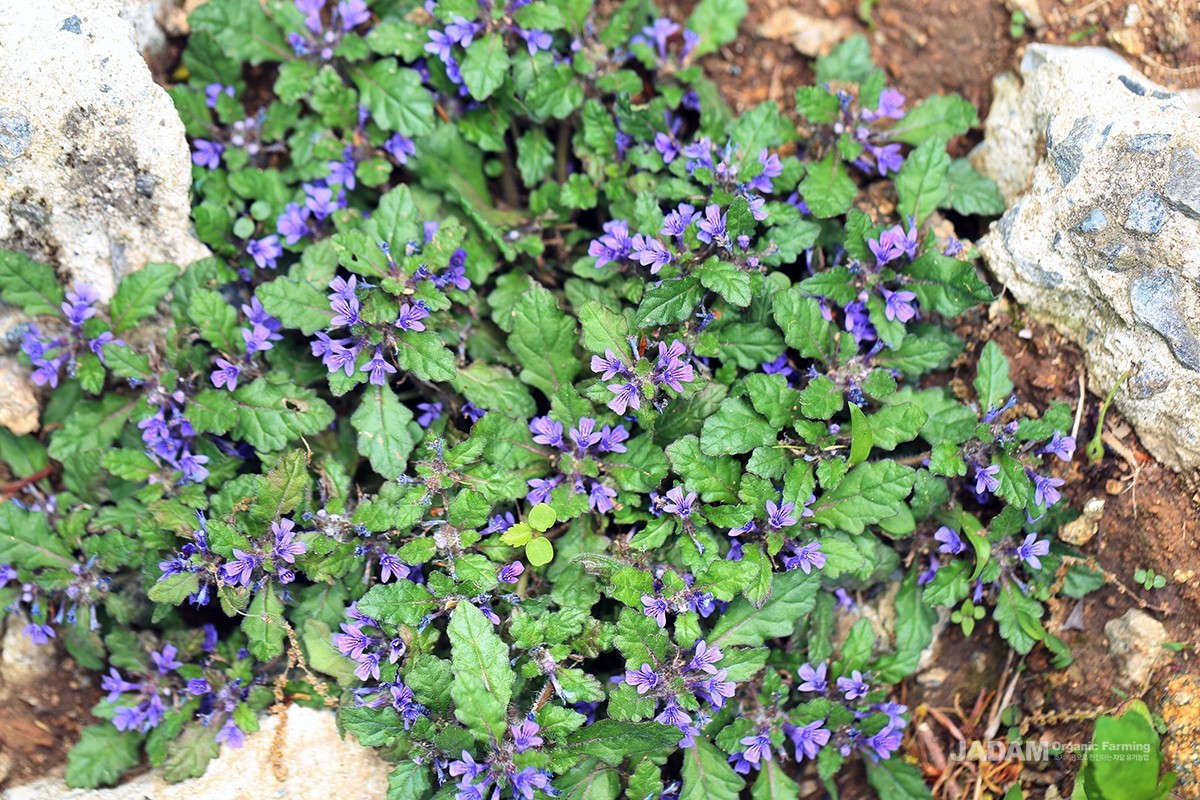
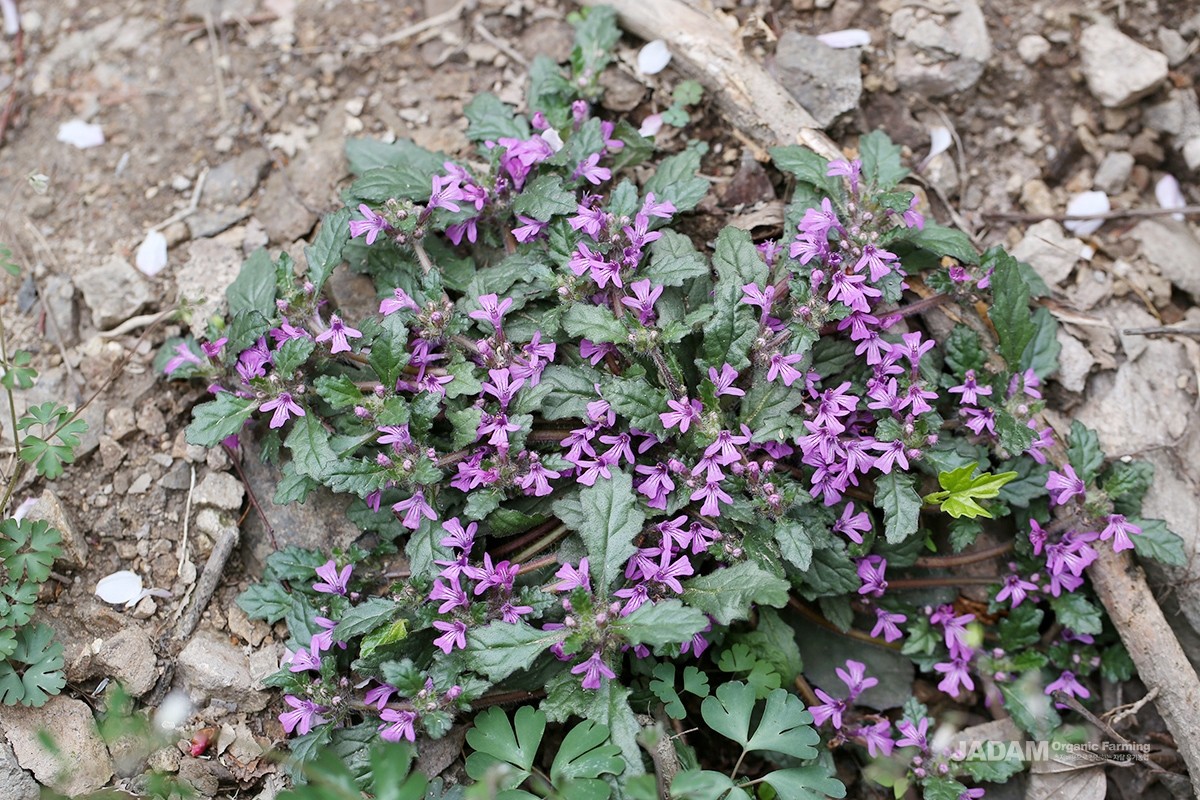
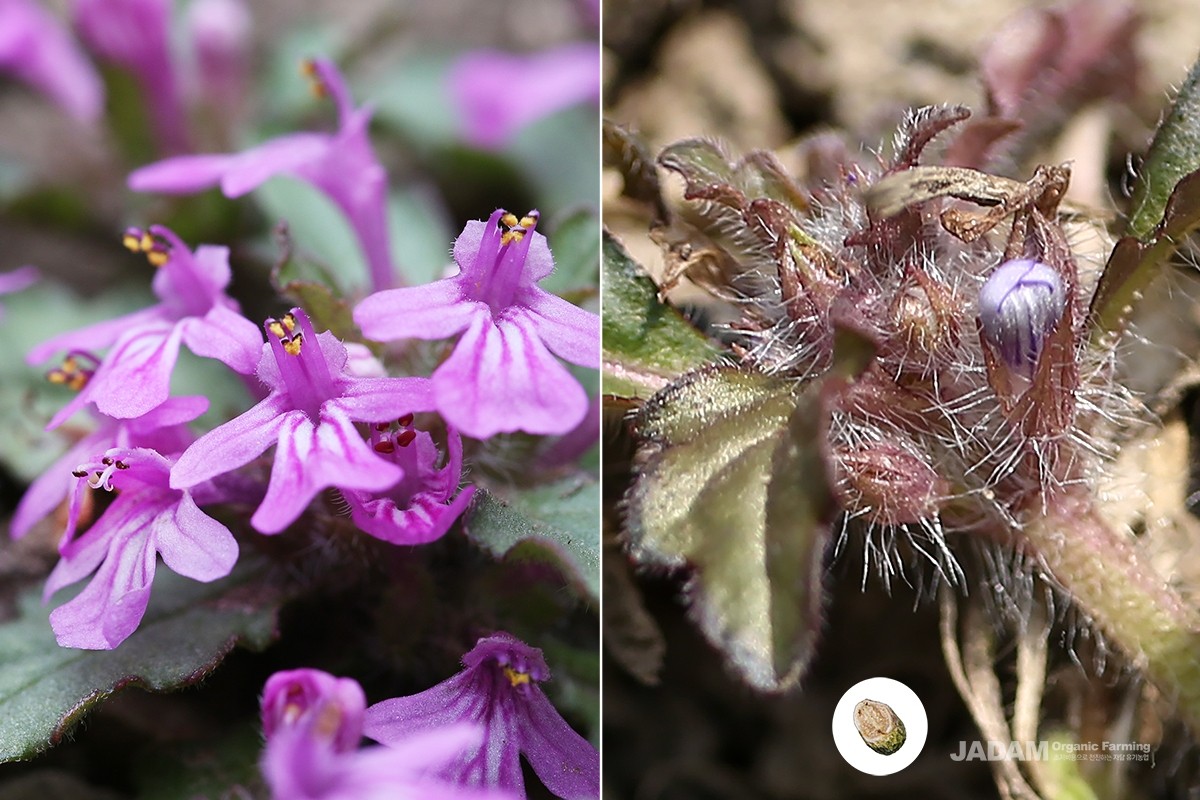
Purple flowers cluster densely in the leaf axils of the upper stems that spread out like a cushion. Occasionally, it produces pink blossoms. The flowers are two-lipped; the upper lip is semi-circular, while the lower lip is broadly divided into three lobes. There are four stamens, two of which are longer than the others. The fruit ripens around May or June. It consists of four nutlets, which are oval-spherical, measuring 1.5 to 2 mm in length, and marked by a distinct, large hilum.
Utilization and Medicinal Properties
The entire plant is dried and decocted or crushed fresh for herbal applications. In traditional medicine, it is used to suppress coughing, resolve phlegm, cool the blood, reduce swelling, and detoxify the body. It is prescribed to treat bronchitis, hemoptysis (coughing up blood), epistaxis (nosebleeds), dysentery, strangury (painful urination), carbuncles, wounds, and bruises. It has a bitter yet sweet taste and a cold nature.
Weed Control Methods
Because of its exceptionally low growth habit, it does not pose a significant problem in orchards. In agricultural crop fields or greenhouses, it can be easily managed by removing the plants manually or tilling the soil when farming preparations begin in the spring.
Etymology and Similar Species
The Korean name geumchangcho (금창초) translates literally to "gold wound herb." This name originates from the traditional practice of crushing the fresh herb and applying it directly to heal wounds caused by metal weapons or tools, known as geumchang (금창). It differs distinctly from the Korean bugle, which grows completely upright and is covered with noticeably long white hairs.
FAQ: Quick Fact
Q: Is the decumbent bugle edible, and what are its primary characteristics and medicinal benefits?
A: While primarily utilized as a medicinal herb rather than a culinary vegetable, the decumbent bugle is a low-growing perennial characterized by its ground-hugging, cushion-like growth habit; it is highly valued in traditional medicine for its anti-inflammatory, antitussive, and wound-healing properties, particularly in treating respiratory issues and topical bruises.