

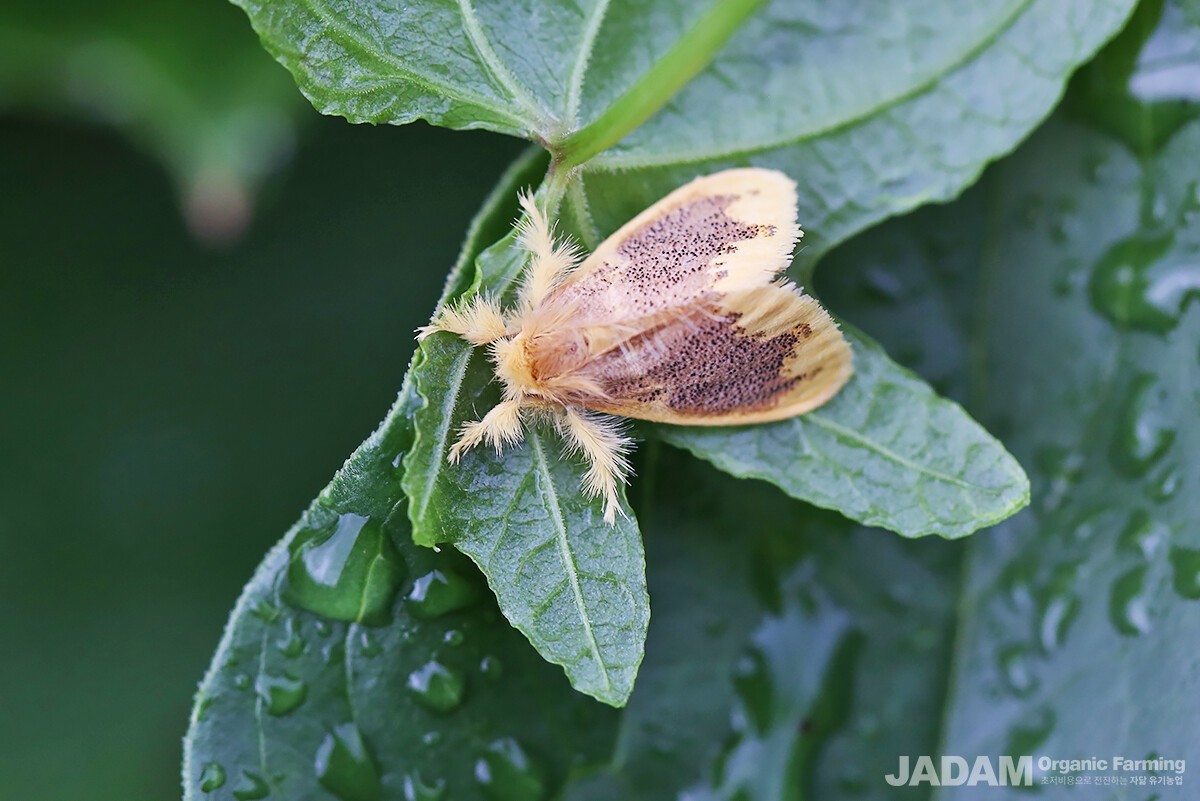
A small moth covered entirely in yellow hairs, featuring a dark multi-brown band in the middle of its forewings. The hairs contain a toxic substance that causes severe itching and inflammation upon skin contact or when touched with bare hands. The larvae gather in groups to attack a wide range of plants, including persimmon, chestnut, and Rosaceae fruit trees like plum, Japanese apricot, and apple, as well as sawleaf zelkova, maple, azalea, and rose.
The swan moth (Euproctis subflava) is an insect belonging to the family Erebidae (tussock moths), characterized by its small body covered entirely in vibrant yellow hairs. Adults emerge from their pupae between June and August. Because they are highly attracted to artificial lights, they frequently fly into residential areas. The body length of the adult moth is about 15 to 17 mm for females and 13 to 15 mm for males. They possess bipectinate (feather-like) antennae and a distinct dark multi-brown band across the middle of their forewings.
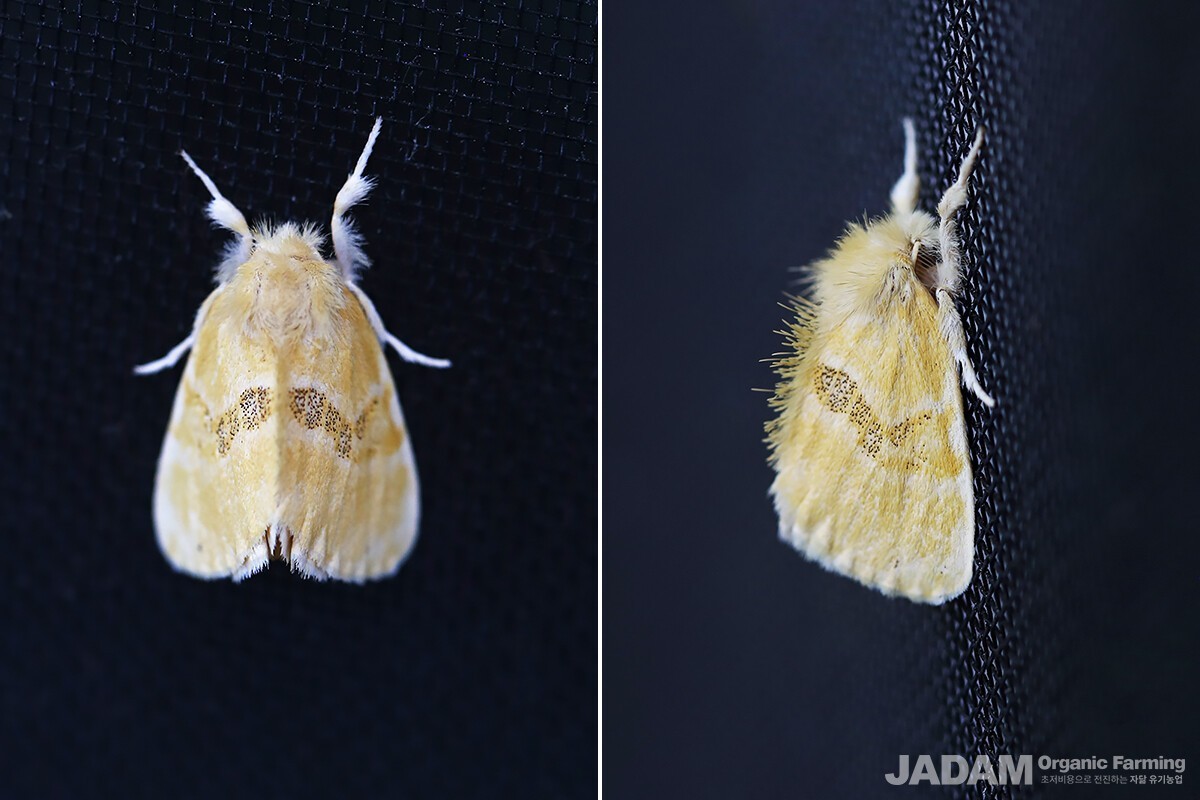
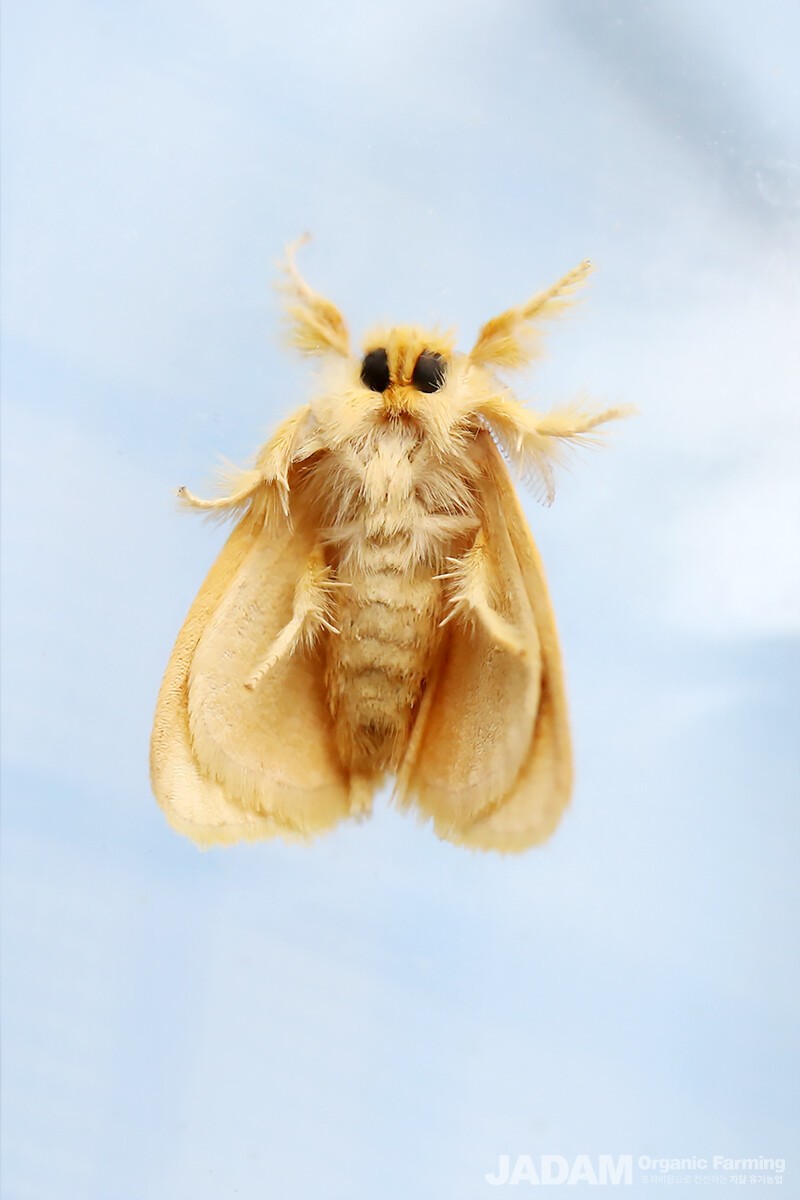
The shaggy hairs covering the insect contain a toxic substance that induces severe itching and skin inflammation if it comes into contact with human skin or is handled with bare hands. The lifespan of an adult moth is brief, lasting only about a week to 10 days. After mating, the female lays a cluster of 200 to 300 eggs on the undersides of leaves or stems close to the ground, protecting them by covering the surface with her own hairs. Once hatched, the larvae aggregate densely on the undersides of leaves and feed primarily at night.
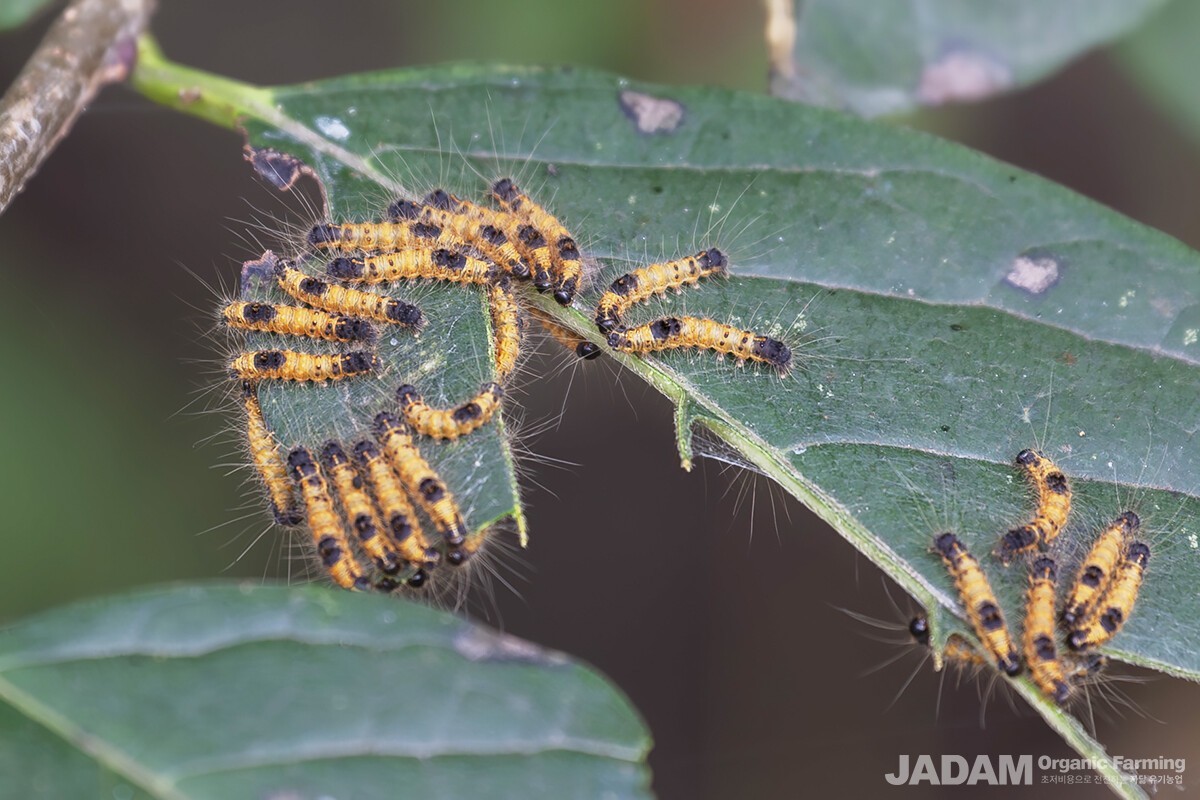
After molting once or twice, the larvae enter overwintering dormancy in November, hiding among weeds or fallen leaves near the base of the tree. In the following spring, they climb back up the tree to feed heavily in groups on newly sprouted leaves. This spring period is when agricultural and environmental damage is most severe. A fully grown larva reaches 35 to 40 mm in length and features black stripes over an orange base color. Like the adults, their bodies are dotted with clusters of highly irritating toxic hairs.
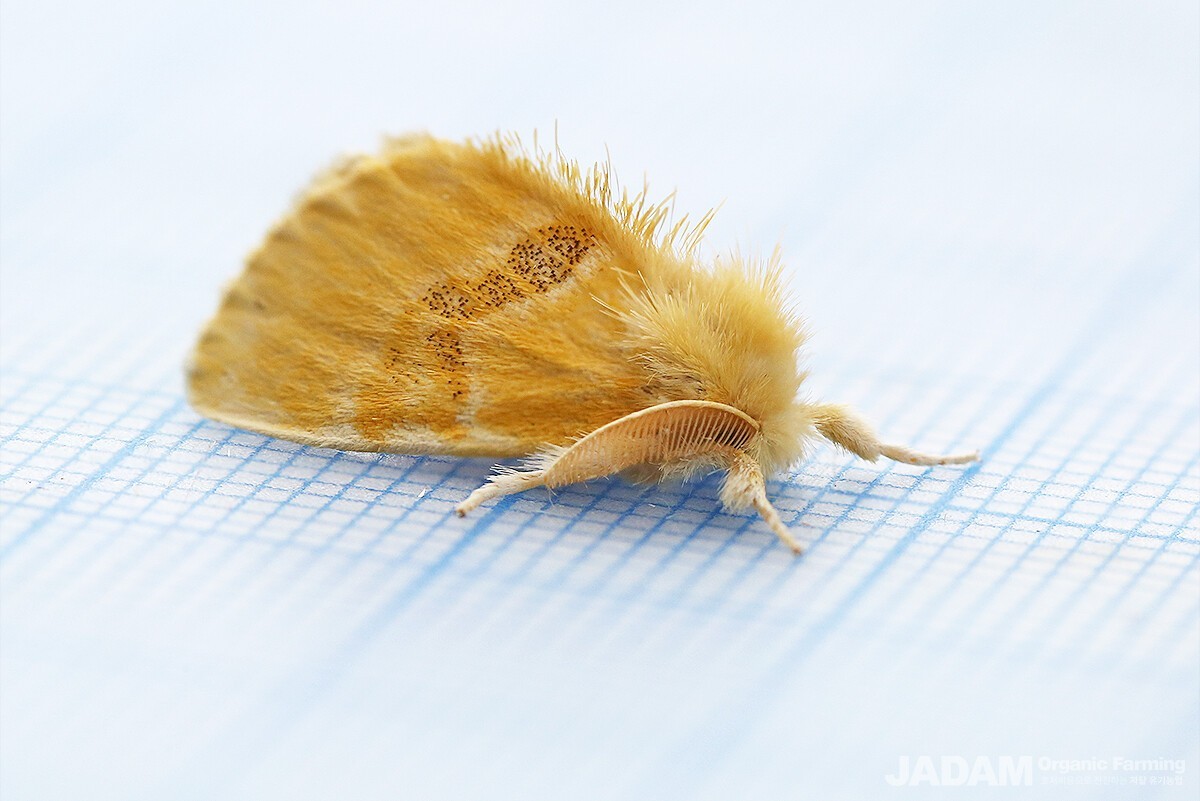
The mature larvae begin spinning cocoons on the undersides of leaves in late May to pupate. After spending 2 to 3 weeks in the pupal stage, they emerge as adults once again between June and August. Swan moth larvae voraciously feed on a vast array of trees, including persimmon and chestnut, Rosaceae fruit trees such as Japanese apricot, plum, and apple, as well as sawleaf zelkova, maple, azalea, and rose. Similar related species found in Korea include the yellow tussock moth (Euproctis piperita) and the small yellow tussock moth, both of which feature more widely distributed dark brown patterns across their wings.
FAQ: Quick Fact
Q: What are the primary characteristics of the swan moth, and why is it considered dangerous? A: The swan moth is a yellow-haired pest whose larvae destroy fruit and ornamental trees; both the adults and larvae are covered in highly toxic hairs that cause severe skin irritation, swelling, and intense itching upon human contact.