

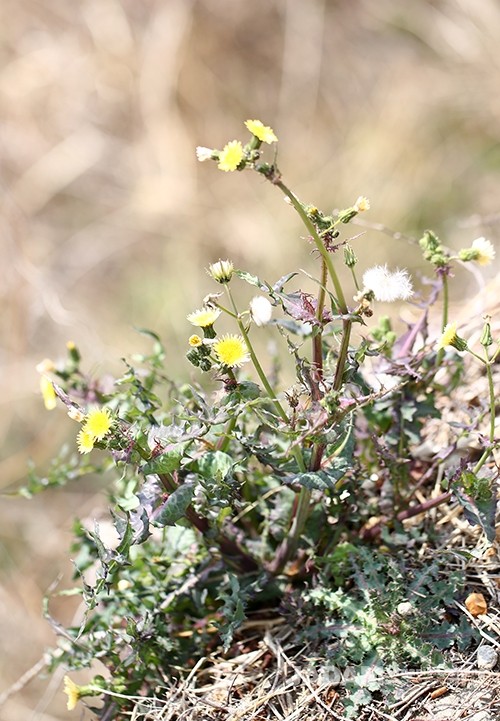
A winter annual weed that grows along roadsides, vacant lots, field margins, and orchards. It typically germinates in autumn and overwinters as a rosette cushion, but it can also germinate in late spring and grow into early winter. From May onward, it blooms with yellow flower heads at the tips of its stems and branches, dispersing seeds with white feathery tufts.
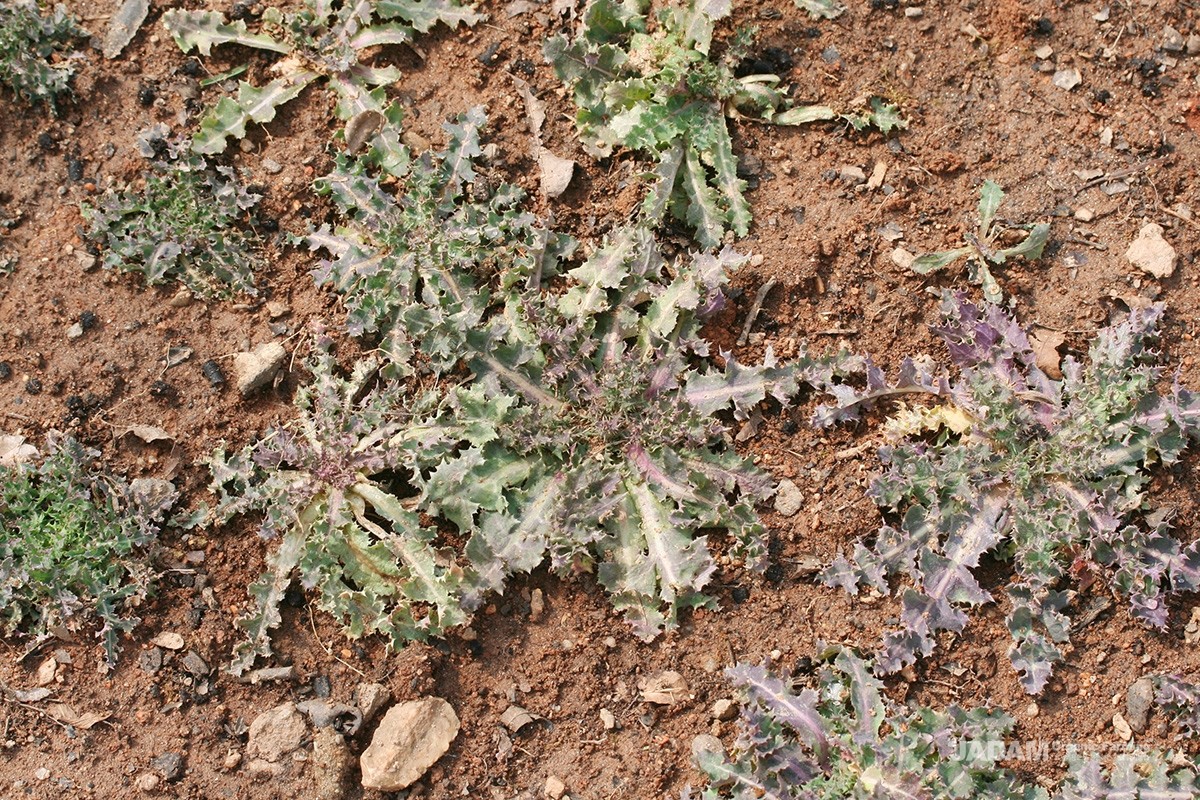
The spiny sowthistle (Sonchus asper) is a winter annual weed commonly found growing along roadsides, vacant lots, field margins, and orchards. While it typically germinates in autumn and overwinters as a rosette cushion flat against the ground, it can also germinate in late spring, continuing to bloom and bear fruit into early winter. The basal leaves cling tightly to the ground and are deeply lobed like a radish leaf. These leaves frequently display a purplish tint with sharp, spine-like tips, and they typically wither away by the time the plant begins to flower.
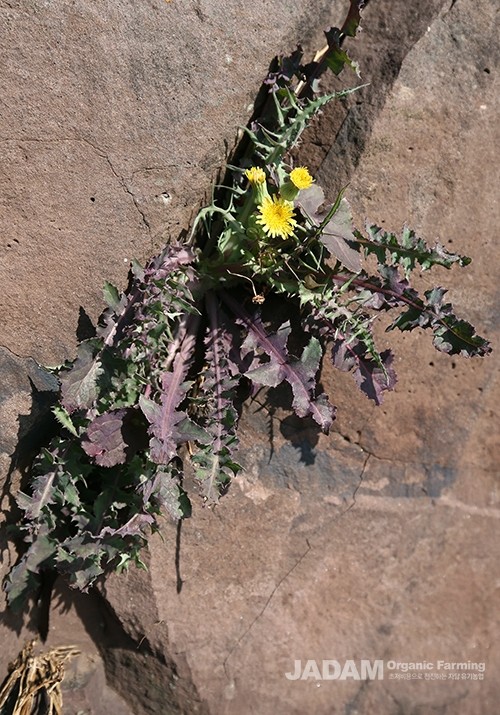
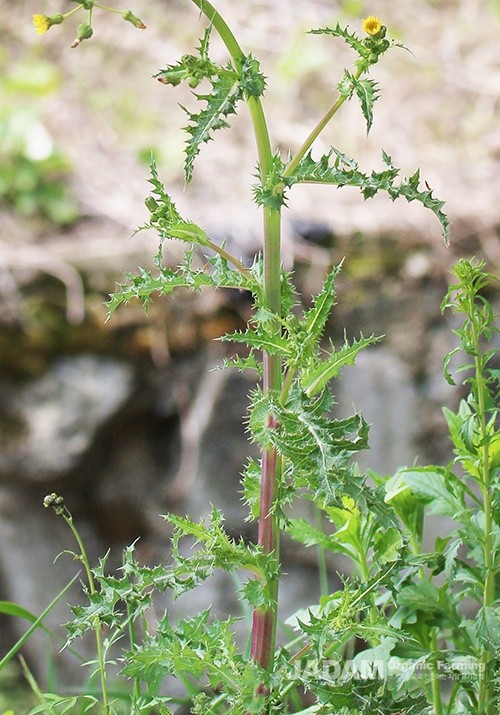
The stems arising from the center of the basal rosette grow upright to a height of 40 to 120 cm. They are hollow, purplish, and exude a milky white sap when cut. The stem leaves are arranged alternately, taking on a narrow oblong-ovate shape with deeply pinnate lobes. The base of each leaf clasps tightly around the stem, and the serrated edges often turn into sharp spines. In contrast, the closely related common sowthistle (Sonchus oleraceus) has fewer serrations along its leaf margins, and its tips generally do not harden into sharp spines.
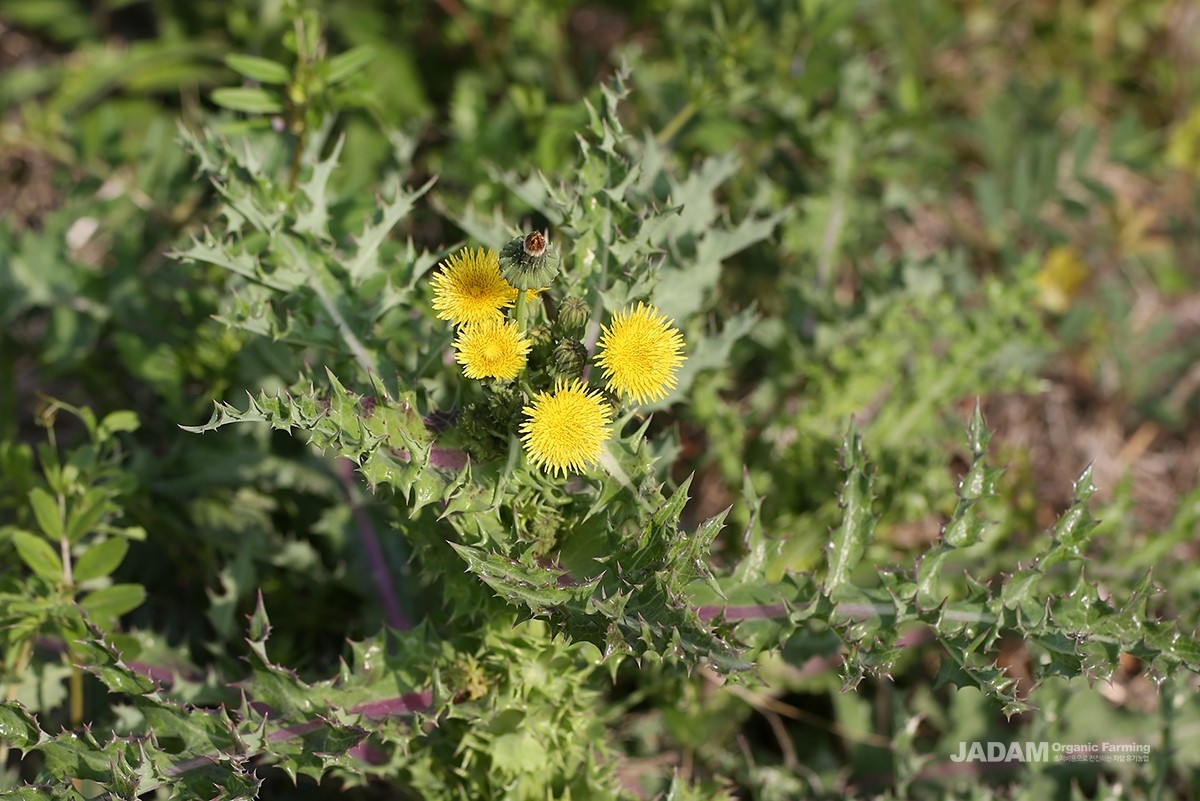
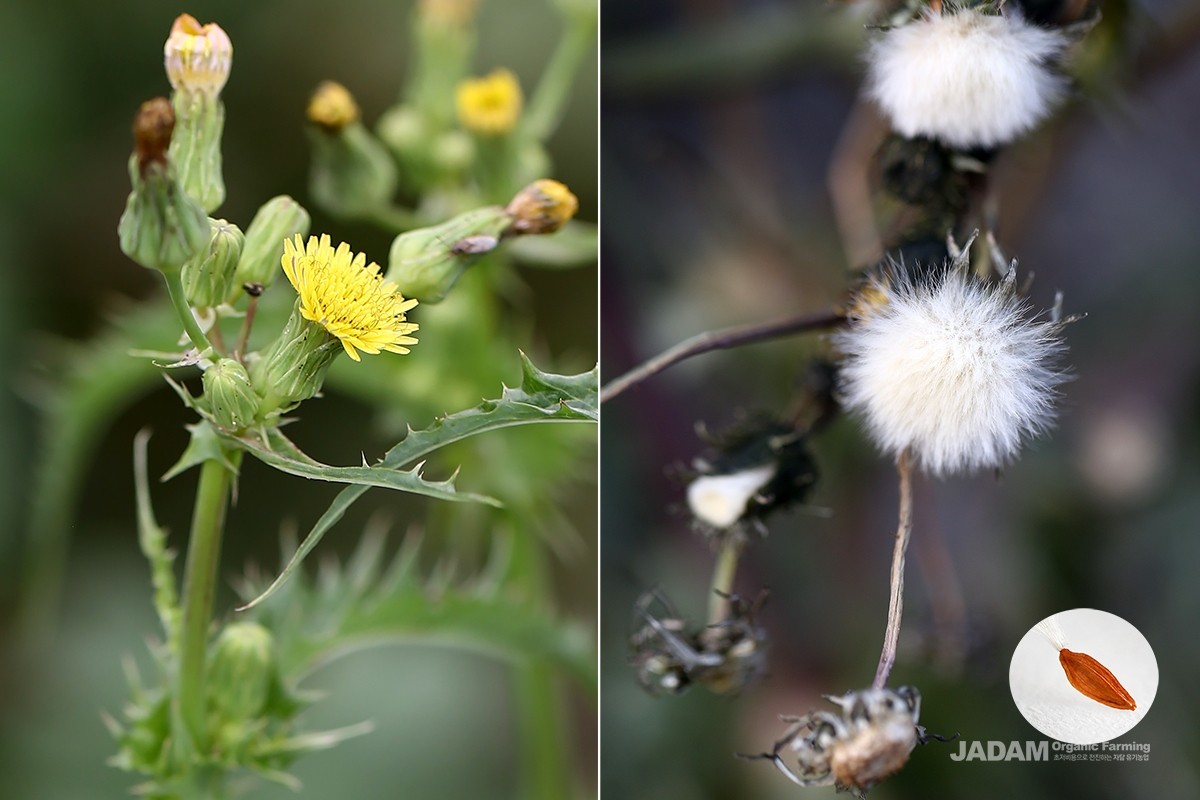
Beginning in May, yellow flower heads that resemble the common dandelion (Taraxacum officinale) bloom at the tips of the stems and branches. These flower heads contain no straw-like tubular disk flowers, consisting entirely of densely packed ray florets instead. The involucre is egg-shaped, with the outermost bracts being the shortest. In warmer southern regions, these flowers can be spotted from early spring all the way into early winter. Once the blossoms fade, the white pappus (feathery tufts) attached to the seeds puffs up, preparing to catch the wind.
The fruit is an achene, measuring about 2 to 3 mm in length with an oblong-ovate shape. It features three distinct longitudinal ribs but lacks fine transverse wrinkles. A single flower head produces at least 200 to 300 seeds. While the Korean name Bangaji-ttong sounds as endearing as Aegi-ttong-pul (greater celandine), its exact etymological origin remains unknown. Some hypothesize a connection to the grasshopper, noting that bangaji is a regional dialect term for the long-headed grasshopper, suggesting the plant's shape or secretions resembled grasshopper droppings.
▶ Utilization and Medicinal Properties
The young leaves, stems, and flower buds can be blanched and seasoned as namul (Korean seasoned vegetable dishes) or stir-fried. In traditional medicine, it is used to clear heat, detoxify the body, reduce swelling, dispel blood stasis, cool the blood, and stop bleeding. It demonstrates high efficacy against acute sore throats, dysentery, blood in the stool or urine, nosebleeds, burns, and boils. Its taste is bitter, and its property is cold.
▶ Control Methods
Plants that have grown throughout the winter should be dug up and consumed as wild spring greens before the farming season begins. Any individuals that sprout later in the season should be removed well before they can disperse their wind-borne seeds.
▶ Origin of Name and Similar Species
It is named Keun-bangaji-ttong (large sowthistle) because it grows significantly larger than the common sowthistle. The common sowthistle can be easily distinguished by its leaf margins, which feature fewer serrations and generally lack the sharp, spine-like tips characteristic of the spiny sowthistle.
FAQ: Quick Fact
Q: Is the spiny sowthistle edible, and what are its primary characteristics and health benefits? A: Yes, the young leaves, stems, and buds are edible as seasoned or stir-fried greens; it is a hollow-stemmed winter annual exuding milky sap that is used traditionally to clear internal heat and stop bleeding, though it must be handled carefully due to its sharp, spine-like leaf margins.