

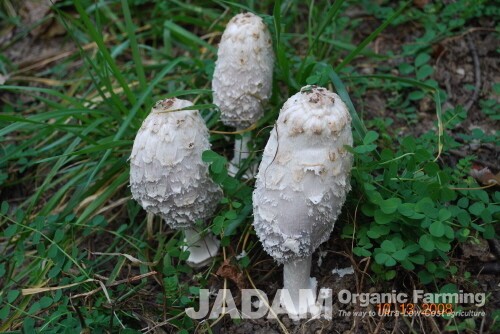
The scientific name for the Shaggy Mane mushroom is Coprinus comatus. The genus name, Coprinus, is derived from the Greek word kopros, meaning "dung," particularly from large animals. The species name, comatus, comes from the Latin word coma, meaning "shaggy hair" or "adorned with hair tufts."
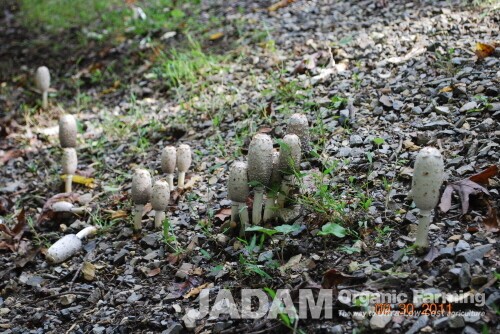
In English, it is commonly known as the "Shaggy Mane" or "Lawyer's Wig" because it resembles the wigs traditionally worn by British lawyers. Some even call it the "thunderstorm head," likely because it often sprouts in dense clusters immediately following heavy rain. In my area, I frequently find them growing in lawns or meadows in the morning after a heavy autumn downpour in late October.
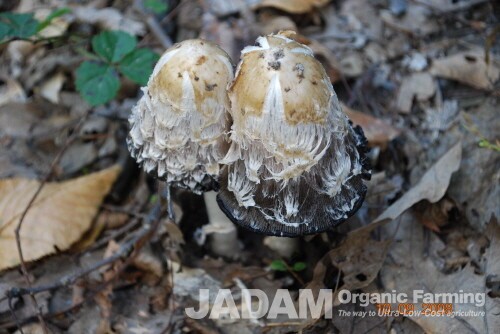
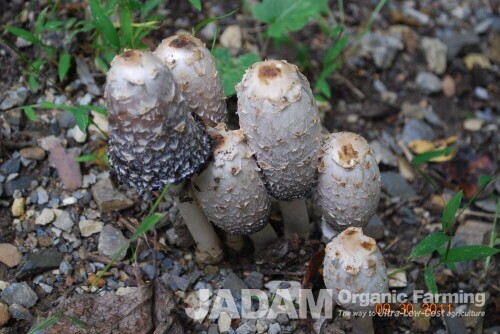
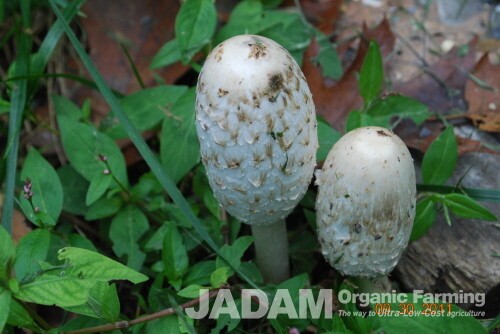
The Shaggy Mane is a popular edible mushroom in Europe, North America, and Korea. It is easy to identify, and since there are no similar-looking poisonous look-alikes, it is relatively safe for foraging. The strength of this mushroom is truly surprising, as it has been known to push through asphalt as it grows. I often see them sprouting vigorously along unpaved forest paths that have been packed hard by car tires. When gathered while still young and firm, they are excellent in doenjang-jjigae (soybean paste stew). The texture is pleasant, and both the flavor and aroma are exceptional, making it one of my favorite mushrooms to eat.
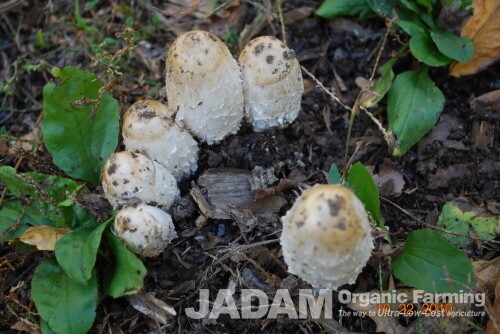
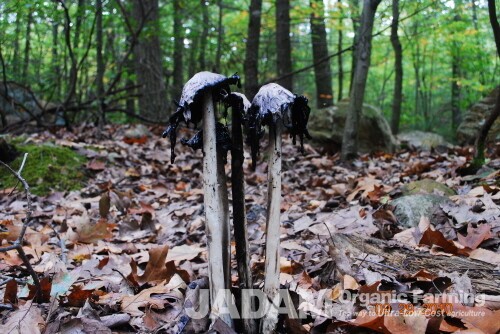
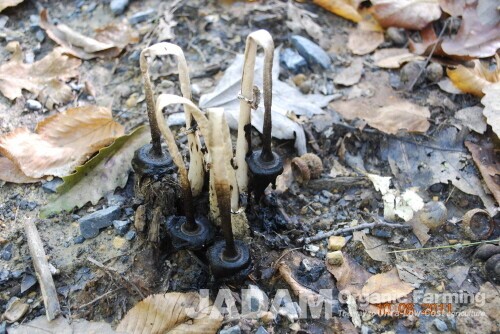
There is a saying that you should start the water boiling before you even head out to pick Shaggy Manes. This is because the young caps can begin to bloom and dissolve during the short trip home. They grow incredibly fast, capable of releasing 1.66 million spores per minute and a total of 52.5 million spores throughout their short life. Young specimens contain about 25% protein and have a wonderful taste. It is best to gather them early, blanch them immediately, and store them in the refrigerator. Once the cap opens, it quickly begins to liquefy into a black, ink-like substance. This is why it is called "Inky Cap" in English and Meokmul-beoseot (Ink Mushroom) in Korean. In the past, when ink was scarce, this liquid was actually used for writing. I have even collected this liquid myself to use as black paint.
Chemical Composition
The exquisite aroma of this mushroom comes from a wealth of volatile compounds such as 3-octanone, 3-octanol, and 1-octen-3-ol. Compared to 18 other types of medicinal and edible mushrooms, the Shaggy Mane is particularly rich in 1,3 beta-glucan.
According to Mr. Wan-hee Park, this mushroom contains 30 types of free amino acids, 8 types of fatty acids, 8 trace metals, and various polysaccharides. It can be cultivated artificially, but the key is to harvest it before the spores mature and the cap turns to ink. It also tends to grow better in soil rich in magnesium.
Medical Applications
In China, the Shaggy Mane is used to aid digestion and treat hemorrhoids. It has shown significant anti-cancer potential, with research indicating a 100% inhibition rate against Sarcoma 180 and a 90% inhibition rate against Ehrlich ascites cancer. Extracts from fresh mushrooms contain antibiotic properties, and water extracts have demonstrated efficacy against breast cancer cells.
Furthermore, alkaline proteins in the mushroom have been found to suppress stomach cancer cells, while ethyl acetate extracts have shown inhibitory effects on ovarian cancer cells. It also contains "coprinin," a natural antibiotic that provides robust defense against various fungi and bacteria. "Coprinol," obtained through fermentation, has demonstrated high efficacy against drug-resistant Gram-positive bacteria.
Recent studies have confirmed the mushroom's ability to lower blood sugar. Experiments on rats showed that dried Shaggy Mane powder significantly reduced blood glucose levels. Fermented Shaggy Mane is also rich in vanadium, which contributes to this blood-sugar-lowering effect.
A compound called "comatin" was found to lower blood cholesterol and fat in diabetic rats. Additionally, ethanol extracts have shown the ability to block androgen activity, suggesting potential for the treatment or prevention of prostate enlargement and prostate cancer. In 2005, a Korean study by Ms. Kyeong-ae Lee suggested that extracts could reduce lipid degeneration and inflammation, hinting at strong liver-protective properties.
Potential as a Natural Pesticide
Like some other mushrooms, the Shaggy Mane acts as a natural predator to nematodes. It creates specialized structures that penetrate the bodies of nematodes, allowing the mycelium to colonize and kill them. Unlike the oyster mushroom, which uses toxic droplets to paralyze prey, the Shaggy Mane uses unique, spiked spherical structures to kill and digest the nematodes within a few days. Perhaps because of these insecticidal properties, I rarely see any signs of pest damage on these mushrooms in the wild.
References:
▶Rogers, R. (2011). The Fungal Pharmacy. North Atlantic Press.
▶Park, W., & Lee, H. (1999). Korean Medicinal Mushrooms Field Guide. Kyohaksa.
FAQ: Quick Fact
Q: What is the most unique characteristic of the Shaggy Mane mushroom, and how should it be used medicinally?
A: The Shaggy Mane is famous for dissolving into black ink shortly after being picked; medicinally, it is highly effective at lowering blood sugar for diabetes and can be boiled as a decoction to treat hemorrhoids.