

It is a winter annual of the mustard family commonly found growing in agricultural lands, such as fields, field margins, rice paddy banks, and orchards, as well as along sunny roadsides and open plains. It germinates in the autumn, overwinters pressed flat against the ground like a rosette cushion, and blooms with white inflorescences from early spring, bearing fan-shaped fruits.
Shepherd's purse (Capsella bursa-pastoris) is a winter annual of the Brassicaceae (mustard) family, cherished as one of the oldest and most representative namul (Korean edible wild greens). It commonly grows in agricultural lands such as fields, field margins, rice paddy banks, and orchards, as well as along sunny roadsides and open plains. Most germinate in the autumn and overwinter, but some sprout in early spring or summer and live a short life.
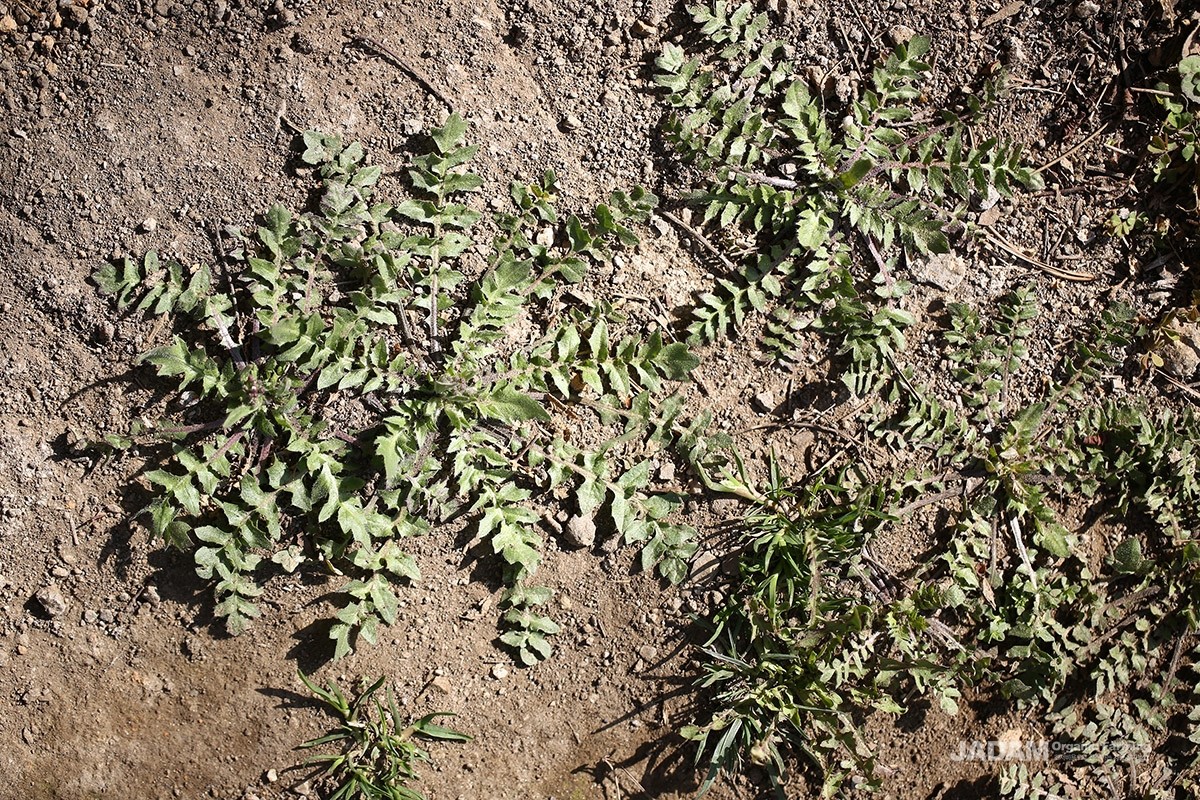
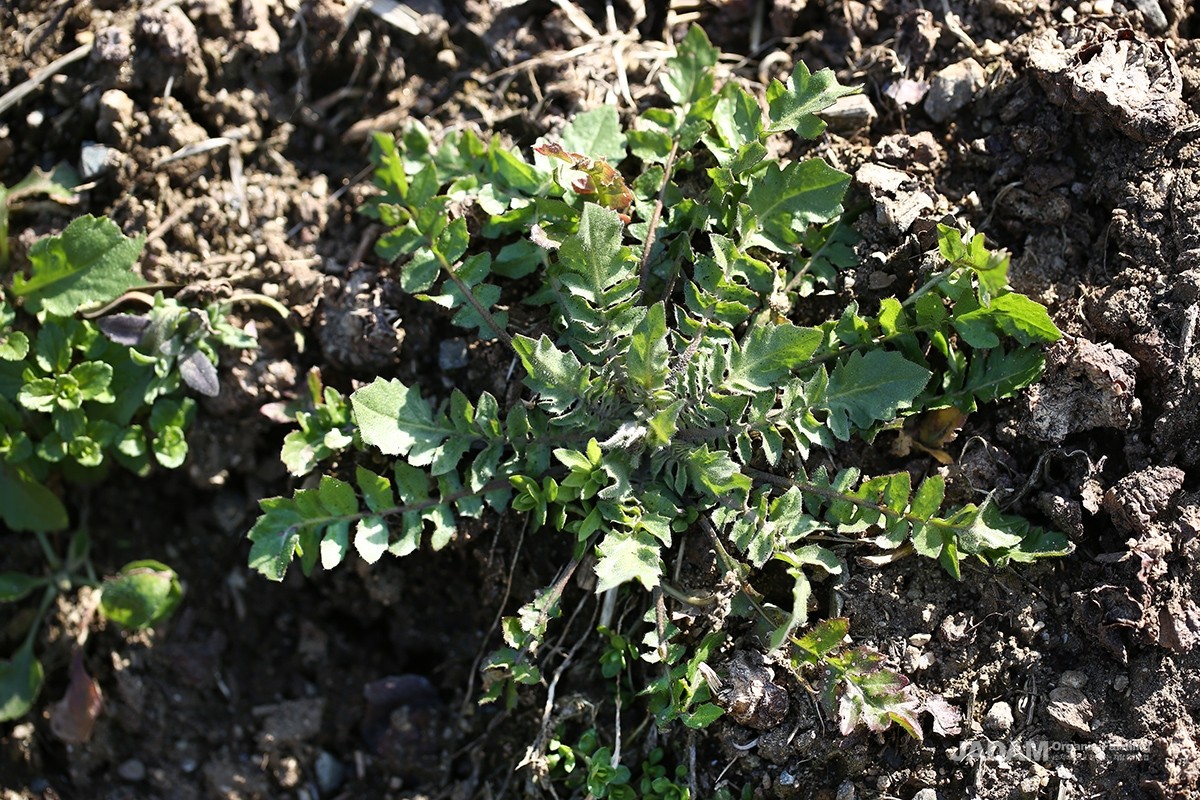
As the weather cools heading into autumn, the winter-type individuals germinate and overwinter pressed flat against the ground like a rosette cushion. While avoiding the cold, they efficiently gather nutrients through photosynthesis with their spread-out leaves. Then, in early spring, they shoot up their stems and bloom a step ahead of other weeds. They grow to a height of 10 to 50 cm and are covered with fine hairs overall. The stem leaves are lanceolate and are arranged alternately.
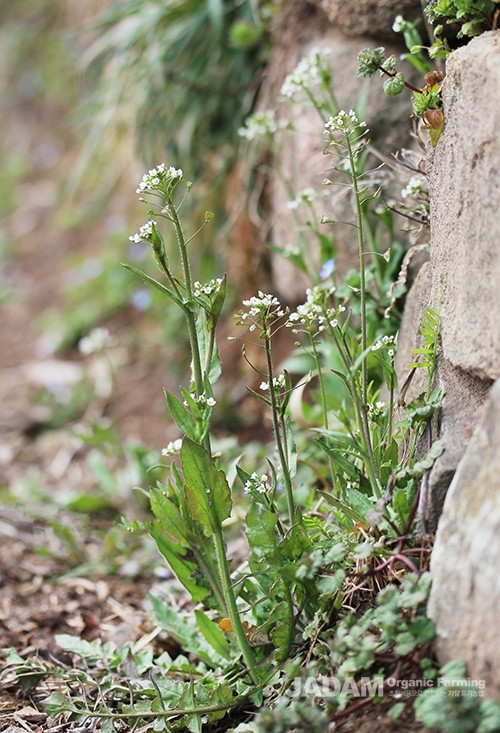
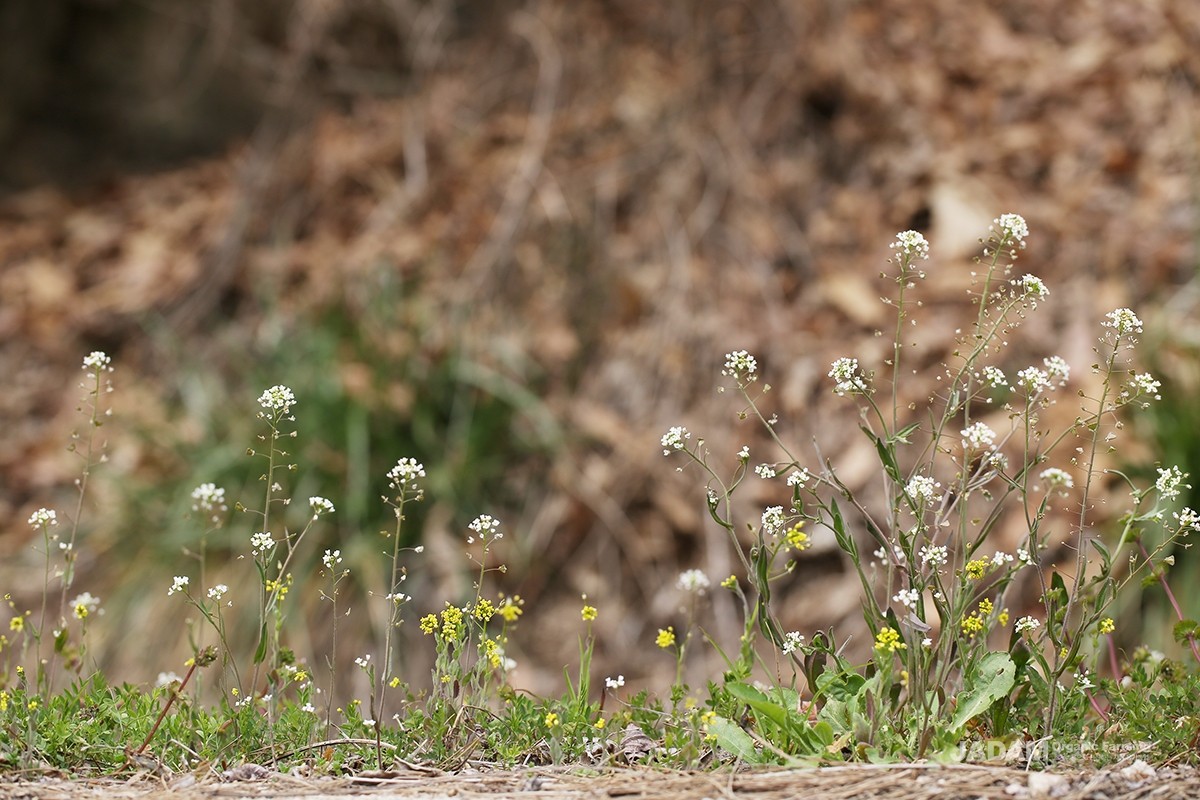
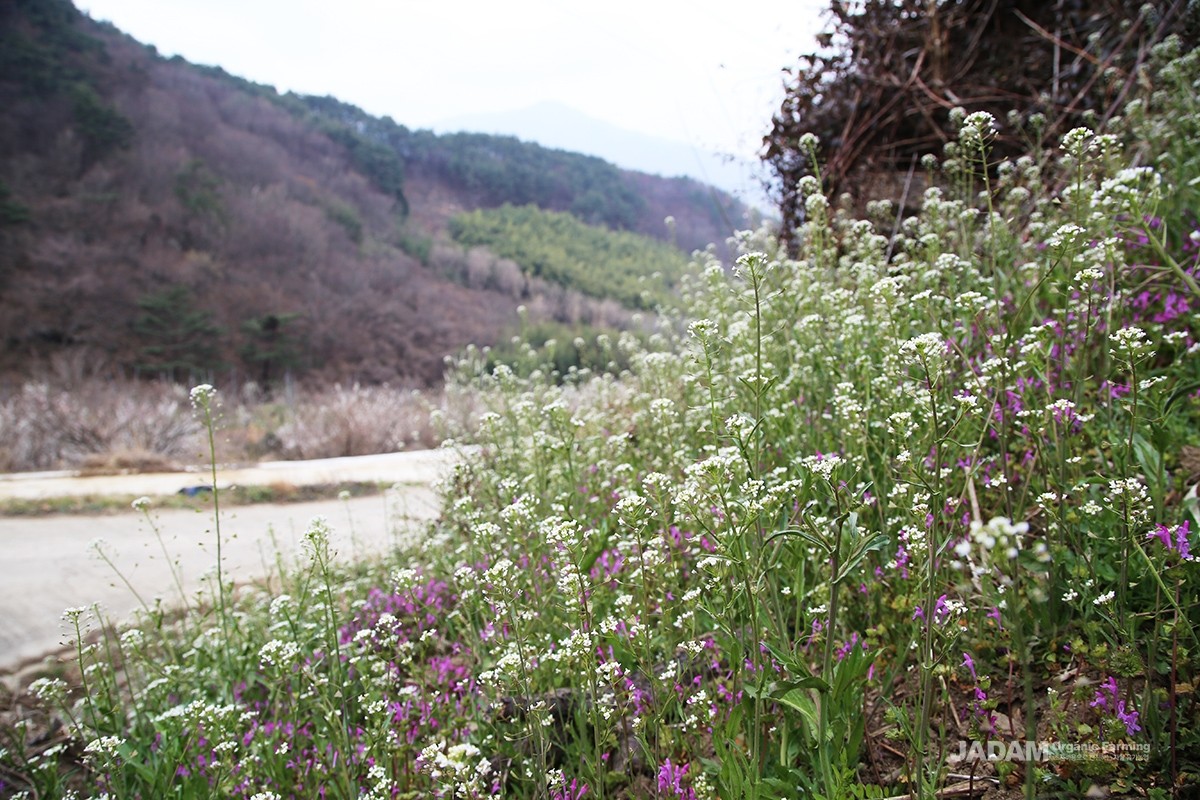
The white inflorescences blooming at the ends of the stems and branches, along with the yellow flowers of the woodland draba (Draba nemorosa), richly color the empty fields during the agricultural resting season. The reason the shepherd's purse acts so diligently is to bear fruit before farmers plow the fields. When the field is plowed, the ripened seeds are naturally buried in the soil to continue the next generation. This is a survival strategy chosen by most winter-type weeds that make their home in agricultural lands.
The flower consists of four sepals, four petals, six stamens, and one pistil. The fruit is flat, triangular, and fan-shaped. When ripe, it splits into two halves, pouring out tiny, oval-shaped seeds. While the shepherd's purse graces dining tables with its fragrant and sweet-yet-bitter taste, it also capitalizes on human agriculture to propagate and expand its territory.
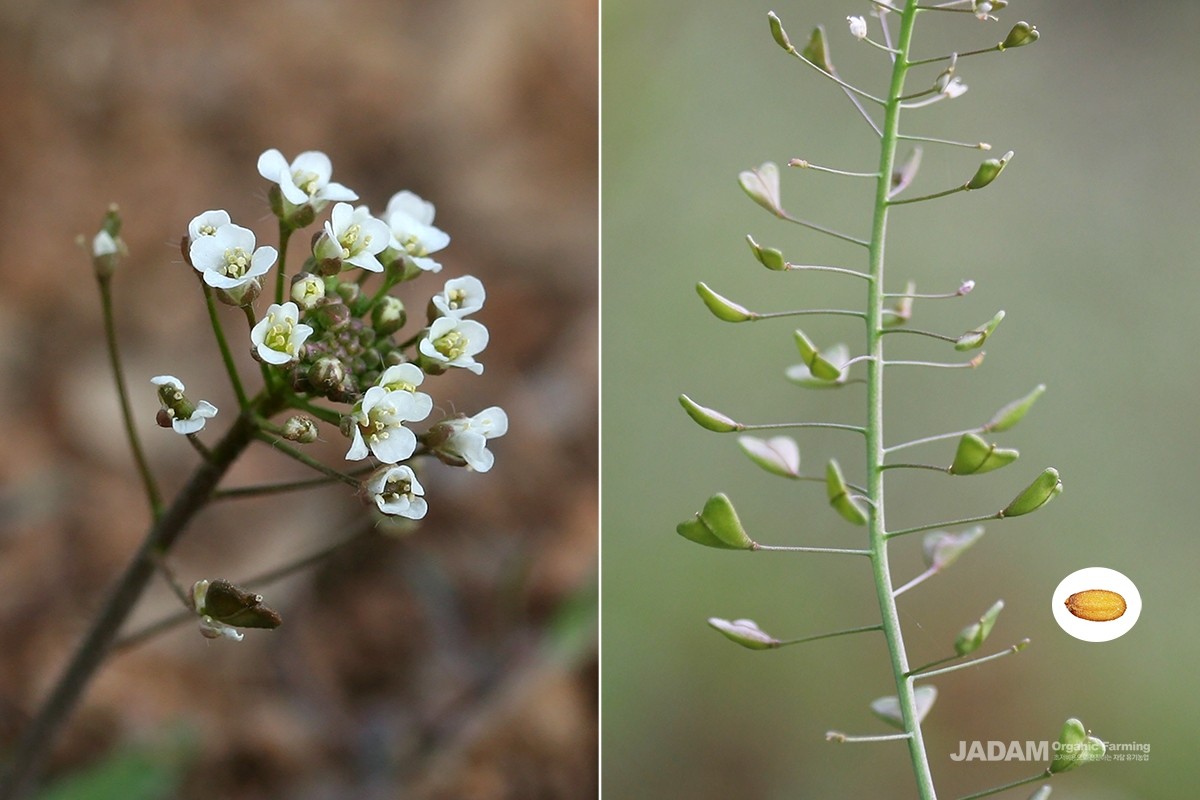
▶ Utilization and Medicinal Properties The young shoots and leaves are dug up along with the roots to be seasoned as namul or added to soups and doenjang-jjigae (Korean soybean paste stew). Medicinally, it is known to aid digestion, promote urination, stop bleeding, and improve eyesight. It is used to treat dysentery, edema, gonorrhea, uterine bleeding, menorrhagia, and bloodshot, painful eyes. Its taste is sweet, and its medicinal property is neutral.
▶ Control Methods Since it is a winter annual that flourishes only during the agricultural off-season, it does not pose a significant problem to farming. They can be foraged and eaten as spring greens early in the season, and any remaining plants are easily removed when farming begins (Yoo, 2020).
▶ Origin of Name and Similar Species The Korean name Naengi is believed to be an old native word sharing the same etymology as nasaengi, namsae, and namul (words referring to vegetables or wild greens). It can be distinguished from similar species like the variable-leaved bittercress (Cardamine impatiens) or the wavy bittercress (Cardamine flexuosa), which have pinnate stem leaves, long oval-shaped fruits, and a pungent taste.
FAQ: Quick Fact
Q: Is shepherd's purse edible, and what are its main medicinal properties and characteristics? A: Yes, its entire young plant, including the root, is a highly prized edible spring green; medicinally, it aids digestion and stops bleeding, and ecologically, it is a winter annual weed that smartly completes its life cycle before spring plowing.