

Seong-hyeong Lee from Suncheon. Crops: Pepper, Garlic, Onion. Area: ≈ 1.63 acres. 14 years in organic farming.
The case of Seong-hyeong Lee demonstrates that JADAM Organic Farming is a practical technology that can be stably applied in real farming operations. By utilizing plenty of leaf mold soil and boiled potatoes, he rapidly cultures JMS within 17 hours. He significantly reduces costs and labor by repeatedly using the leftover microbial sediment. Furthermore, he separately uses JADAM Microbial Pesticide (JMP) and JMP.S (JMP mixed with JADAM Sulfur, JS) depending on the greenhouse or open-field environment, keeping pests and diseases in check through periodic control. These experiences clearly show that the JADAM method is an Ultra-Low-Cost and highly effective agricultural solution.
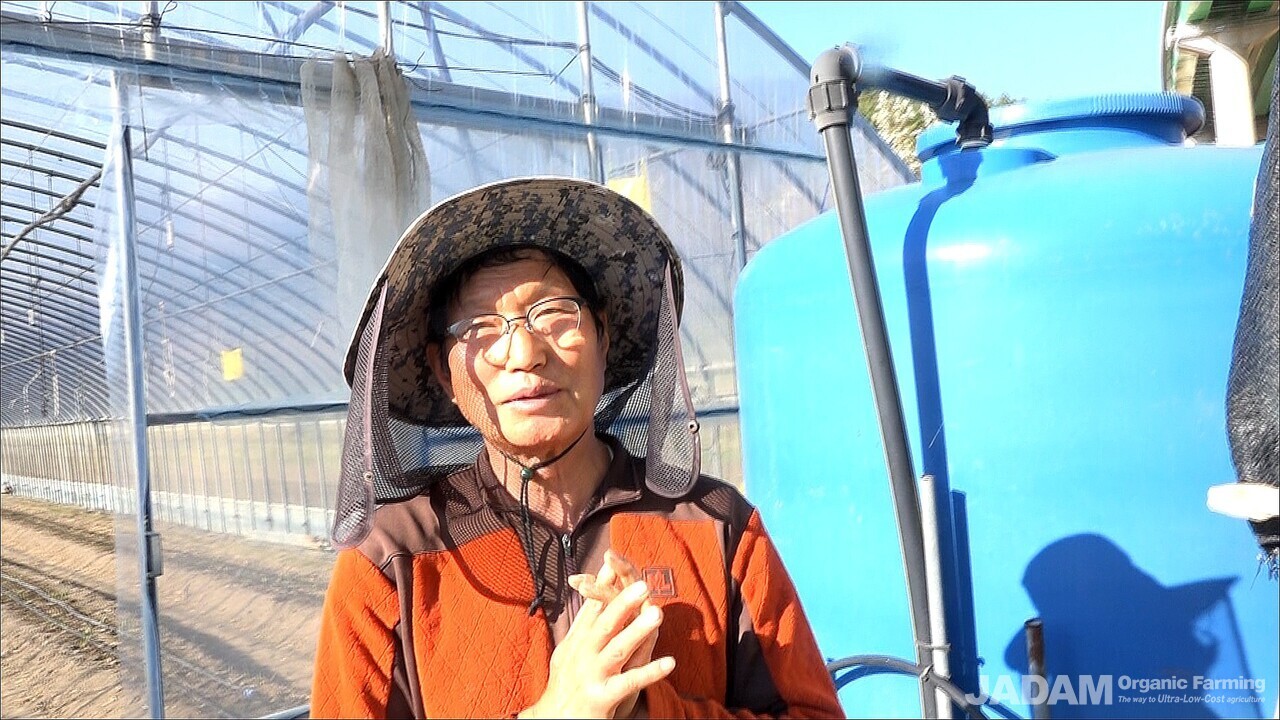
Even though he has already made 2 tons of JMP, he is currently culturing JMS to make more JMP. Making a large batch in the spring allows him to conveniently use it whenever needed, and it feels like using it for free, eliminating any financial burden.
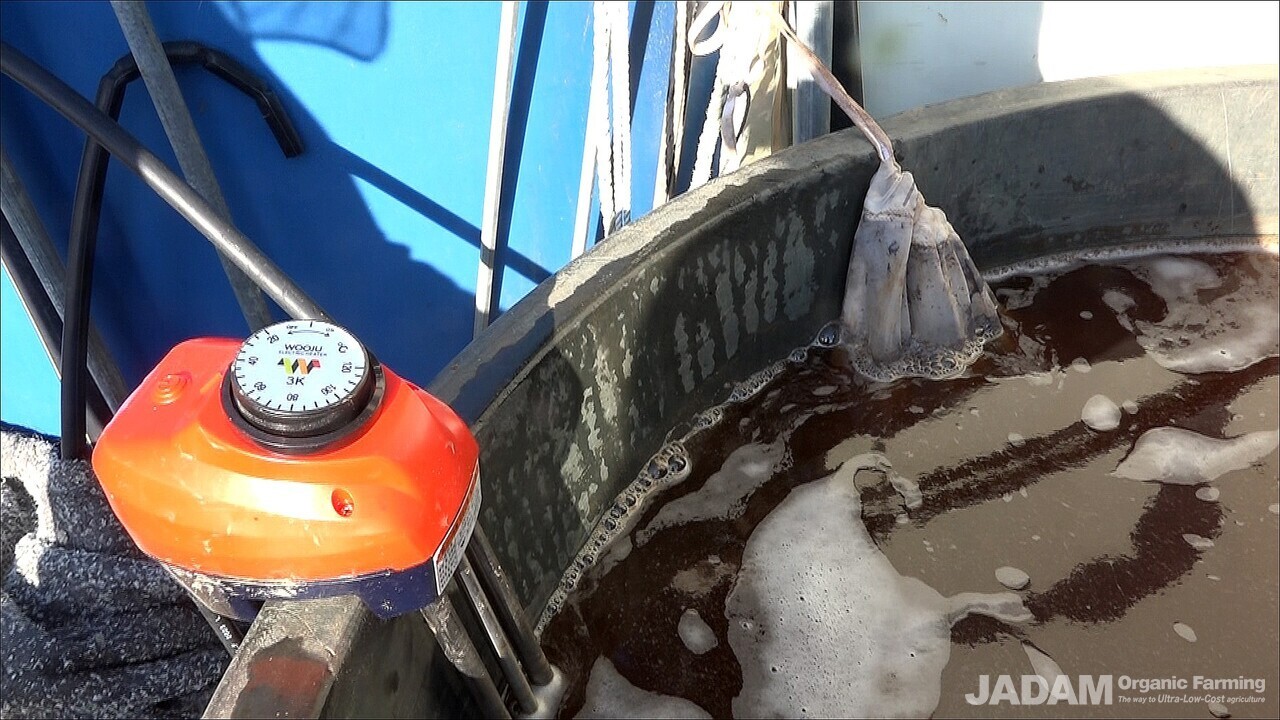
Because Mr. Lee attended JADAM lectures in the past and had experience culturing JMS, he has never failed in culturing JMS when making JMP. He draws groundwater and lets it sit for 2 to 3 days. Then, he heats it with a coil heater and adds plenty of leaf mold soil, over 700 g, to 500 L of water. Since he grows potatoes, he boils potatoes instead of using starch, adding a generous amount of 2.5 to 3 kg. When plenty of leaf mold soil and boiled potatoes are added this way, culturing JMS is completed in just 17 hours. Finding it a hassle to weigh the salt every time, he puts 10 kg of salt in a 45 L container to make saltwater, and scoops out 2 L with a beaker each time to add to the mixture.
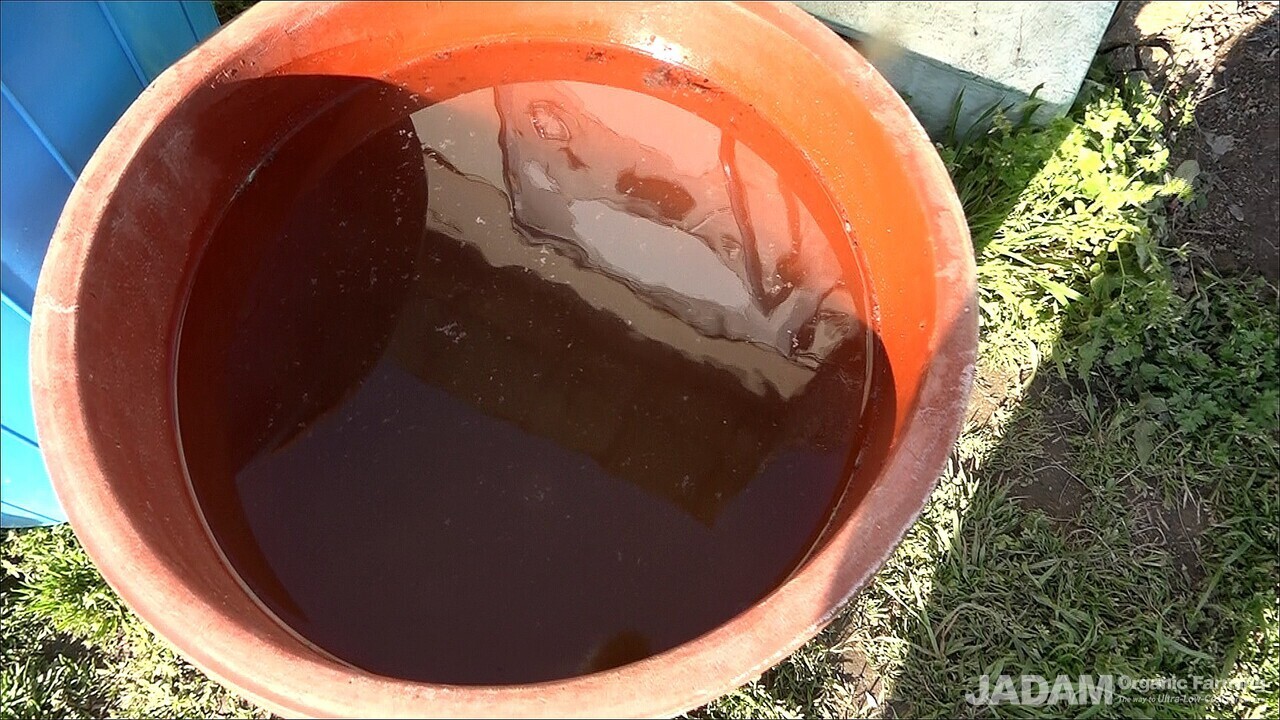
When culturing JMS is finished, he does not wash the container. Leaving the leftover microbial sediment and culturing it again yields excellent results. In the greenhouse, he uses only JMP. In the open field, he mixes it with JS to make JMP.S during the rainy season. He applies control measures every 5 days when pests and diseases are visible, and unconditionally once a week during normal times. When growing cabbages, he sprays JMP even if bugs are not visible. When he checks the next morning, the bugs have come out and died.
- Making JMP: https://www.jadam.kr/news/articleView.html?idxno=16765
- Watch Video (7 minutes)
|
HD
|
FAQ: Quick Fact
Q: What is the reason for continuing to culture even after securing 2 tons of JMP, and what benefits does this provide to real farms?
A: By making a large amount in advance, it can be used immediately whenever needed without cost burden, drastically reducing pesticide costs and improving work efficiency.