

A summer annual weed commonly growing in sunny, slightly dry roadsides, vacant lots, abandoned fields or their edges, and open plains. The young leaves have a whitish tinge, and it blooms and bears seeds from summer through autumn.
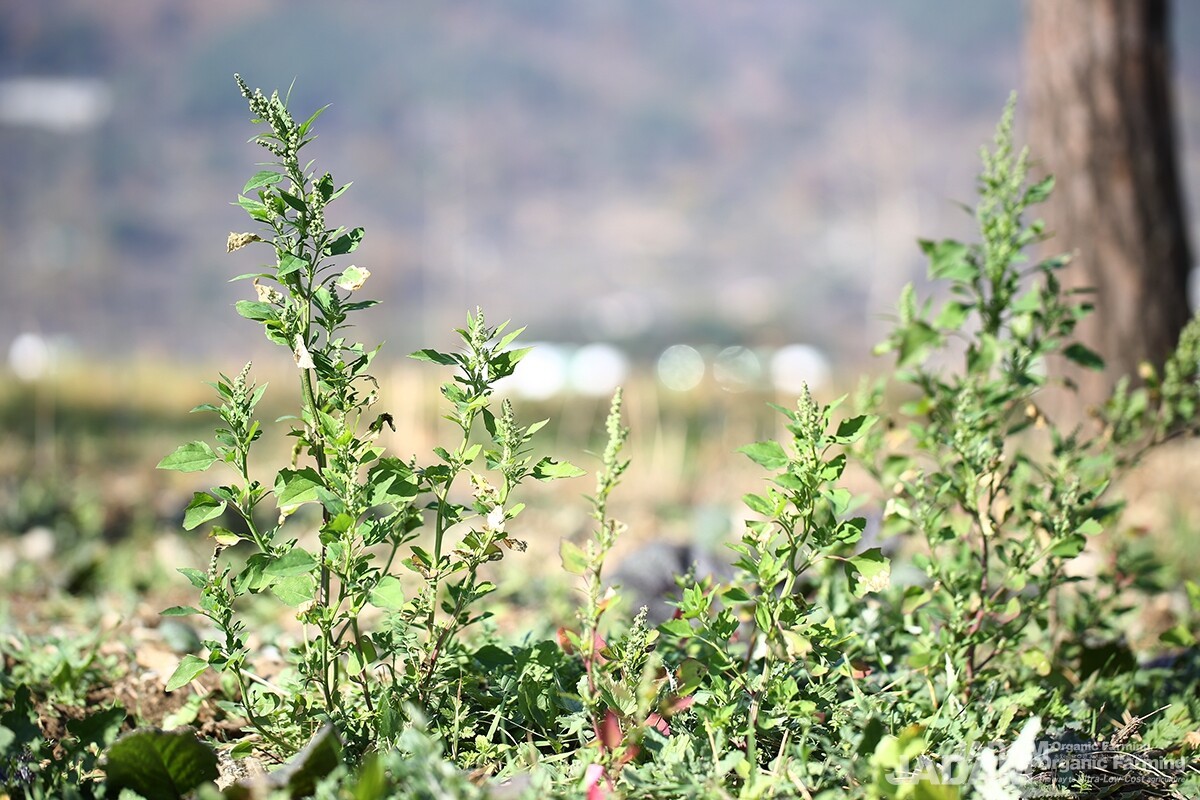
White goosefoot (Chenopodium album) is a summer annual weed commonly found growing in sunny, slightly dry areas such as roadsides, vacant lots, the edges of abandoned fields, and open plains. It prefers fertile soil and can grow up to 2 meters tall in nitrogen-rich environments. However, it is highly adaptable and can still bloom and bear seeds even at a hand's span in barren conditions.
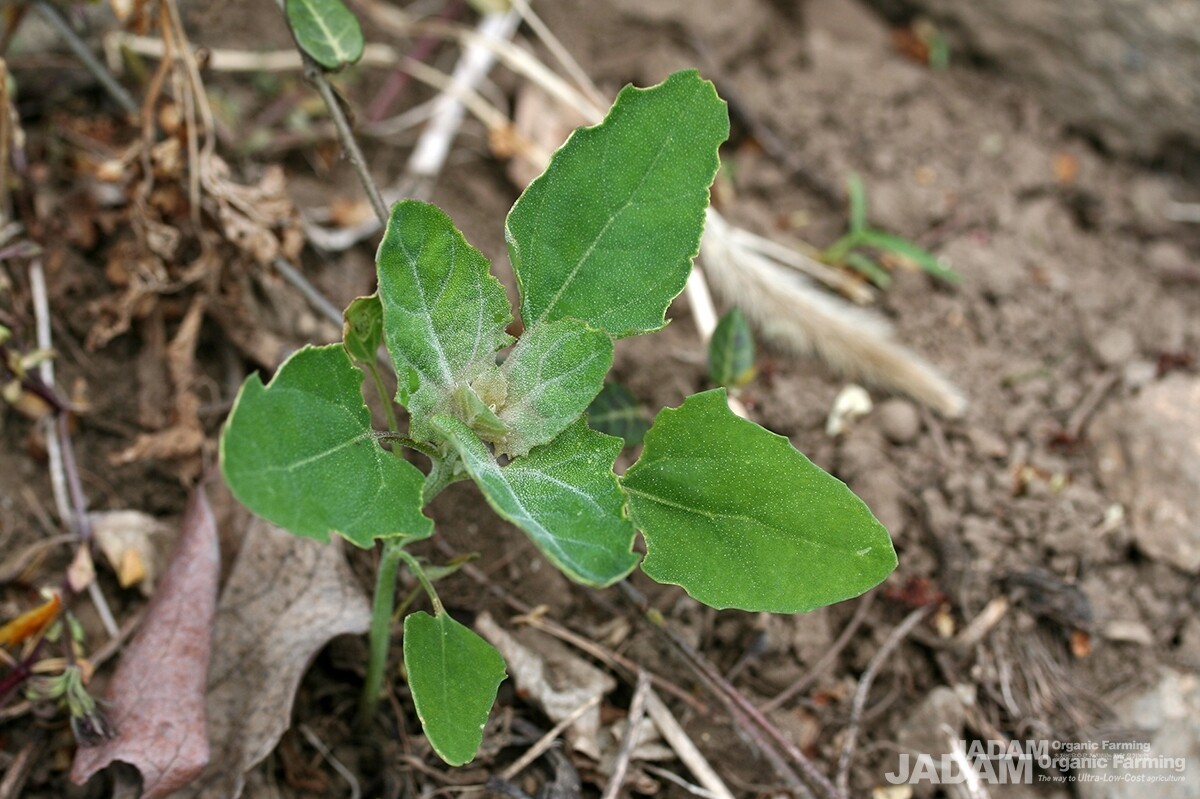
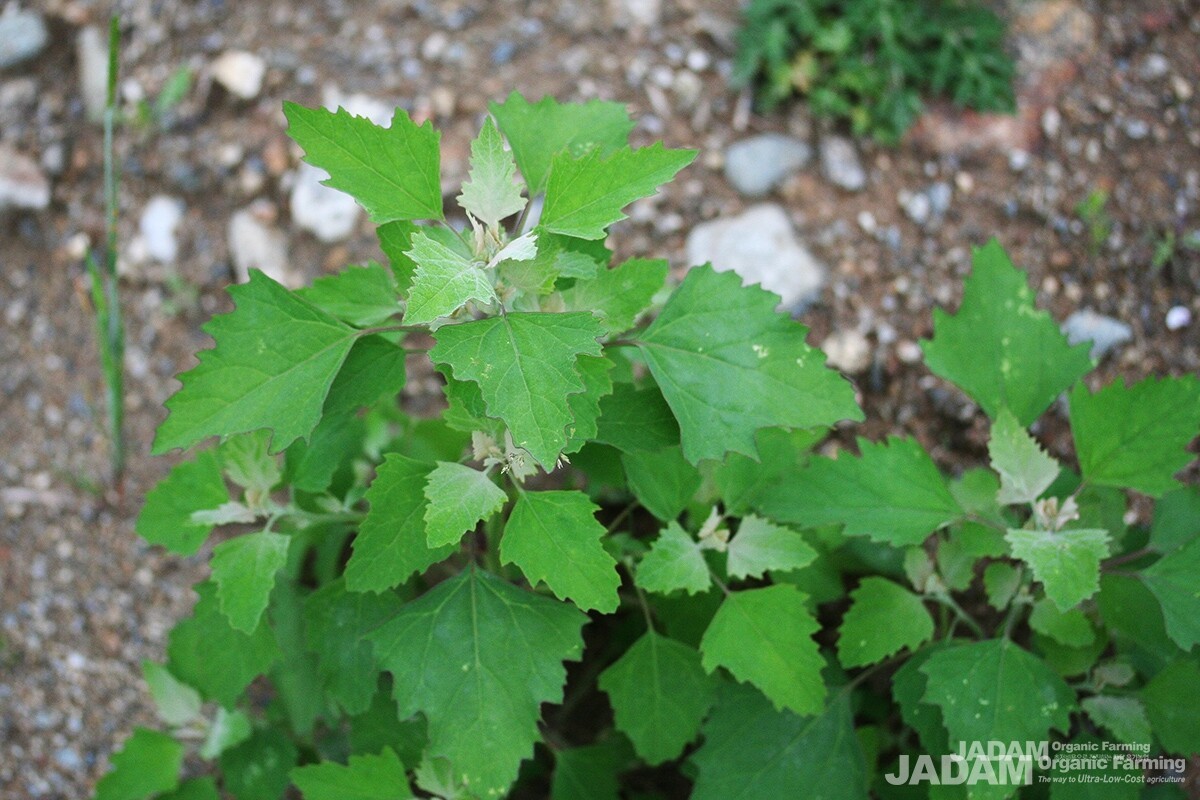
The stem stands upright, features vertical green stripes, and has an irregularly angled cross-section. The branching points are often tinged with red. Newly emerged shoots and young leaves have a powdery white hue, as if dusted with flour, whereas the young shoots of the red goosefoot (Chenopodium album var. centrorubrum) have a reddish tinge. The leaves are typically triangular-ovate and grow alternately. Their margins have irregular serrations, and the undersides are covered with a fine white powder.
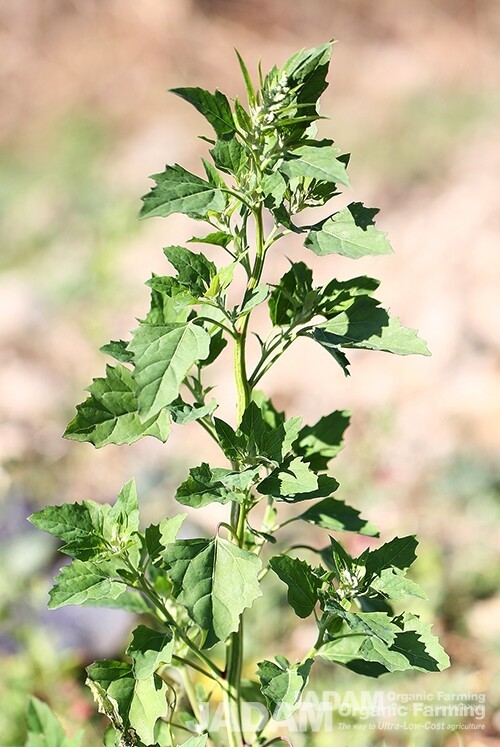
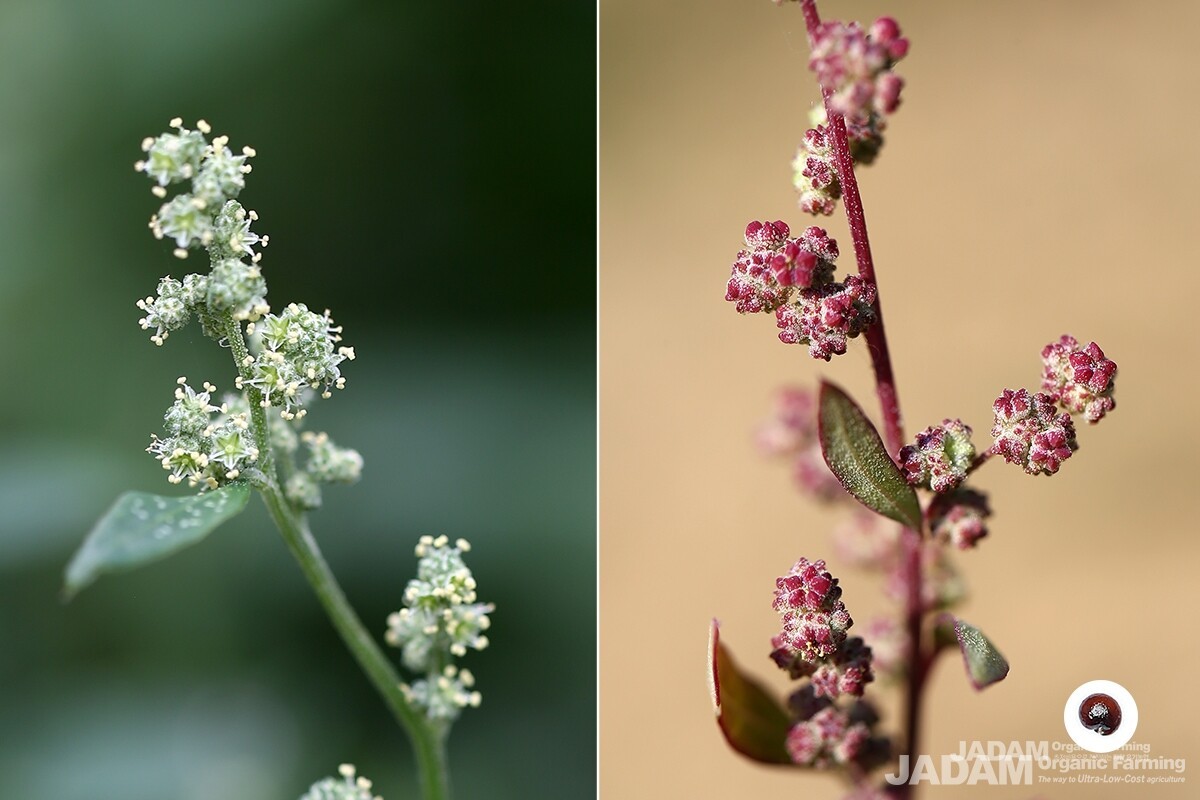
The plant grows slowly until June but shoots up rapidly in midsummer. It usually blooms during the summer, but if it germinates late due to human interference, it can continue flowering until late autumn. The yellowish-green flowers, covered in white powder, cluster in spike-like inflorescences at the branch tips and leaf axils to form panicles. It has five perianth segments and five stamens. The fruit is flat and disc-shaped, made of five segments that turn red, while the seeds ripen to a black color.
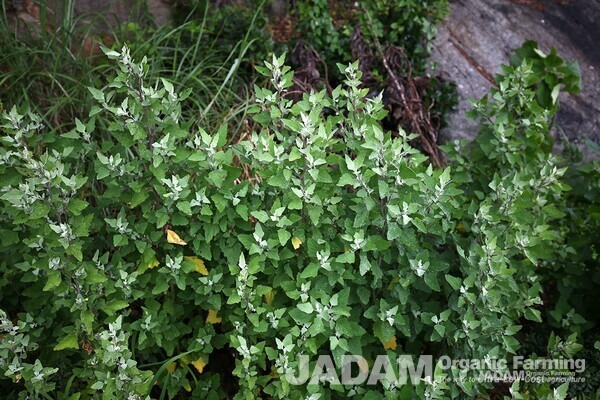
An average plant produces over 18,000 seeds, which can remain dormant in the soil for at least 6 years, and sometimes up to 30 to 40 years. With such extraordinary vitality combined with excellent environmental adaptability, the goosefoot has long spread worldwide following human migration routes. As a result, it is now one of the most widely distributed plants globally, boasting a vast number of varieties.
Utilization and Medicinal Properties
The young shoots are blanched to remove toxins and eaten as namul (Korean seasoned vegetable dishes) or dried to make muknamul (dried vegetables reconstituted for later use). However, consuming large amounts can cause sunlight-induced skin inflammation (photosensitivity). The mature, hard stems are traditionally used in Korea to craft light and sturdy walking sticks known as cheongnyeojang. In traditional medicine, the plant clears heat, promotes moisture expulsion, and acts as an antiparasitic. It is used to treat dysentery, diarrhea, eczema, and venomous insect bites. Its taste is sweet, its properties are neutral, and it contains mild toxicity.
Control Methods
Because it is a summer annual weed, it is best to pull it out from fields or greenhouses before it grows vigorously in the summer. Once it grows large, its roots spread deep and wide into the soil, making it exceedingly difficult to remove.
Origin of Name and Similar Species
The plant is called white goosefoot because its young leaves have a distinct whitish tinge. In Korea, it is often called neunjaengi or doteuraji without strictly distinguishing it from the red goosefoot. It can be visually distinguished from the red goosefoot, which has a reddish tinge on its young leaves, and the narrow-leaved goosefoot (Chenopodium album var. stenophyllum), which has elliptic or lanceolate leaves with smooth margins.
FAQ: Quick Fact
Q: Is white goosefoot edible, and what are its main medicinal properties and characteristics?
A: Yes, the young shoots are edible as a seasoned vegetable, but overconsumption can cause photosensitivity; this highly adaptable plant is used medicinally to clear heat and treat insect bites, and its sturdy mature stems are traditionally crafted into walking sticks.