

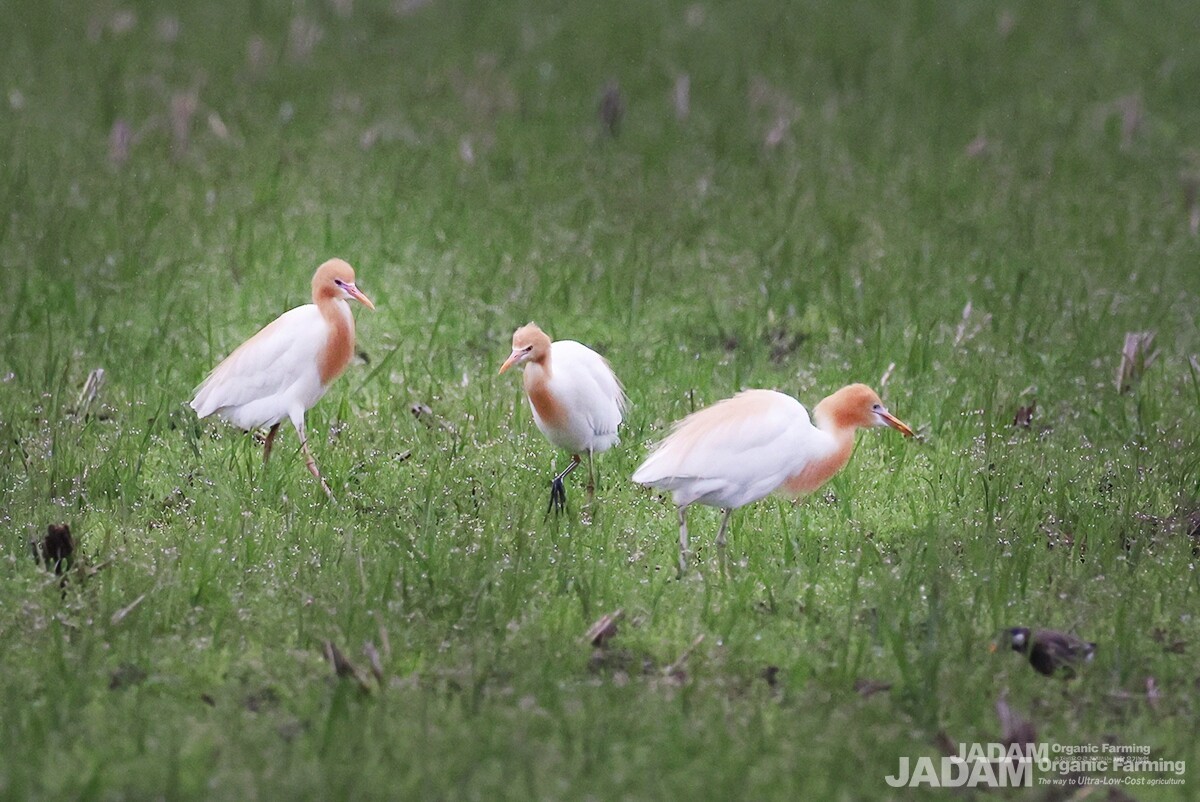
A summer migratory bird of the heron family, measuring about 50 cm in length, with identical plumage in both males and females. It resembles other egrets but has a smaller body and a relatively shorter neck. Its winter plumage is entirely white, while its summer plumage features a yellowish-brown tint on the head, neck, and back. The beak is orange, and the legs are dark brown.
In the past, during the rice-planting season, flocks of the cattle egret (Bubulcus ibis) would competitively follow behind tractors plowing the fields, snatching up unearthed insects, frogs, and loaches. However, their population has noticeably declined in recent years, making such scenes a rare sight. Nowadays, it is more common to simply see small flocks arriving in the spring and scattering across flooded rice paddies to forage.
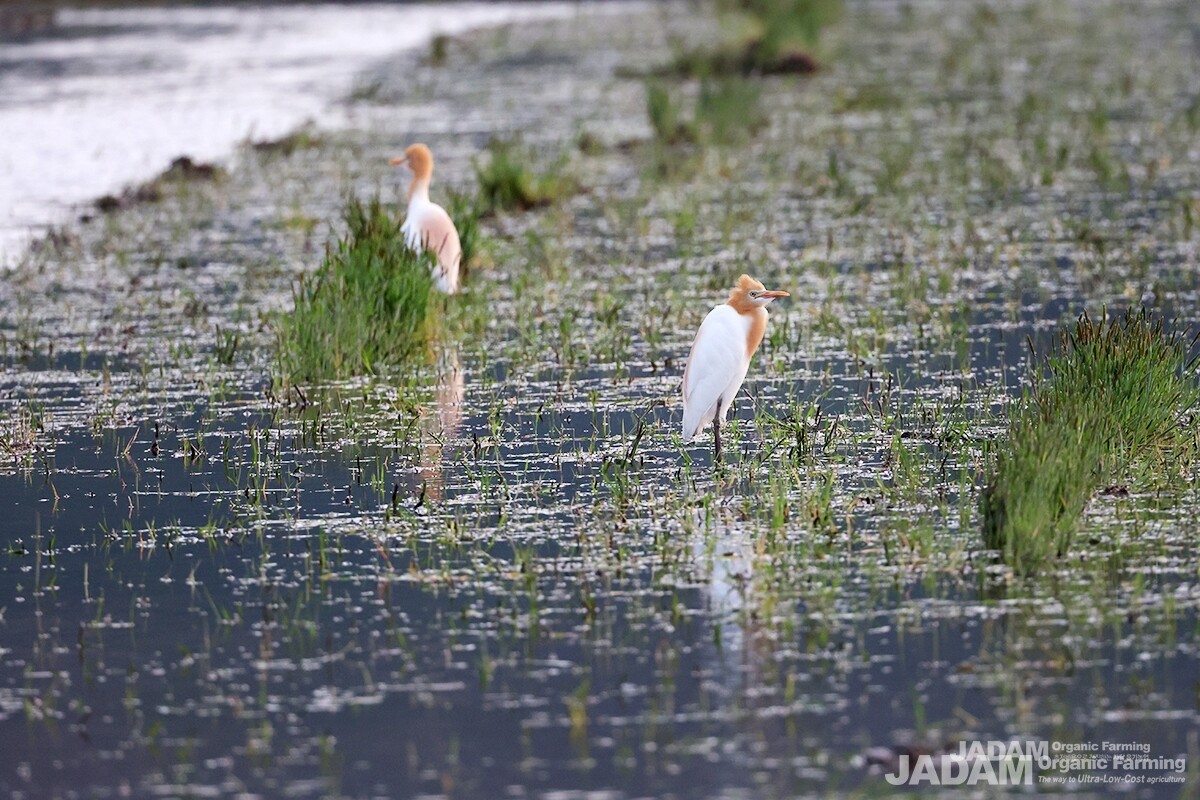
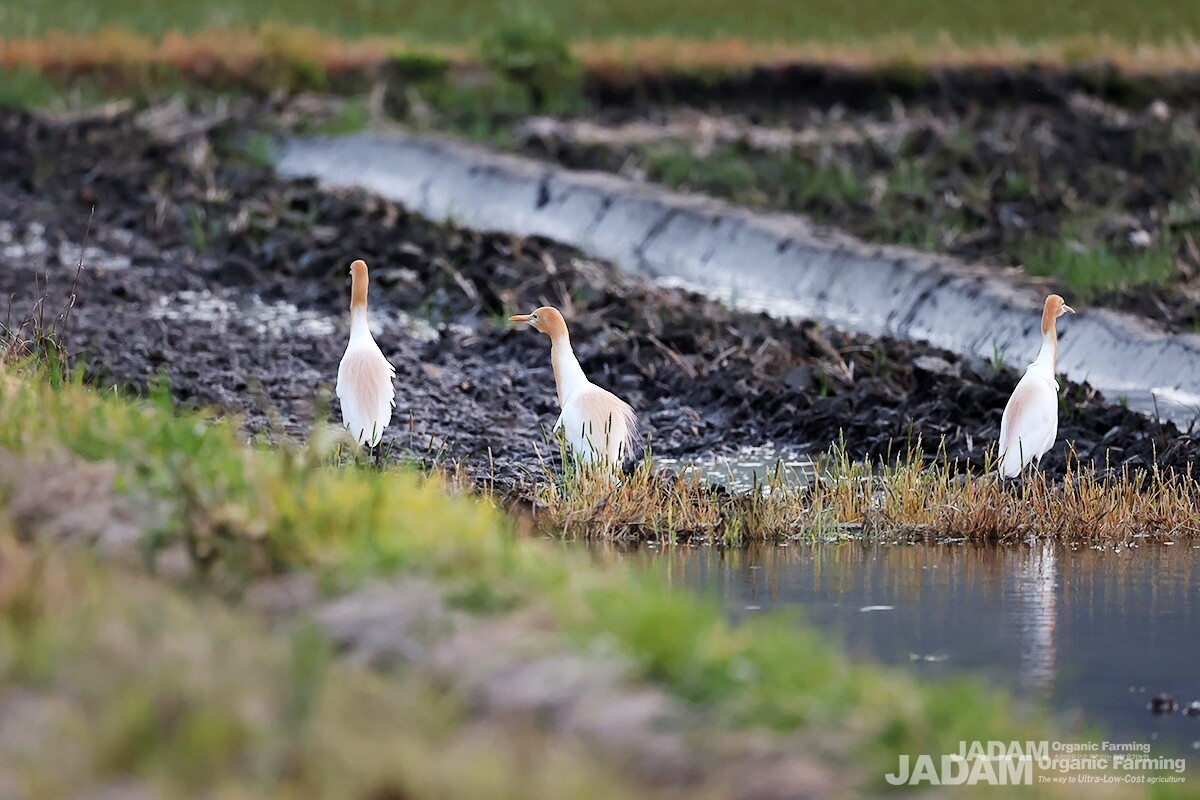
They can often be seen migrating or foraging alongside other egret species. Compared to other egrets, their foraging behavior is noticeably more active. While typical egrets tend to stay in one spot for a long time, patiently waiting for their prey to move before striking, the cattle egret moves around busily in search of food. In this regard, their smaller size and shorter necks actually seem to serve as an advantage.
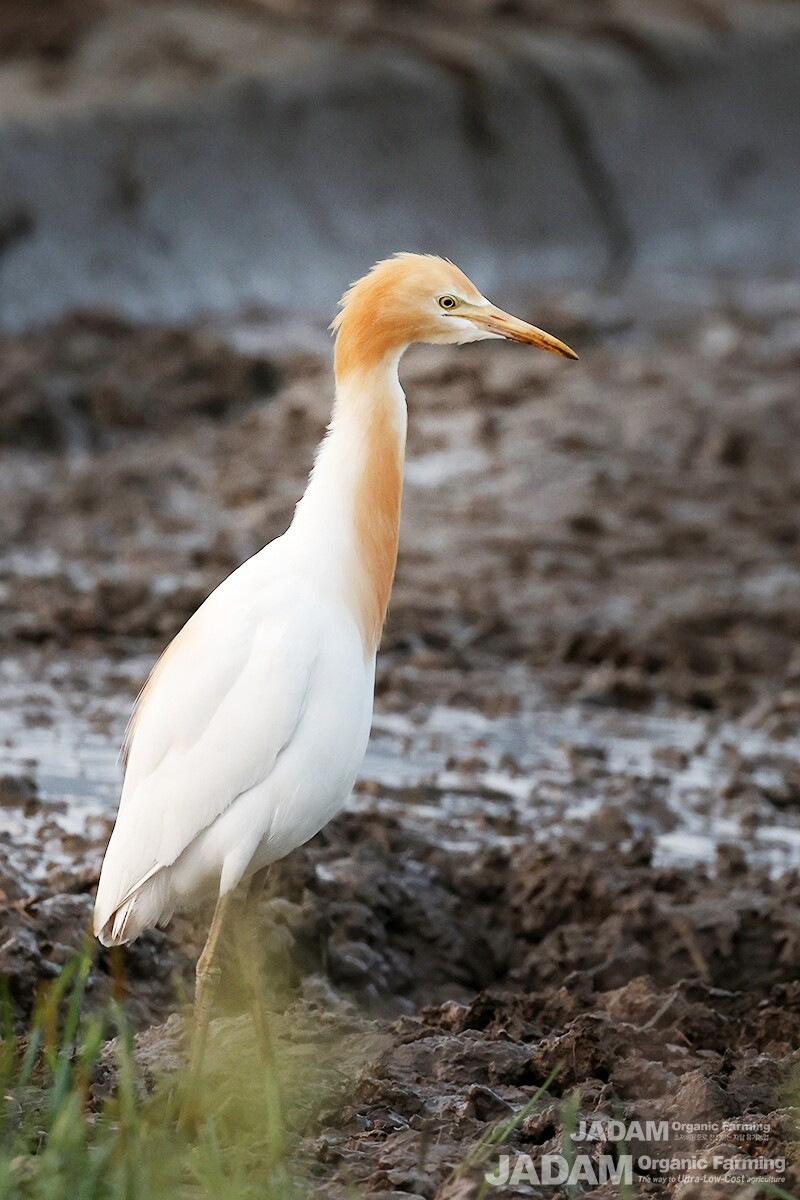
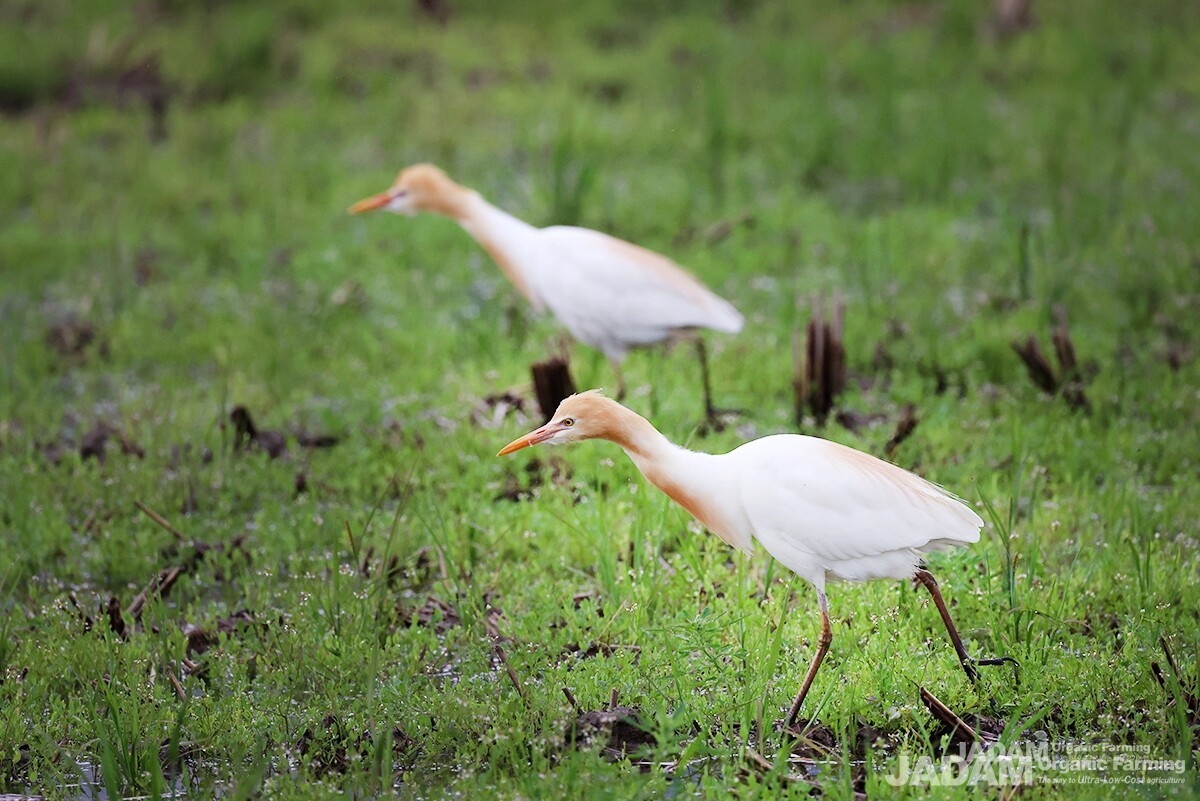
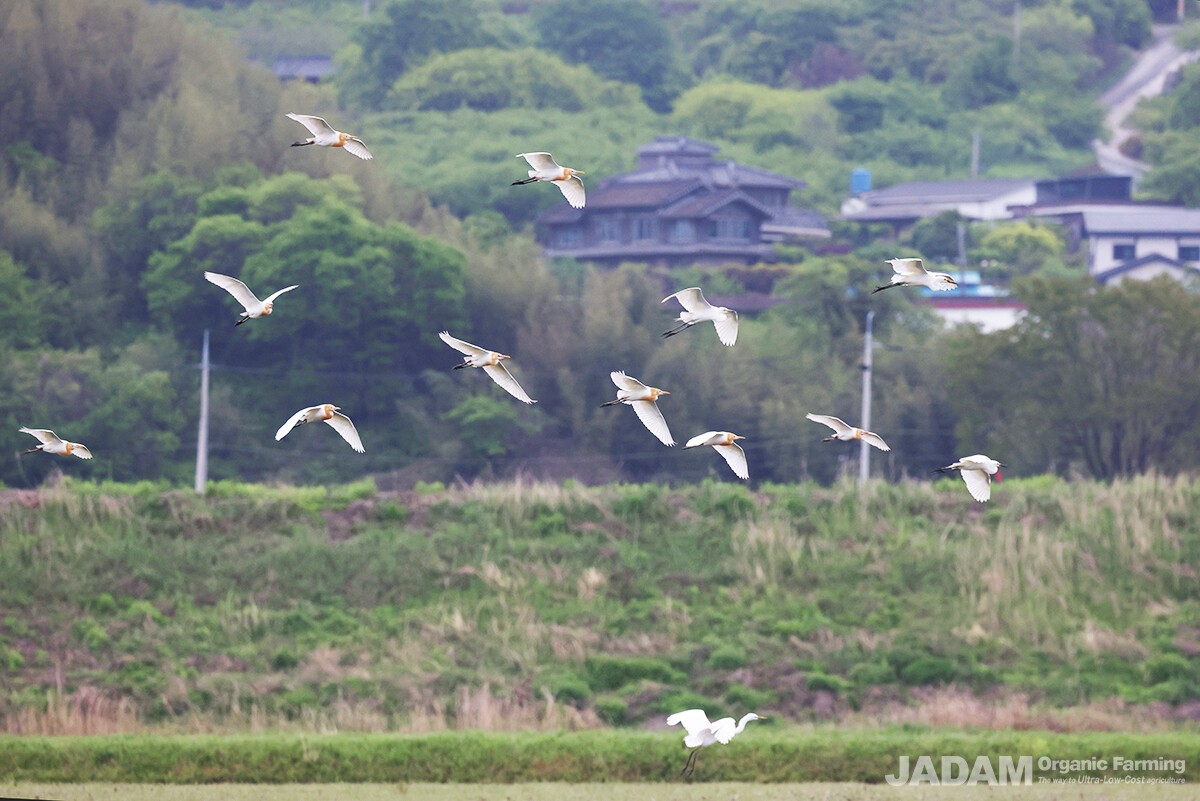
While many egrets have become resident birds that can be seen year-round in Korea, the cattle egret remains a migratory bird. It spends the winter in warm regions like Southeast Asia and visits Korea either as a brief stopover while migrating northward in the spring, or to spend the summer. In Korea, they primarily operate in rice paddies, often moving back and forth along waterways or streams near agricultural lands. They live in small flocks, completely alone, or in pairs.
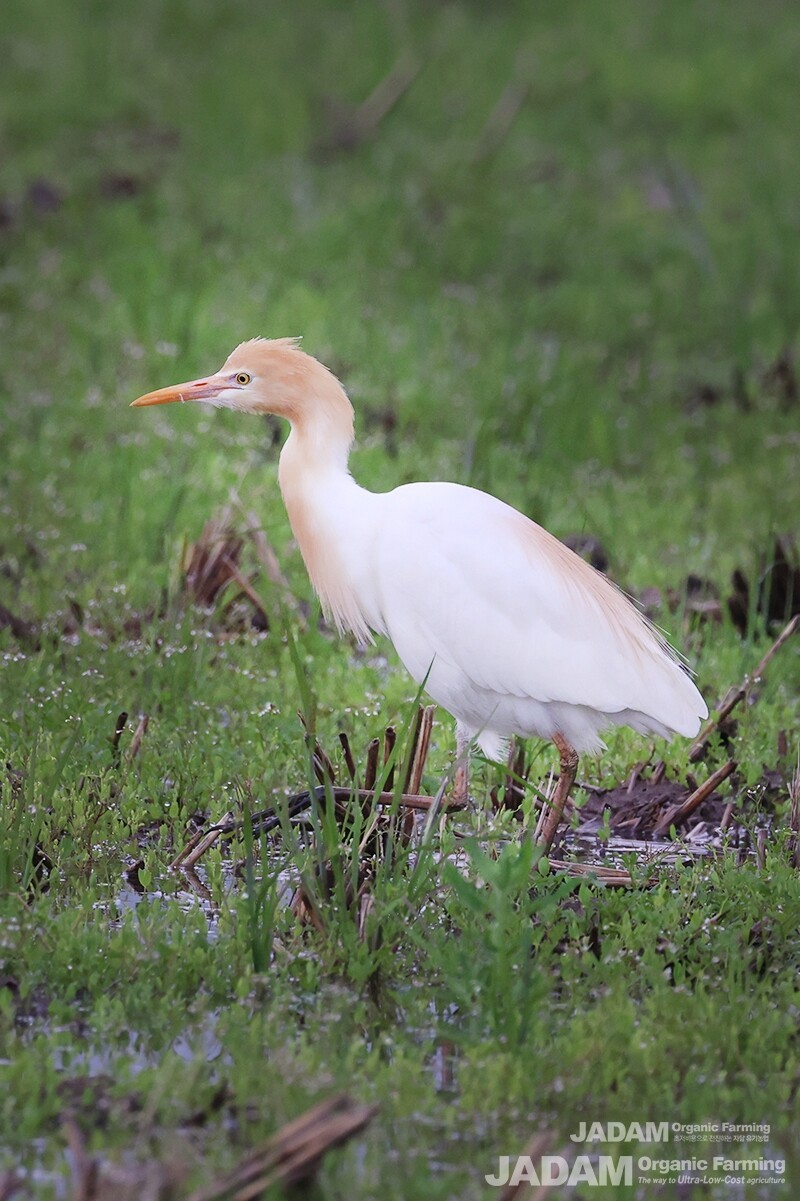
Their diet mainly consists of grasshoppers, frogs, and loaches. They also consume other insects, spiders, fish, shrimp, and reptiles. Just as they do with tractors, they often follow behind large animals like cows, snatching up any prey that is flushed out by their movement. During the breeding season, they mix with flocks of other egrets to build their nests in trees. They lay 2 to 5 eggs, with both the male and female taking turns raising the young. The chicks leave the nest 30 to 40 days after hatching.
FAQ: Quick Fact
Q: What are the main characteristics and feeding habits of the cattle egret?
A: The cattle egret is a small, highly active migratory bird with distinct yellowish-brown summer plumage on its head and neck; it often follows large animals or farming tractors in rice paddies to eagerly snatch up flushed-out insects, frogs, and small fish.