

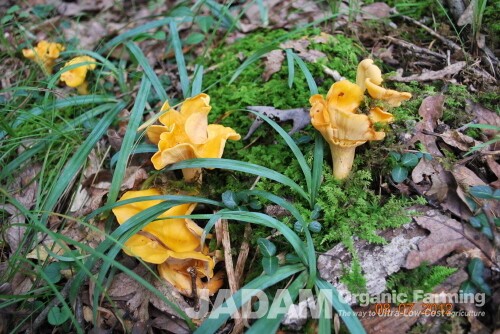
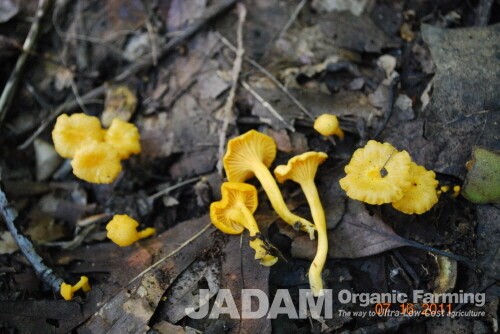
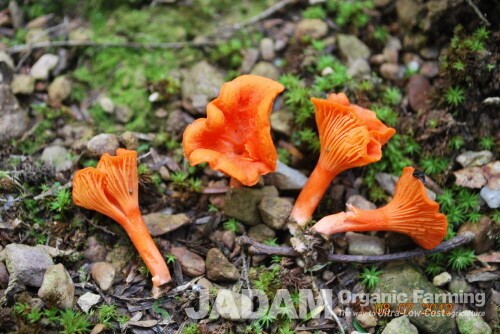
There are several mushrooms belonging to the chanterelle genus. Besides the representative chanterelle (Cantharellus cibarius), there is the small chanterelle (Cantharellus minor), the cinnabar-red chanterelle (Cantharellus cinnabarinus), and mushrooms whose genus was changed to the horn of plenty genus, such as the tube chanterelle (Craterellus tubaeformis), which was previously called the funnel chanterelle.
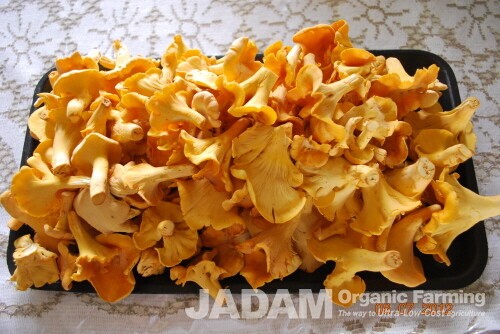
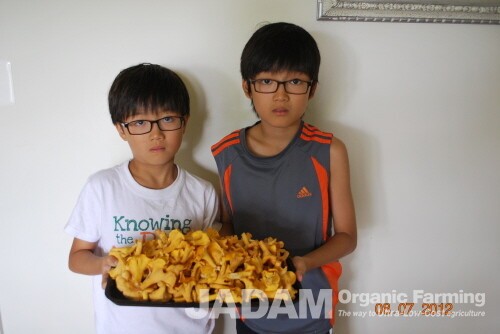
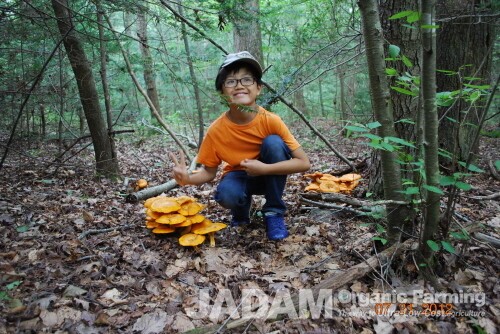
In July and August of 2012, there was a bumper crop of chanterelles in my area. They sprouted up abundantly wherever I went, allowing me to bring home a basketful every time I visited the mountain for the first time since the summer of 2004. My three grandchildren were visiting from Korea at the time, so we went foraging together. The kids were busy shouting with joy and filling their paper bags in the chanterelle patches. If you chop onions, beat eggs, and roll up a chanterelle omelet, the kids will slather it in ketchup and exclaim how delicious it is. The unique, apricot-like aroma of the chanterelle blends perfectly with the eggs and onions, creating a superb flavor. Chanterelle jeon (Korean savory pan-fried batter) is also great as a side dish for rice; it makes a perfect packed lunch for hiking when paired with just one other side dish like oiji muchim (seasoned pickled cucumbers). When I ask Americans I meet on the mountain for recipes, they simply say they saute them in butter. The flesh is unique—it is not tough and offers a great texture.
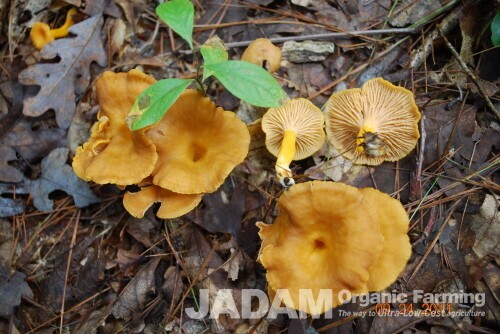
The species name cibarius means "good to eat," and the genus name Cantharellus comes from the Greek word kantharos, meaning "vase," which refers to the shape of the chanterelle. The Korean name, kkoekkori-beoseot, was given because its color resembles the bright yellow of the kkoekkori (Korean black-naped oriole). It is an endearing name that combines the visual color with the cheerful song of the beautiful bird. As a mycorrhizal fungus that grows in yellow clusters on the ground in mixed broadleaf and coniferous forests from summer to fall, especially under oak trees, the chanterelle truly symbolizes the abundance and happiness of the mushroom world. Because they grow in the same spot every year, you can always find them if you memorize their colonies. In the West, they are loved as much as the pine mushroom or neungi (tiger's ear mushroom) in Korea and are heavily utilized in high-end cuisine. In France, foraging is limited to 500g per person and 1kg per vehicle. Washington state in the US also has harvesting limits, and Oregon officially declared the chanterelle its state mushroom in 1999.
The chanterelle contains 8 essential amino acids, 19 free amino acids, 21% protein, vitamins A, C, and D2, cibaric acid, 10 fatty acids, potassium, iron, citric acid, malic acid, ergosterol (which turns into vitamin D2 when exposed to UV light), 3 free sugars, 6 volatile aroma compounds, and the fragrance compound benzaldehyde. Notably, chanterelles contain a significant amount of ergosterol, which regulates calcium transport in the human body. This vitamin D2 also acts as a rodenticide that causes calcium accumulation in mammals, birds, and fish. This high vitamin D2 content explains why slugs, snails, or insects do not eat chanterelles. Indeed, when foraging for chanterelles, you rarely see any slug bite marks. Additionally, the volatile aroma compound 1-octene-3-ol, which is also found in pine mushrooms, acts as an insect repellent that drives away slugs, and this same compound is naturally present in chanterelles.
In traditional Chinese medicine, the chanterelle was prescribed to prevent night blindness and eye inflammation. It was also used to boost resistance against various respiratory infections and as a mucosal tonic. In the Republic of Latvia, dried chanterelles or tinctures made from fresh ones are used not only to treat tonsillitis, boils, and sores but also to delay the growth of tuberculosis bacteria and remove radiation from the body. It is also historically believed that eating plenty of chanterelles helps eliminate intestinal parasites.
The small chanterelle has medical effects similar to the standard chanterelle, and it is believed to clear the eyes and benefit liver and stomach health. It has also been used to treat diseases caused by vitamin A deficiency, such as dry skin, keratomalacia, night blindness, and dry eye syndrome (Hobbs, 1996; Park & Lee, 1999; Rogers, 2011).
In Tanzania, a mixture of chanterelle, reishi, turkey tail, split gill, meshima, and hoof mushrooms—called gacoca—is used to treat HIV, Kaposi's sarcoma (an idiopathic multiple hemorrhagic sarcoma), and other health issues. In Korea, researchers discovered that chanterelles contain ergosterol, ergosterol peroxide, and cerevisterol (Kim et al., 2008). They also found components effective in inhibiting NF-kappaB activation. Furthermore, researchers discovered antibacterial compounds in the fruiting body extract of the chanterelle (Robbins et al., 1989).
Canthaxanthin, a type of pigment found in the cinnabar-red chanterelle, is used as a cosmetic color additive to create suntanning agents that give the skin a nice tan color (Hobbs, 1996; Park & Lee, 1999; Rogers, 2011). This pigment is also found in various marine crustaceans and is believed to give flamingos their beautiful pink color.
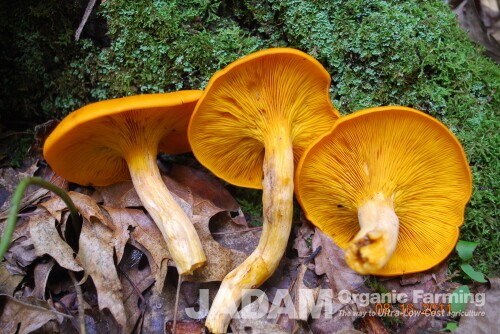
In the United States, there is one critical precaution to take. During the chanterelle season, it is easy to confuse them with the Jack-O-Lantern mushroom (Omphalotus illudens), a toxic mushroom with a Halloween pumpkin color whose gills glow in the dark. Beginners must be extremely careful because the color is similar and the gills run down the stem in both species. The false gills of the chanterelle are blunt and not sharp, whereas the true gills of this toxic mushroom are sharp and well-defined. Also, while chanterelles grow on the ground singly or scattered in small groups of two or three, the Jack-O-Lantern mushroom grows in large clusters on dead broadleaf wood, especially around oak stumps. Although not a deadly poisonous mushroom, accidentally eating it causes severe gastrointestinal distress that will likely require hospitalization.
FAQ: Quick Fact
Q: Are chanterelle mushrooms edible, and what are their main health benefits and characteristics?
A: Chanterelles are highly prized, apricot-scented edible mushrooms that grow on the forest floor; they are rich in vitamin D2 (ergosterol) and are used medicinally to improve eye health, boost the immune system, and treat respiratory infections, but foragers must be careful to avoid the toxic Jack-O-Lantern look-alike.
References
Hobbs, C. (1996). Medicinal mushrooms: An exploration of tradition, healing, & culture (3rd ed.). Interweave Press.
Park, W., & Lee, H. (1999). Korean medicinal mushrooms field guide. Kyohaksa. Rogers, R. (2011). The fungal pharmacy: The complete guide to medicinal mushrooms and lichens of North America. North Atlantic Press.