

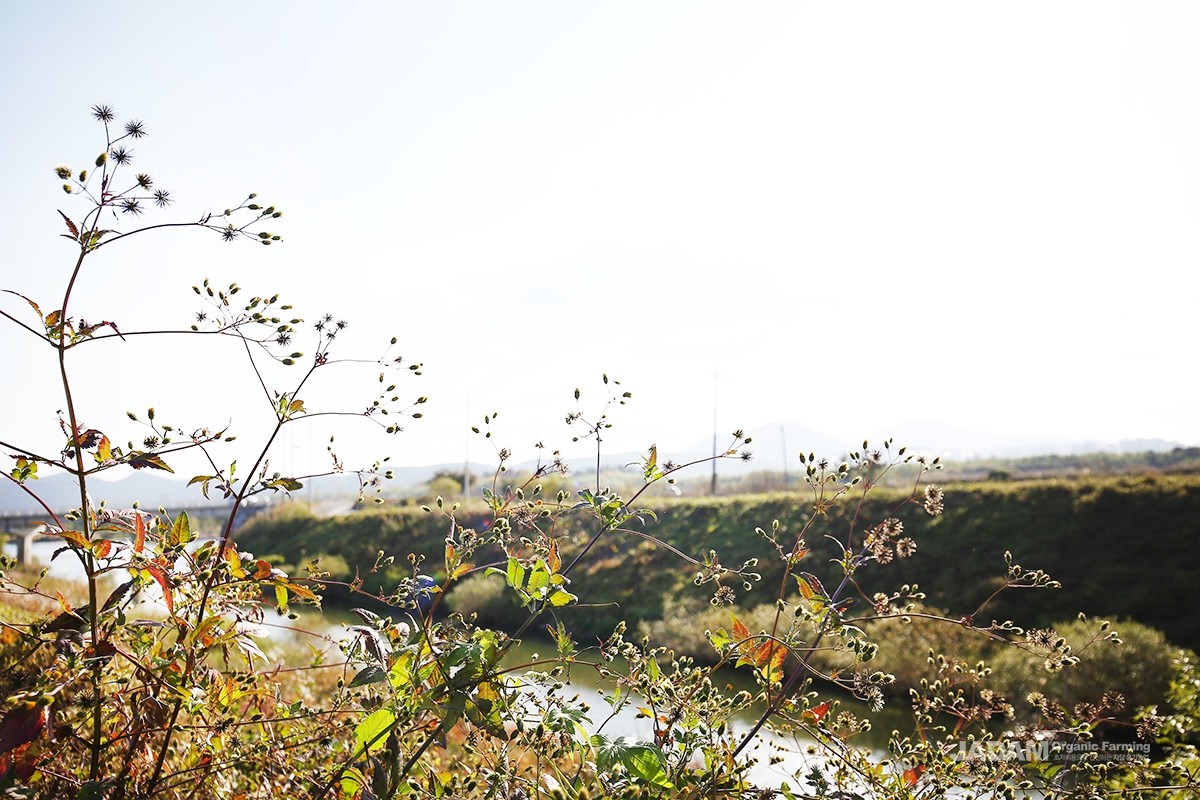
A naturalized annual native to South America, growing in various places such as roadsides, fields, orchards, vacant lots, and mountain foothills. As autumn approaches, dozens of yellow flower heads bloom at the ends of branches, eventually bearing needle-like fruits.
Hairy beggarticks (Bidens pilosa) is a naturalized annual plant native to South America. Since it was first discovered in Ulsan, South Korea, it has spread nationwide and now grows in various locations, including roadsides, fields, orchards, vacant lots, and mountain foothills (Yoo, 2020). Armed with a high germination rate and the ability to sprout without a dormancy period, it is spreading rapidly. Currently, it has the highest appearance frequency among the Bidens species in the region.
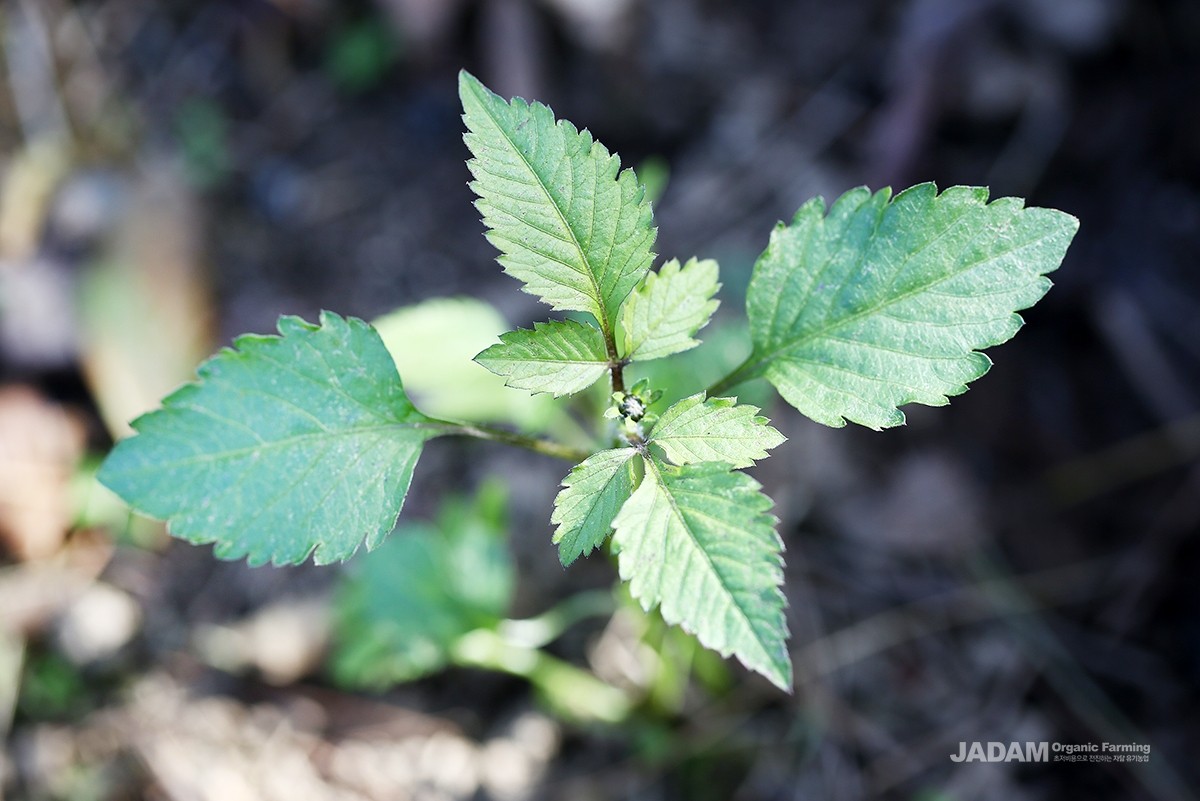
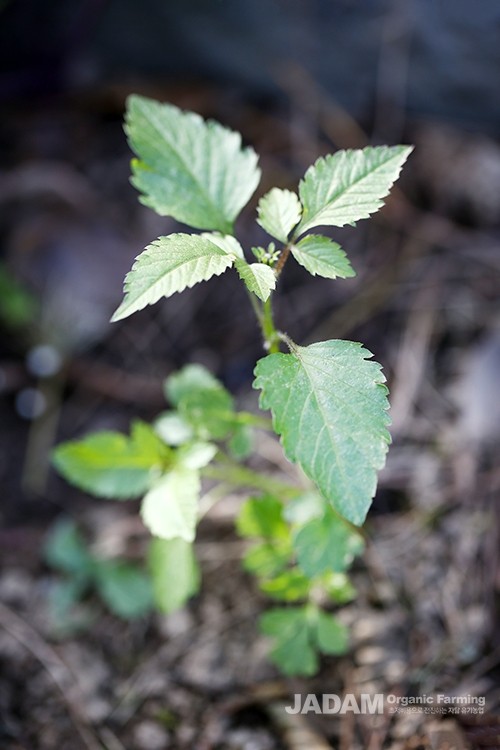
The plant sprouts in late spring and grows to a height of 50 to 110 cm throughout the summer. The stems are four- to six-angled, stand upright, and branch out extensively. The leaves generally grow in opposite pairs but may alternate near the top of the stem. They are typically pinnately compound, consisting of three to five leaflets; these leaflets are ovate with serrated edges and are covered in short, fine hairs.
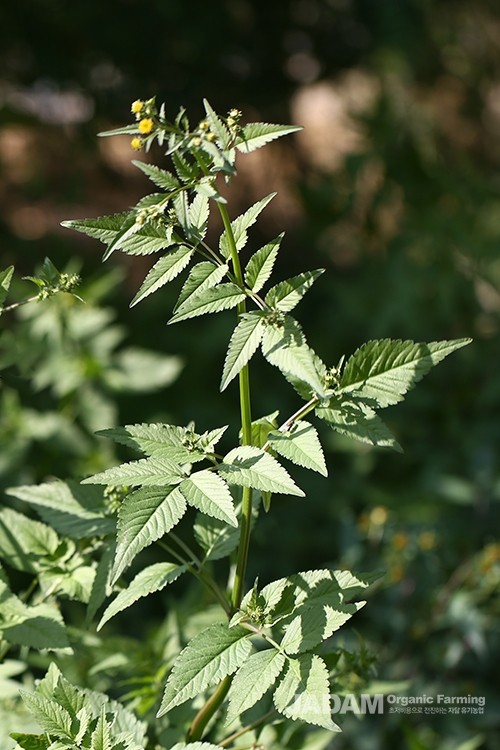
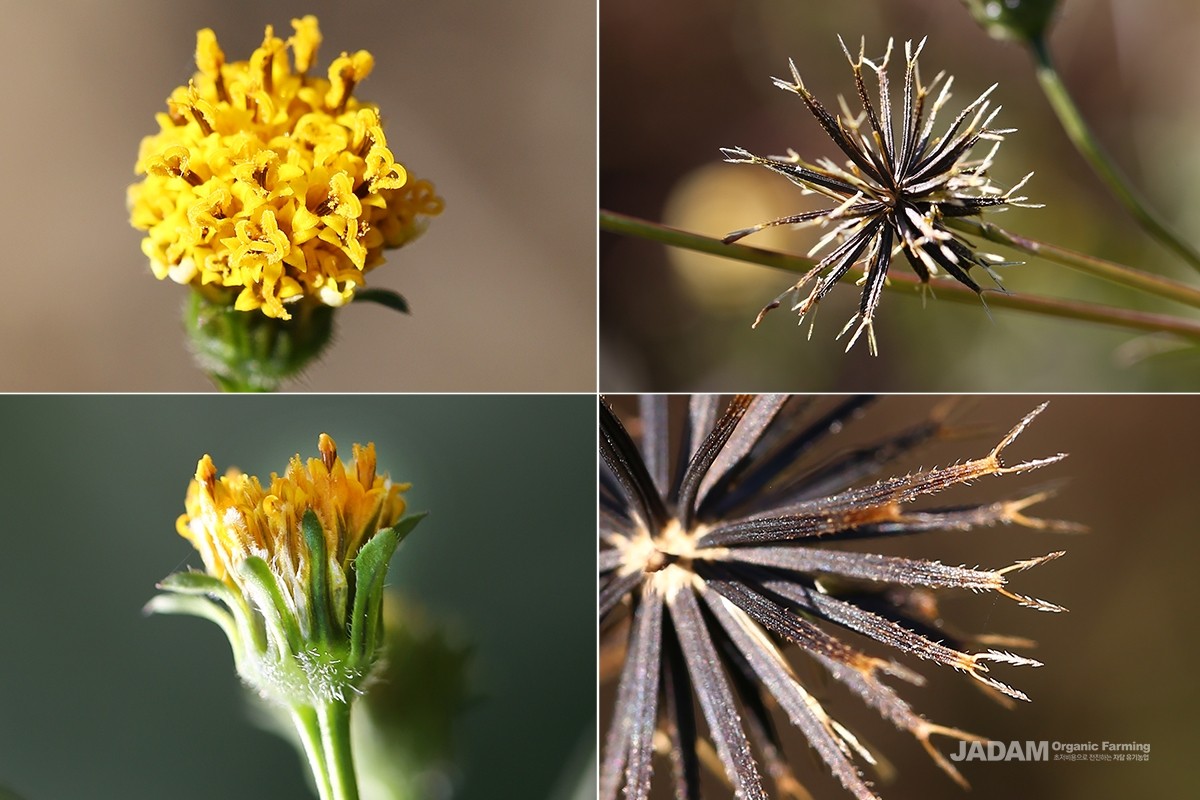
As autumn approaches, single yellow flower heads, about 1 cm in diameter, bloom at the ends of the branches. While the Spanish needles (Bidens bipinnata) have one to three ray flowers on the margins of their flower heads, the hairy beggarticks lack ray flowers entirely and consist solely of straw-like tubular flowers. The tips of these tubular flowers are shallowly divided into five lobes. The involucre (bracts surrounding the base of the flower head) consists of seven to eight spatula-shaped pieces.
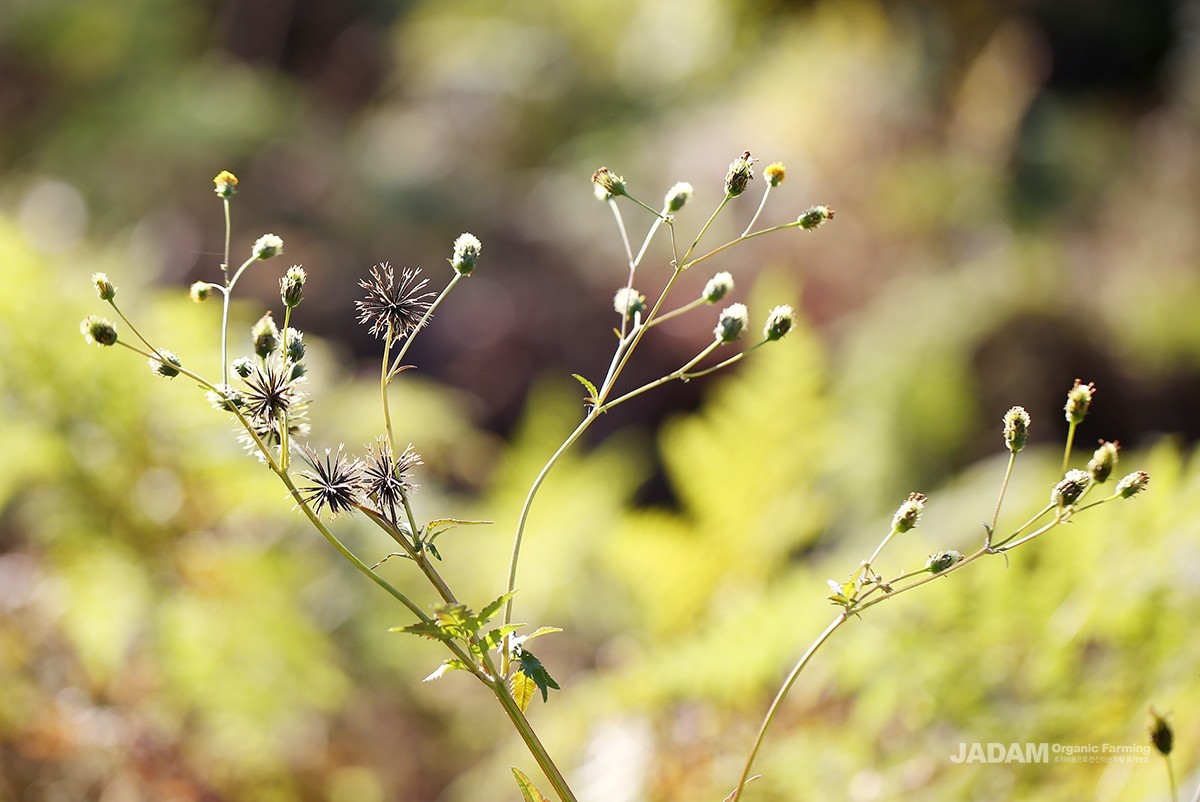
A single plant can produce dozens of flower heads that bloom, fade, and ultimately bear fruit. As the fruit ripens, the clustered seeds spread out radially, revealing their needle-like shape. At the end of each needle-shaped fruit, there are two to four awns (modified pappus bristles). These awns have downward-pointing barbs, much like the barb of a fishhook, making them difficult to detach. They cling to animal fur or human clothing, which serves to disperse the seeds over long distances.
▶ Utilization and Medicinal Properties
The young shoots are blanched to remove their bitterness and are either seasoned and eaten as namul (Korean vegetable side dishes) or boiled in soybean paste soup. Medicinally, the plant is known to lower fever, detoxify the body, remove blood stasis, and reduce swelling. It is used to treat diarrhea, dysentery, hepatitis, acute nephritis, bruises, snake or insect bites, and other wounds. Its taste is bitter, and its medicinal property is neutral.
▶ Control Methods
Although it is an annual plant, it is difficult to eradicate because it establishes deep roots even when the stem is only slightly grown. Furthermore, once it bears fruit, the needle-like seeds cling stubbornly to clothing, making it highly bothersome. Therefore, it is best to remove the plant in its early stages of growth.
▶ Origin of Name and Similar Species
The Korean name, Ulsan-dokkaebi-baneul (Ulsan goblin needle), originates from the fact that it was first discovered in Ulsan and its needle-like fruits secretly cling to passersby like a mischievous goblin. It can be distinguished from Spanish needles, which feature one to three ray flowers on their flower heads.
FAQ:
Q: Are hairy beggarticks edible, and what are their main properties?
A: The young shoots can be eaten as a seasoned vegetable or in soups after blanching to remove bitterness; medicinally, it is used to lower fever and reduce swelling, but it is notorious as an invasive weed due to its barbed, needle-like seeds that aggressively cling to clothing and animal fur.