

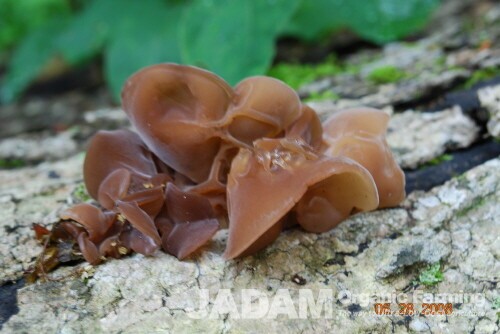
At one time, the scientific name of the wood ear was Auricularia auricula-judae, and its common English name was Judas's ear or Jew's ear. In Europe, wood ear often grows on elder trees (Sambucus). According to legend, Judas Iscariot, who betrayed Jesus for 30 pieces of silver, hanged himself on an elder tree, and the ear-shaped mushrooms that sprouted from that cursed tree were said to be the ears of Judas. However, because the horrific historical genocide of the Jewish people was rooted in the anti-Semitism that blamed Judas for Jesus's crucifixion, the term "judae" has recently been dropped from the scientific name. For a more detailed story, please refer to "Wood Ear and Anti-Semitism: The Mystery of Wild Mushrooms (36)." Regardless, wood ear and its cousin, the hairy wood ear (Auricularia polytricha), are highly valued mushrooms that are artificially cultivated and widely consumed in Korea, China, and Japan. Furthermore, their history of medicinal use is remarkably long.
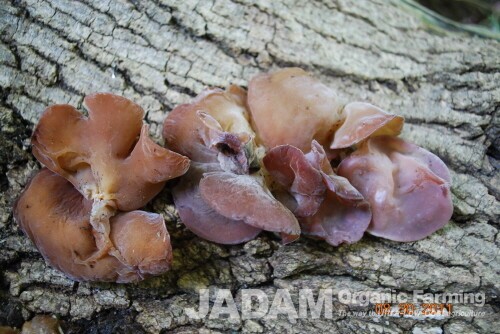
Chemical Composition of Wood Ear
Looking at the nutritional composition, per 100g of dried wood ear, it contains 10.6g of protein, 0.2g of fat, 65g of carbohydrates, 7g of fiber, 5.8g of ash, 375mg of calcium, 201mg of phosphorus, 185mg of iron, and 0.03mg of carotene, along with 21 free amino acids, ergosterol, 6 fatty acids, vitamins B1, B2, D, and niacin (Hobbs, 1996; Park & Lee, 1999).
It also contains various types of polysaccharides, including active heteropolysaccharide glucans, acidic heteroglycans, glycerol, mannitol, free sugars, and mycose, as well as cellulose, hemicellulose, chitin, pectin, and lignin. It contains beta-glucan, which has antitumor properties, and gluconoxylomannan, which provides anti-inflammatory and cholesterol-lowering effects.
Traditional Medical Uses
In traditional Chinese medicine, the hairy wood ear was considered to provide various benefits to the human body, making it feel lighter, providing strength, and fortifying the will. Thus, it was consumed for mental and physical energy. It was considered particularly good for bleeding and was used for uterine hemorrhaging. It was believed to improve lung health, replenish energy after childbirth, and promote blood circulation. In China, it has been used for thousands of years to treat lower gastrointestinal bleeding and strengthen the stomach.
In the West, wood ear was traditionally boiled in milk or alcohol and used to treat throat inflammation. In 1857, the famous mycologist Berkeley recorded that wood ear was well-known for treating the larynx. This likely stems from the fact that the spore-producing part of the wood ear resembles the surface of the larynx. The renowned botanist Linnaeus also noted that wood ear was used for eye inflammation and angina. In central Ireland, it was traditionally boiled in milk to treat jaundice, and in the mountainous regions of Scotland, it was used for sore throats. In Germany, dried wood ear was soaked overnight in rose water and applied to styes or eyelid inflammations. It is said that dried wood ear was soaked in vinegar for several hours and chewed to relieve postpartum weakness, spasms, numbness, or paralysis. For irregular uterine bleeding, wood ear was roasted, boiled in water until soft, and eaten with brown sugar. In Hong Kong folk medicine, it was traditionally used to thin the blood and reduce blood clot issues in postpartum women.
Modern Medical Uses
By the 1970s, wood ear became widely used in Chinese restaurants across the United States. Patrons who ate Chinese dishes containing wood ear developed spotted hemorrhagic bruising on their faces, a condition that came to be known as Szechwan purpura. During the investigation of this phenomenon, a new anticoagulant component useful for dissolving blood clots was discovered in wood ear, leading to the use of chemically treated wood ear to remove adenosine. Animal experiments revealed that wood ear prevents blood clots; it was also found to balance pancreatic enzyme secretion, regulate glycogen production conservation, and prevent biological hepatic monosaccharide disorders. Consequently, this allowed for better management of hypoglycemia and diabetes, which are key to maintaining a vigorous immune response. Clinical trials have also proven the antitussive effect of wood ear in suppressing coughs.
In Korea, Jeong et al. (2004) obtained anti-complementary activity by submerged culturing of wood ear, and Acharya et al. discovered that significant amounts of nitric oxide were produced when examining its antioxidant effects. Wood ear possesses antioxidant effects, as well as blood sugar-lowering, total cholesterol-lowering, and LDL cholesterol-lowering properties. The polysaccharides contained in wood ear also prevent blood coagulation, platelet aggregation, and thrombosis. Additionally, Yoon et al. (2003) in Korea discovered significant anticoagulant effects through alkali extracts of wood ear. This antiplatelet aggregation effect is similar to that of aspirin but without side effects like gastrointestinal bleeding. Furthermore, wood ear serves as a good choice for treating intermittent claudication in areas with leg pain after exercise. Therefore, it thins the blood without detrimental side effects to the collagen fibers of the blood vessels. Recent studies have revealed that the polysaccharides in wood ear are good for strengthening heart function alongside their antioxidant effects.
In addition, wood ear has antitumor, immune-enhancing, anti-ulcer, and anti-mutagenic effects. It lowers triglycerides, a blood fat component that causes arteriosclerosis along with cholesterol, and reduces overall blood lipid levels. It is also effective in anti-hepatitis actions and preventing aging. It has antihypertensive effects, lowers lipofuscin in the heart muscle, and increases SOD activity in the brain and liver, proving effective in anti-aging. Thus, wood ear is good for preventing heart attacks, and Kim et al. (1996) in Korea even demonstrated that it inhibits Helicobacter pylori, the bacteria responsible for stomach ulcers.
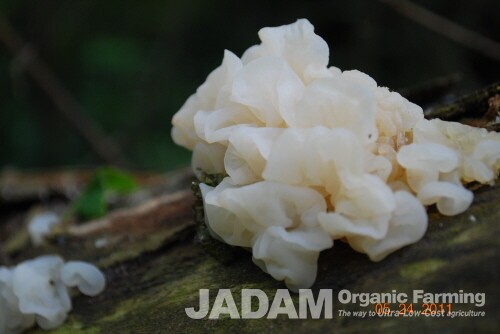
Recipes, Prescriptions, and Dosage
Professor Park Wan-hee listed the indications for wood ear as pain, numbness of the hands and feet, postpartum weakness, bloody dysentery, hematuria, hemorrhoidal bleeding, leukorrhea, uterine bleeding, vomiting, high blood pressure, intestinal wind (腸風), constipation, metrorrhagia(崩漏), and fundus hemorrhage. He also recorded prescriptions for nine diseases, including high blood pressure, postpartum weakness, and uterine bleeding (Park & Lee, 1999). Christopher Hobbs documented similar prescriptions (Hobbs, 1996).
1. Excessive leukorrhea: Dry the wood ear thoroughly, grind it into
a fine powder, and mix 9g into boiled water to drink twice a day.
Honey or sugar can be added for flavor.
2. Postpartum weakness: For postpartum invigoration, soak 30g of
wood ear in vinegar and consume 5-6g three times a day.
3. Nausea, vomiting, and excessive phlegm: Boil 7-8 large wood ears in
water and drink the decoction twice a day.
4. Bloody stool, uterine bleeding, and hemorrhoidal bleeding: Add 15g of
wood ear and 15g of sugar to water, simmer over low heat,
and take one cup twice a day.
For stubborn senile hemorrhoids, grind dried wood ear into a powder,
mix with water to make an ointment, and apply it over the hemorrhoid
using gauze.
For senile boils, mix 10g of dried wood ear powder with 5g of sugar
and a little water to make an ointment, and apply it to the affected
area morning and evening.
5. High blood pressure, arteriosclerosis, and fundus hemorrhage: Soak 3g
of wood ear in water overnight, steam it for 1-2 hours, mix with honey,
and take one cup before going to bed.
However, it must be noted that individuals taking blood-thinning medications should refrain from eating wood ear. Also, women may experience significantly heavier menstrual flows after consuming wood ear dishes. Furthermore, because animal experiments have shown that wood ear interferes with egg implantation, women in the early stages of pregnancy should avoid consuming it. As an aside, as mentioned at the beginning of this article, due to anti-Semitism, it is advisable to avoid using the word "judae" or the names "Judas's ear" or "Jew's ear" when using scientific or common English names.
References
Rogers, R. (2011). The fungal pharmacy: The complete guide to medicinal mushrooms and lichens of North America. North Atlantic Press.
Hobbs, C. (1996). Medicinal mushrooms: An exploration of tradition, healing, & culture (3rd ed.). Interweave Press.
Park, W., & Lee, H. (1999). Korean medicinal mushrooms field guide. Kyohaksa.
FAQ: Quick Fact
Q: Is wood ear edible, and what are its main medicinal benefits and characteristics?
A: Yes, wood ear is a widely cultivated and highly prized edible mushroom characterized by its distinct ear-like shape; it is medically valued for its strong anticoagulant properties that promote blood circulation, lower cholesterol, and provide antioxidant benefits.