

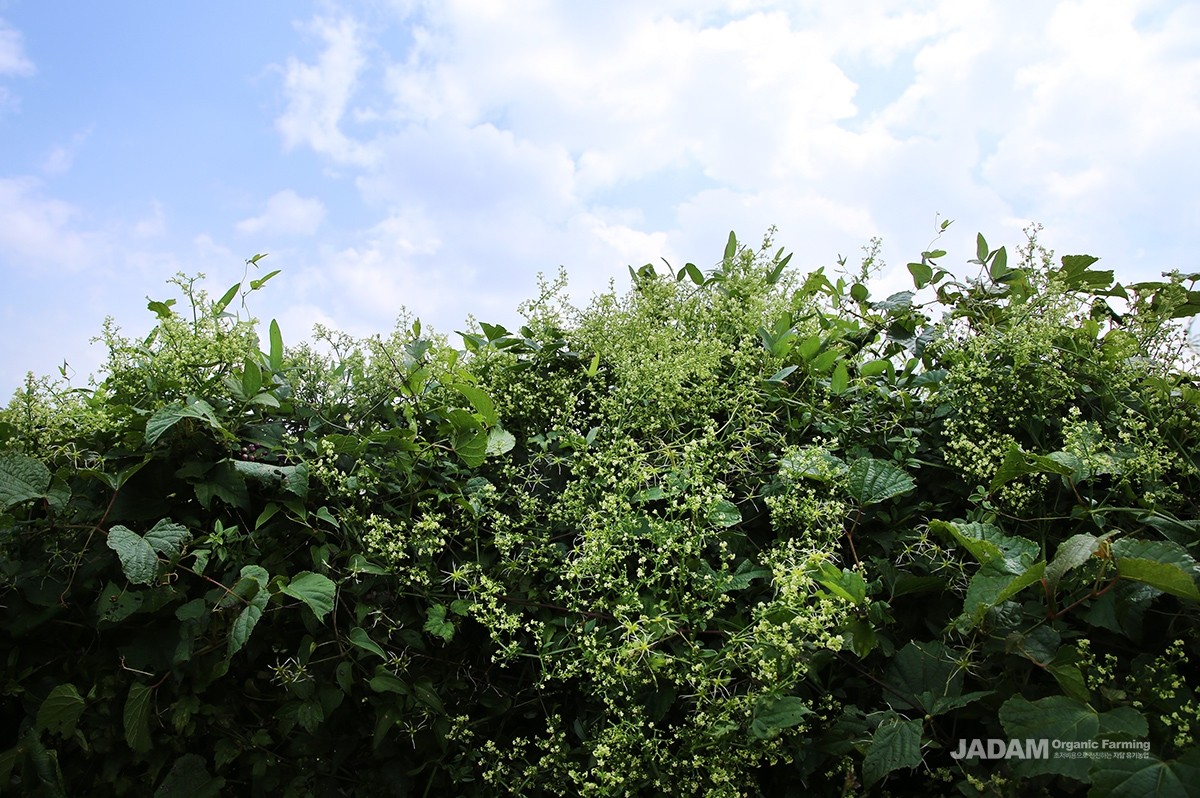
As a perennial vine, it grows along forest edges, logging roads, fields, orchards, their boundaries, and surrounding slopes. Its branches often become intricately tangled, frequently covering other vegetation or fences. From summer to autumn, it blooms with tiny flowers and bears black fruits.
Asian madder (Rubia argyi) is a perennial vine that grows along forest edges, logging roads, fields, orchards, and surrounding slopes, reaching a length of 1 to 2 meters. Its square stems feature short, downward-pointing thorns, and these thorns are also present on the undersides of the leaves, allowing the plant to easily climb over other vegetation. Once it climbs, its branches often become intricately tangled, frequently covering other plants or fences.
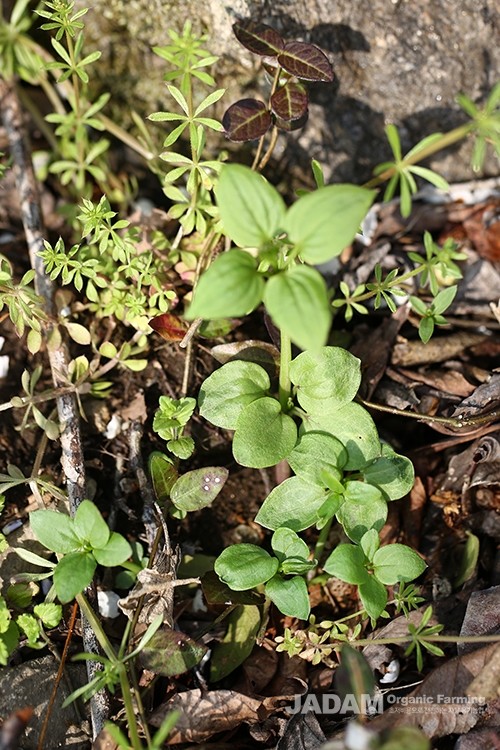
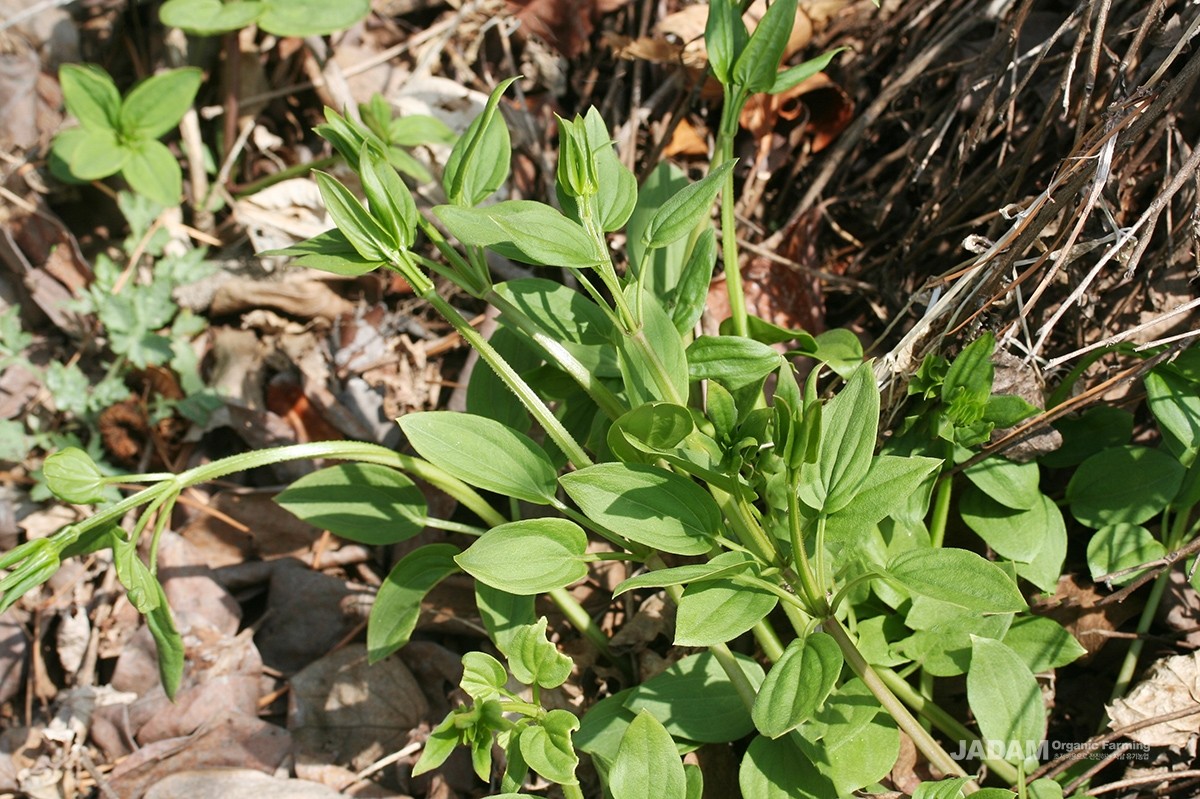
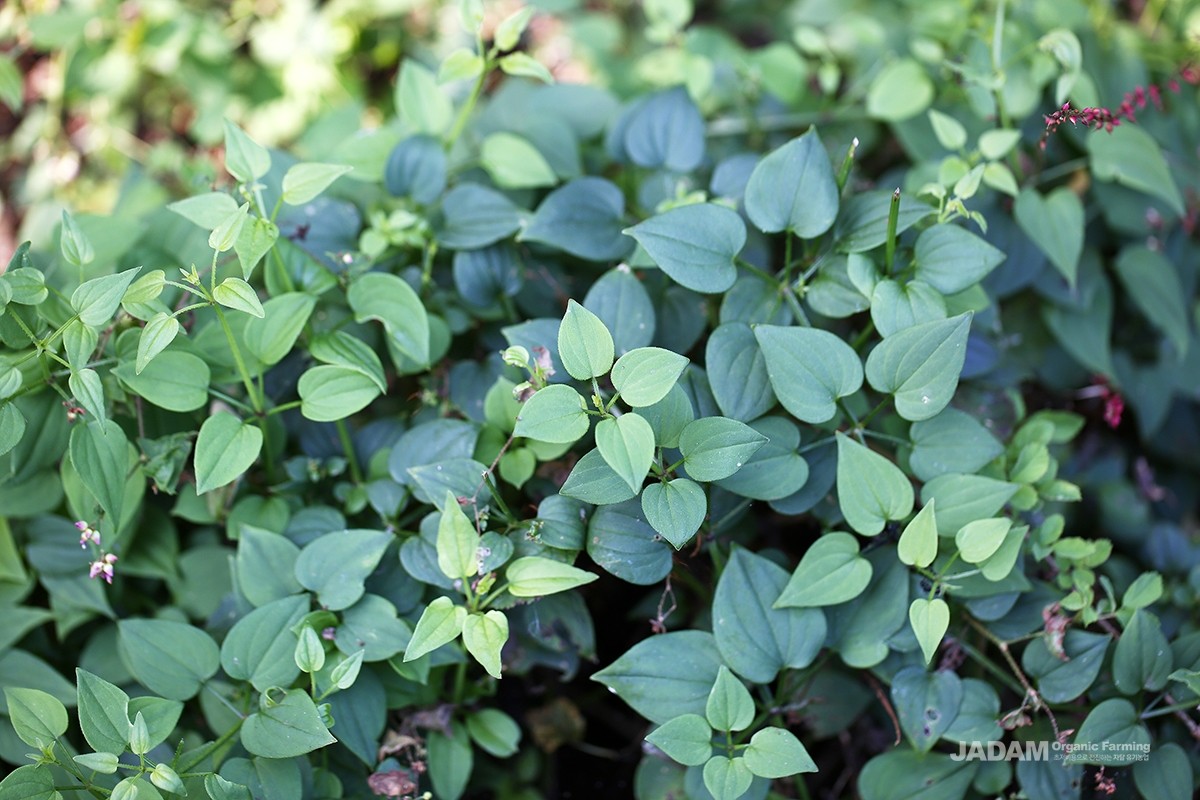
The leaves are heart-shaped or elongated ovals, growing in whorls of four with long petioles. Two of these are true leaves, while the other two are modified stipules. Fine thorns are present on the petioles, the veins on the underside of the leaves, and the leaf margins. It is difficult to distinguish the true leaves from the stipules because they look quite similar, but branches only emerge from the axils of the true leaves. The modified stipules also tend to fall off earlier than the true leaves.
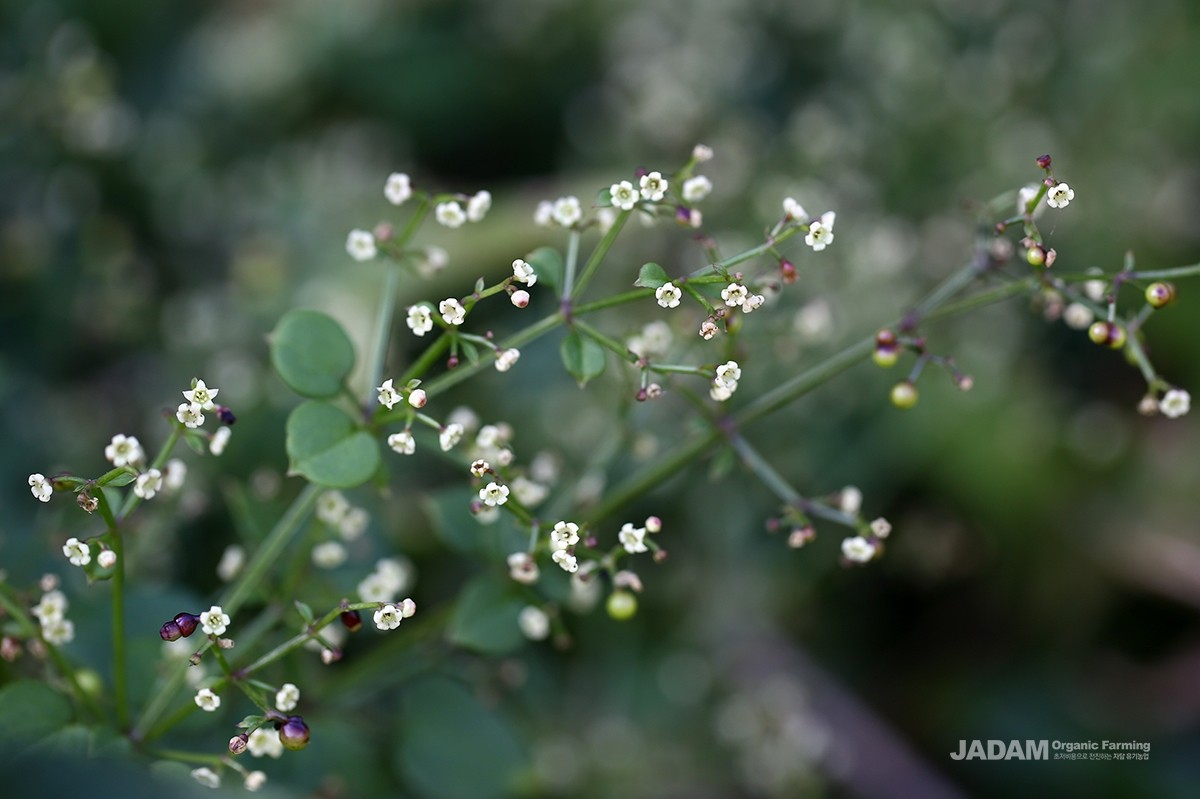
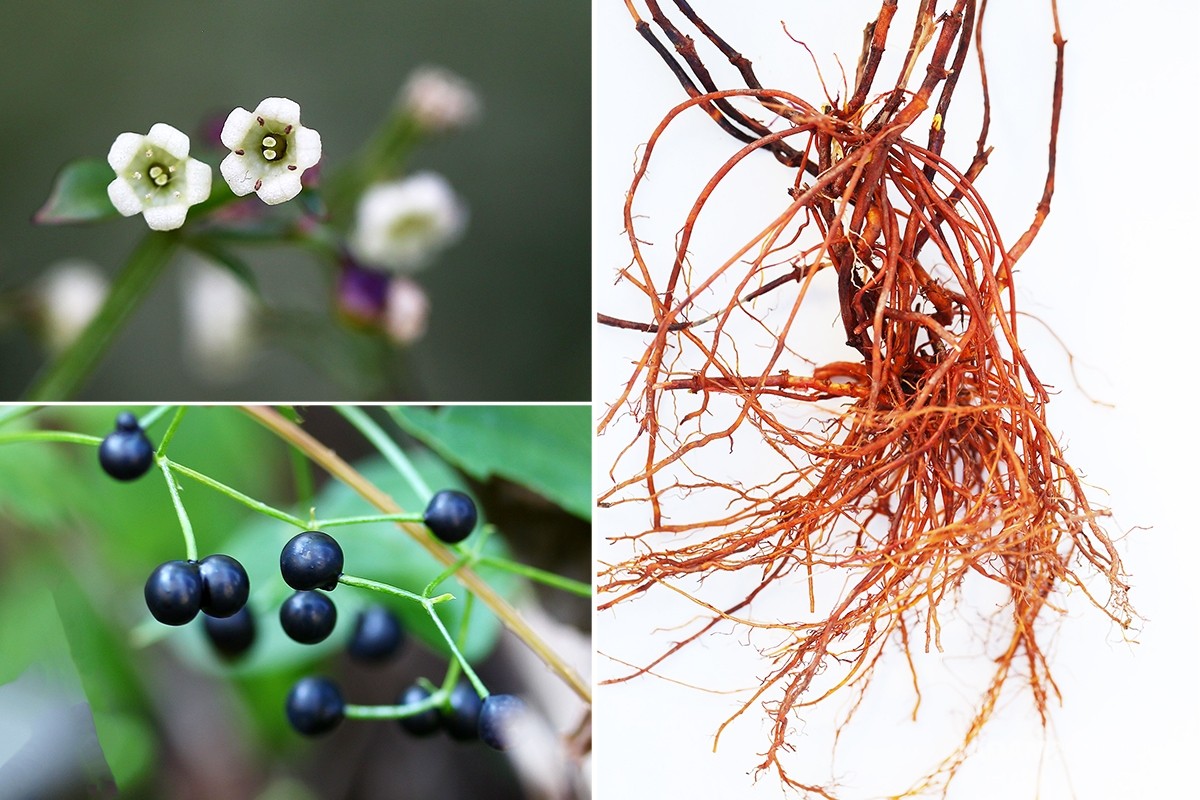
From August to October, tiny pale yellow flowers bloom in panicles at the leaf axils and the ends of the main stems. The corolla is typically five-lobed, with lanceolate lobes that are pointed at the tips and curve backward. The flower has five stamens and two styles. The fruit is a berry that ripens to a black color in October. Usually, two fruits grow partially attached to each other, but it is also common to see them form as a single fruit.
The thick, fibrous roots of the Asian madder are yellowish-red, turning a deeper scarlet color when dried. In the past, along with safflower, it was one of the primary natural red dyes. However, its use declined significantly in the 19th century as synthetic dyes replaced it. It was once used as an edible food coloring, but its designation as a food additive was revoked after it was revealed to have the potential to cause kidney cancer.
Utilization and Medicinal Properties
The young shoots are consumed as namul (Korean seasoned vegetable dishes), and the roots are used as a natural red dye or medicinal herb. It has a distinct hemostatic effect on nosebleeds and uterine or intestinal bleeding caused by blood heat, and it promotes blood circulation, making it effective for irregular menstruation in women and blood stasis caused by bruises. Its taste is bitter, and its properties are cold.
Control Methods
Because it is a perennial vine, it is best to completely remove the plant down to its roots in the early stages. Once the roots are firmly established, the stems will continue to regenerate even if the visible vines are cleared away.
Origin of Name and Similar Species
The name is believed to have originated from its old Korean names, Gokdoson or Gokdosoni. While the exact meaning is unknown, it is presumed to be related to its red roots. It can be distinguished from the similar species Indian madder (Rubia cordifolia), which has oblong-ovate leaves that grow in whorls of six to ten on the stem .
FAQ: Quick Fact
Q: Is Asian madder edible, and what are its main properties and characteristics?
A: The young shoots are edible as seasoned vegetables, but the root pigment was removed from food additives due to toxicity; the plant is a climbing vine whose red roots are used medicinally to stop bleeding and promote blood circulation.