

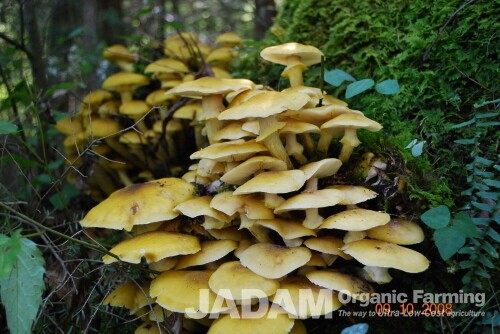
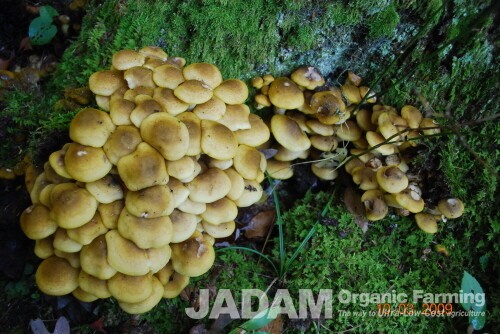
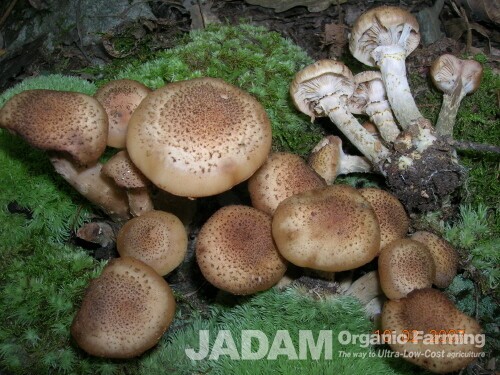
Among the most common and abundantly growing edible mushrooms, the honey mushroom is probably the foremost. The genus name Armillaria means “ring,” and the species name mellea means “having the color of honey.” The yellow color of this mushroom resembles honey, which is why its common English name is Honey Mushroom. The word Armillaria also comes from Latin, meaning “furnished with armband.” This refers to the ring on the stalk of this mushroom. Eastern Europeans who settled in the Canadian plains, including Piles and Ukrainians, call honey mushrooms “popinki.” When the author of this article lived in Scranton, a famous col town in northeastern Pennsylvania, they often saw descendants of Eastern European immigrants who came to work in the coal mines gathering honey mushrooms in the mountains. They also called them “popinki.”
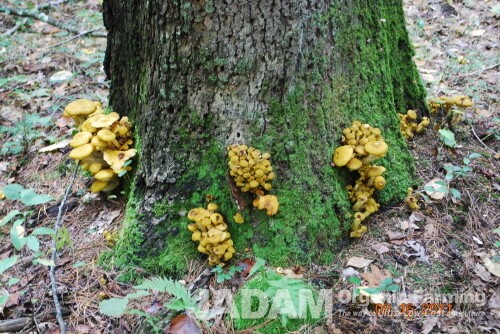
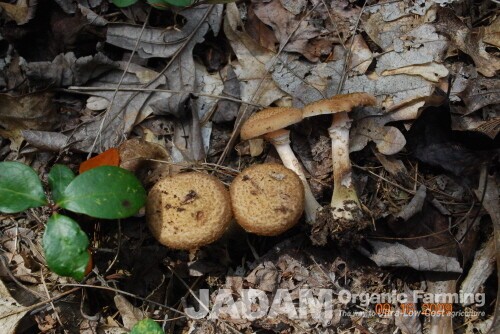
From late summer to early autumn (September to October), they grow in large clusters of hundreds around the stumps of broad-leaved trees, especially oak trees. Sometimes, they also grow in large quantities around the base of the coniferous Eastern Hemlock (Tsuga canadensis). In North America, there are at least 11 distinctly identified species of honey mushrooms. Because of this, they are referred to as the "honey mushroom complex." Broadly speaking, they can be distinguished into yellow and brown varieties. It is a delicious edible mushroom that must be well cooked and should not be eaten raw.
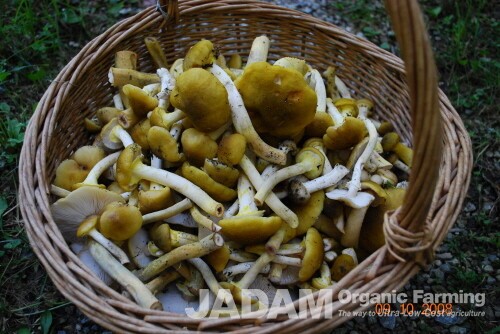
The mushroom contains 10 types of aromatic sesquiterpene esters, including armillaricin, as well as aryl aromatic sesquiterpene esters. It also contains melleolide, an antifungal and antibacterial compound. The sporophore contains vitamin A, and polysaccharides account for 1.12% in the mycelium and 2.27% in the fruiting body. The mycelial extract contains volatile organic acids used as flavorings or disinfectants. These include propionic acid, valeric acid, isovaleric acid, butyric acid, and isobutyric acid. In addition to hepatonic acid, which protects and regenerates liver cells, it contains six trace metal elements. These are potassium, iron, manganese, and a significant amount of copper. Furthermore, it contains nearly 30% protein. According to Wan-hee Park (1999), it includes 27 types of free amino acids and ergosterol.
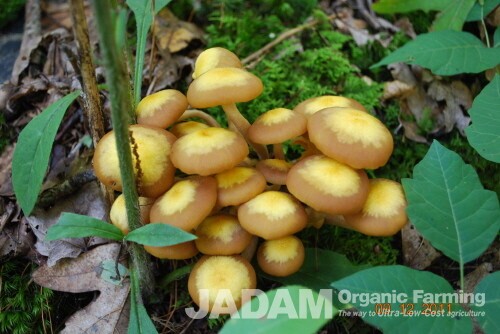
In traditional Chinese medicine, the honey mushroom is said to contain beneficial nutritional components. It is considered to have a cold nature and a sweet taste. Honey mushroom tablets are known to be good for dizziness, headaches, neurasthenia, insomnia, numbness in the hands and feet, and infantile convulsions. Indications include vision loss, night blindness, dry skin, respiratory and digestive infections, epilepsy, and lower back and leg pain (Rogers, 2011; Park & Lee, 1999). Its effectiveness against respiratory infections is due to the vitamin A contained in the mushroom.
The honey mushroom has antibacterial properties against Staphylococcus aureus, Bacillus cereus, which causes food poisoning, and Bacillus subtilis. In addition to its antibacterial action against Gram-positive bacteria, it has pharmacological effects. These include anticancer, antitumor, antiviral, and antioxidant actions (Park & Lee, 1999). It also contains neuroprotective components that help blood circulation in the brain, protecting it. Furthermore, it has cholesterol-lowering and blood lipid-lowering effects. The polysaccharides also protect the body from the side effects of radiation exposure. In human clinical trials, it has been shown to reduce essential hypertension, renal hypertension, and neurasthenia. It also has a sedative effect on convulsions (Rogers, 2011).
Dried and powdered honey mushrooms can be consumed in doses of 30 to 90 grams in tea, in capsules, or simply sprinkled over food. However, they should not be consumed with alcoholic beverages. In pill form, 250 mg tablets can be taken three times a day, or 400 mg capsules twice a day. A Korean product called Milhwanpyeon is a fermented honey mushroom preparation.
Among Armillaria ostoyae, some grow to an enormous size. One colony in a national forest reserve in Oregon reaches 64 km in diameter. Its area is equivalent to 1,600 American football fields. It is 2,400 years old and is still growing. The mycelium of Armillaria gallica in Michigan spans 5.2 km over an area of 15 hectares. It weighs 91 tons and is said to be 1,500 years old. Recently, an Armillaria ostoyae discovered in Washington State was incredibly large, covering 1,100 acres. Paul Stamets called these mycelial colonies the "internet of Mother Nature." He described them as a type of neural network of cells weighing hundreds of millions of tons.
The so-called "will-o'-the-wisp" (phosphorescence) seen in the forest at night is actually the light emitted from the mycelium of the honey mushroom. Roger Phillips suggests that legends or folktales about the will-o'-the-wisp were inspired by the luminescence of this mycelium. Ancient philosophers like Aristotle and Pliny also mentioned these glowing objects in the forest. Some people speculate that the burning bush that Moses saw in the Book of Exodus might have been the light from honey mushroom mycelium. However, this is unlikely. Because glowing objects were believed to possess powerful magical properties, shamans and others utilized them. In fact, it is said that glowing wood was lined up along both sides of a path to serve as a guide at night. During World War I, soldiers attached glowing wood to their helmets to prevent colliding with each other on pitch-black nights.
As is well known, the honey mushroom forms a symbiotic relationship with Gastrodia elata. This plant is used as a precious medicinal material. The mushroom also forms an endophytic mycorrhiza with orchids. However, it parasitizes trees and causes white rot root disease, which damages forests. Therefore, one should avoid collecting honey mushrooms and moving them from place to place.
Q: What makes the Armillaria mushroom complex the largest living organism?
A: Certain species of the honey mushroom, such as Armillaria ostoyae, form massive underground mycelial networks. A famous colony in an Oregon national forest spans 64 kilometers in diameter, covers an area equivalent to 1,600 football fields, and is estimated to be 2,400 years old.