

An annual naturalized plant native to Africa, it is spreading widely from empty lots to roadsides, forest roads, and agricultural lands, mainly in the southern regions. Passing through summer, it quickly sends up stems and begins to bloom vermilion, head-shaped flowers at the tips.
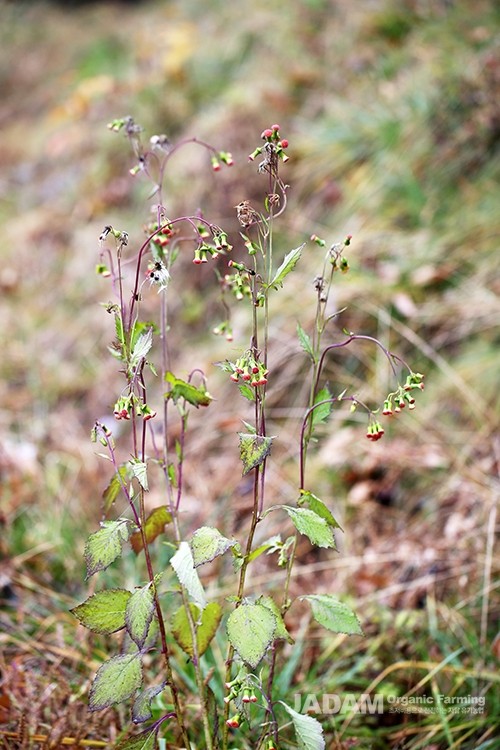
Redflower ragleaf (Crassocephalum crepidioides) is an annual naturalized plant native to Africa that has rapidly spread and become wild, primarily in the southern regions of Korea. Its natural habitat is broad, ranging from empty lots, roadsides, and agricultural lands to mountainous areas exposed by forest thinning or wildfires. It grows 50 to 100 cm tall, stands upright, and is sparsely covered with fine hairs.
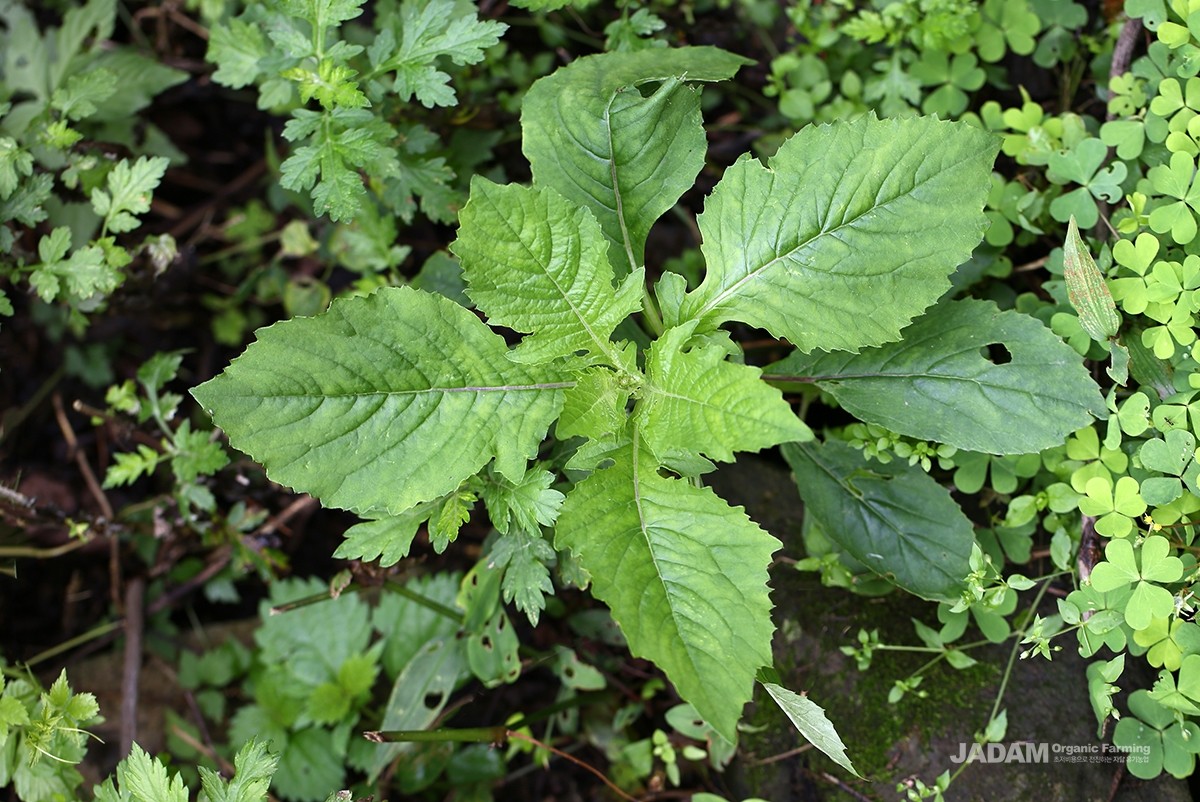
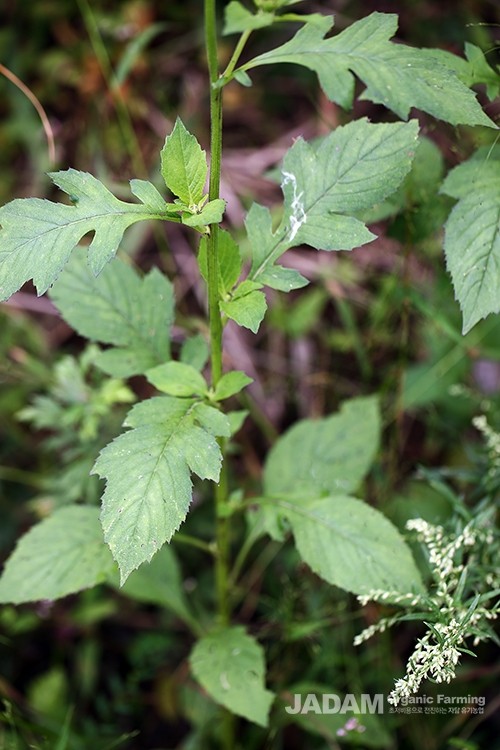
The leaves grow in an alternating oblong pattern. The leaves on the lower part of the stem are usually slightly divided in a pinnate shape, while the leaves on the upper part of the stem have irregular serrations along the edges. Both the stem and the leaves are quite tender. It emits a scent similar to crown daisy, lacks bitterness, and is soft enough to be perfectly suitable as a wild vegetable. The young shoots can be eaten raw in salads or lightly blanched and seasoned as namul (a traditional Korean seasoned vegetable dish).
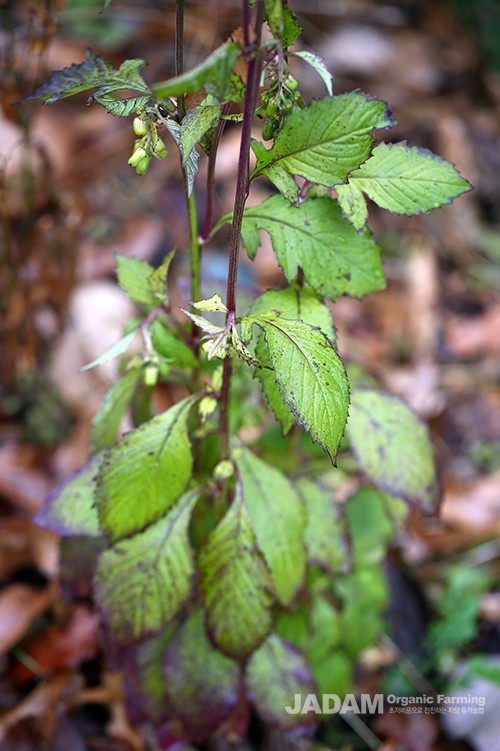
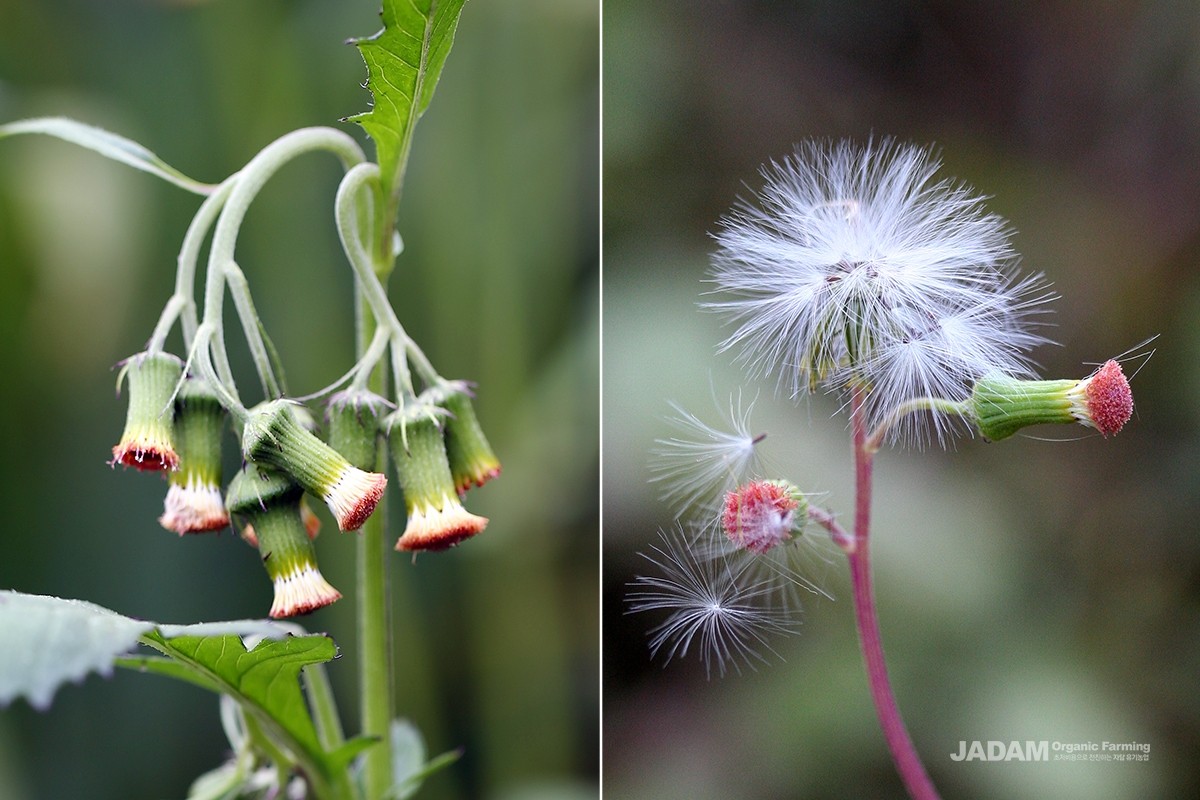
As summer passes, vermilion, head-shaped flowers begin to bloom at the tips of the stems or branches. Like thistles, they consist solely of tubular flowers (disk florets) without any petal-like ray flowers. The lower part is milky white, and only the upper reproductive parts exhibit a reddish-vermilion color. The flowers initially bloom facing downward, but over time, they gradually begin to raise their heads, standing stiffly upright by the time the fruit ripens.
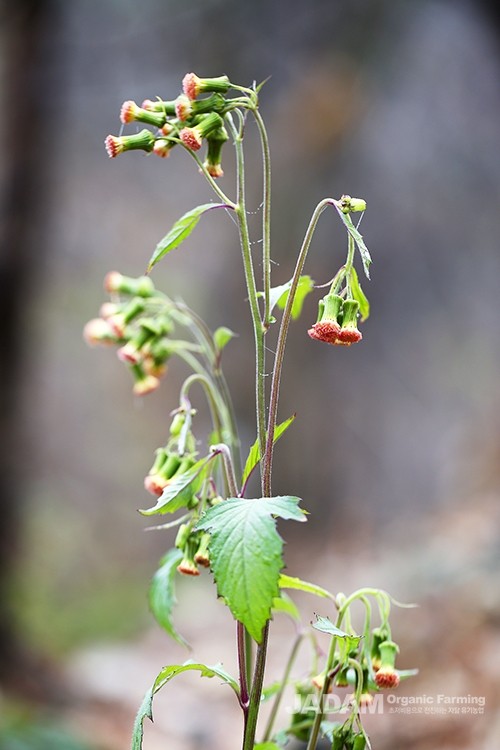
As is the case with most plants in the Asteraceae family, when the fruit of the redflower ragleaf ripens, it swells up like cotton and scatters numerous seeds attached to a white pappus (bristles) into the wind. Raising its head even slightly higher is advantageous for dispersing its seeds farther. Thus, although the redflower ragleaf is an introduced species, it has expanded its territory faster than other native plants, earning a spot on the list of notable weeds.
▶ Utilization and Medicinal Properties The young shoots are eaten as a salad, blanched and seasoned as namul, or added to doenjang-guk (Korean soybean paste soup). It strengthens the spleen, reduces swelling and fever, detoxifies the body, and promotes the circulation of qi. It is effective in treating colds, fever, dysentery, enteritis, mastitis, bronchitis, and edema. The taste is pungent, and its nature is neutral.
▶ Control Methods Large specimens can grow close to 1 meter in height. While it may not be a major issue in orchards, it is best to pull them out before they bloom if they are in a field or greenhouse. Once the flowers bloom, the seeds will disperse as the plant dries out, even if the plant has been uprooted.
▶ Origin of the Name and Similar Species It is called redflower ragleaf (Ju-hong-seo-na-mul in Korean) because its flowers have a vermilion hue, named in comparison to the similar American burnweed (Bulg-eun-seo-na-mul). The American burnweed differs in that its flowers face upward and do not exhibit a red coloration.
FAQ: Quick Fact
Q: Can I eat the redflower ragleaf, and what are its main medicinal benefits and identifying traits?
A: Yes, the tender young shoots of the redflower ragleaf are entirely edible and often used in salads, soups, or as blanched seasoned greens; medicinally, it reduces fever, promotes blood and qi circulation, and detoxifies the body, while its most defining botanical trait is its downward-facing, vermilion-tipped tubular flowers that eventually stand upright to disperse seeds.