

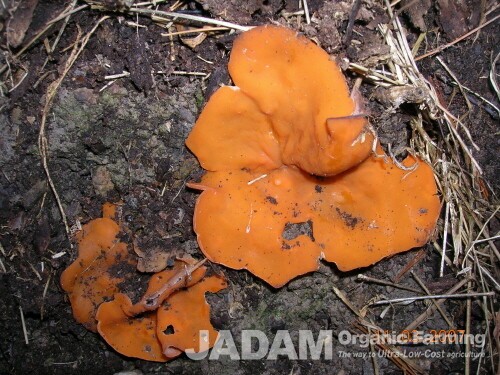
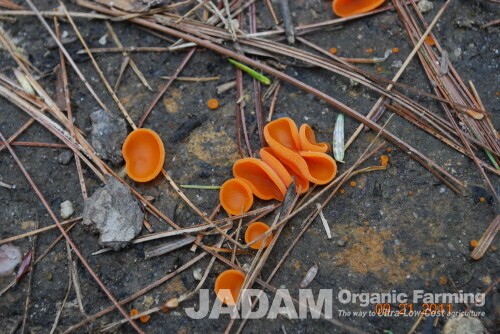
The species name aurantia signifies “organge-colored” or “possessing an orange hue.” This scientific name was chosen specifically because the fungus displays a vibrant orange color. It is cup-shaped and typically appears between summer and autumn on forest floors, near hiking trails, or on gravelly ground. While it is considered an edible mushroom, its small size and infrequent occurrence mean it holds little practical culinary value. In the United States, it is sometimes eaten raw in salads to take advantage of its color and crunchy texture, and some even enjoy it alongside a glass of Kirsch. However, in the Comprehensive Guide to Korean Medicinal Mushrooms, it is noted that it should not be consumed raw but should instead be boiled and leached before eating.
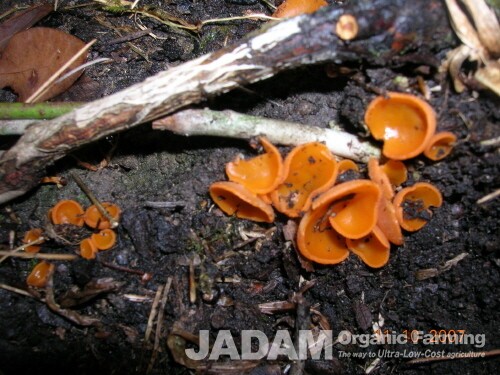
The bright orange color of this fungus comes from a reddish-yellow pigment within the carotenoid family, primarily one called aleuriaxanthin. This specific pigment is reportedly the only carotenoid of its kind that can be obtained from a natural source. Carotenoids are colored compounds ranging from yellow to reddish-orange that influence the vibrant colors of autumn leaves. As fat-soluble pigments found abundantly in yellow and orange fruits and vegetables, they are known for their excellent antioxidant and anti-cancer properties. Consequently, they may help prevent the onset of cancer and strokes, as well as age-related macular degeneration, which can lead to blindness in the elderly.
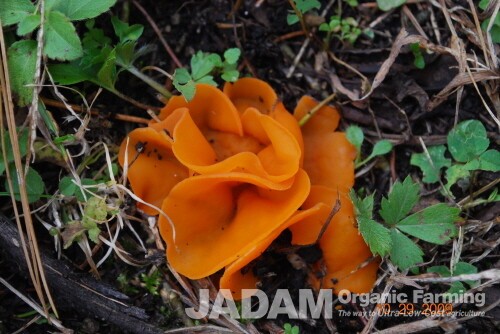
Regarding its chemical composition, the Orange peel fungus contains fucose-binding lectins. Fucose is a hexose deoxy sugar belonging to the monosaccharides, often used as a chemical reagent, making it useful in tumor screening. Fucose is also one of the factors determining human blood types; while it is found in the cell walls of seaweed and it generally not available in common foods, it is prevalent in breast milk and certain medicinal mushrooms. Other components include steroids, fatty acids, quaternary amines, and indole derivatives- colorless crystalline compounds that melt at low temperatures and are used in fragrances and reagents. Additional research identifies 27 types of free amino acids, yellow pigments such as beta-carotene and gamma-carotene, the orange pigment lycopene, and various lectins.
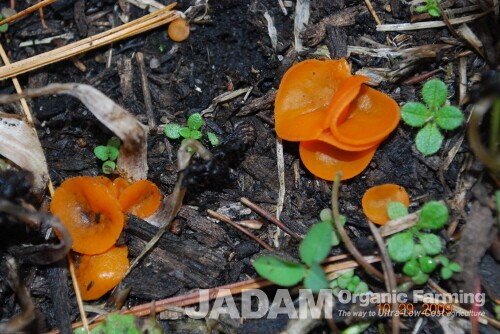
This fungus essence is said to help achieve a balance between the material and spiritual worlds. It is believed to assist those who are overly obsessed with material possessions, as well as those who ignore the physical world to escape into spirituality. Traditionally in Europe, this fungus was also utilized in animal husbandry. A decoction made from the mushroom was reportedly fed to daily cows suffering from colds or other ailments.
(The above is based on Rogers, 30, Park Wan-hee, 663, and internet searches for chemical components, etc.)
FAQ: Quick Fact
Q: Is the Orange peel fungus edible and what are its main benefits?
A: Yes, it is edible, though better consumed after boiling; it is highly valued for its unique carotenoid pigments which