

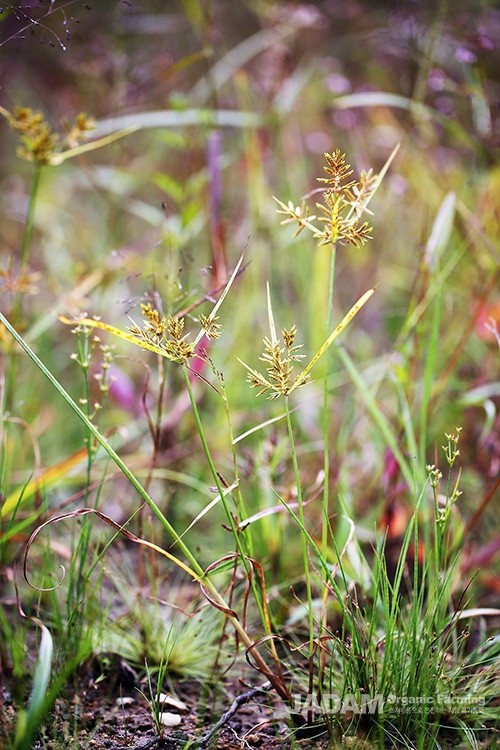
The Golden sedge is a common annual herb found in fallow fields, vacant lots, around cultivated lands, and along ditches or furrows. It typically grows in small clusters of two or three between spring and summer. From August to September, its yellowish-brown flower spikes spread out in all directions from the tip of the stem. The entire plant emits a subtle fragrance, which is particularly concentrated in the roots.
Sedges are representative weeds of the Poaceae and Cyperaceae families, alongside Crabgrass (Digitaria sanguinalis) and GReen foxtail (Setaria viridis). Because there are many species with very similar appearances, they can be difficult to distinguish. However, if you notice a pleasant scent coming from the roots while pulling weeds in a field, it is most likely the GOlden sedge (Cyperus microiria). While the whole plant is aromatic, the scent is strongest in the roots. Its name is derived from the golden hue of its flower spikes.
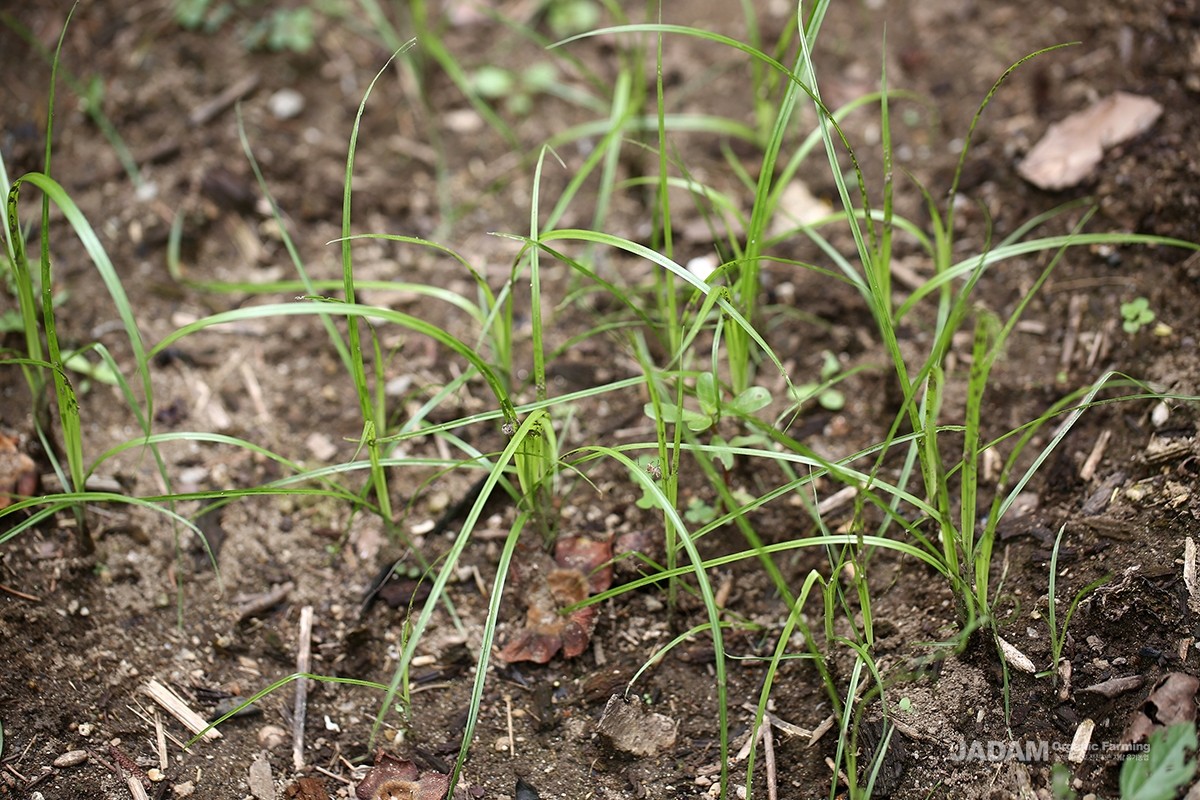
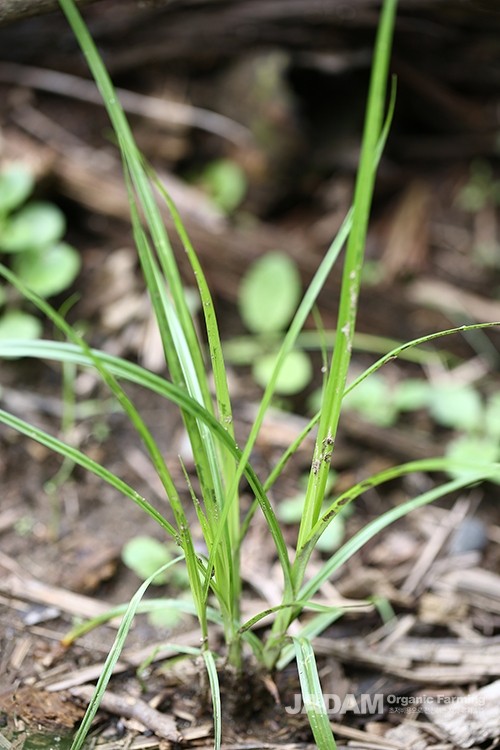
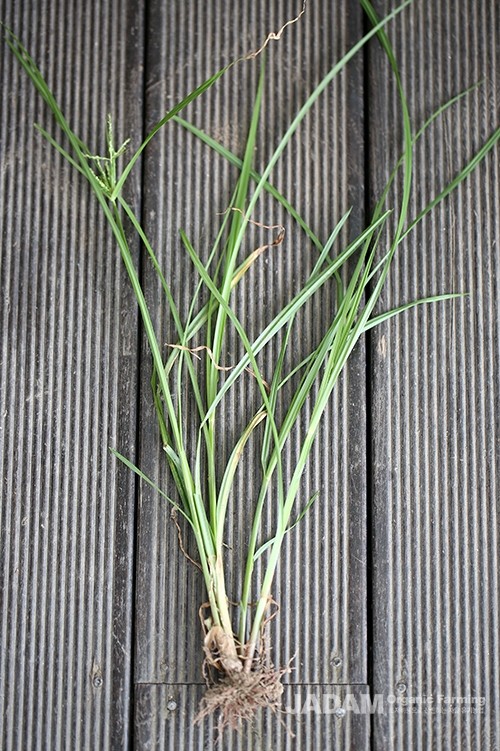
It is an annual herb that grows naturally in damp environments rather than dry ones, often found in fallow fields, vacant lots, or near waterways. It grows to a height of 20-60cm. The stem is triangular in cross-section and stiff enough that it does not break easily. The leaves are long, linear, and glossy, with several appearing at the base of the stem.
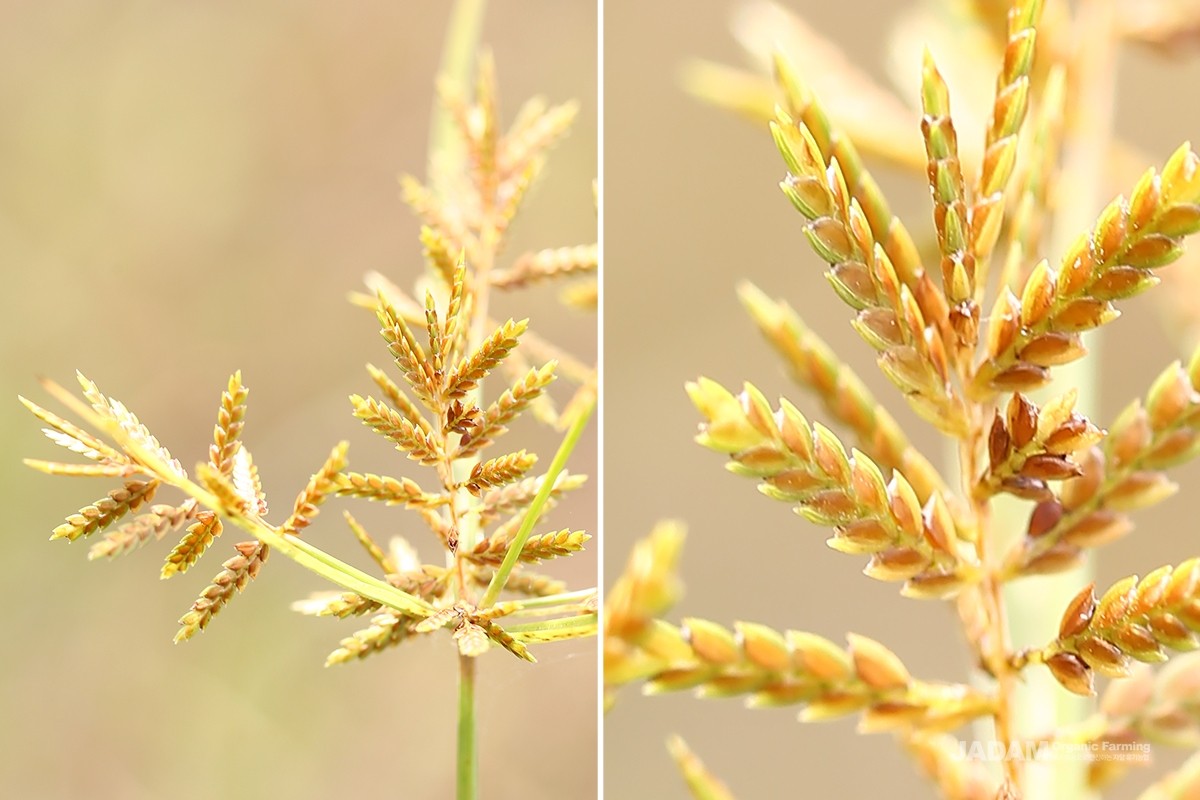
From August to September, yellowish-brown flower spikes branch out twice from the tip of the stem. Beneath these spikes, three to four leaf-like involucral bracts (modified leaves) extend, usually growing longer than the flower spikes themselves. The spikelets contain 10-20 flowers protected by scales. The tips of these scales protrude in a short, straight manner. Once pollination occurs and the spikes ripen, they turn a dark purple color.
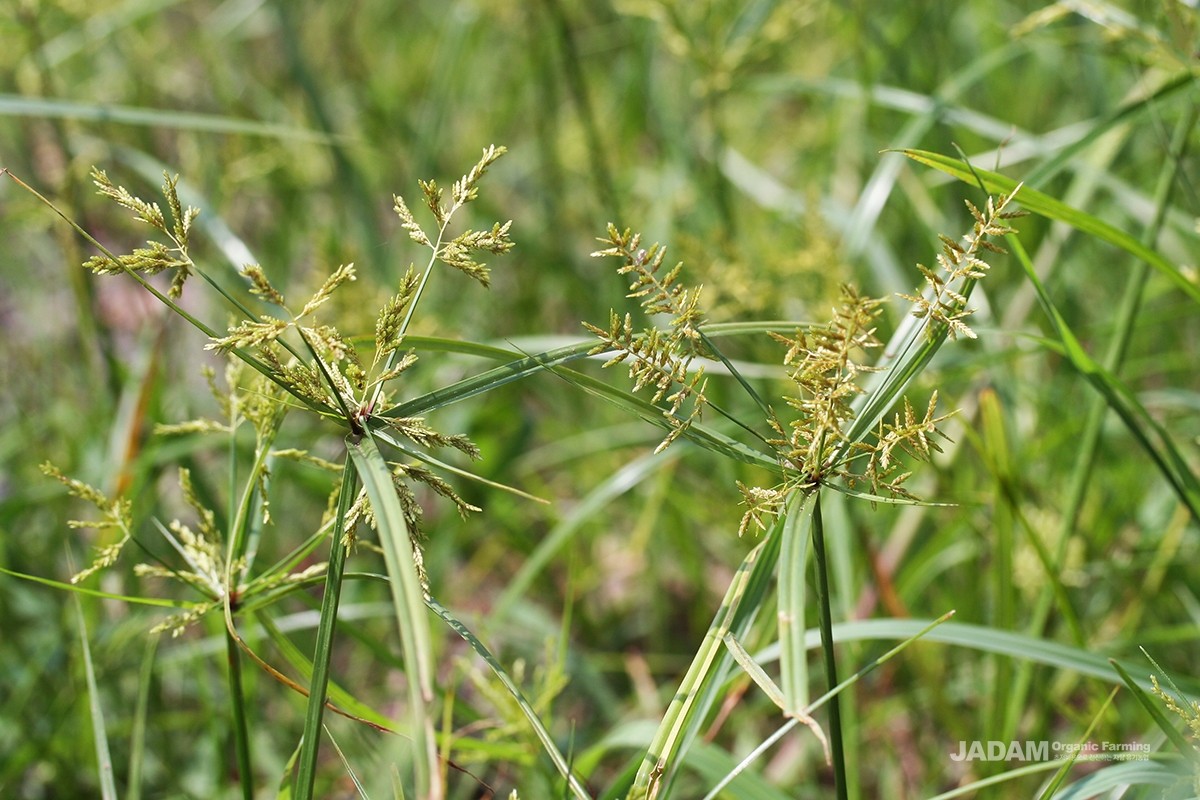
A very similar species is the Ricefield flatsedge (Cyperus iria). They are hard to tell apart before flowering, but the Ricefield flatsedge has almost no scent and tends to grow in larger clusters. ITs spikelets are smaller than those of the Golden sedge but are more densely packed. The most definitive way to distinguish them is by the scales: the scale tips of the Ricefield flatsedge do not protrude, whereas those of the Golden sedge protrude shortly and straightly.
▶ Utilization and Medicinal Properties:
Based on its similarities to the Ricefield flatsedge, this plant is known to thelp expel “wind-dampness” (a traditional term for joint and muscle heaviness), relax muscles, clear the meridians (energy pathways), and resolve blood stasis (poor circulation). It is used to alleviate musculoskeletal pain caused by dampness, irregular menstruation, and menstrual cramps, and it also helps clear phlegm. Its flavor is slightly spicy and mild, and its nature is neutral.
▶ Control Method:
While it grows to about 60 cm in height and does not pose a major problem in orchards, it is advisable to remove it regularly in dry fields, greenhouses, or rice paddies before it flowers. Because the roots are not deep, it can be pulled out easily by hand.
▶ Name Origin and Related Species:
The exact origin of the Korean name Bangdong-sani (Sedge) is unknown. The Golden sedge is so named because of its golden flower spikes. In contrast, the Ricefield flatsedge has scales that do not protrude at the tips, and the standard Sedge (Cyperus amuricus) does not have flower pikes that branch a second time.
Q: Is the Golden sedge useful for anything other than being a common weed?
A: Yes, beyond being a fragrant wild herb, the Golden sedge is used in traditional herbal medicine to improve blood circulation, relieve menstrual pain, and alleviate muscle and joint discomfort.