

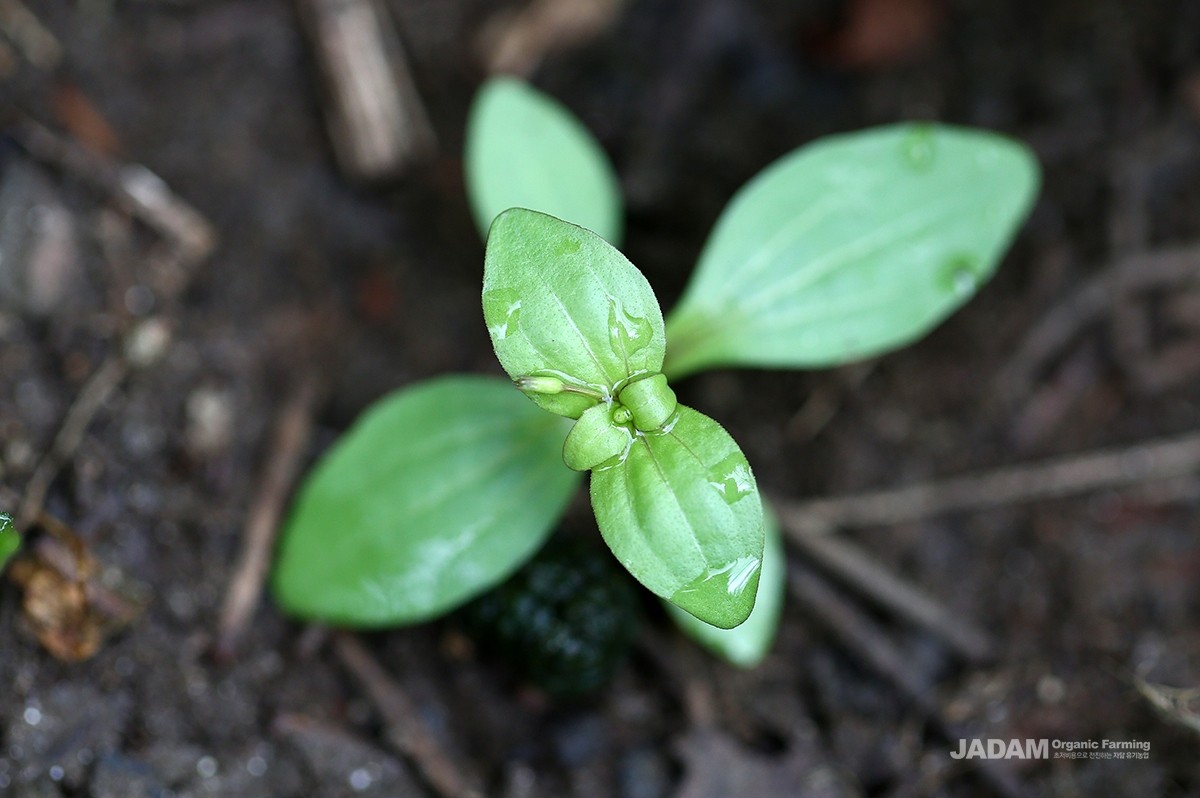
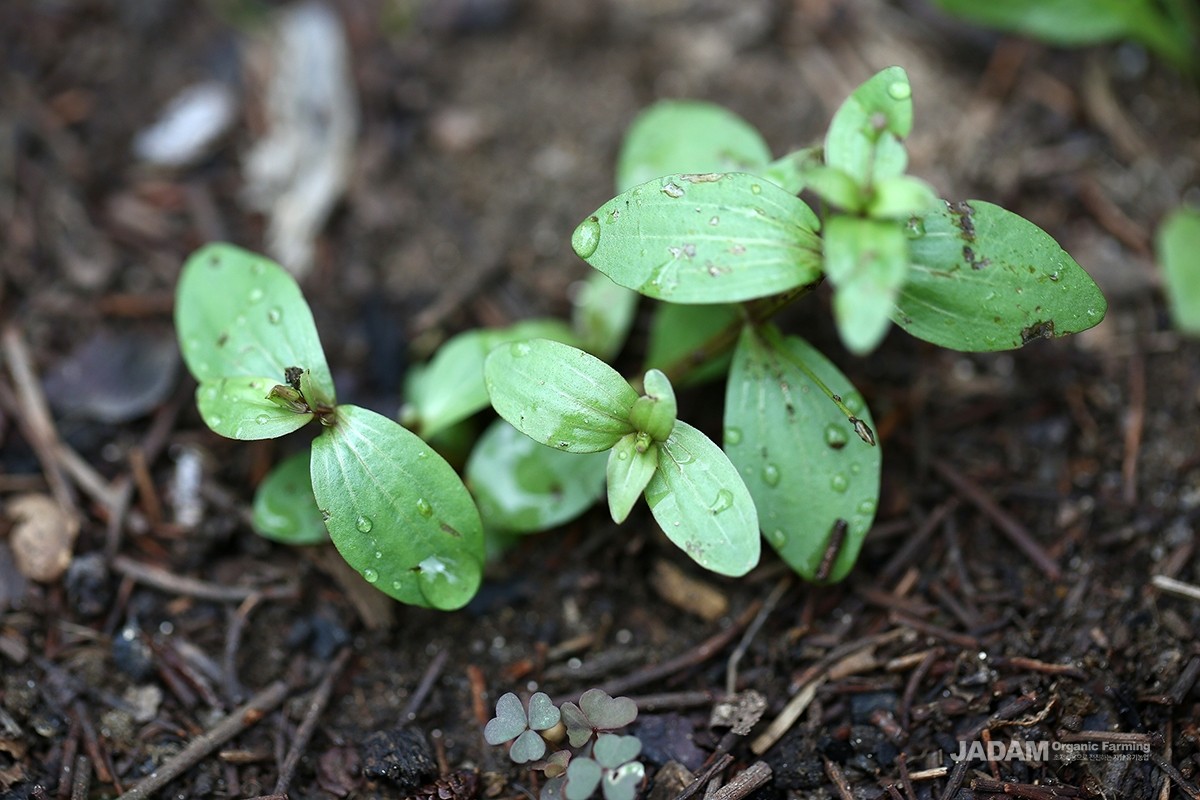
A hardy annual herb commonly found on rice paddy banks, field margins, roadsides, wetlands, and riverbanks. The oval leaves grow in opposite pairs and feature 3 to 5 distinct parallel veins. From August to September, solitary lip-shaped flowers bloom from long stalks emerging from the leaf axils.
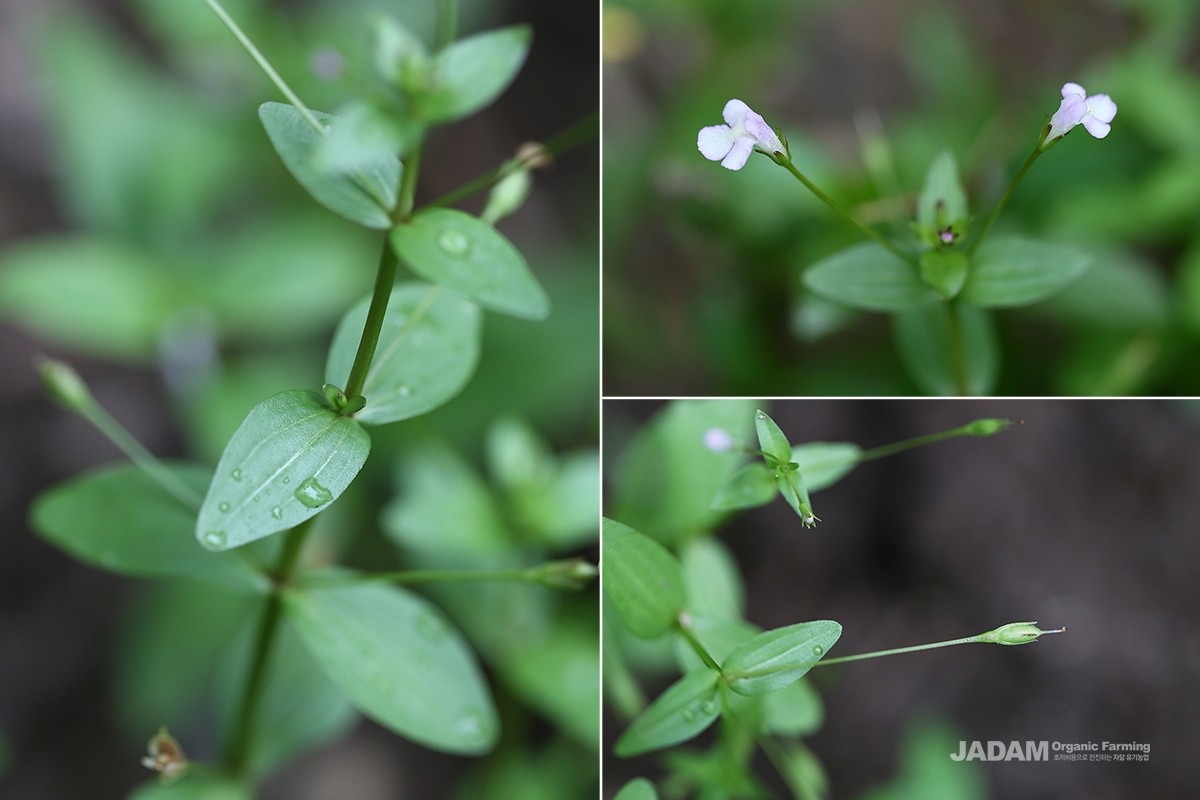
The Common false pimpernel (Lindernia procumbens) is a common annual herb found alongside related species like the Prostrate false pimpernel and Yellowseed false pimpernel. It thrives on rice paddy banks, moist fields, roadsides, and riverbanks. Reaching a height of 7 to 25 cm, it spreads by branching from the base. The stem is square-shaped and entirely hairless. Its leaves grow in opposite pairs, are oval in shape, and feature 3 to 5 distinct parallel veins. The leaf margins are smooth, and they lack petioles (leaf stalks).
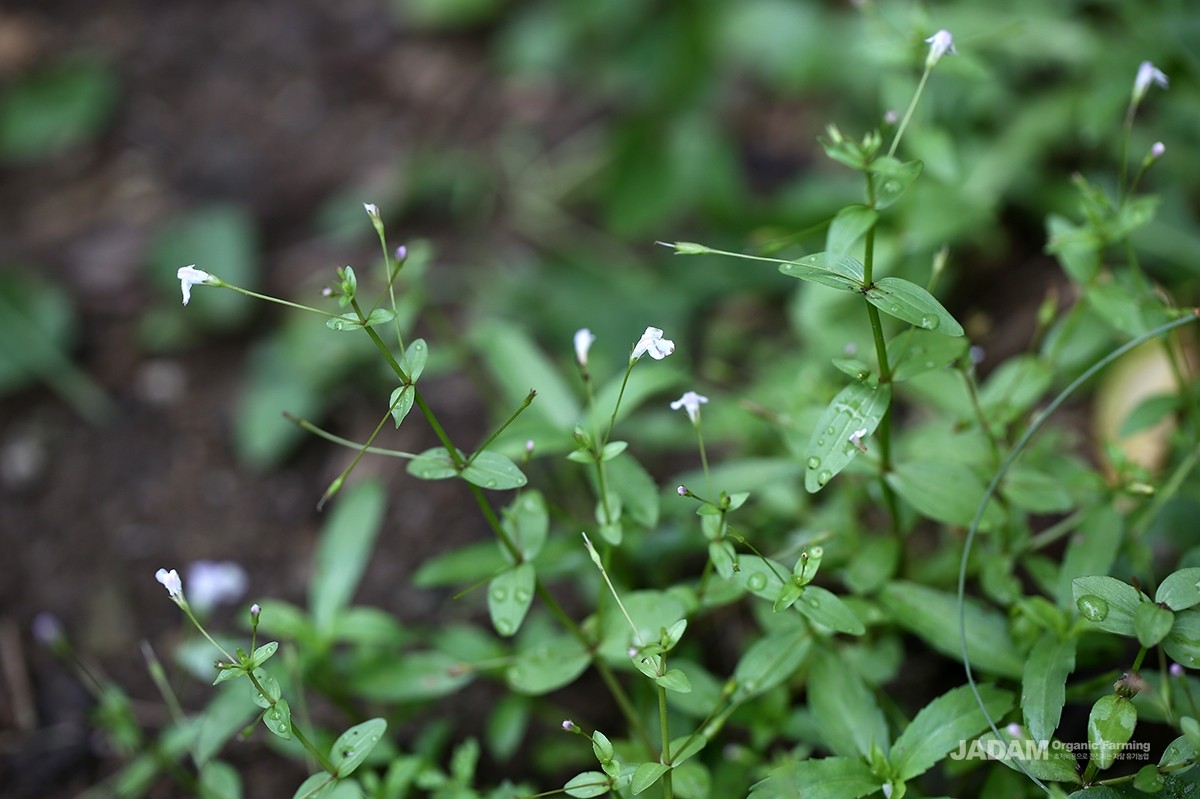
Between August and September, pale reddish-purple flowers appear individually on long stalks emerging from the upper leaf axils. The calyx is deeply divided into five lobes. The corolla is lip-shaped, and among its four stamens, two are notably longer. Flowers that appear later in the season often remain closed as cleistogamous flowers, ensuring the production of offspring through self-pollination.
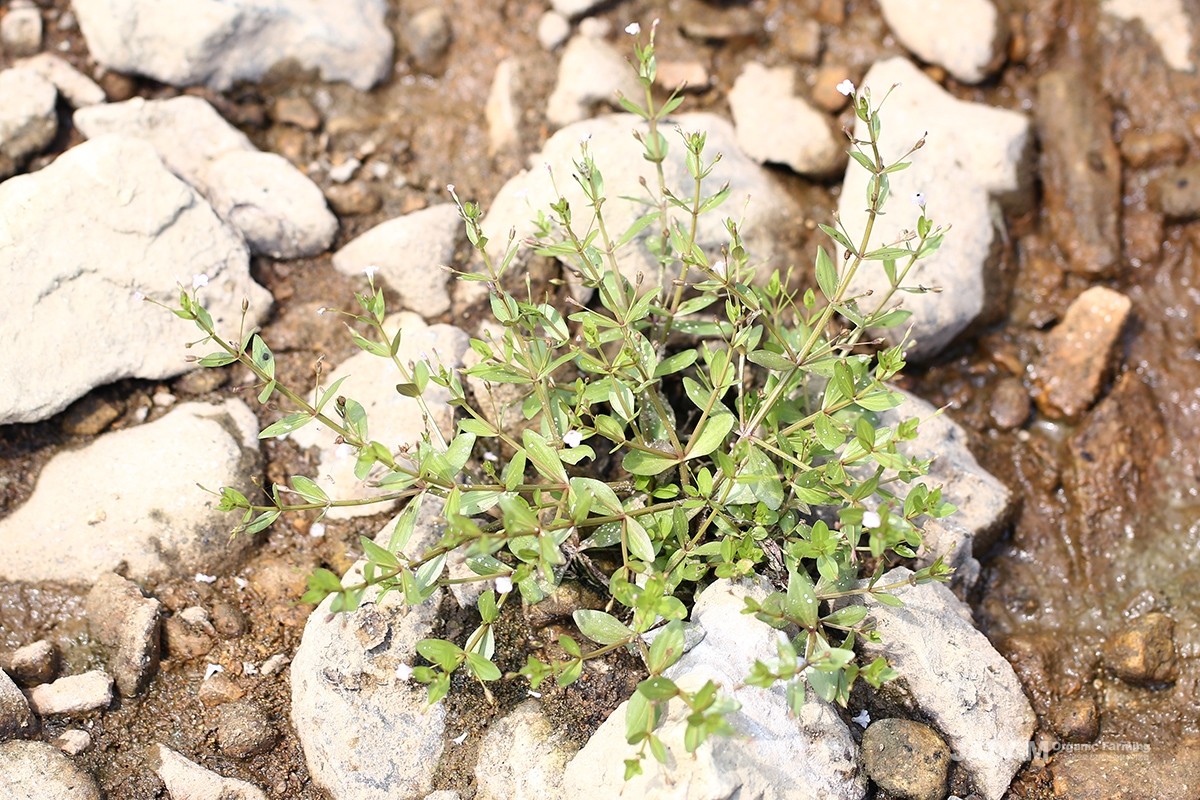
Once pollination is complete, the flower stalks lengthen further, often reaching more than twice the length of the leaves. At the tip, an elongated oval fruit forms, encased by the calyx. The fruit is roughly the same length as or slightly longer than the calyx, and a long, spear-shaped style remains attached. When ripe, the top bursts open to release tiny seeds. The name oepul (oriental melon herb) was derived from the fruit's resemblance to a miniature chamoe (Korean yellow melon).
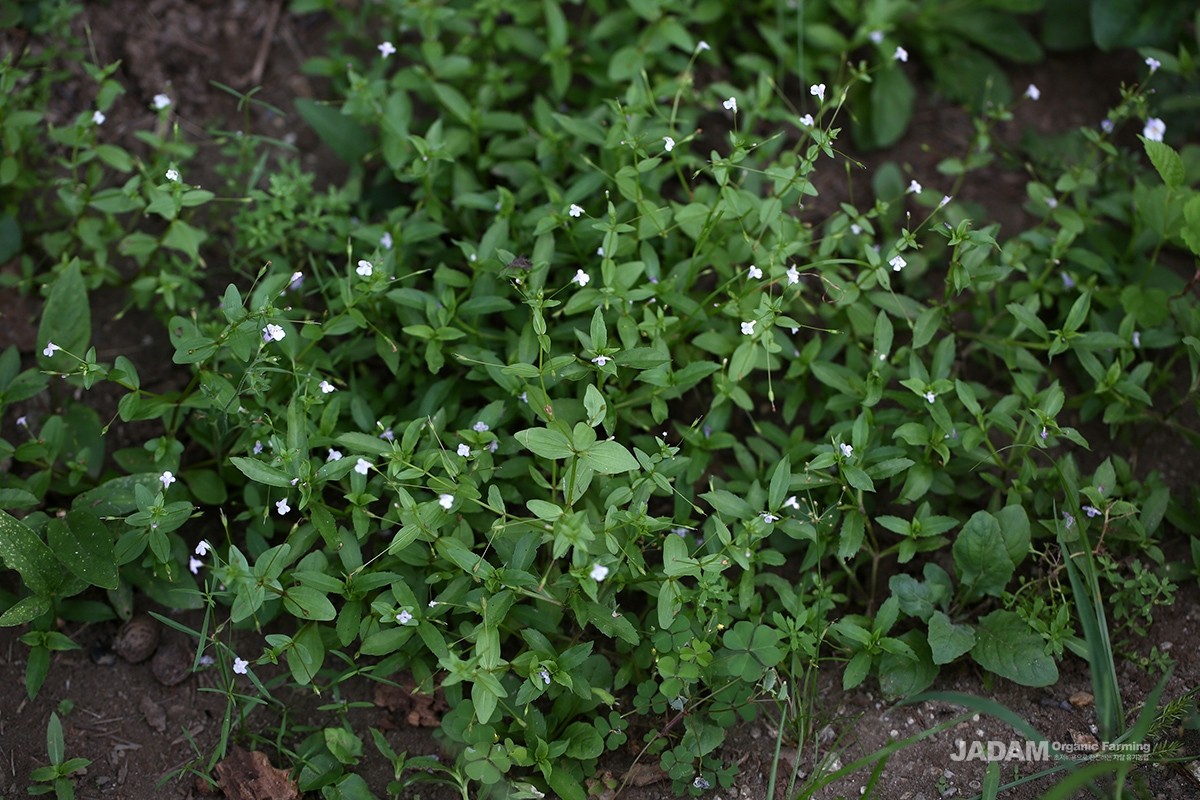
While the Common false pimpernel and Prostrate false pimpernel share similar habitats, the latter is more concentrated in warmer southern regions, whereas the Common false pimpernel is widely distributed throughout the temperate zones of the Northern Hemisphere. Like many agricultural weeds, its life cycle—from germination to seeding and senescence—is closely synchronized with the farming season. Despite its delicate and diminutive appearance, it is known as a resilient weed that is notably resistant to certain herbicides like Paraquat.
Uses and Medicinal Properties
In traditional herbal practice, this plant is used to reduce fever, drain dampness, and detoxify the body. It is considered effective for treating colds, acute or chronic bacterial dysentery, enteritis, and skin swellings. Its flavor is slightly bitter and mild, and it possesses a "cool" botanical nature.
Control Methods
Although it only reaches about 20 cm in height, it possesses strong vitality and reproductive capacity. It is best to remove the plants in early summer before they flower, or at the latest, before the seeds are dispersed.
Origin of Name and Similar Species
The name Battuk-oepul (Field-bank melon herb) refers to its melon-shaped fruit and its habitat on the banks of fields and paddies. In contrast, the Prostrate false pimpernel (Lindernia dubia) has lance-shaped leaves with faint serrations, while the Yellowseed false pimpernel (Lindernia dubia var. anagallidea) features flower stalks shorter than its leaves and more distinct serrations along the leaf margins.
Q: What are the primary characteristics and uses of the Common false pimpernel?
A: This hardy annual is characterized by its melon-shaped fruit and resistance to herbicides; it is used medicinally to detoxify the body and treat gastrointestinal issues like dysentery and enteritis.