

Water willow is an annual herb commonly found along roadsides, in fallow fields, on park lawns, at the foot of mountains, and near forest paths. The stems branch out extensively, with the upper portions standing upright. From July to September, one or two flowers bloom sequentially on spike inflorescences that resemble the shape of a mouse's tail.
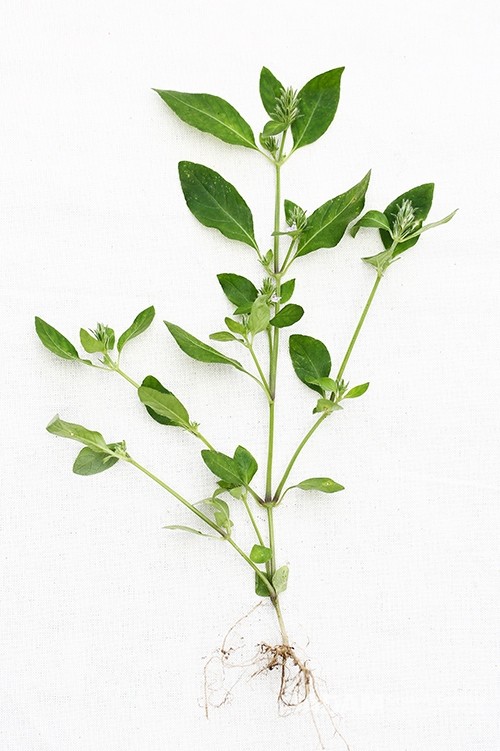
Water willow (Justicia procumbens) is an annual herb that commonly grows in fallow fields, grassy roadsides, and along forest paths. Standing about 30cm tall, the water willow is a common sight near human habitats. The main stem is either square or hexagonal in cross-section and is densely covered with fine hairs. The leaves grow in opposite pairs. They are ovate or elongated elliptical-lanceolate in shape, tapering at both ends with smooth margins.
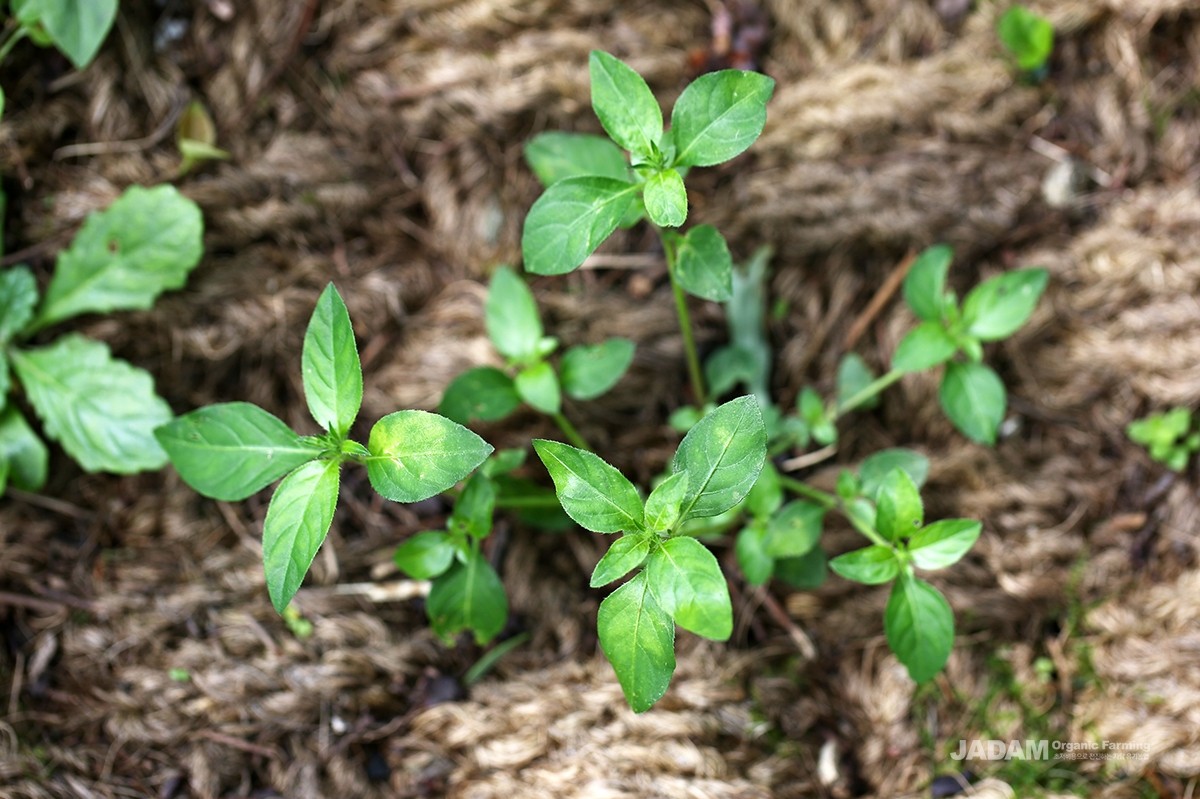
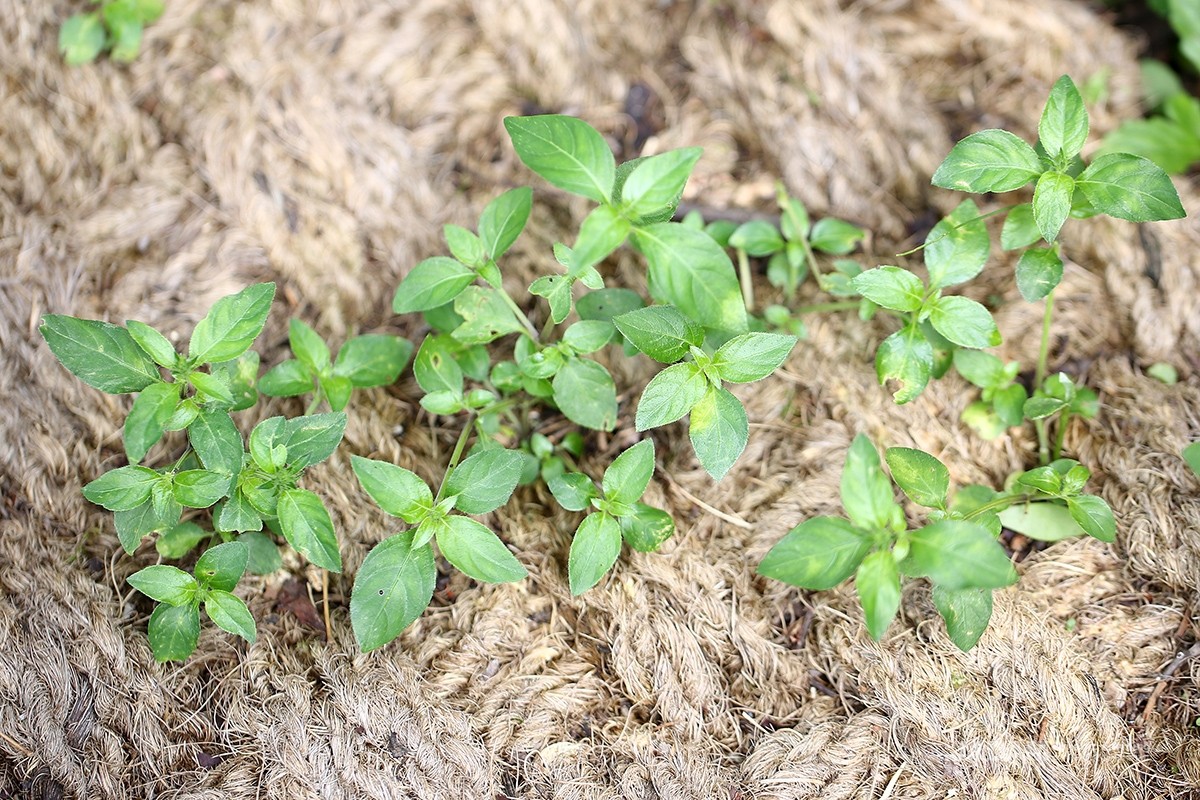
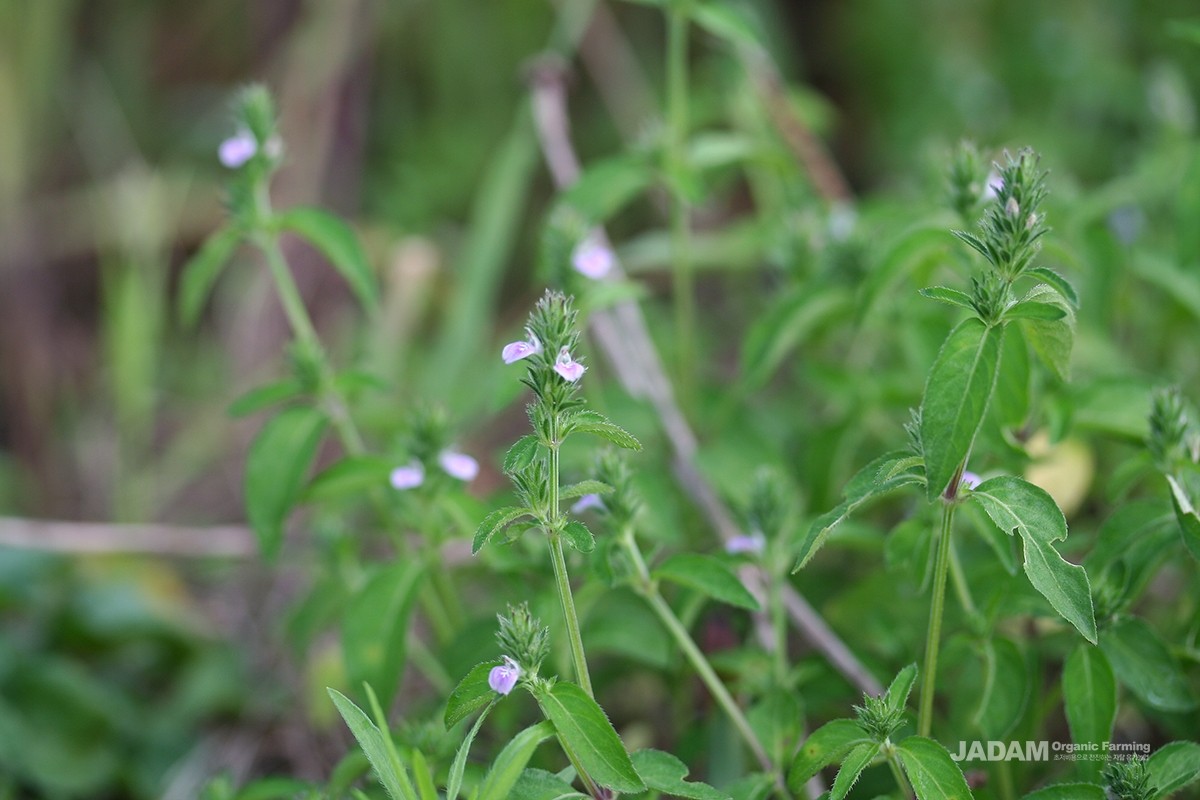
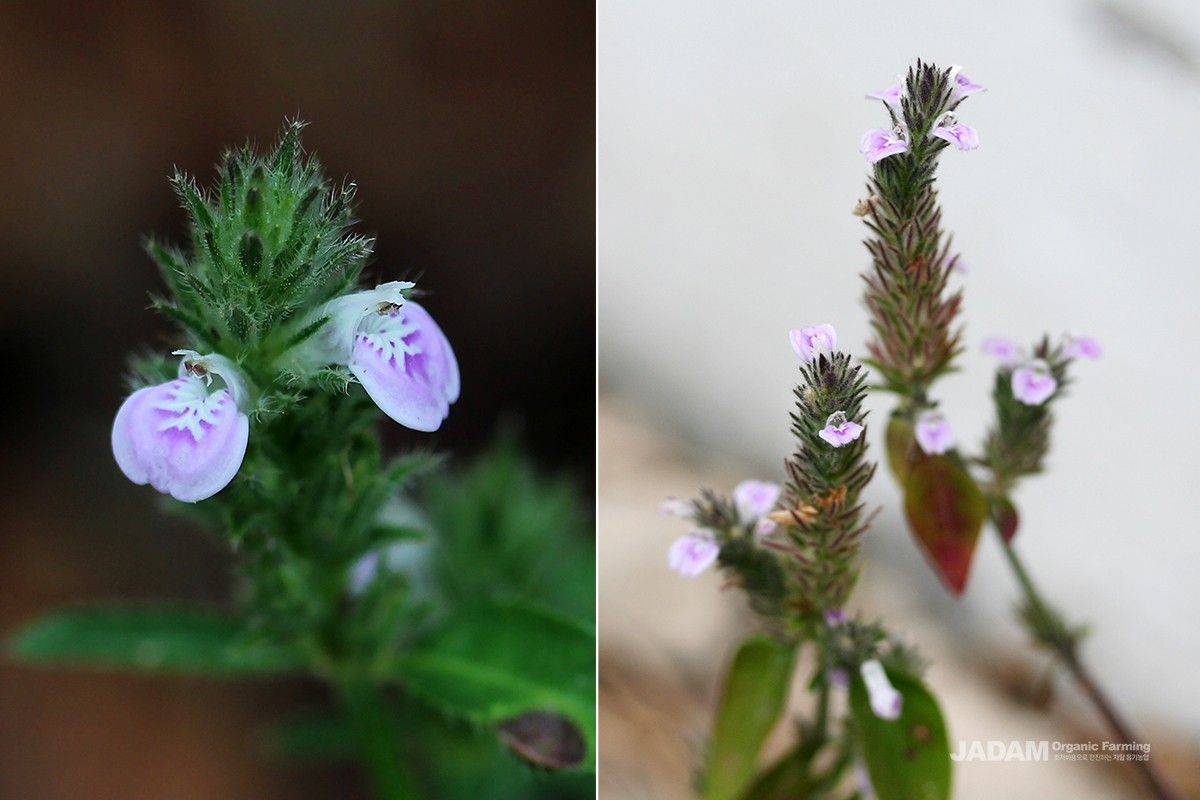
From the start of summer in July until early autumn in September, small flowers bloom sequentially, one or two at a time, on spikes at the end of each branch. As time passes, these flower spikes lengthen to the size of a pinky finger, densely packed with narrow, lance-shaped hairy bracts and calyxes. This spike resembles a mouse's tail, which is how the plant earned its Korean name, Jwiggori-mangcho (mouse-tail weed).
The flowers are labiate (lip-shaped). The lower lip has white patterns arranged against a reddish-purple background, while the upper lip holds two stamens and one pistil. The structure is designed so that when an insect follows the white "guide marks" into the flower, pollination occurs on its back. The calyx is deeply divided into five lobes.
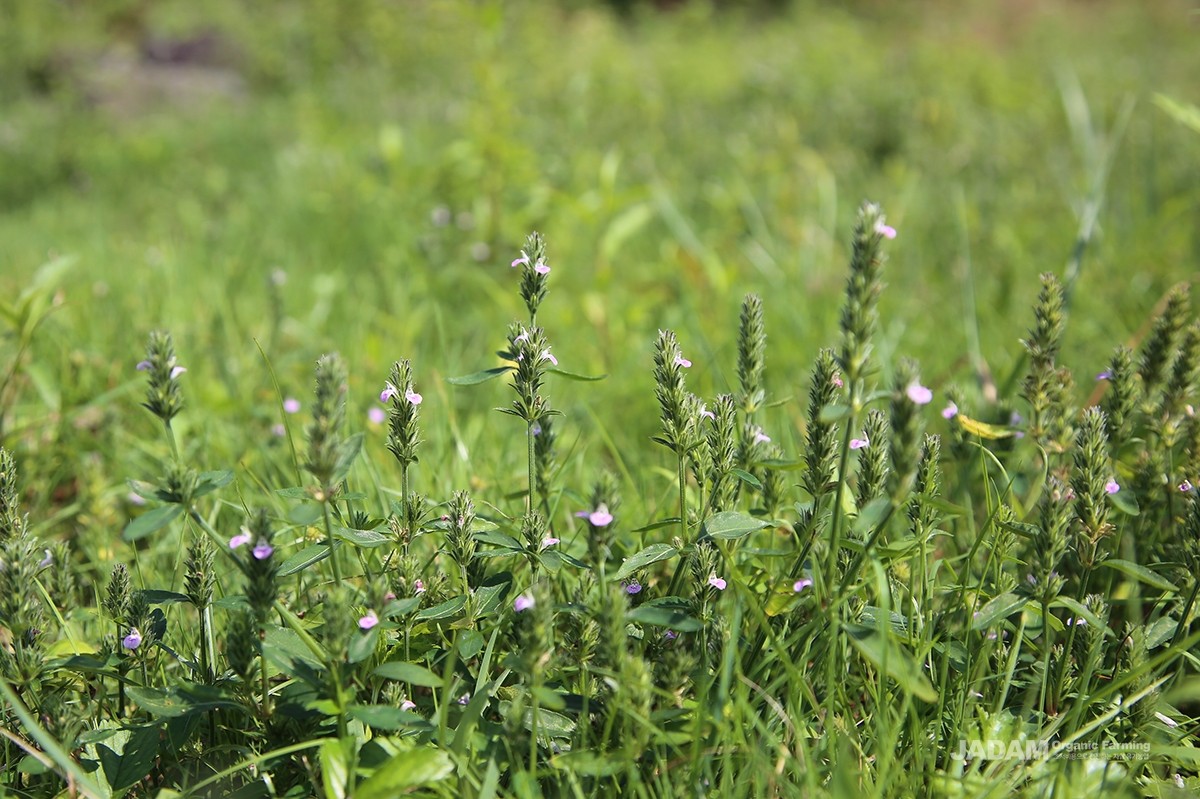
Because the flowers do not bloom all at once but rather sequentially throughout the summer, the plant avoids the risk of total pollination failure due to fickle summer weather. Furthermore, this strategy allows the plant to receive pollen from a wider variety of individuals, which is advantageous for genetic diversity. The fruit is a slender ellipse; when ripe, it bursts open to release four wrinkled black seeds.
Culinary Use and Medicinal Properties
Water willow is known to reduce fever, detoxify the body, remove dampness, resolve stagnant energy, promote blood circulation, and alleviate pain. It is traditionally used for cold-related fevers, coughing, sore throats, malaria, bacterial diarrhea, nephritic edema, and joint or muscle pain. It has a salty and pungent taste and "cold" properties.
Control Methods
Since it only reaches a height of 30–40cm, it does not pose a major problem in orchards. However, in vegetable fields or greenhouses, it is recommended to remove the plant before its branches spread too wide.
Name Origin and Similar Species
The name comes from the flower spike’s resemblance to a mouse’s tail. A similar species, the lip-shaped willow (Justicia terminalis), differs in that its flowers do not bloom in spikes, and the upper and lower petals are roughly equal in size.
Q: What are the main characteristics and medicinal uses of water willow?
A: Water willow is a common annual herb characterized by its mouse-tail-like flower spikes; it is used medicinally to treat fevers, sore throats, and inflammation while promoting healthy blood circulation.