

This plant is an annual herb that commonly grows around residential areas, such as open fields, fallow farmlands, roadsides, and vacant lots. The stems branch out extensively, spreading wide, and produce white flowers during the summer. Its pea-sized berries emerge green and turn black as they ripen.
Black nightshade (Solanum nigrum) is an annual plant commonly found in residential areas, such as open fields, abandoned farms, roadsides, and vacant lots. Its stems branch out extensively, and small white flowers bloom during the summer months. The pea-sized berries start green and turn a deep black as they ripen.
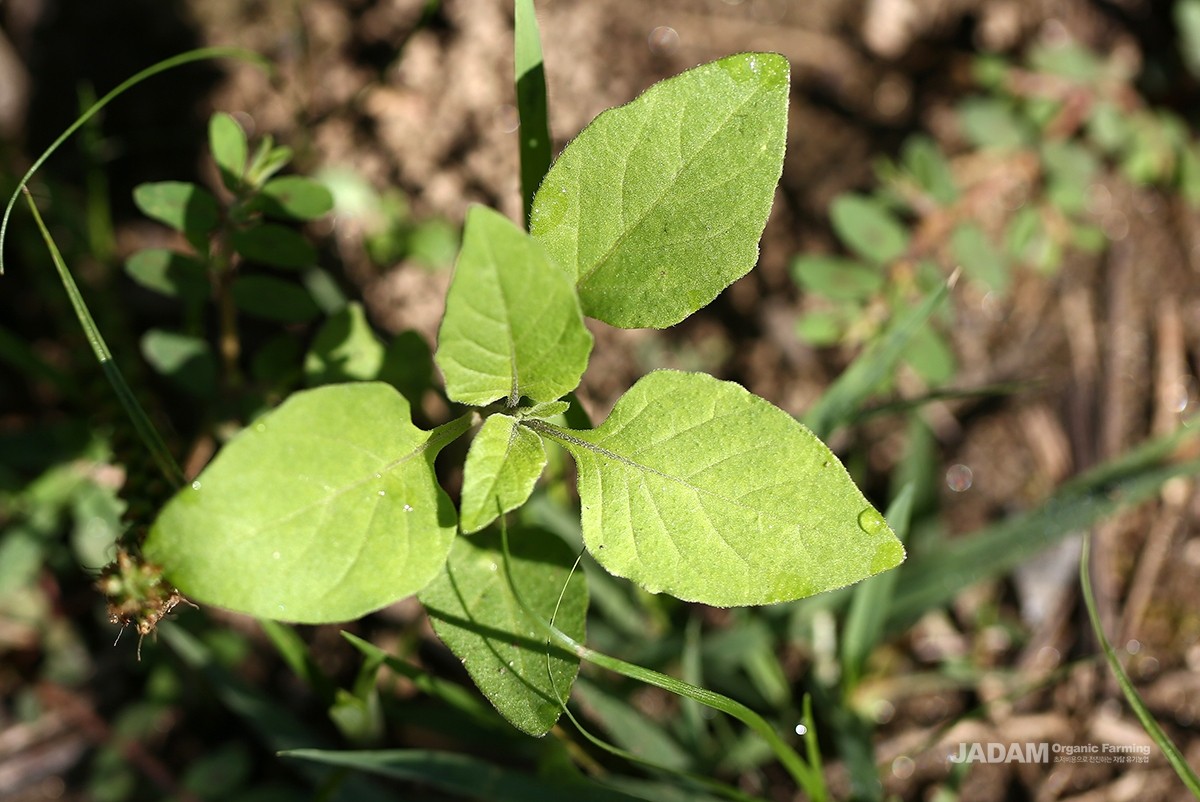
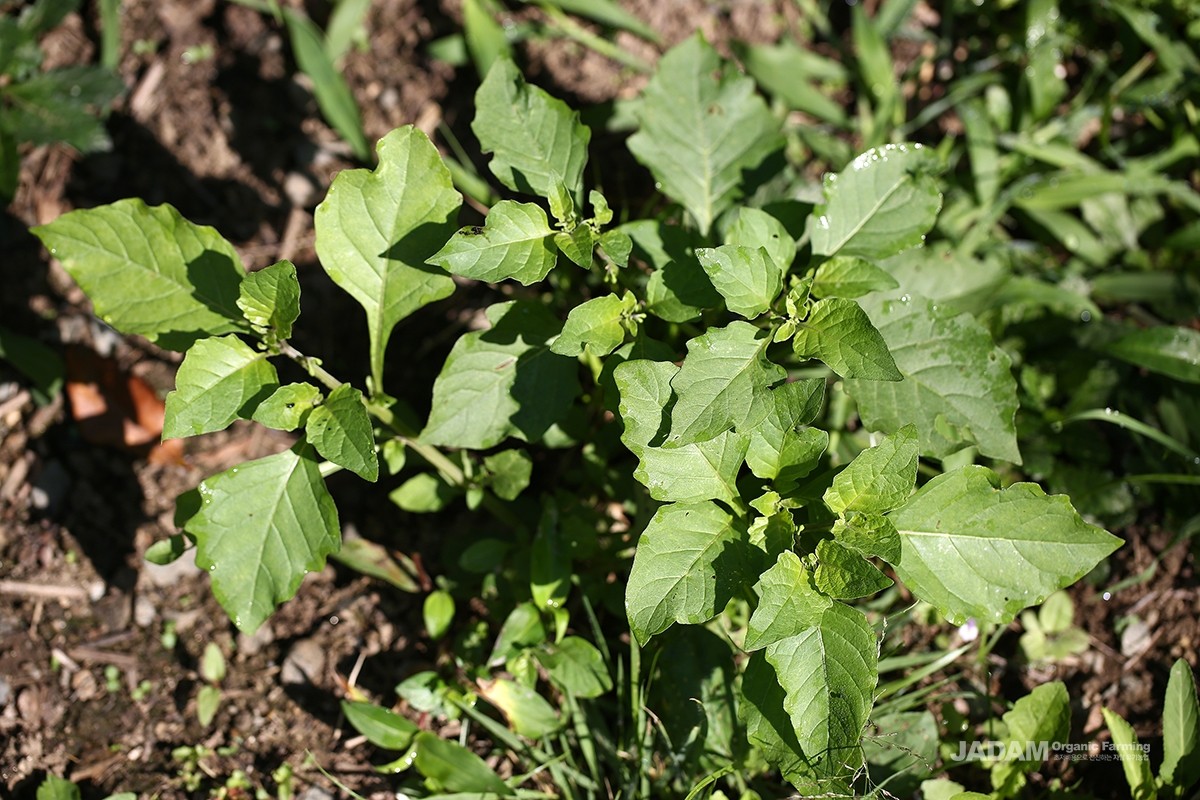
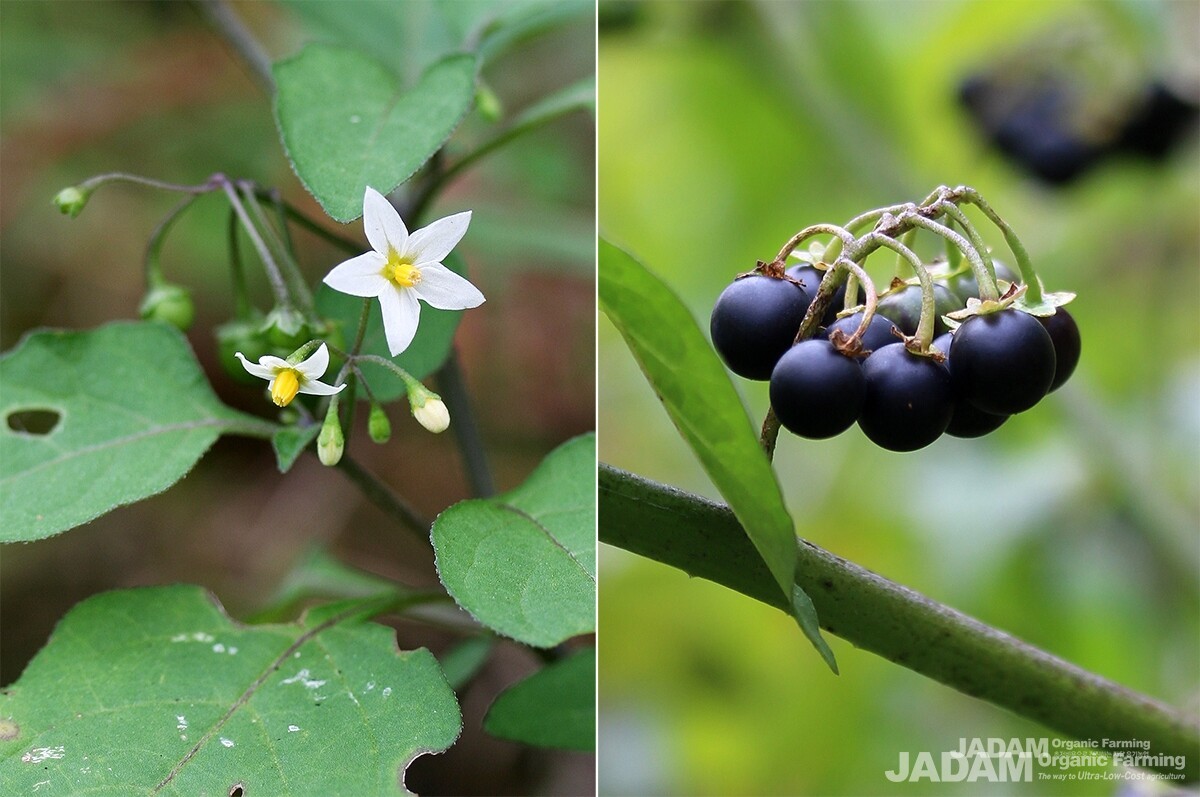
The flowers bloom white from May to September. Long flower stalks emerge from the stem between the leaves, bearing 3 to 8 flowers in a cluster. The calyx and corolla are each divided into five segments, with five yellow stamens surrounding the central pistil. The fruit is a round berry that begins to ripen into a black color starting in July. While the berries have a slightly sweet taste, they contain an alkaloid toxic substance called solanine.
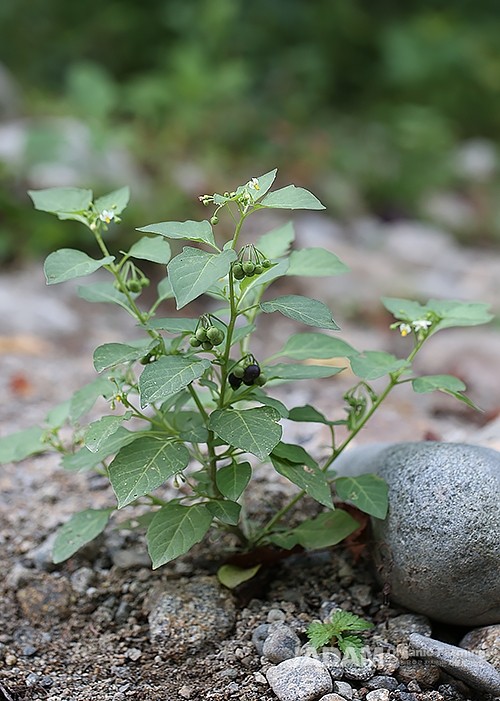
The concentration of solanine is particularly high in unripe berries. This compound is common to most plants in the Solanaceae family and is also found in potato sprouts or potatoes that have turned green. This toxin serves as a defense mechanism, discouraging animals from eating the fruit before it is ripe and ensuring that, if consumed, the seeds are excreted quickly. This process helps the seeds germinate properly without being damaged.
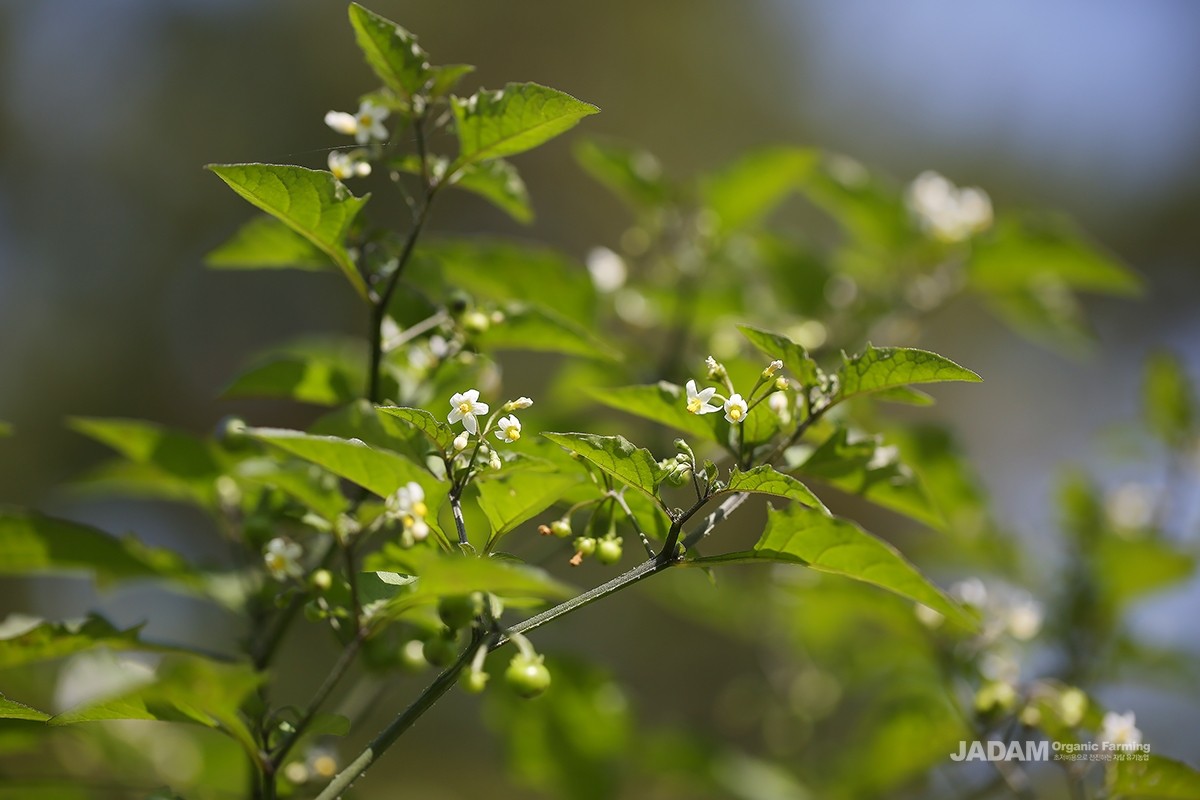
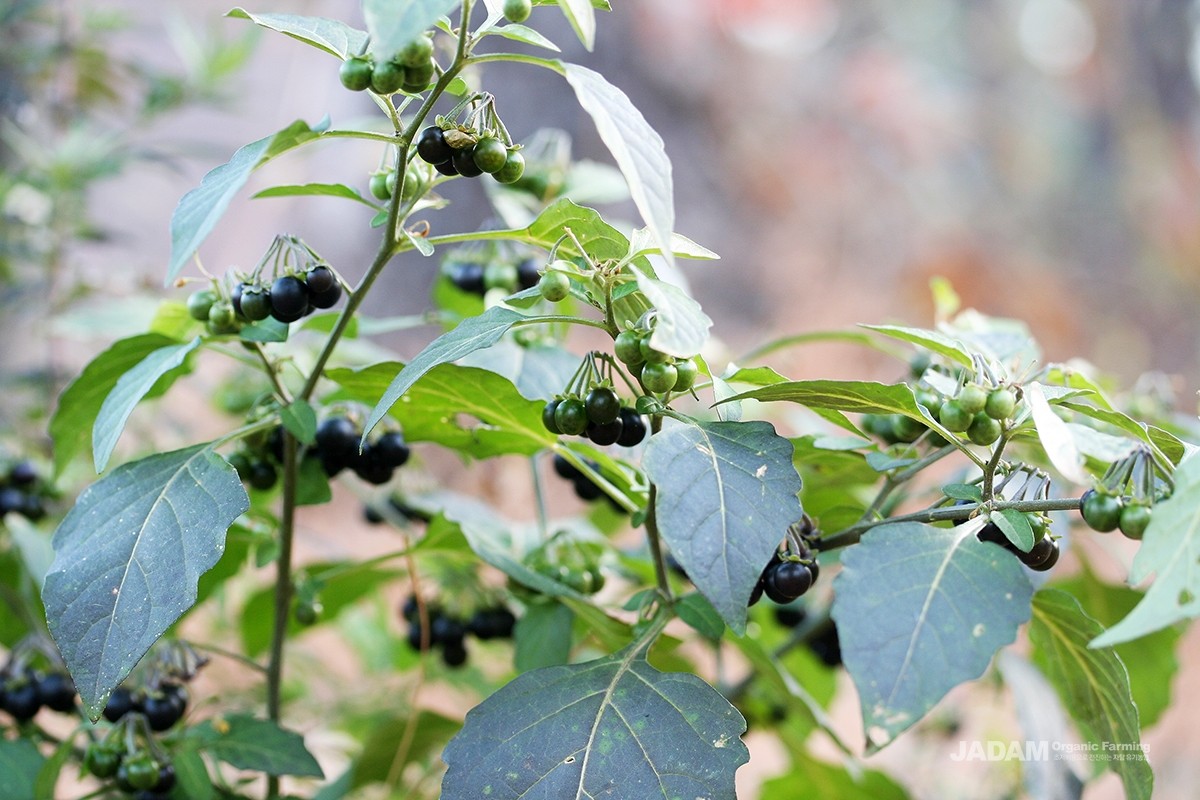
Solanine has a sharp, acrid taste and, like saponin, can cause hemolysis (the breaking down of red blood cells). In small amounts, it may assist in reducing inflammation and strengthening the immune system. However, poisoning can lead to an itchy throat, vomiting, and diarrhea, similar to food poisoning symptoms. Many people recall snacking on the fully ripened black berries during childhood without any particular stomach aches or illness, suggesting that the toxin levels in ripe fruit are generally not problematic in small quantities.
Culinary Use and Medicinal Properties
The young shoots of black nightshade can be blanched and eaten as namul (Korean seasoned herbal side dish). Medicinally, the plant is known to reduce fever, detoxify the body, promote blood circulation, and alleviate swelling. It is traditionally used to treat sores, boils, skin inflammation, chronic bronchitis, and acute nephritis. The berries are also used as an expectorant to clear phlegm and suppress coughing. The plant has a bitter taste and "cold" properties according to traditional herbal principles.
Control Methods
Since the plant typically grows to a height of 20–60cm, it does not pose a significant problem in orchards. However, in vegetable gardens or greenhouses, it is best to remove it before the stems begin to spread extensively.
Name Origin and Similar Species
The name Kkamajung in Korean is derived from the fact that the ripened black berries resemble the shaven head of a Buddhist monk (jung). A similar species, American black nightshade (Solanum americanum), generally has smaller leaves and fruit. It can also be distinguished by its petals, which often have a purplish tint, and its tendency to have flowers and fruits clustered more tightly in a single spot.
FAQ: Quick Fact
Q: Is black nightshade edible and what are its main benefits? A: Yes, the young shoots can be eaten as blanched greens, and the fully ripe berries are edible in moderation; it is primarily used to reduce inflammation, detoxify the body, and relieve respiratory issues like coughing and phlegm.