

Fruit Tree Pest
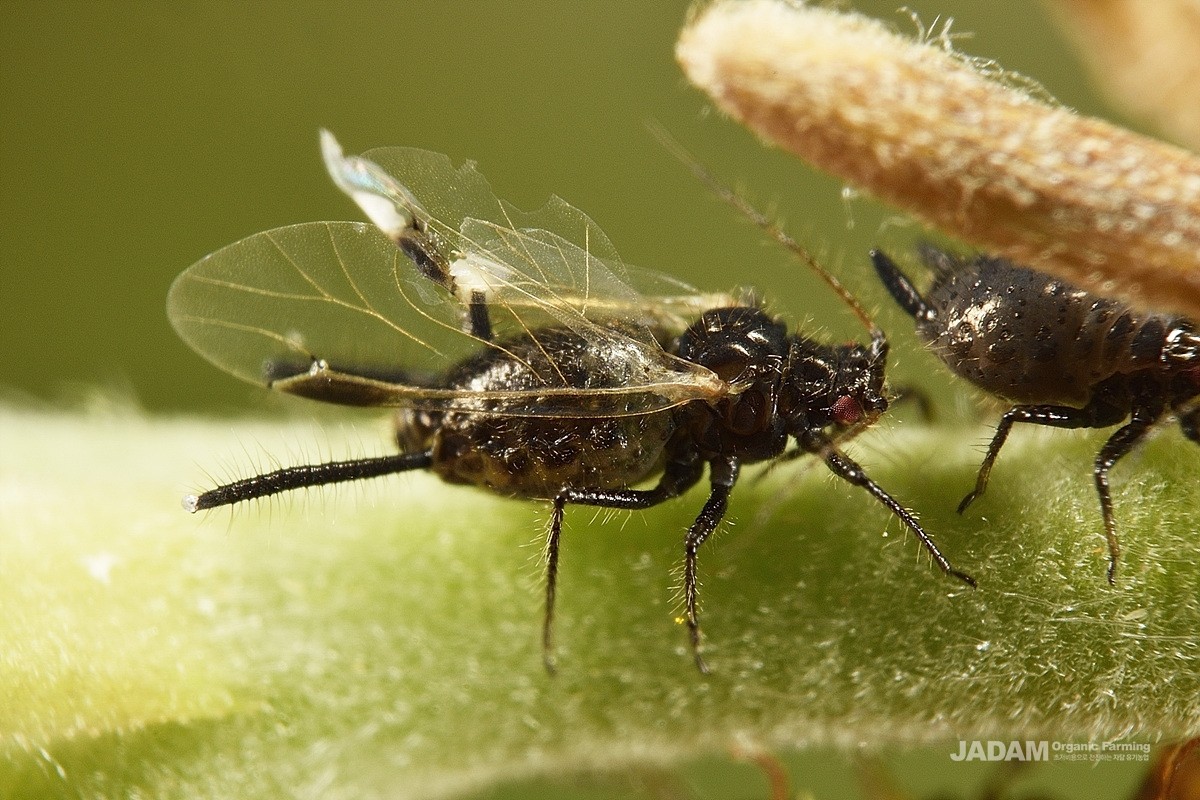
Oak-Leaf Aphid
Order: Hemiptera
Family: Greenideidae
▶Scientific Name: Greenidea nipponica Suenaga
▶Size: Body length of winged adults approx. 4mm; wingless adults 3–3.5mm
▶Host Plants: Chestnut trees, sawleaf oak, oriental white oak, daimyo oak, etc.
▶Distribution: Korea, Japan, etc.
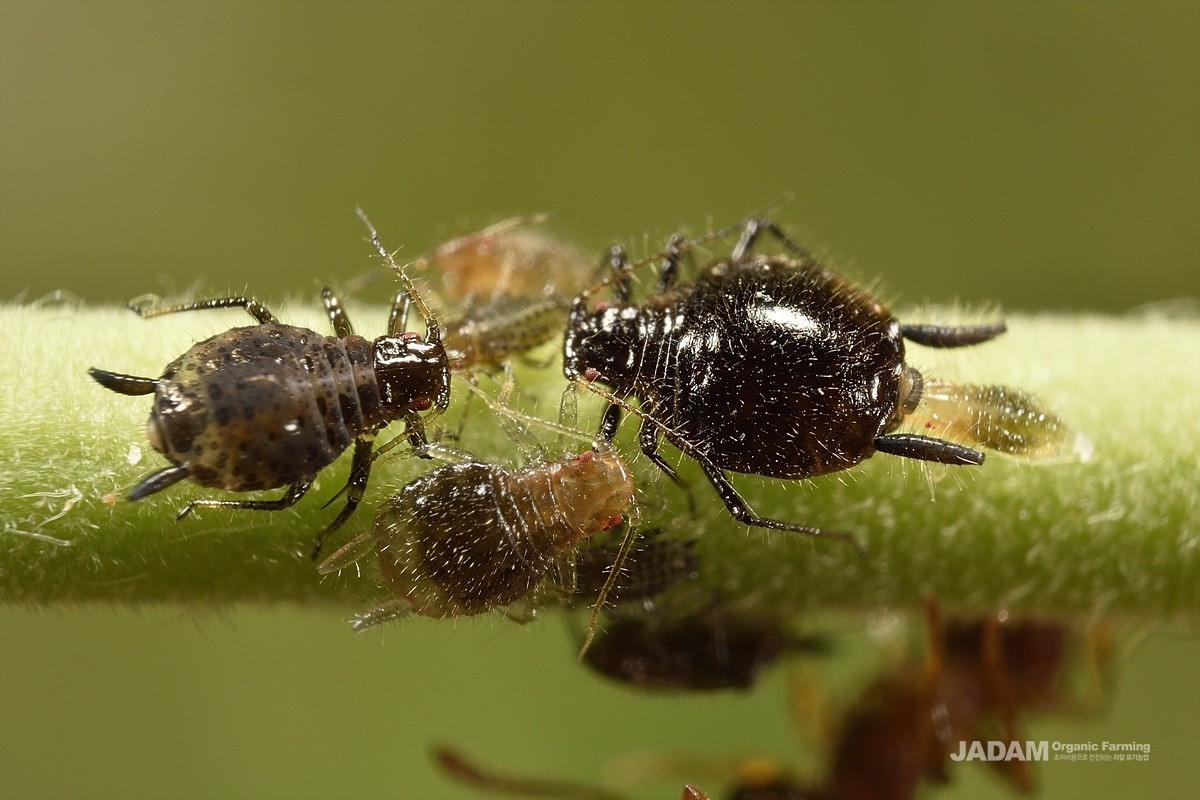
The winged adults (alate) of the oak-leaf aphid (Greenidea nipponica) are approximately 4 mm long and black, with bodies covered in long, stiff bristles. Their antennae are slender, consisting of six segments with distinct scale-like patterns. The siphunculi (cornicles) are remarkably long, reaching nearly 2 mm, and are cylindrical with rounded tips bearing six long bristles. In contrast, the wingless adults (apterous) measure about 2.5 mm, are black with dark reddish eyes, and also possess stiff bristles.
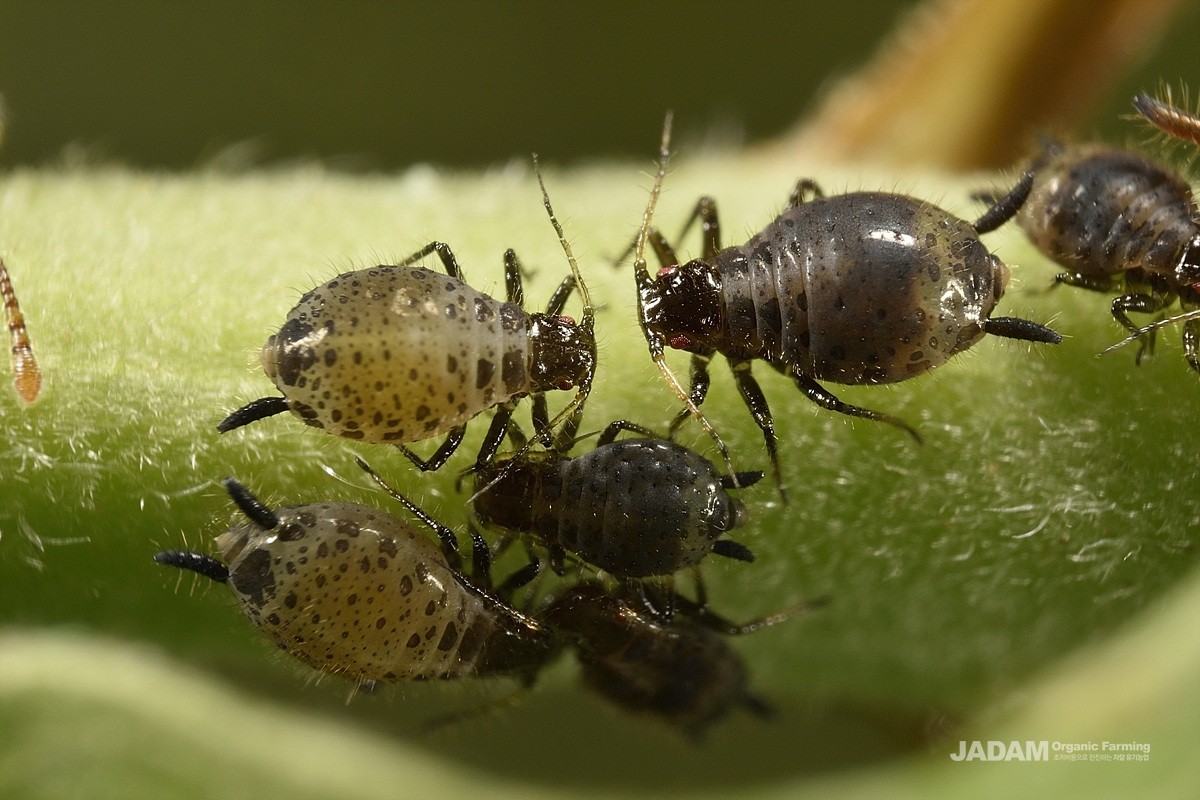
Although their detailed ecology has not been fully established, they occur several times a year, with various life stages overlapping throughout the season. The sexual generation typically appears in autumn. These aphids cluster on new shoots to feed by sucking sap (suction damage), which inhibits the growth of young branches.
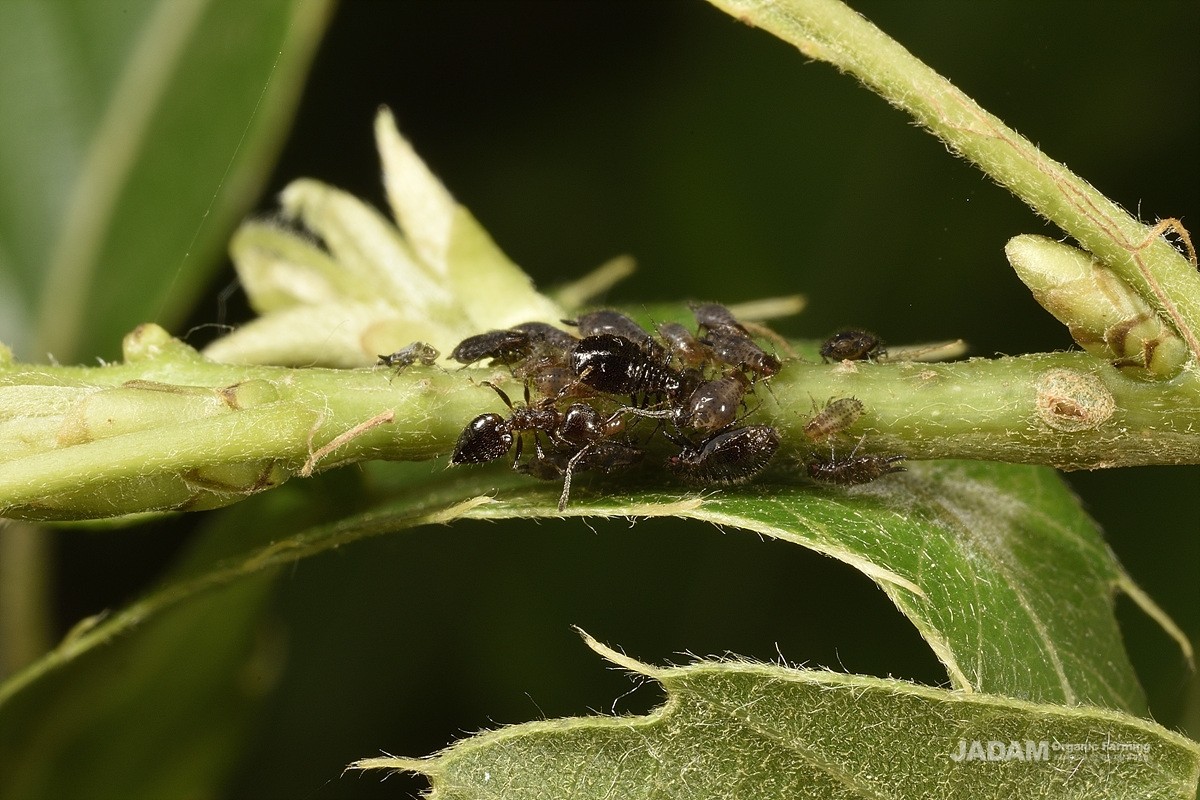
Since they appear for short periods, the damage is generally not severe. Therefore, rather than using chemical pesticides, it is advisable to prioritize strategies that protect natural predators, such as lacewings, ladybugs, hoverflies, and spiders. [Text source: Korea Forest Service]
Q: How does the oak-leaf aphid affect trees and what is the best way to manage it?
A: This aphid inhibits the growth of new shoots on oak and chestnut trees by sucking sap, but because the damage is temporary, protecting natural predators like ladybugs and spiders is more effective than using chemical sprays.