

It is a perennial herb that commonly grows in sunny places such as roadsides, empty lots, playgrounds, lawns, and embankments. Its creeping stems spread in all directions, taking root, and it produces round white flower clusters from spring to early summer.
White clover (Trifolium repens) is a perennial herb belonging to the legume family. Native to Europe, it was introduced to Korea in the early 20th century during the opening of ports as fodder for livestock before naturalizing and spreading across the country. Although it is a naturalized plant, it is very familiar to people in their youth, known for the four-leaf clover symbolizing luck, as well as for making flower bracelets, rings, and necklaces.
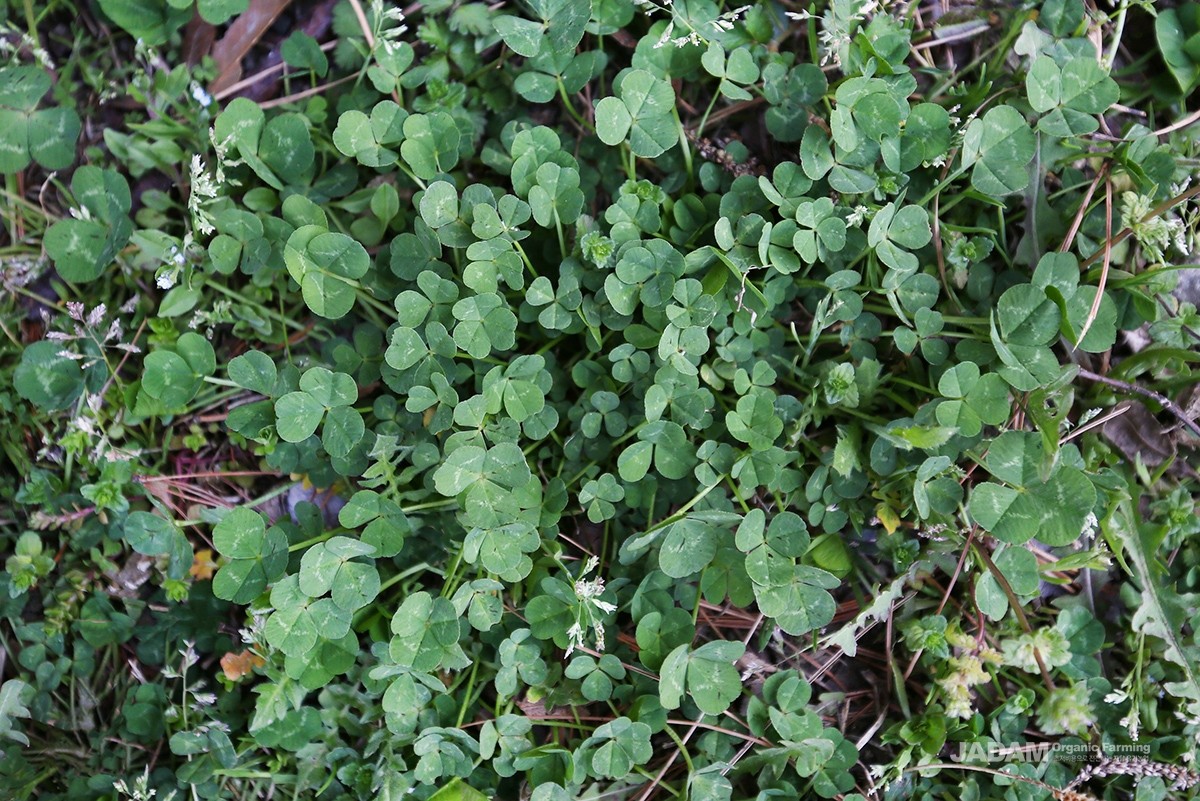
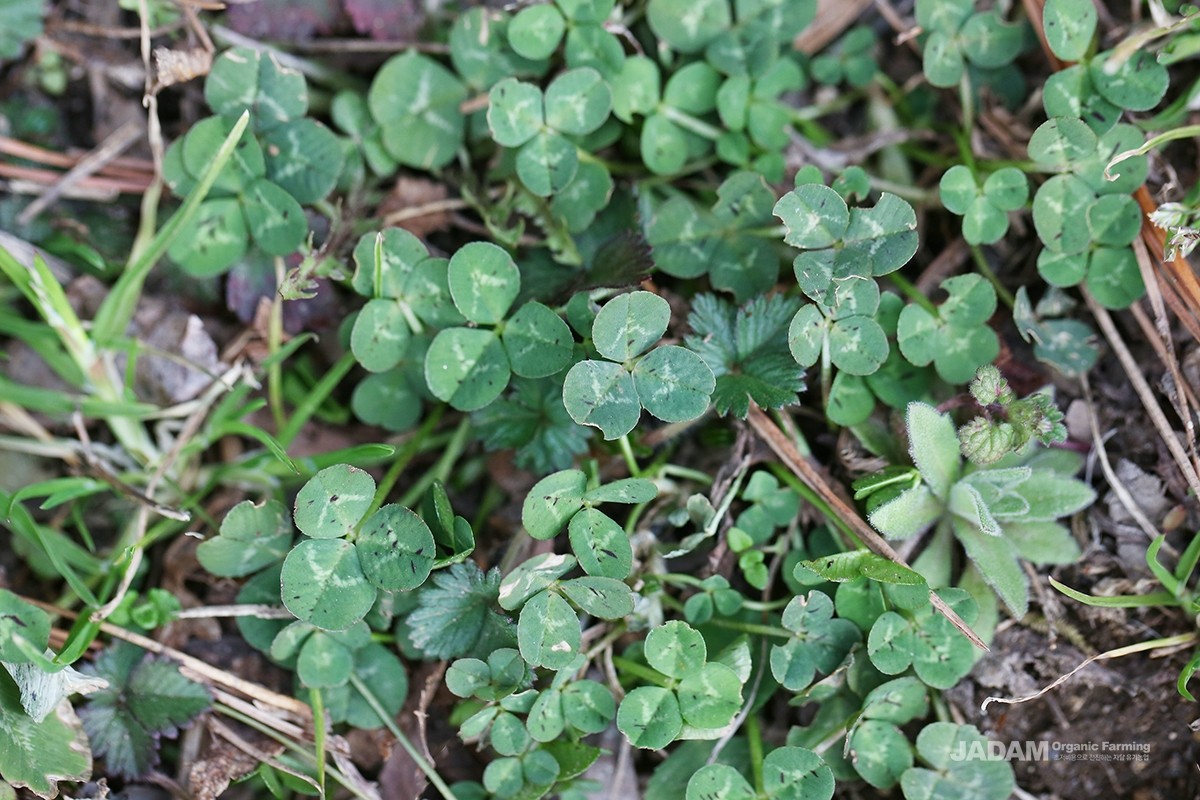
In spring, its creeping stems spread in all directions, rooting downward and spreading leaves upward. The creeping stems are dense and tough, allowing the plant to compete successfully against lawn grass. If left unchecked, a lawn will soon be overtaken by white clover. Even if you meticulously weed and pull them out, if a single cut fragment of the stem remains, it will regenerate and spread again, making removal quite difficult.
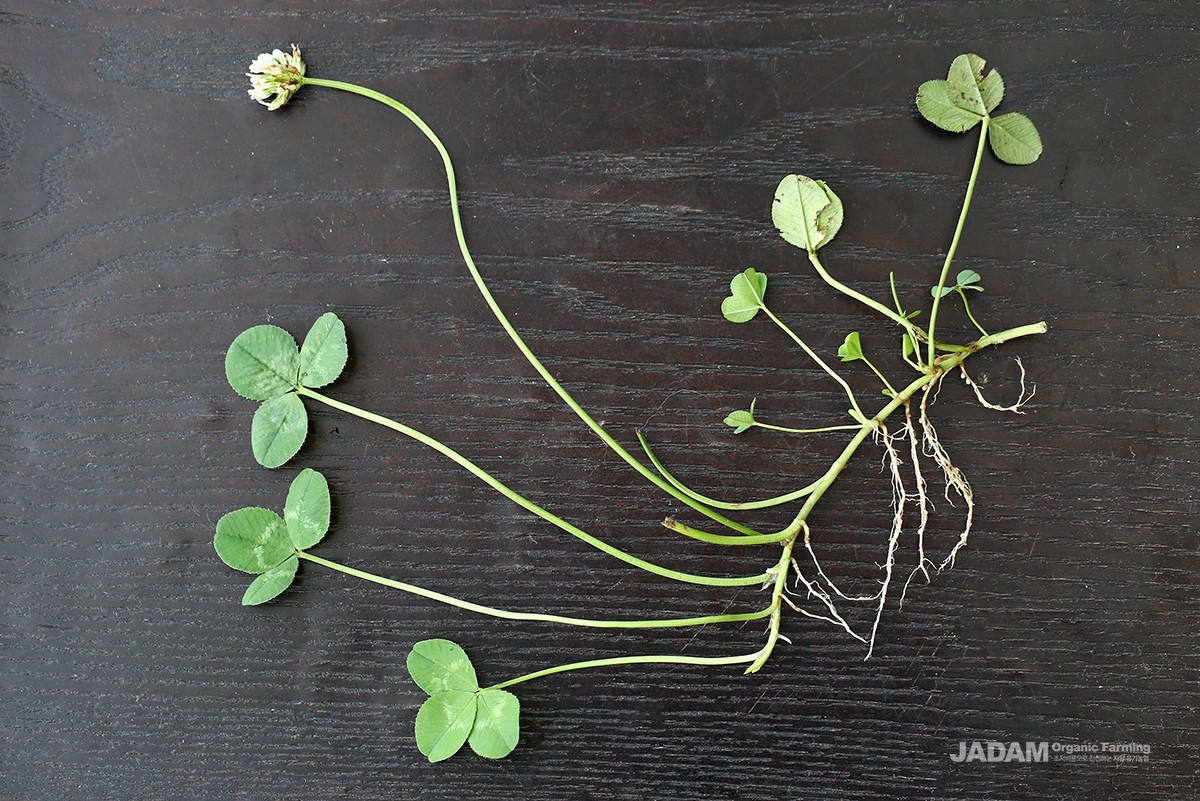
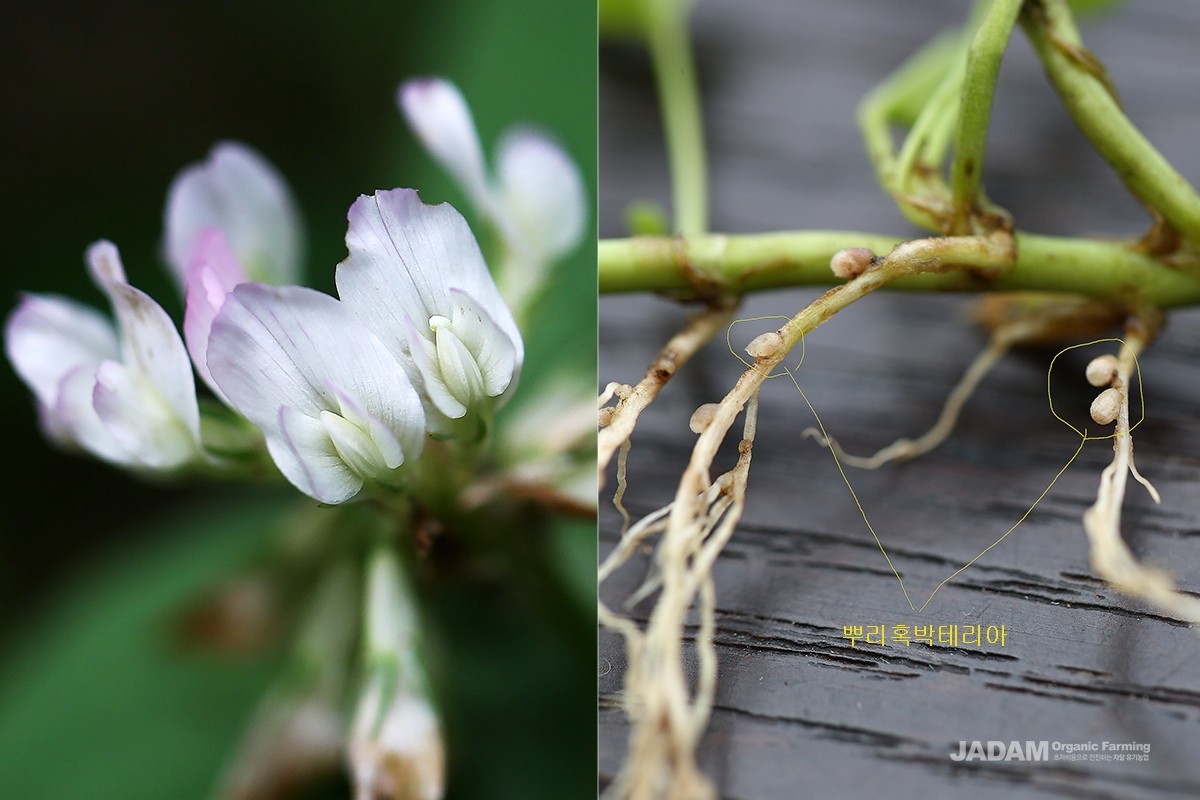
However, because it is a legume, it has a positive aspect: root nodule bacteria on its roots fix nitrogen, enriching the soil. The leaves are compound, consisting of three egg-shaped (obovate) leaflets attached to a long petiole. There is usually a white band in the middle of the leaf. Rarely, leaves with four leaflets are found; these are called "four-leaf clovers," and people believe they bring good luck (happiness) in addition to the meanings of hope, faith, and love associated with the three leaves.
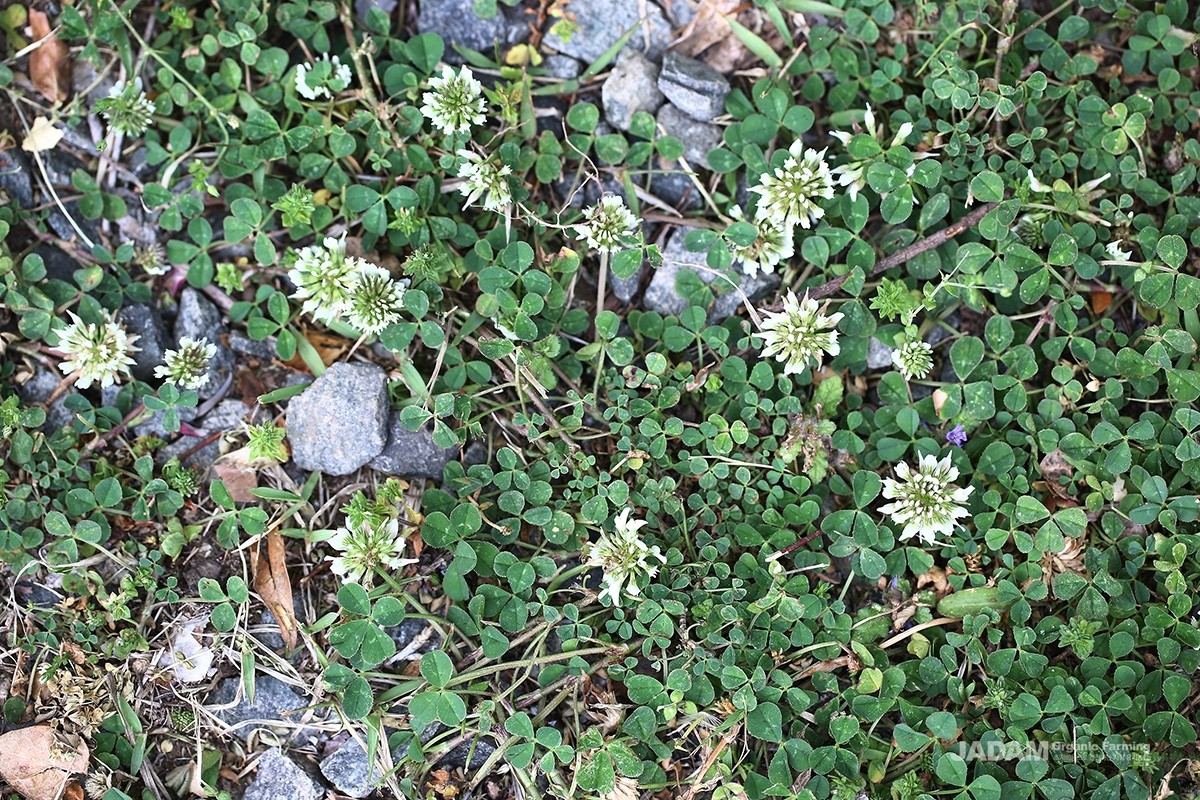
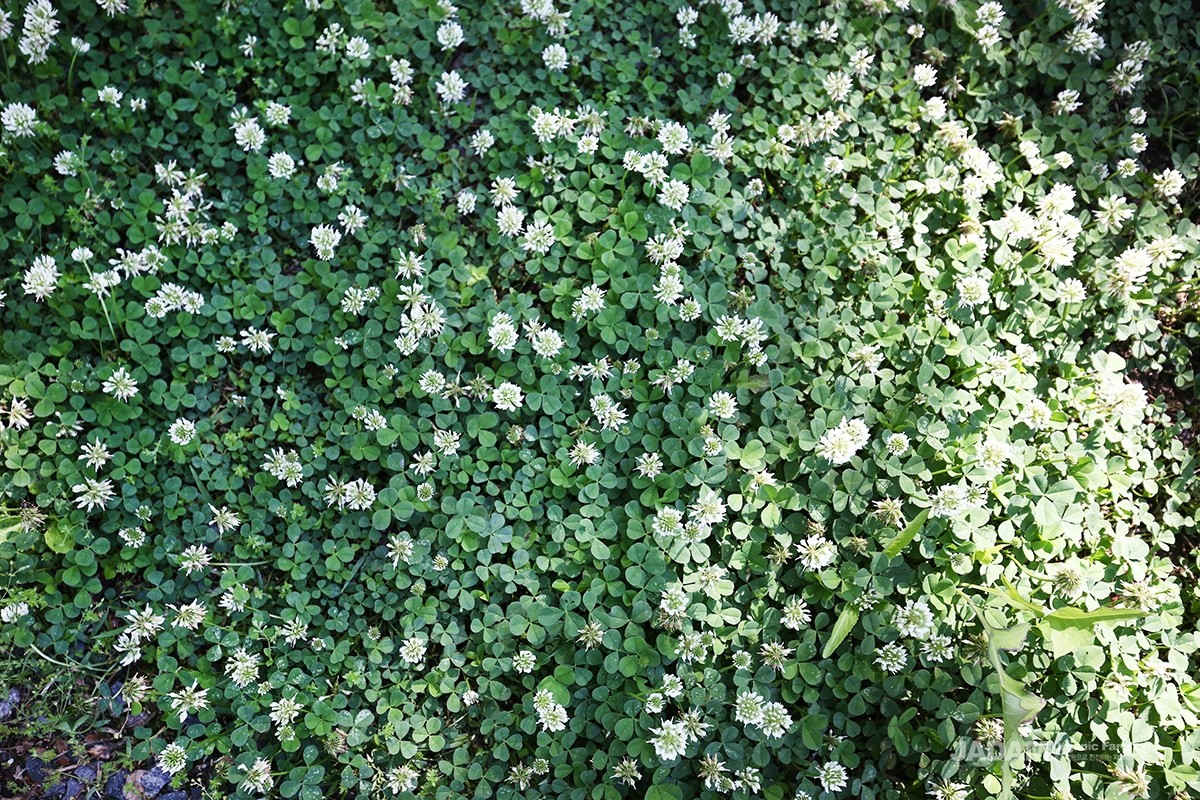
From spring to early summer, round flower clusters rise from the leaf axils. The inflorescence consists of dozens of small white flowers gathered together. Like most legume flowers, each flower consists of a keel petal housing the pistil and stamens, wing petals on the left and right, and a fan-like banner petal at the back. White clover flowers serve as an excellent honey source for bees. The fruit is linear, ripening while wrapped in dried petals, and contains 4 to 6 seeds.
▶Utilization and Medicinal Properties The young leaves can be eaten in salads, and the flowers can be battered and fried. It has properties that lower fever, act as an astringent, and stop bleeding (hemostasis). Fresh leaves are pounded and applied to wounds, whitlow (fingertip infection), hemorrhoids, boils, burns, and mastitis to stop bleeding and treat inflammation. The taste is slightly sweet, and its energetic nature is neutral.
▶Control Method Since it is a low-growing legume, it can be utilized like Chinese milk vetch (Astragalus sinicus) for weed suppression and green manure in orchards or tree nurseries. However, in fields, greenhouses, or gardens, it is best to remove it in the early stages before the creeping stems spread.
▶Name Origin and Similar Species It is called "Rabbit Grass" (Tokkipul in Korean) because rabbits enjoy eating it. Red clover (Trifolium pratense) is distinguished by its red flowers, the presence of hair on the entire plant, and its upright growth habit.
FAQ: Quick Fact
Q: Is white clover edible, and what are its benefits? A: Yes, the young leaves can be used in salads and the flowers can be fried. Medicinally, it promotes blood clotting, reduces fever, and treats skin inflammation such as boils and wounds.