

Fruit Tree Pest
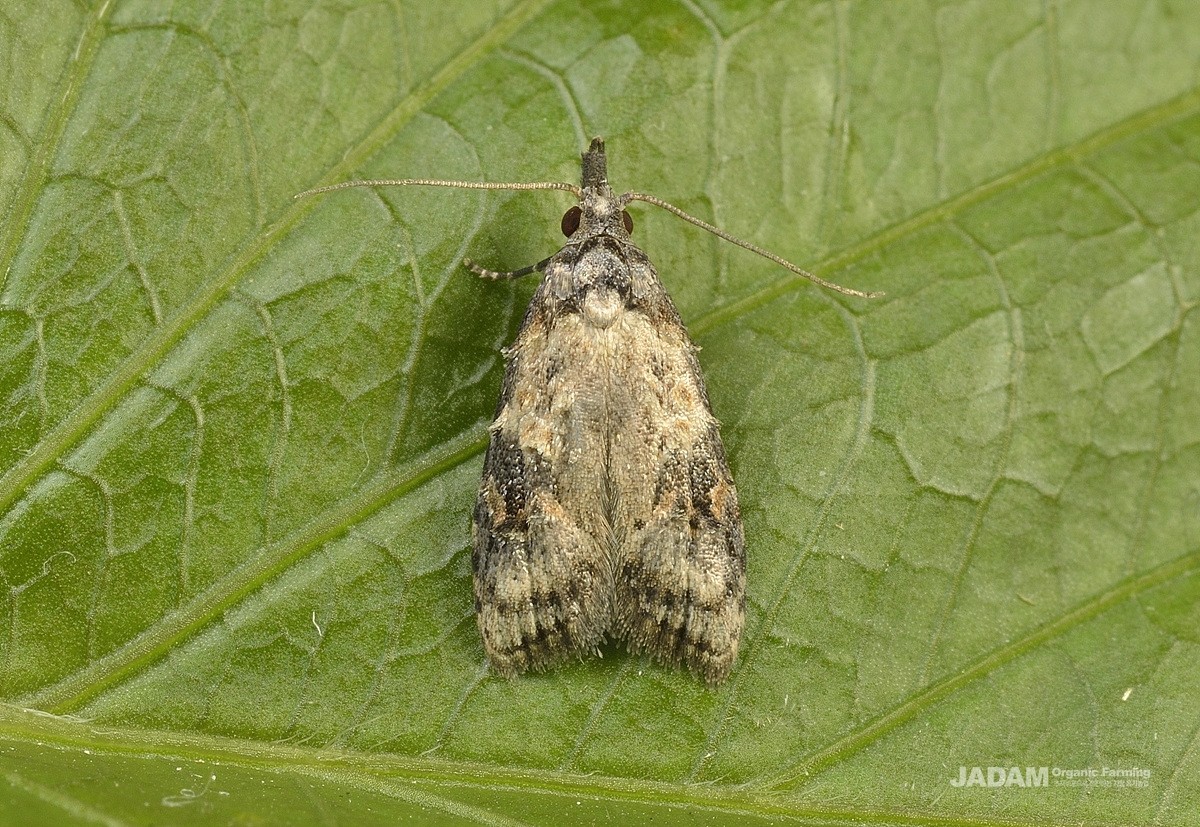
Peach Fruit Moth
Order: Lepidoptera,
Family: Carposinidae
▶Scientific Name: Carposina sasakii Matsumura
▶Size: Adult body length 7–8 mm, Larva 12–15 mm
▶Hosts: Apple, peach, plum, Chinese quince, jujube, etc.
▶Distribution: Korea, Japan, China, etc.
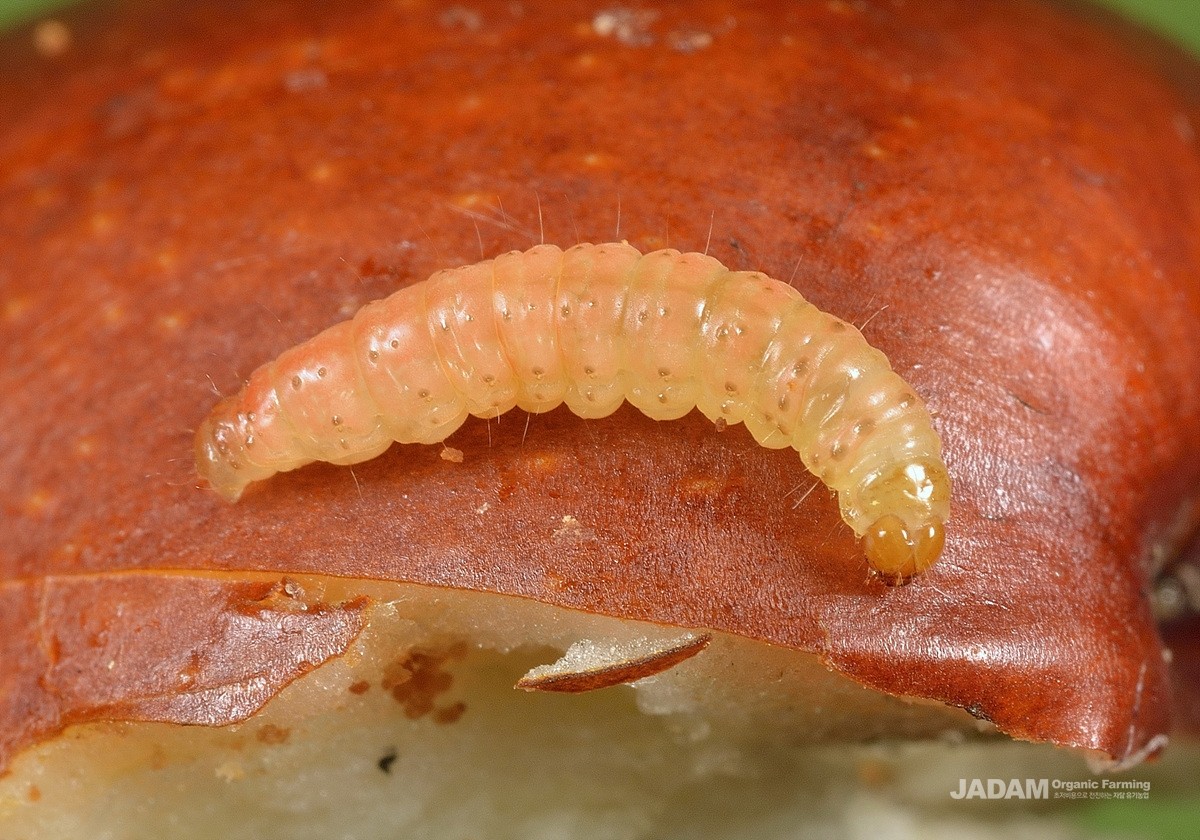
The adult body length is 7–8 mm, and the forewings are grayish-white with a wingspan of 12–15 mm. There is a cloud-shaped black-brown pattern on the front edge of the wing and a glossy, black-brown triangular spot slightly below the center. The eggs are red, flat, and round. The larva has a somewhat convex body; it is yellowish-white while inside the fruit but often turns red when it matures and exits the fruit. The mature larva measures 12–15 mm. The pupa is contained within a spindle-shaped cocoon, approximately 8 mm long. It is initially pale yellow but gradually darkens to black.
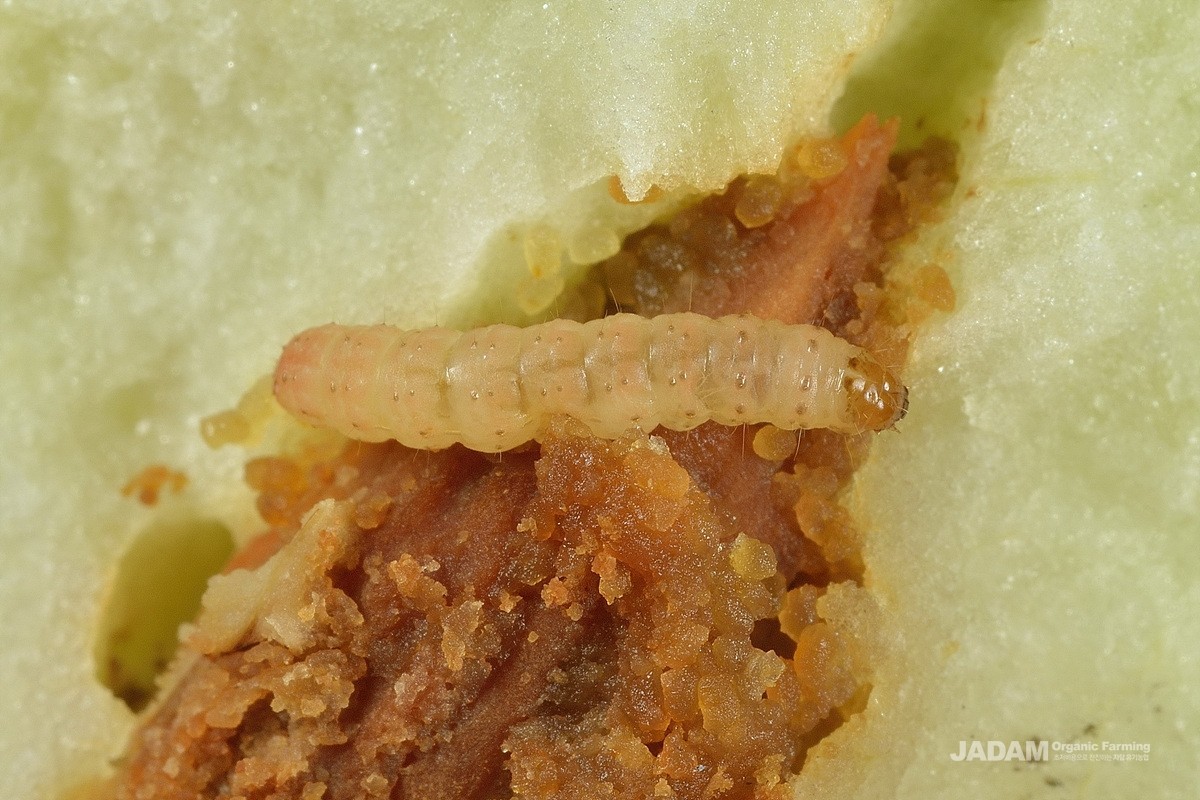
It typically occurs twice a year, though this can vary from once to three times depending on conditions. It overwinters as a mature larva inside a hard, flat-round winter cocoon located 2–4 cm underground. From May to July, the larvae emerge from their winter cocoons, spin loose, spindle-shaped summer cocoons, and pupate.
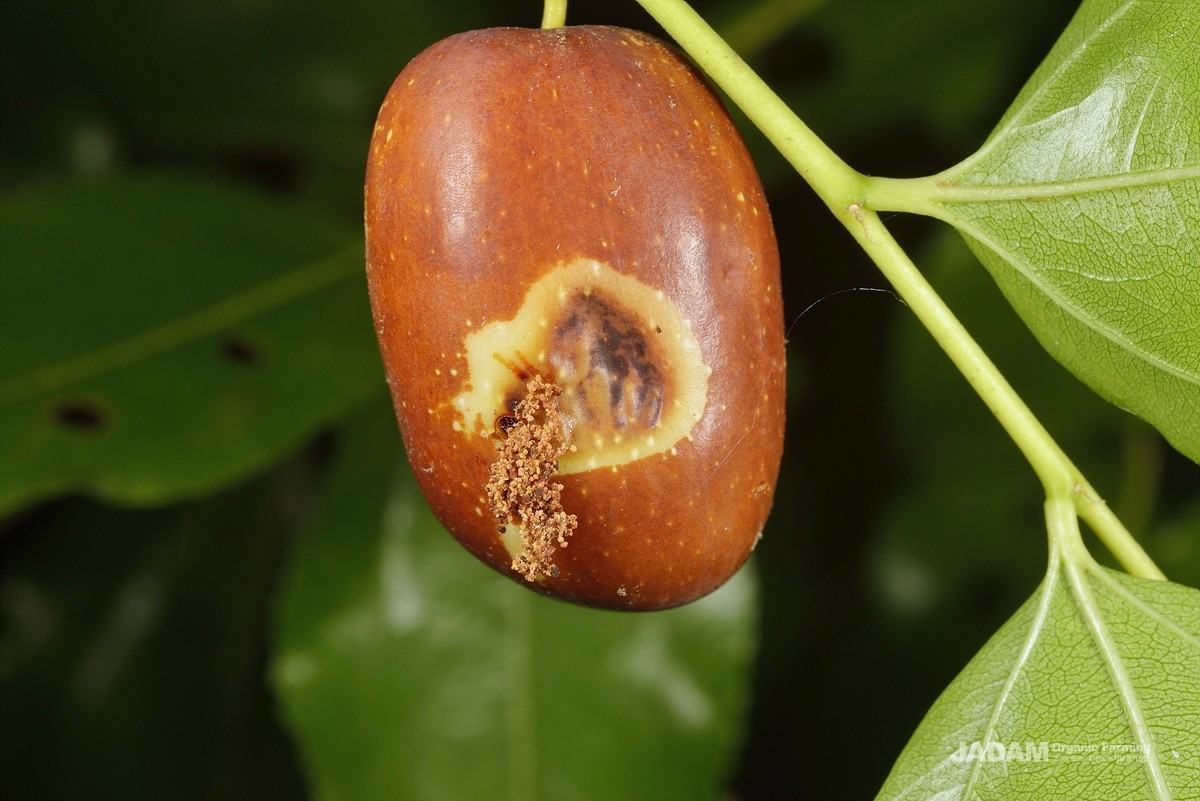
The first generation of adults appears as early as early June and as late as early August. Most individuals that escape the fruit between July and mid-August build summer cocoons and become second-generation adults, though some may build winter cocoons and enter hibernation immediately. Second-generation adults appear from late July to early September, peaking around mid-August. A very small number may emerge as third-generation adults between late August and mid-September. Consequently, most larvae exit the fruit before mid-October, fall to the ground, create winter cocoons, and begin overwintering.
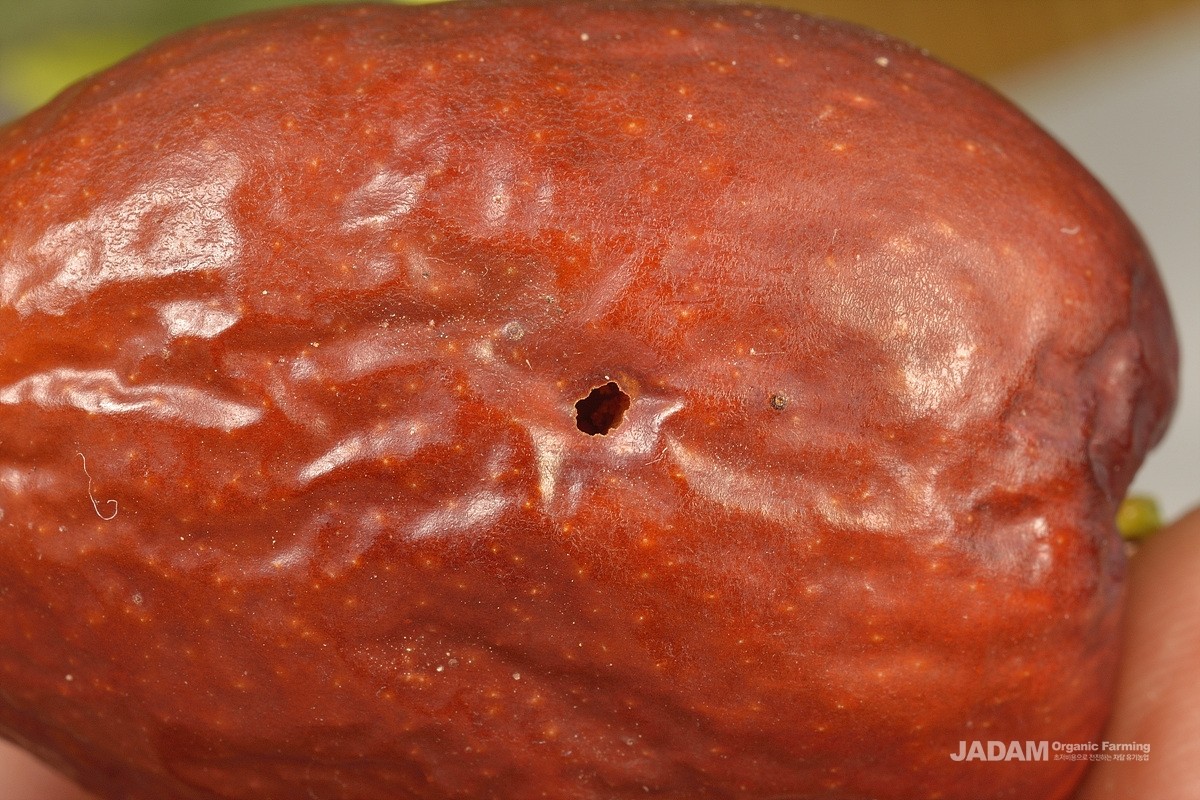
On apples, 70–80% of eggs are laid on the calyx (flower end), with the remaining 20–30% laid on the peduncle (fruit stem) area. However, on peaches, eggs are deposited evenly across the entire surface. The eggs are vermilion (red-orange), making them easier to spot than those of the Oriental fruit moth (Grapholita molesta), but careful observation is required during the young fruit stage as many eggs are laid inside the stem cavity. When using sex pheromone traps, they should be installed in apple orchards around late May to observe the emergence timing of adults for each generation, allowing for control measures to be applied when the eggs hatch.
[Text Source: National Crop Pest Management System]
FAQ: Quick Fact
Q: What is the Peach Fruit Moth and why is it a problem? A: The Peach Fruit Moth is a serious pest whose larvae bore into fruits like apples, peaches, and jujubes to feed on the flesh and seeds, rendering the fruit inedible and unmarketable.