

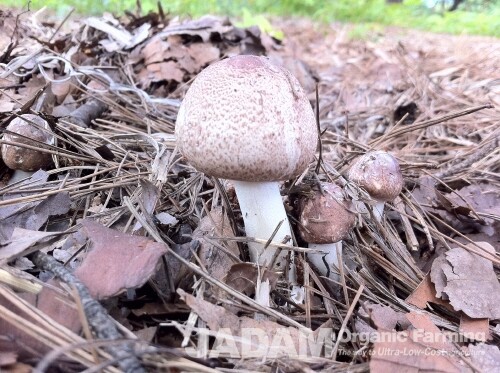
The mushroom commonly referred to by the trade name "Agaricus" or the Korean name "Shinryeong Mushroom" (New Spirit Mushroom) has a complex scientific history. It is often cited as Agaricus brasiliensis or Agaricus blazei. The term brasiliensis means "from Brazil," while blazei is named after R. Blaze.
It was named Agaricus blazei because it was one of some 650 mushroom species discovered by American mycologist William A. Murrill in 1945 on the lawn of Mr. Blaze in Gainesville, Florida. Thus, it is frequently written as Agaricus blazei Murrill. However, the person who originally identified it under the scientific name Agaricus blazei was reportedly a Belgian botanist named Heinemann in 1967 (Rogers, 10).
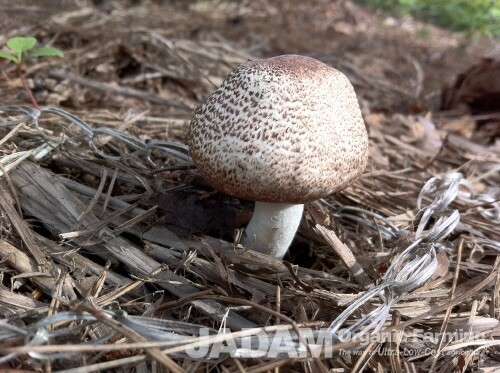
Tracing the origins of this mushroom takes us to Piedade in southeastern São Paulo, Brazil. This mushroom has long been harvested from the wild and consumed by locals. Its reputation is reflected in its various English names: Sun Mushroom, Royal Sun Agaricus, The Mushroom of God, and The Mushroom of Life.
According to Richard Kerrigan, the "Shinryeong mushroom" used medicinally in Brazil and Japan is biologically and phylogenetically identical to Agaricus subrufescens (known as the Almond Mushroom), which grows in North America (Richard Kerrigan, "Agaricus subrufescens, a cultivated edible and medicinal mushroom, and its synonyms," Mycologia 97(1): 12-13).
The North American Agaricus subrufescens was first described and named by New York botanist C.H. Peck in 1893. If the mushroom from Brazil is indeed the same as the one from North America, then Peck's earlier name should rightfully take precedence. However, a 2002 study by Da Eira and colleagues concluded that Agaricus blazei Murrill and Agaricus blazei ssp. Heinemann are different in several respects, suggesting they are distinct species. Regardless of the taxonomic debate, the Royal Sun Agaricus has recently gained significant attention as its excellence as a medicinal mushroom has been scientifically verified.
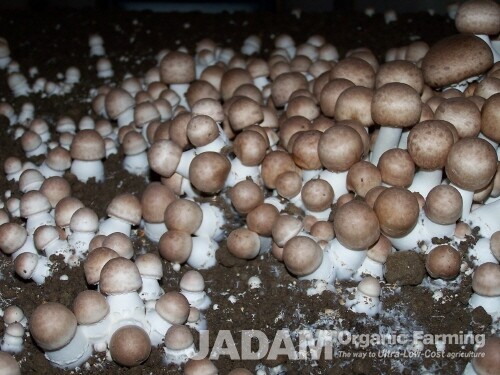
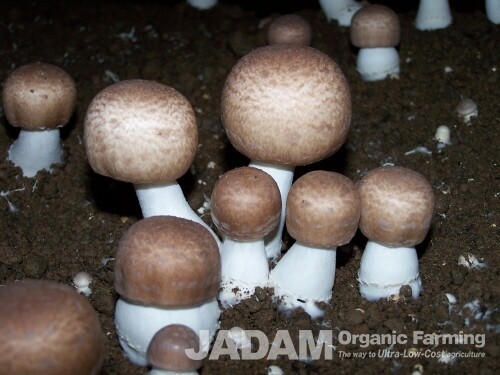
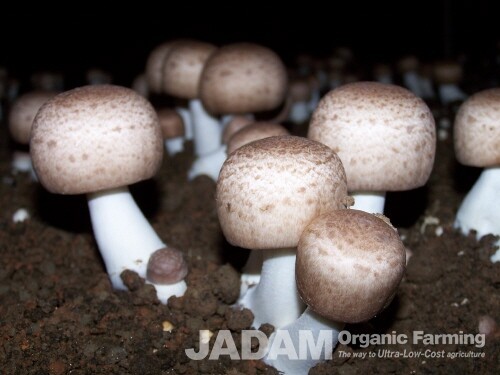
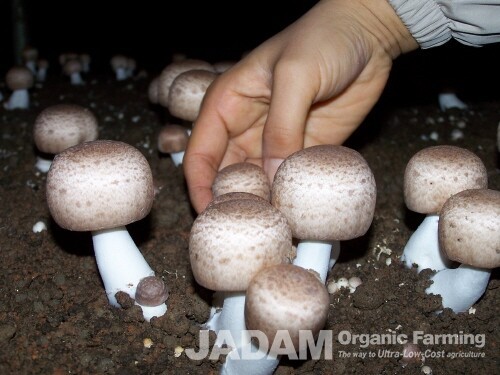
The Royal Sun Agaricus is about the size of a large Portobello mushroom. When touched, it bruises yellow and emits a distinct almond taste and scent. It is rich in protein, with dried mushrooms containing 33–48% protein. It also contains 14% beta-glucan and nearly 27% polysaccharides. It is cultivated under controlled conditions similar to the method used for Agaricus brunnescens (Button mushroom). It is very famous in Korea and Japan; in Japan, it is known by the trade name Himematsutake and the common name Kawariharadake (Rogers, 12).
The agaritine component in Royal Sun Agaricus has been found to inhibit the growth of leukemia cells. It also contains polyhydroxy steroids, similar to those found in Turkey Tail (Trametes versicolor). The polysaccharides in this mushroom not only enhance the action of selectively killing malignant tumor cells but also contain components that strengthen immunity, effectively regulating the immune system. Consequently, it is said to be beneficial for lupus erythematosus, rheumatoid arthritis, and thyroid diseases.
Furthermore, it contains water-soluble proteoglycans (proteins with glycosyl groups attached), which are helpful in treating cancer and AIDS. In Japan, extensive research is underway regarding the anti-tumor and anticancer effects of both the fruiting body and the mycelium of this mushroom. The Japanese Cancer Association recognizes the use of Royal Sun Agaricus extracts for treating colorectal, breast, uterine, lung, liver, and Ehrlich cancers. As a result, it is reported that 30,000 to 50,000 cancer patients in Japan consume 3–5g of this extract daily.
In studies conducted by the National Cancer Center of Japan, the University of Tokyo, and the Tokyo Institute of Pharmaceutical Sciences, guinea pigs administered 10mg of Royal Sun Agaricus extract daily showed a 99.4% prevention rate and a 90% recovery rate against Sarcoma 180 cancer. This result was significantly superior to the 77.8% prevention rate observed with the administration of 30mg of Reishi mushroom (Ganoderma lucidum) extract (Rogers, 21).
Additionally, a study at the Catholic University of Korea involved 100 patients with cervical, ovarian, and endometrial cancers undergoing chemotherapy. The study observed their immune status and quality of life with and without the consumption of Royal Sun Agaricus extract. The results showed improvements in chemotherapy side effects such as loss of appetite, alopecia (hair loss), emotional stability, and general weakness (Rogers, 21-22).
The activity of NK cells (Natural Killer cells) increased significantly in patients taking the mushroom, whereas no change was observed in those who did not. A similar study at the University of Sorocaba in Brazil, where 70 cancer patients took 0.4g of the extract four times a day, also reported a major increase in NK cell activity. NK cells act by locating malignant cancer cells, attaching to them, and injecting substances to dissolve them (Rogers, 21).
Royal Sun Agaricus is also effective for cancer prevention in families with a history of breast or prostate cancer. Beyond cancer, it shows efficacy in antiviral activity, lowering cholesterol, regulating blood sugar and blood pressure, and treating Hepatitis C (Rogers, 22-23).
In homeopathy, Royal Sun Agaricus is used for dermatological conditions and is included in cosmetics. It is used to protect the skin from psoriasis, sycotic conditions, environmental toxins, chemical pollutants, and radioactive substances (Rogers, 24).
According to Dr. Park Wan-hee’s Illustrated Guide to Korean Medicinal Mushrooms, this mushroom contains three types of anti-tumor active ingredients, 12 types of fatty acids, vitamins B1, B2, D2, niacin, and various protein complexes including beta-glucan, all contributing to its anti-tumor effects. Pharmacologically, it acts to fight tumors, lower blood pressure and cholesterol, prevent thrombosis, and activate the immune system. It is indicated for hypertension, cancer, and arteriosclerosis (Park Wan-hee, 18-19).
Common Name: Royal Sun Agaricus (Almond Mushroom)
Scientific Name: Agaricus subrufescens (syn. Agaricus blazei Murrill)
Korean Name: 신령버섯 (Shinryeong-beoseot)
Family: Agaricaceae
Harvest Season: Summer–Autumn (Wild) / Year-round (Cultivated)
Habitat: Grasslands, rich soil, widely cultivated in East Asia and Brazil
Q: What is the Royal Sun Agaricus and is it edible? A: Yes, Royal Sun Agaricus is an edible mushroom known for its distinct almond scent and taste. While it is rich in protein and delicious, it is most famous as a medicinal herb. It is widely used to boost the immune system (specifically activating NK cells), support cancer treatments, and regulate blood pressure.