

Ornamental Plant Pest
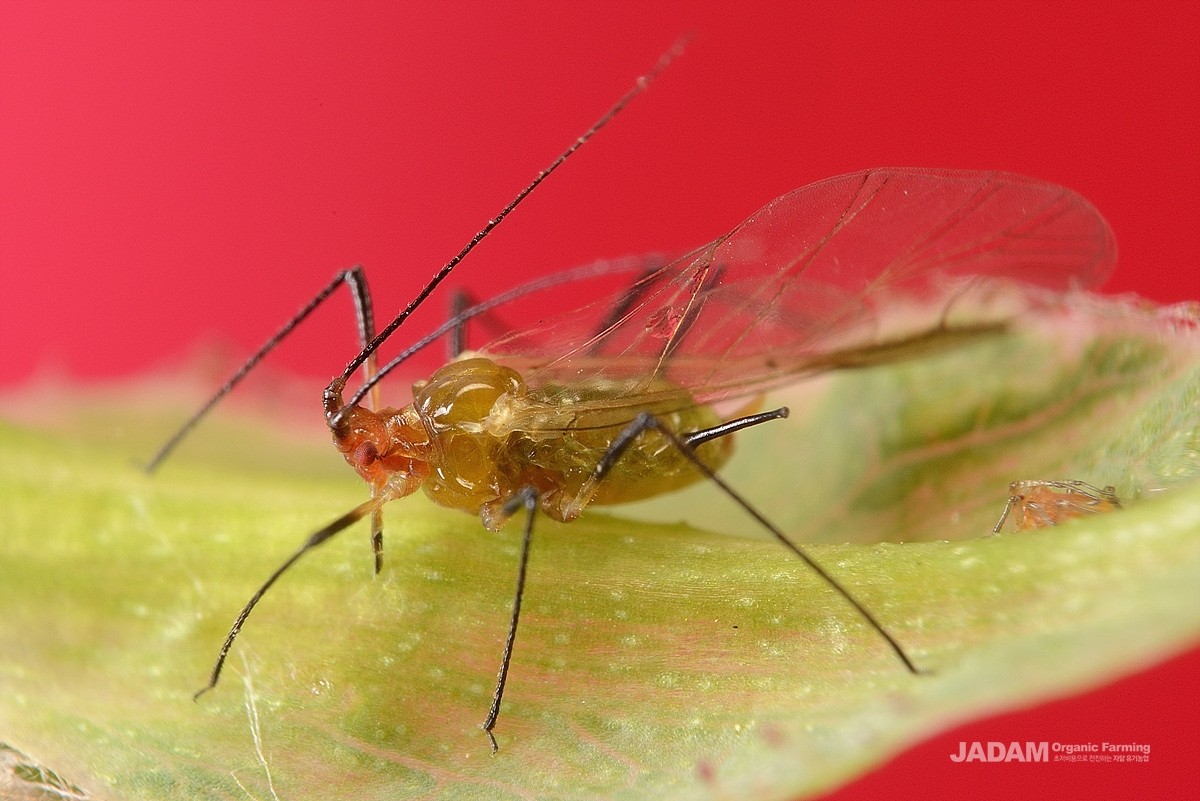
Rose Bristle Aphid
Order: Hemiptera
Family: Aphididae
▶ Scientific name: Sitobion ibarae (Matsumura)
▶ Body length: alate adult about 3.1 mm, apterous adult about 3.4 mm
▶ Host plants: roses, wild roses, and other plants in the rose family (Rosaceae)
▶ Distribution: Korea, Japan, China, Taiwan, Southeast Asia, New Zealand, North and South America, Africa, Europe
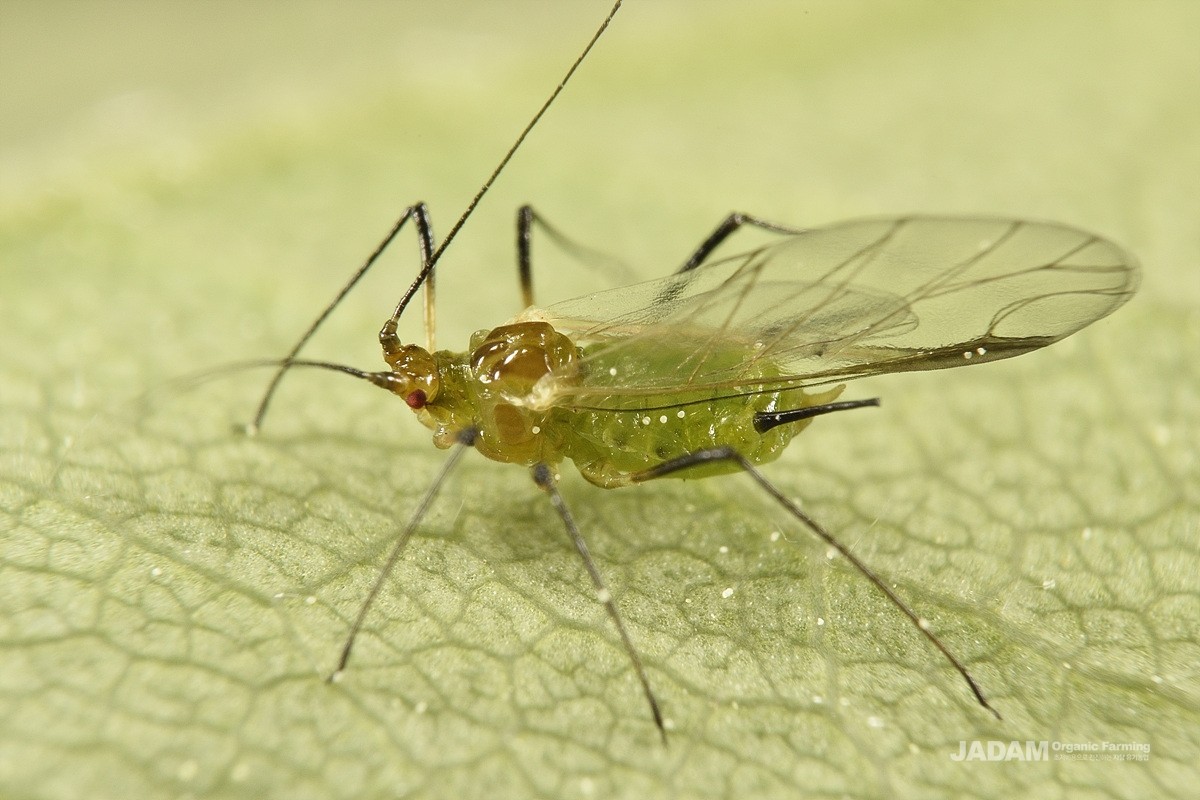
The alate (winged) adult is about 3.1 mm long. The head, antennae, thorax, and legs are black, while the abdomen is yellowish green. In alate forms, frontal tubercles on the head are well developed and smooth on the outer side. The antennae have six segments; the third segment bears about 30 round secondary sensoria and around 20 setae, and is shorter than the combined length of the following segments.
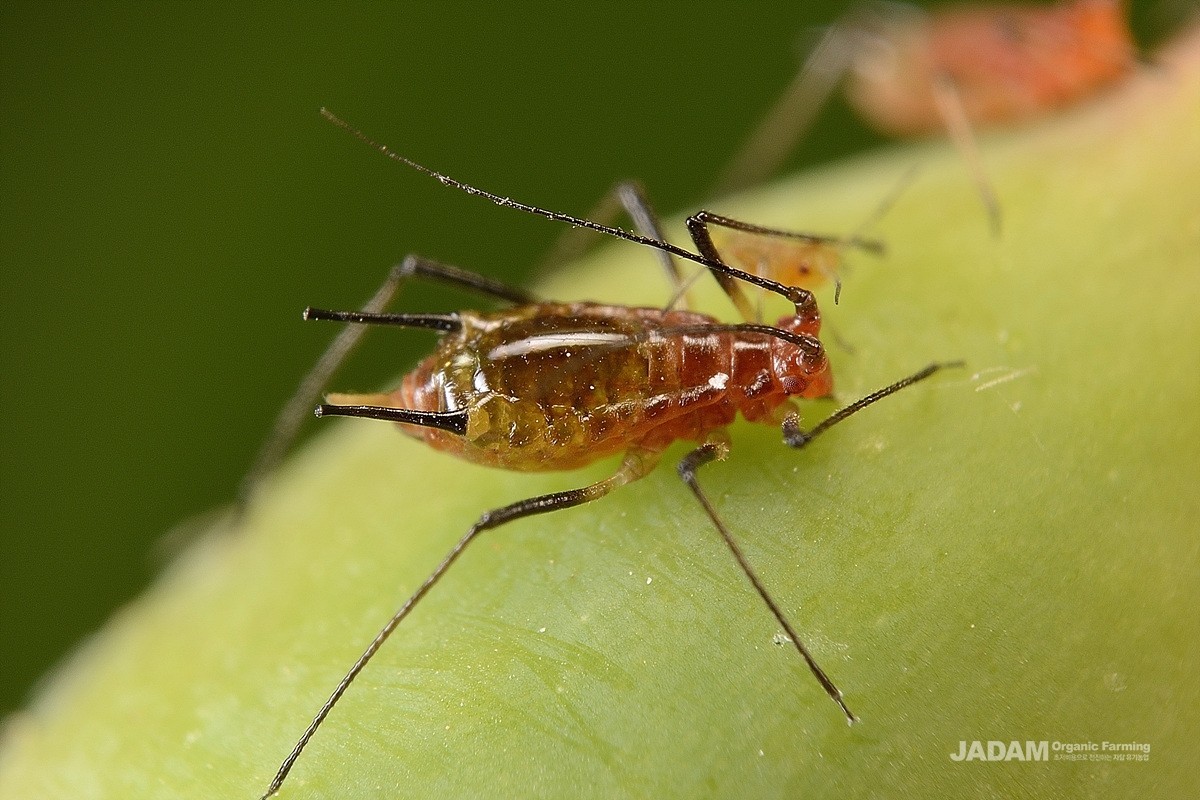
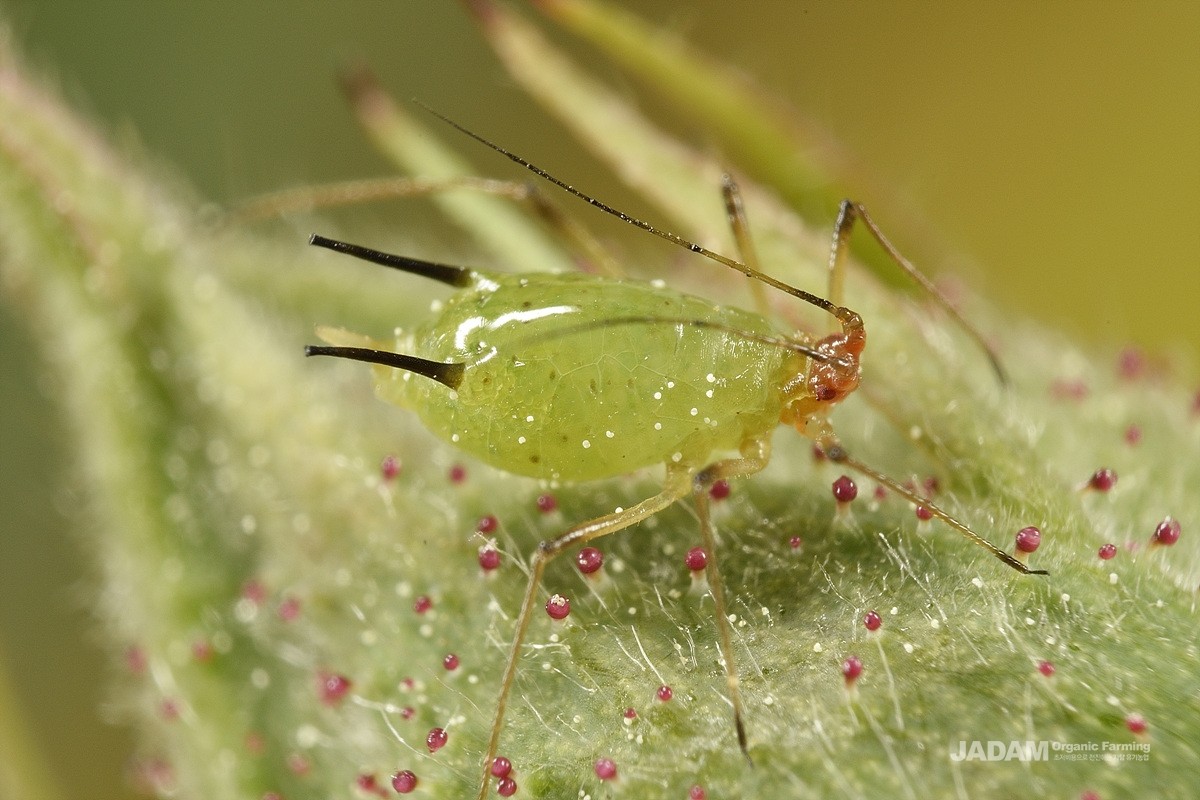
The apterous (wingless) adult has a larger body and is generally green in color, with a light brown head. The prothorax and mesothorax range from green to reddish brown. The abdomen is yellowish green to green, and the anterior portions of the thorax and abdomen are often dark brown. The antennae are slightly longer than the body length; the first segment is smooth with 6–9 setae, and the third segment bears 4–10 secondary sensoria. The apical part of the cornicles has 6–11 setae and is pale in color.
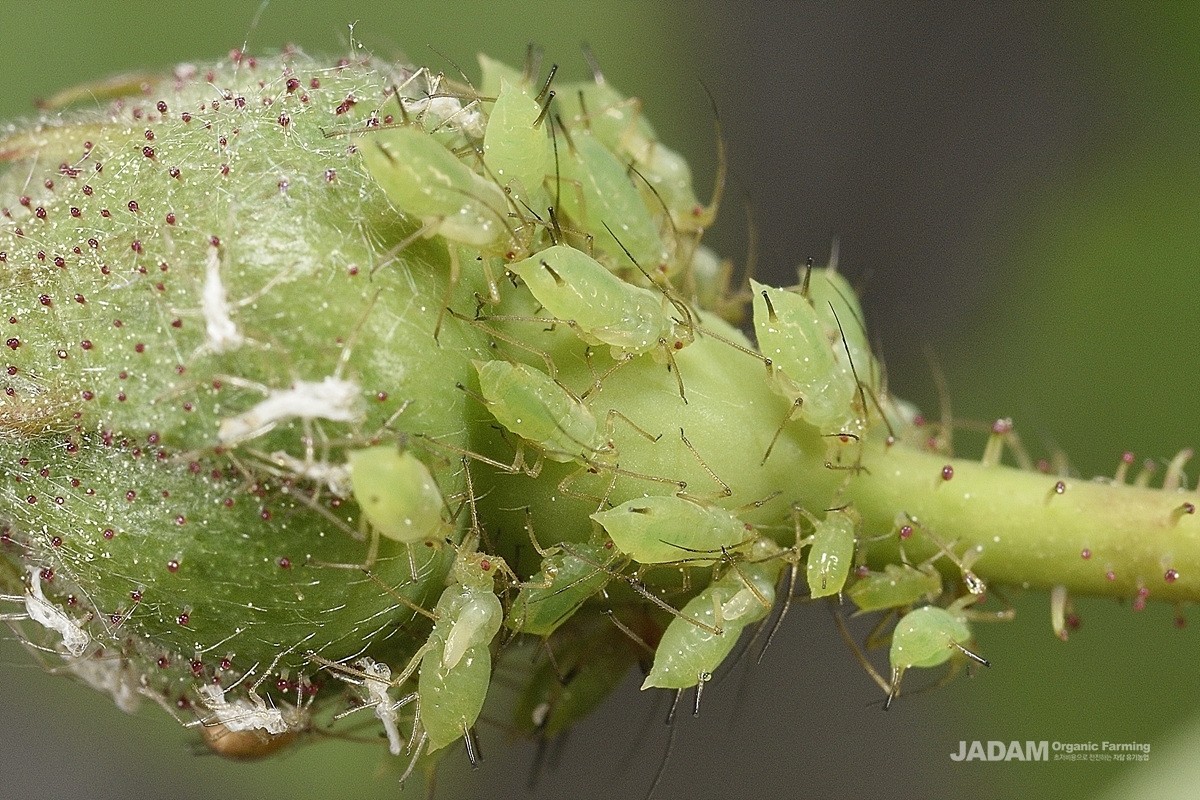
Nymphs parasitize plants in the rose family by sucking plant sap, which interferes with normal growth of the host plant. This species does not alternate hosts. In cold regions, it overwinters as eggs, while in warmer regions it overwinters as adults or nymphs and begins rapid reproduction when new leaves emerge. In open fields, populations peak from April to May, decline during midsummer, and increase again in autumn. In greenhouse cultivation, reproduction continues even during winter. The lifespan is about 17–27 days, and females typically lay around 20 eggs.
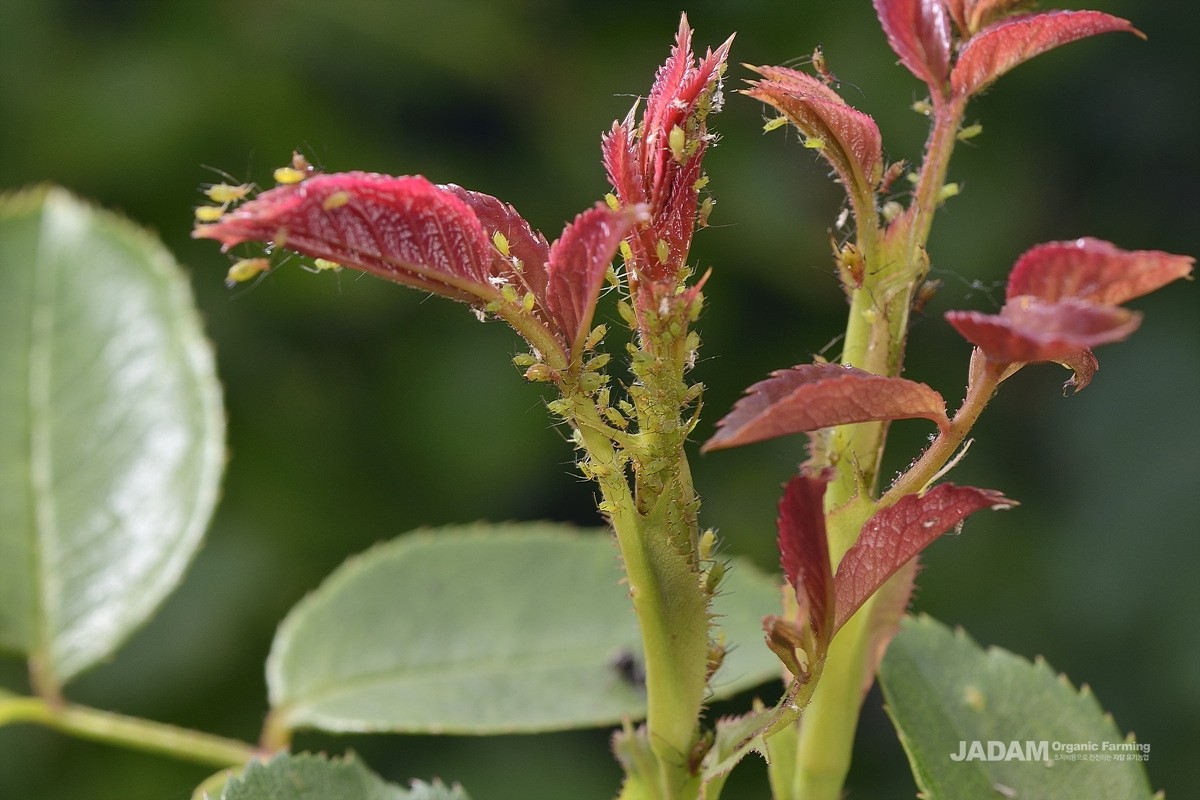
Damage caused by this aphid is commonly observed on roses. Natural enemies include green lacewings, seven-spotted lady beetles, small lady beetles, the black peach aphid parasitoid wasp, rose aphid parasitoid wasps, and hoverflies. This species also acts as a vector for various plant viral diseases.
[Source: National Crop Pest Management System, Korea]
Q: What pest commonly damages roses in spring?
A: The rose bristle aphid (Sitobion ibarae).
Summary: The rose bristle aphid (Sitobion ibarae) damages roses by sap sucking and virus transmission, with peak outbreaks in spring and autumn.