

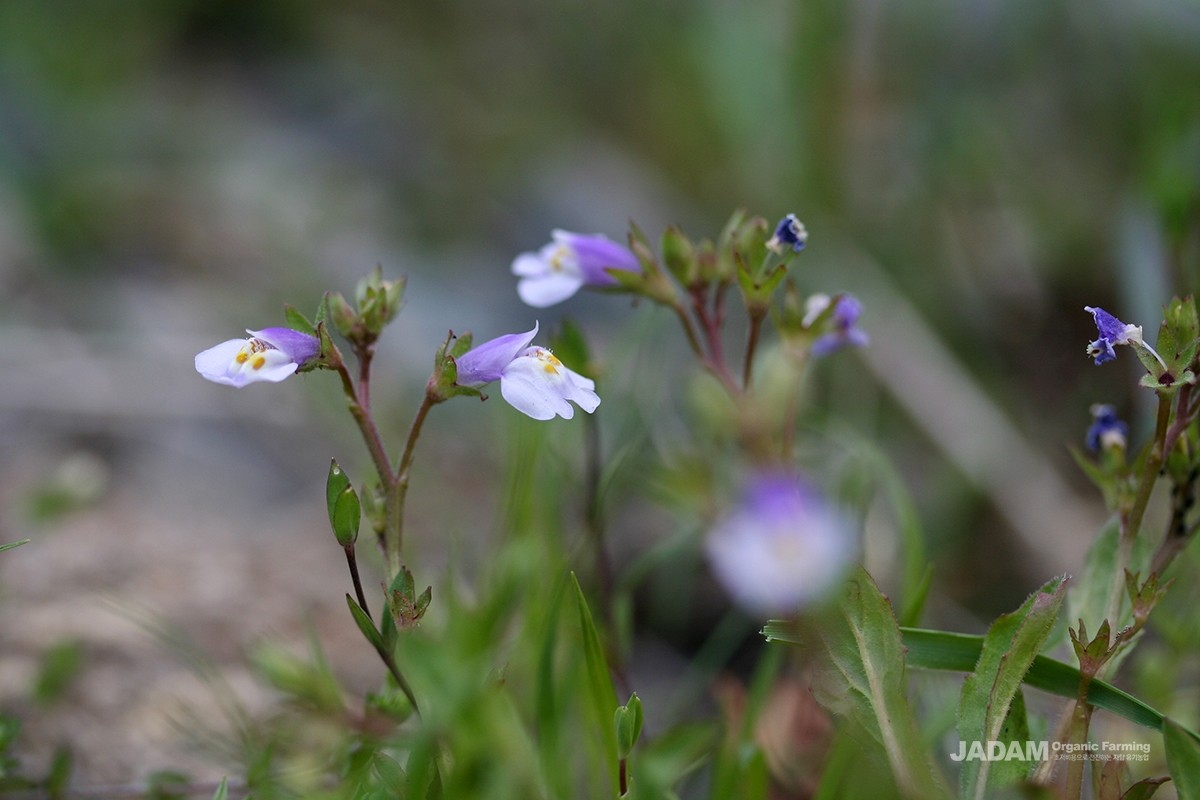
It is an annual herb that commonly grows in fields, rice paddy ridges, orchards, and along roadsides. In spring, it puts forth wrinkled leaves and raises stems, blooming light purple flowers sequentially from the bottom to the top.
Japanese mazus (Mazus pumilus) is an annual herb with a small stature of about 5–20 cm. It grows commonly in fields, rice paddy ridges, orchards, and roadsides. In spring, it produces spoon-shaped obovate leaves and stems. The leaves have dull, shallowly lobed serrations along the edges and are slightly wrinkled. If there are no competing weeds nearby, it may grow lying down (prostrate), but it mostly stands upright.
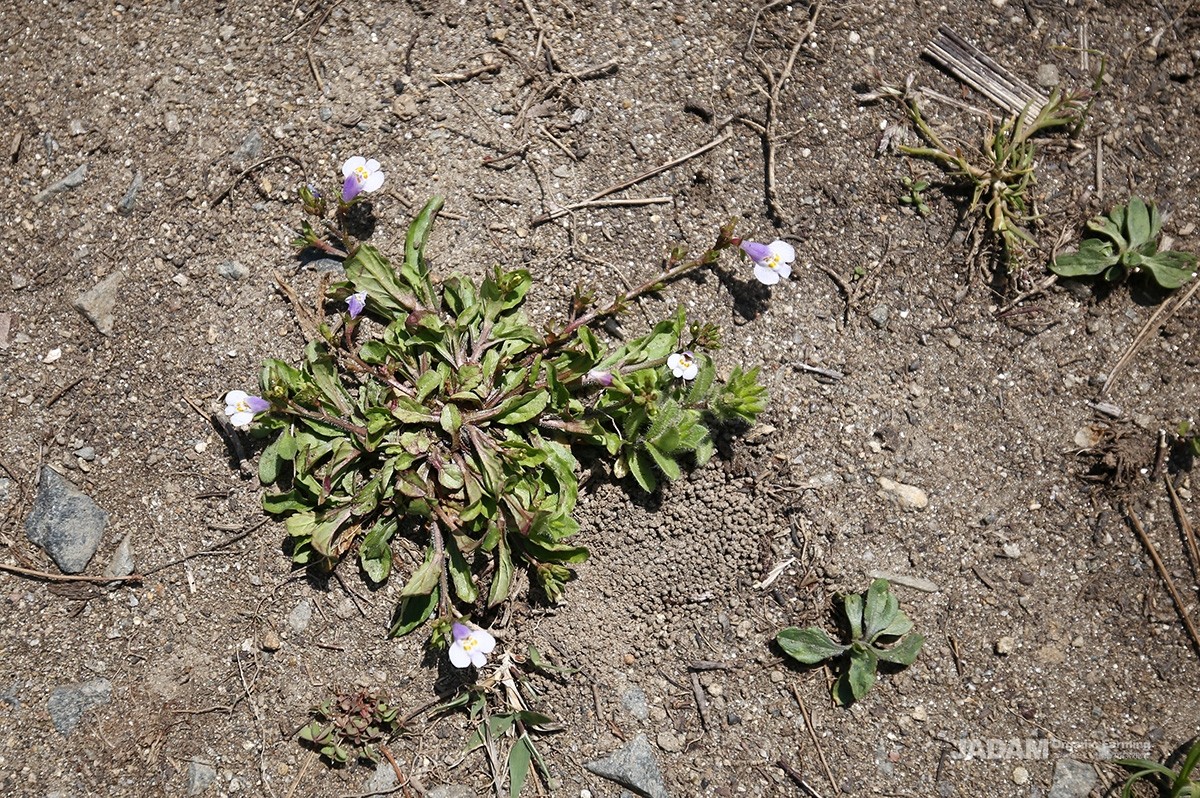
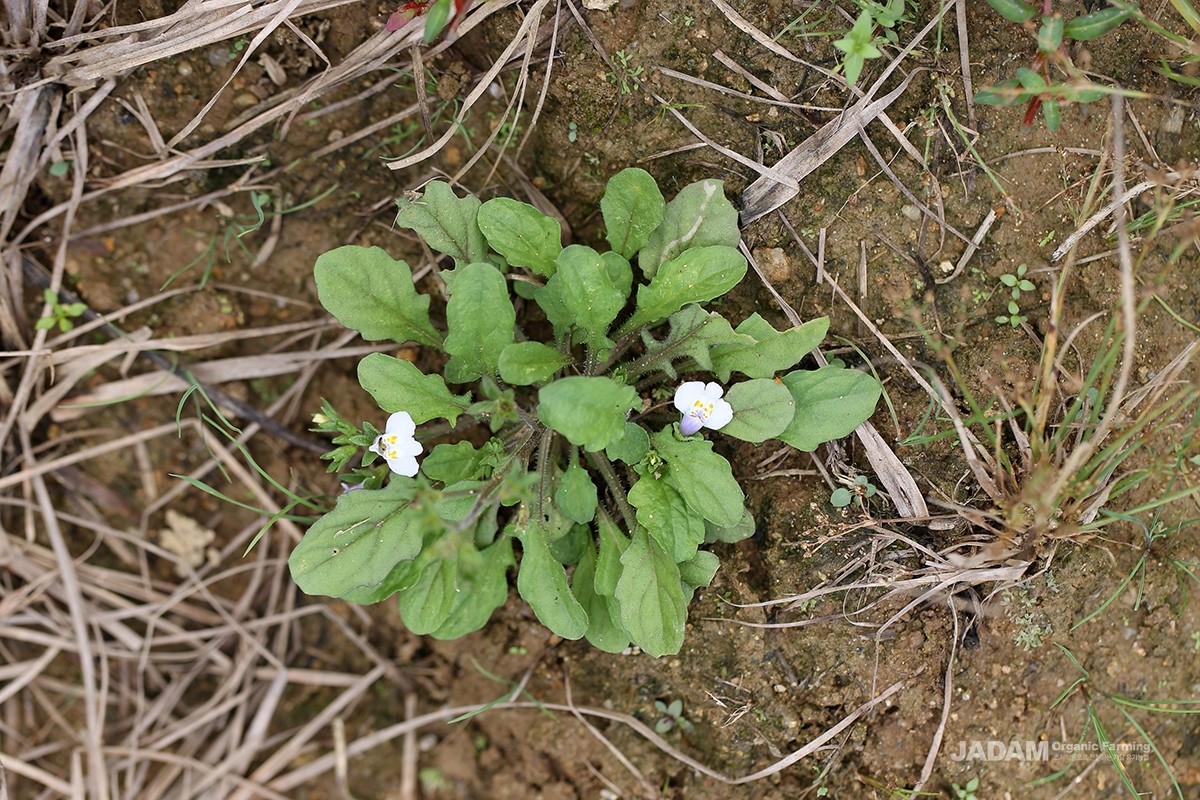
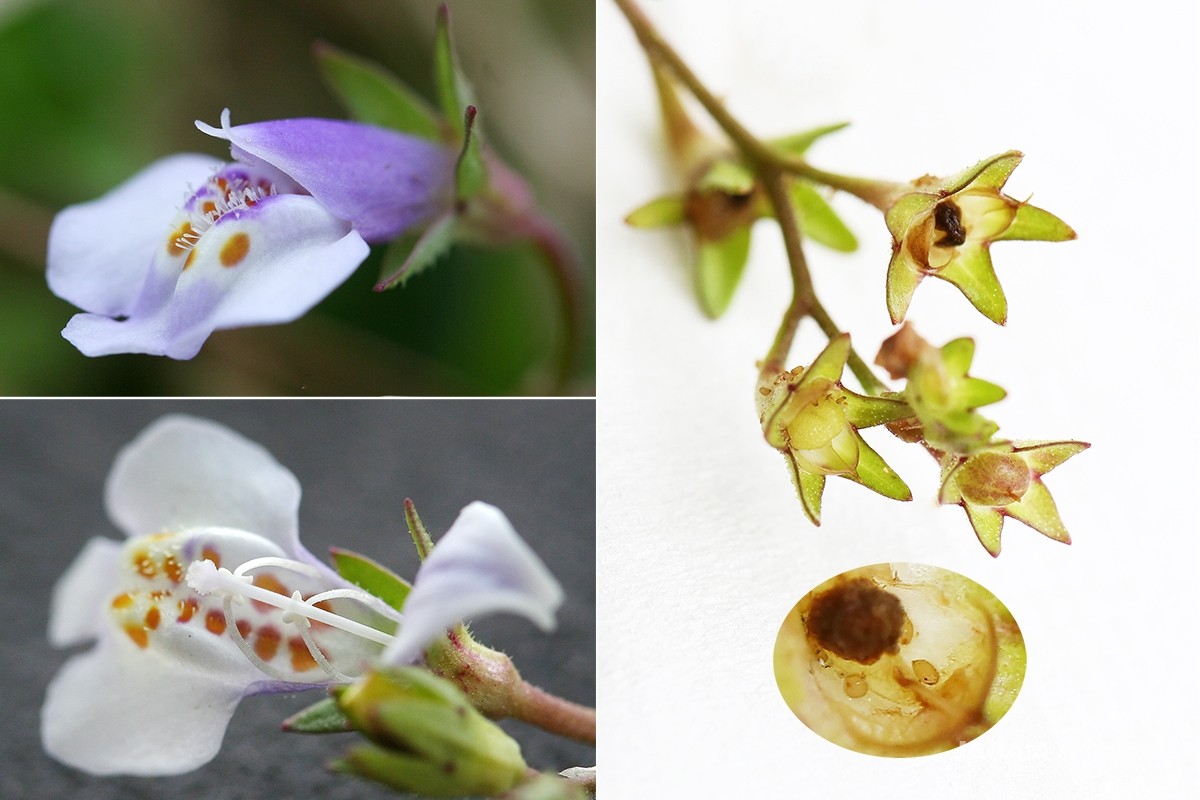
Usually starting in May, it blooms sparse, lip-shaped, light purple flowers sequentially from the bottom of the stem upwards. The flowers are about 1 cm in size, and there are many glandular hairs on the calyx and pedicels. The lower lip petal has furrows resembling field ridges, and two rows of reddish-yellow patterns lead inward like stepping stones. This is a guide mark to lead insects, such as bees, into the flower.
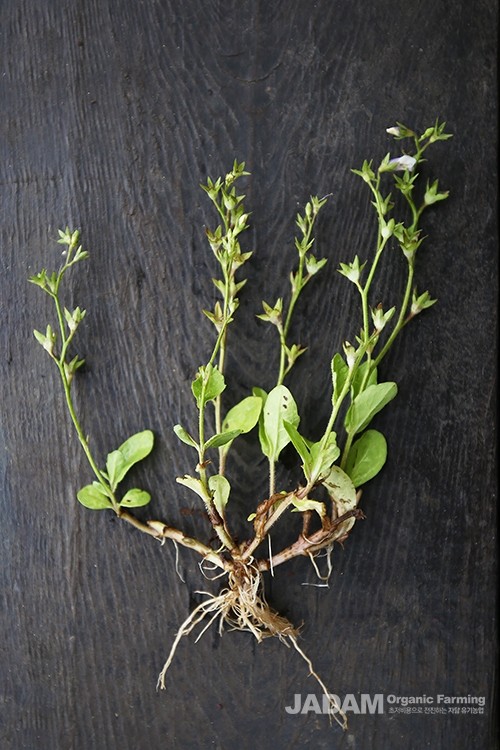
On the front part of the ridges, spoon-shaped protrusions rise jaggedly. Additionally, on the ceiling of the upper petal, there are two pairs of stamens interlocked in a ring shape, with a style resting on top and protruding toward the front of the petal. When looking up from the lower petal, a spoon-shaped pistil hangs on the front ceiling, followed by two pairs of stamens hanging at intervals, holding anthers.
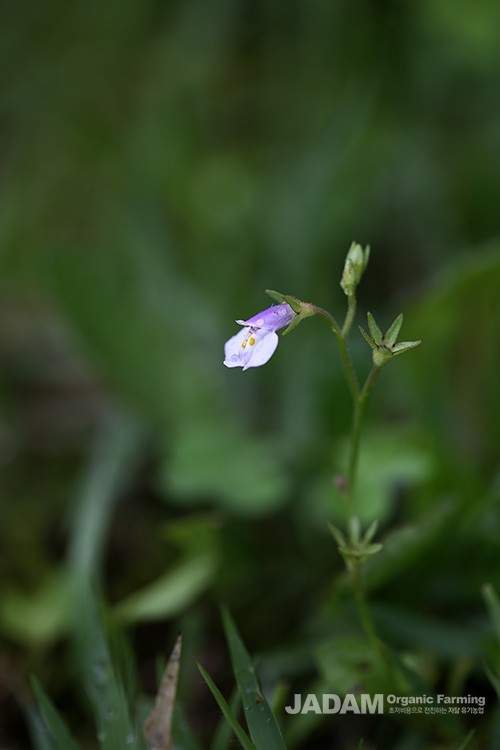
It is a sophisticated mechanism designed so that when an insect lands on the lower lip petal and waddles its way inside, it inevitably contacts the pistil and stamens on the ceiling, ensuring fertilization. Once fertilization occurs, a fruit is formed, surrounded by a 5-lobed calyx. The fruit is a slightly flattened sphere; when ripe, the upper part bursts to scatter seeds.
▶ Utilization and Medicinal Properties
The young leaves can be blanched and eaten as namul (seasoned herbal vegetable dish). It is known to reduce fever, detoxify, aid digestion, and reduce inflammation. In traditional practices, it is used for amenorrhea, high blood pressure, boils, abscesses, and hepatitis. The taste is sweet and slightly pungent, and its nature is cool.
▶ Control Methods
Due to its small stature, Japanese mazus does not pose a problem in orchards. However, in fields or greenhouses, it is recommended to remove the plants before the seeds scatter.
▶ Etymology and Similar Species
It is called Jureum-ip (Wrinkled Leaf) in Korean because the leaves that sprout in spring have many wrinkles. Mazus miquelii (Creeping mazus) has slightly larger flowers, and after flowering, creeping stems (stolons) extend out. Mazus stachydifolius stands upright at around 30 cm and has flowers that are 2–3 times larger.
Common Name: Japanese mazus
Scientific Name: Mazus pumilus
Korean Name: 주름잎 (Jureum-ip)
Family: Mazaceae
Flowering Season: May–October
Habitat: Fields, roadsides, lowlands in East Asia
Q: What is Japanese mazus and is it edible? A: Yes, Japanese mazus (Mazus pumilus) is a small annual herb common in East Asia. Its young wrinkled leaves are edible and typically eaten as a seasoned vegetable (namul). Traditionally, it is also used to treat fever, inflammation, and high blood pressure.