

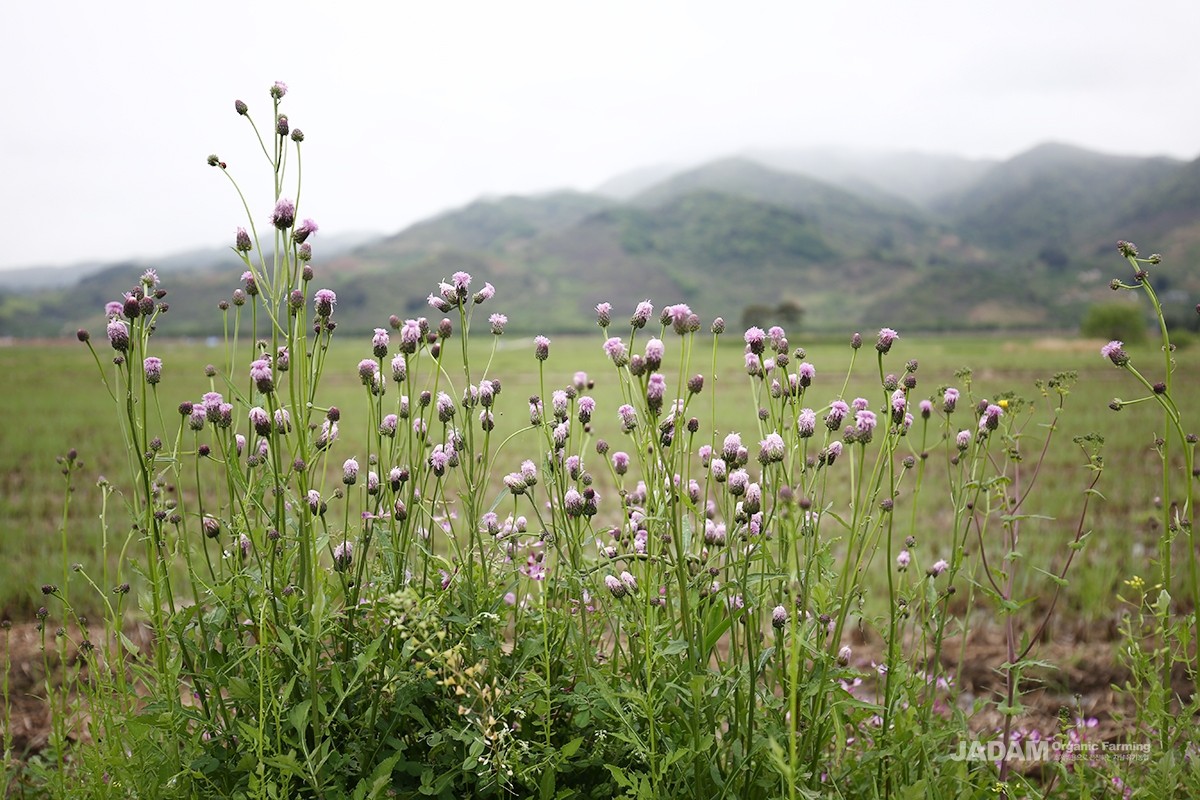
A winter annual plant that commonly grows in fallow fields, vacant lots, and along roadsides. It survives the winter in a rosette form and blooms reddish-purple head-shaped flowers at the tips of stems and branches starting in May.
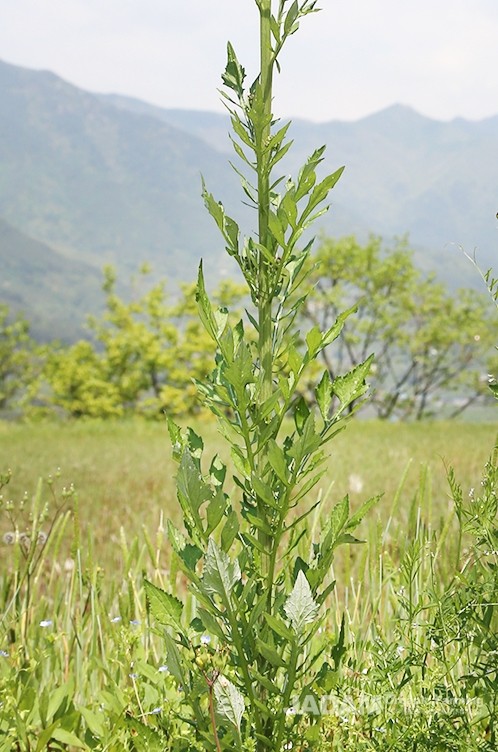
Hemistepta (Hemistepta lyrata) sprouts early in autumn and overwinters as basal leaves. These rosette-shaped basal leaves feature dense white hairs on the underside, are finely divided in a pinnate (feather-like) pattern, and have serrated edges. The leaves attached to the middle of the stem are long and oval-shaped, lack petioles (leaf stalks), and are deeply lobed pinnately. As they ascend the stem, the leaves become smaller and take on a linear shape.
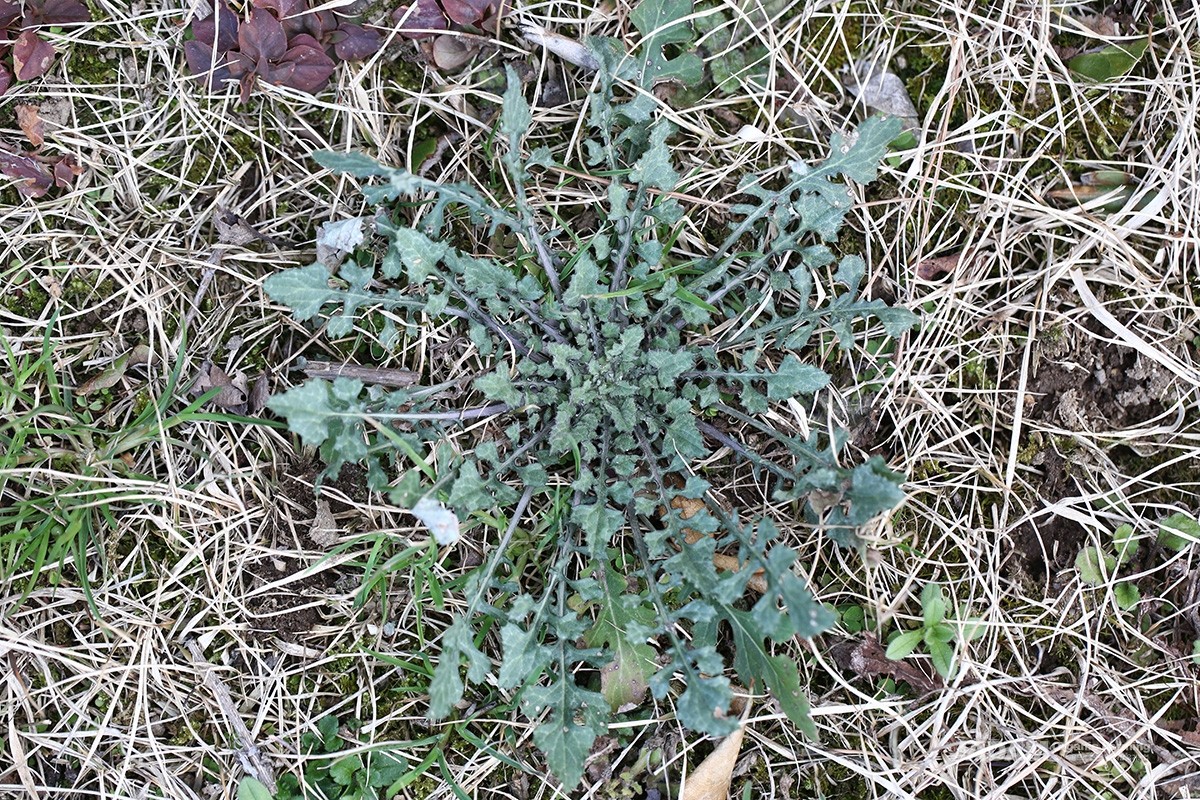
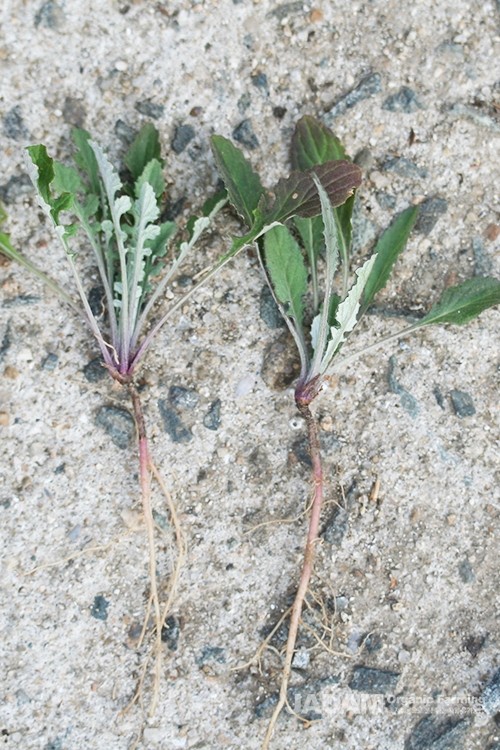
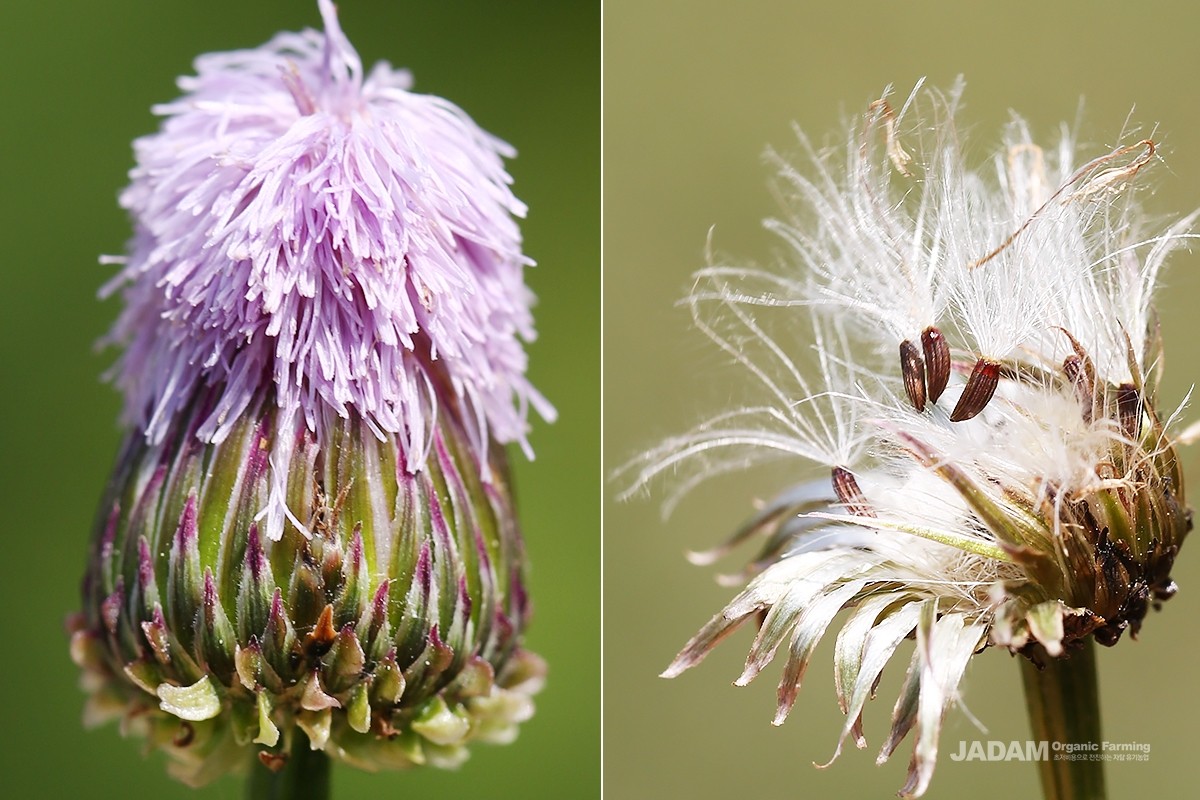
Having stored energy throughout the winter, Hemistepta quickly sends up stems when spring arrives. It produces numerous branches. From May to July, it hangs clusters of head-shaped flowers (capitula) densely at the tips of the stems and branches. The flowers are reddish-purple and are approximately the size of the tip of an adult's little finger. Like thistles, they consist entirely of tubular flowers (disk florets).
The involucral bracts (scales) supporting the flower cluster are arranged in eight rows. The pieces are round, possess a projection at the top, and are covered in cobweb-like white hairs. The seeds are long, oval-shaped, and dark brown with 15 angled ridges. When the fruit ripens and opens, each seed flies away on the wind, aided by a pappus (tuft of hairs). Considering the flowers are packed densely on a single plant, the volume of seeds produced is truly immense.
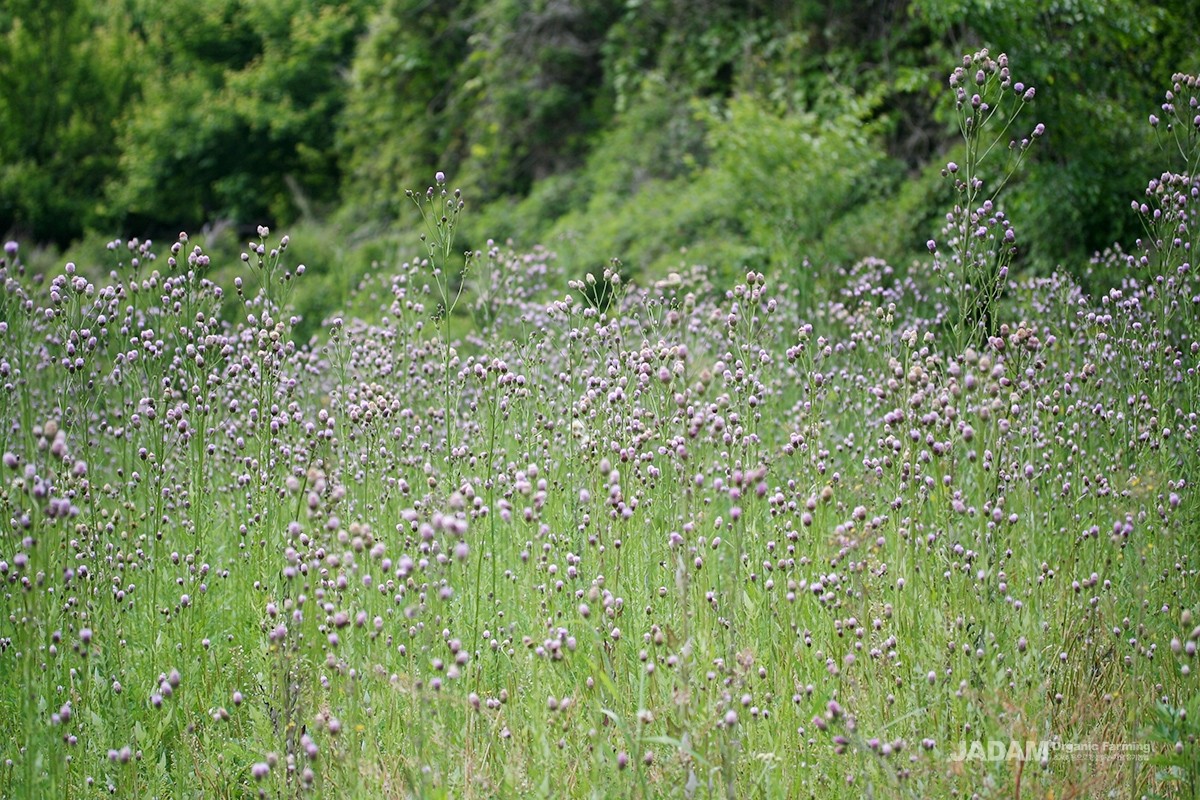
If a field is neglected for just a year or two, the soil becomes a "seed bank" filled with seeds poured out by weeds like Hemistepta. Even if you cut down a flowering Hemistepta to remove it, the fruit often ripens on the cut stem and releases its seeds regardless. Metaphorically speaking, Hemistepta is a "greedy" plant, but this trait has allowed it to become a common presence seen everywhere across the country.
Utilization and Medicinal Properties
From winter to early spring, the young shoots are eaten as namul (seasoned vegetable dish). Since the bitter taste is strong, they are parboiled, soaked in water to remove the bitterness, and then seasoned. The texture is pleasant and crisp, making it an excellent vegetable dish. It has the effect of reducing fever, detoxifying, reducing swelling, and eliminating blood stasis. It is used for anal fistulas, carbuncles, mastitis, lymphadenitis, traumatic bleeding, and fractures. The taste is bitter and pungent, and its nature is cold.
Control Method
Large plants can grow over 1 meter tall. While not a major issue in orchards, it is advisable to pull them out in fields or greenhouses before the stems and leaves become too dense.
Origin of the Name and Similar Species
The Korean name "Jichinggae" is said to originate from the practice of pounding (jit-jjih-eo) the leaves and roots to apply them to wounds. Unlike the Segeta thistle (Breea segeta), its leaves are lobed, and unlike true thistles, it lacks thorns on the leaves.