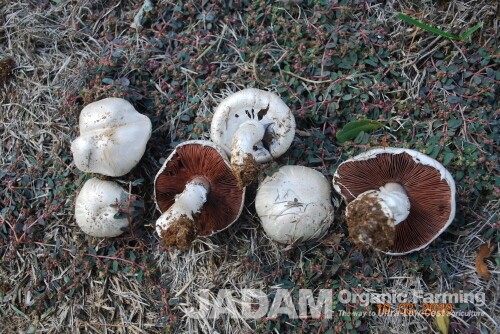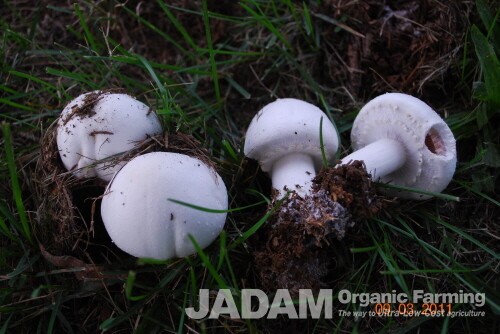
The genus Agaricus encompasses various species of mushrooms. Among these, the ones most familiar to us are the wild Field Mushroom (Agaricus campestris), the cultivated Button Mushroom (Agaricus bisporus), and the likewise cultivated Royal Sun Agaric (Agaricus brasiliensis Wasser et al., or Agaricus blazei Heinemann). We will explore the stories behind these mushrooms one by one.
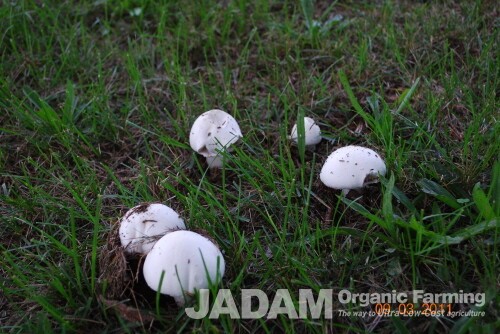
The term Agaricus is derived from the word 'agarius', meaning "growing in the field," or from the Greek word 'agarikon'. The word 'Agaric' generally refers to all mushrooms possessing gills. The name also traces its origins to Agari, a Scythian person who lived in the region north of the Black Sea and the Caspian Sea. The Scythian people historically possessed skills in using medicinal herbs, including mushrooms. They called mushrooms 'Agaricum', which is believed to have referred to the Fomes polypore species.

The specific epithet 'campestris' means "of the field," indicating a mushroom that sprouts in open fields. Consequently, its English common name is the Field Mushroom or Meadow Mushroom. While Agaricus campestris is still found in various places, its numbers have significantly decreased compared to the past due to the widespread application of chemical fertilizers and herbicides. I also encounter this mushroom annually in various locations, primarily on lawns near residential areas or cemeteries. However, I have yet to taste them, as these areas are typically treated with insecticides and herbicides in addition to chemical fertilizers.
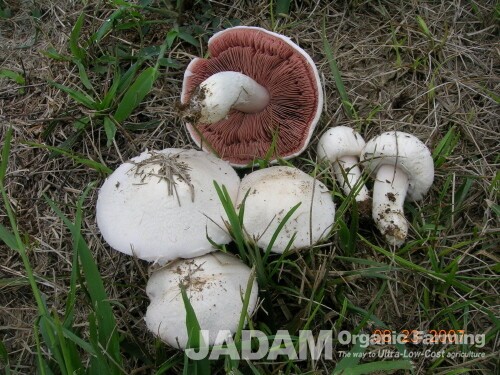
The history of using Agaricus campestris medicinally dates back to the Byzantine era in the 4th century. Unani medicine utilized it for treating sinusitis and arresting coughs and colds in their early stages. In the 16th century, ancient Hindu and Unani medicine employed it as an aphrodisiac. Unani medicine refers to the Greco-Arabic traditional medicine based on the teachings of the Greek physician Hippocrates (460?-377 B.C.) and the Roman physician Galen (131-201 A.D.), which was later refined by Arab and Persian physicians. Additionally, the mushroom was boiled in milk and consumed to treat weakness caused by wasting diseases like tuberculosis. In Norfolk, England, it was boiled in milk to treat esophageal cancer. In China, it was used as a remedy for hypertension, and the dried mushroom was ground into powder to treat lower back pain, leg pain, tendon issues, and numbness in the extremities.
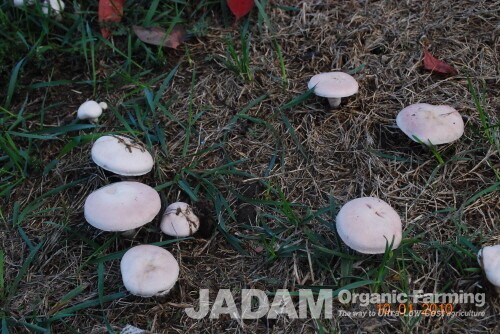
Agaricus campestris contains vitamins A, B1, C, K, and P (bioflavonoids). Regular consumption can prevent general weakness, loss of appetite, indigestion, and reduced lactation. It can also alleviate conditions such as capillary rupture, gum and gastric bleeding, and erythema caused by Vitamin B3 (niacin) deficiency.
Furthermore, Agaricus campestris contains an antibacterial component called campestrin, which is effective against both Gram-positive and Gram-negative bacteria. This supports the aforementioned traditional use for treating pulmonary tuberculosis and sinusitis. It also contains Coenzyme Q10 (ubiquinone), which is involved in cellular energy production. The fruit body contains hetero-auxin, a plant growth substance known to inhibit the growth of higher plants while promoting the growth of lower plants. Additionally, the fruit body contains ergosterol, which converts to Vitamin D2 upon exposure to sunlight, and proteolytic enzymes, which are suggested to have anti-clotting properties.
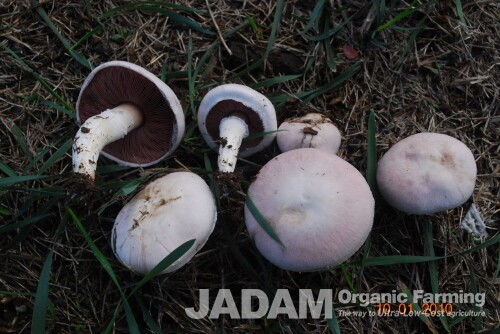
Components such as retine or alpha-ketoaldehyde, which inhibit cell division and growth, prevent the growth of malignant tumors like Sarcoma 180 and Ehrlich ascites carcinoma. Lectins in the mushroom bind with red and white blood cells as well as basidiolipids, a novel immune adjuvant. Agaricus campestris is also noted for its significant antiviral potential, particularly in preventing polio. In experiments with diabetic mice, it was shown to stimulate insulin secretion, thereby neutralizing hyperglycemia.
According to the Illustrated Book of Korean Medicinal Mushrooms (Park, 1999), the components of Agaricus campestris include 22 types of free amino acids, 9 trace metal elements, and 1-octene-3-ol, a volatile fragrance compound, along with antitumor polysaccharides. Pharmacologically, in addition to the antitumor effects mentioned earlier, it aids in fighting Gram-positive bacteria (causing gastroenteritis and skin infections) and Gram-negative bacteria, and enhances immunity. Indications listed include anorexia, indigestion, insufficient lactation, fatigue, beriberi, abdominal hemorrhage, anemia, capillary rupture, and rough skin.
On the other hand, Agaricus campestris contains toxic components known as agaritine or agaritinal. Since these have been shown to induce tumors in mouse experiments, it is inadvisable to consume this mushroom raw.