

A common winter annual found in fields, orchards, and roadsides. It survives winter in a rosette form and produces small yellow flowers at the tips of its stems starting in May.
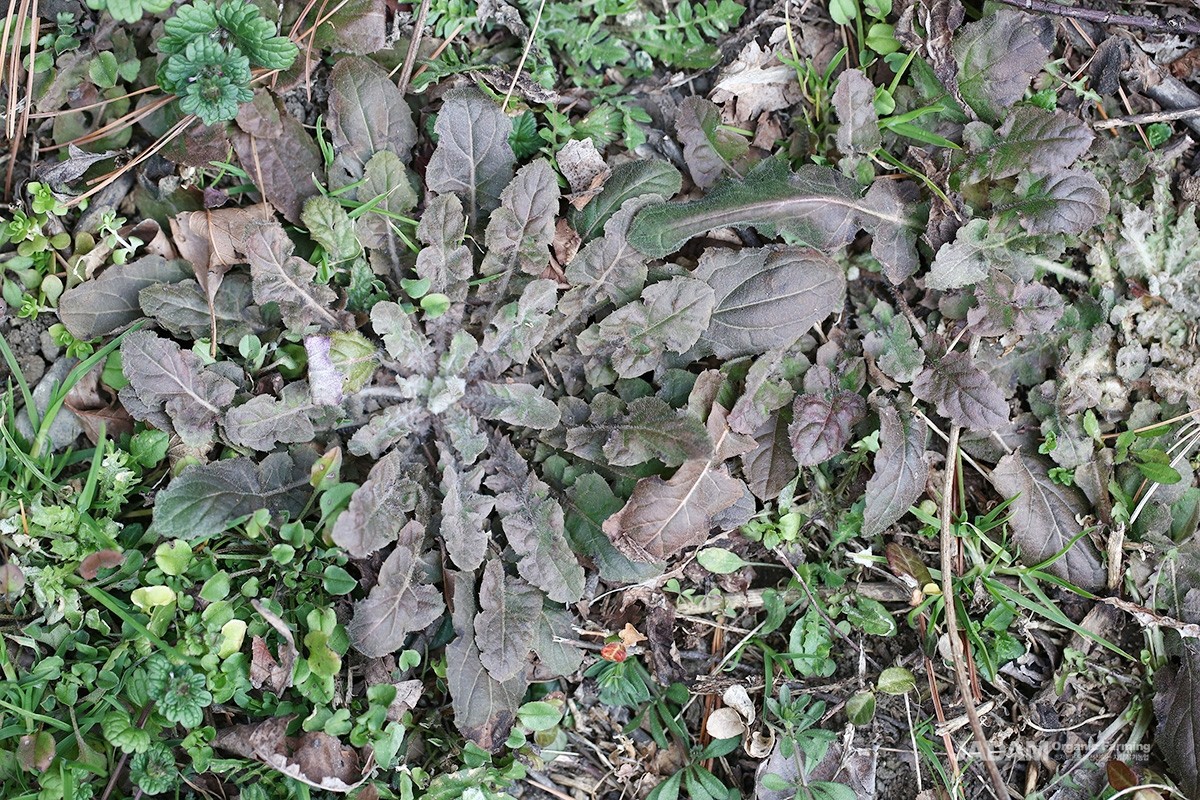
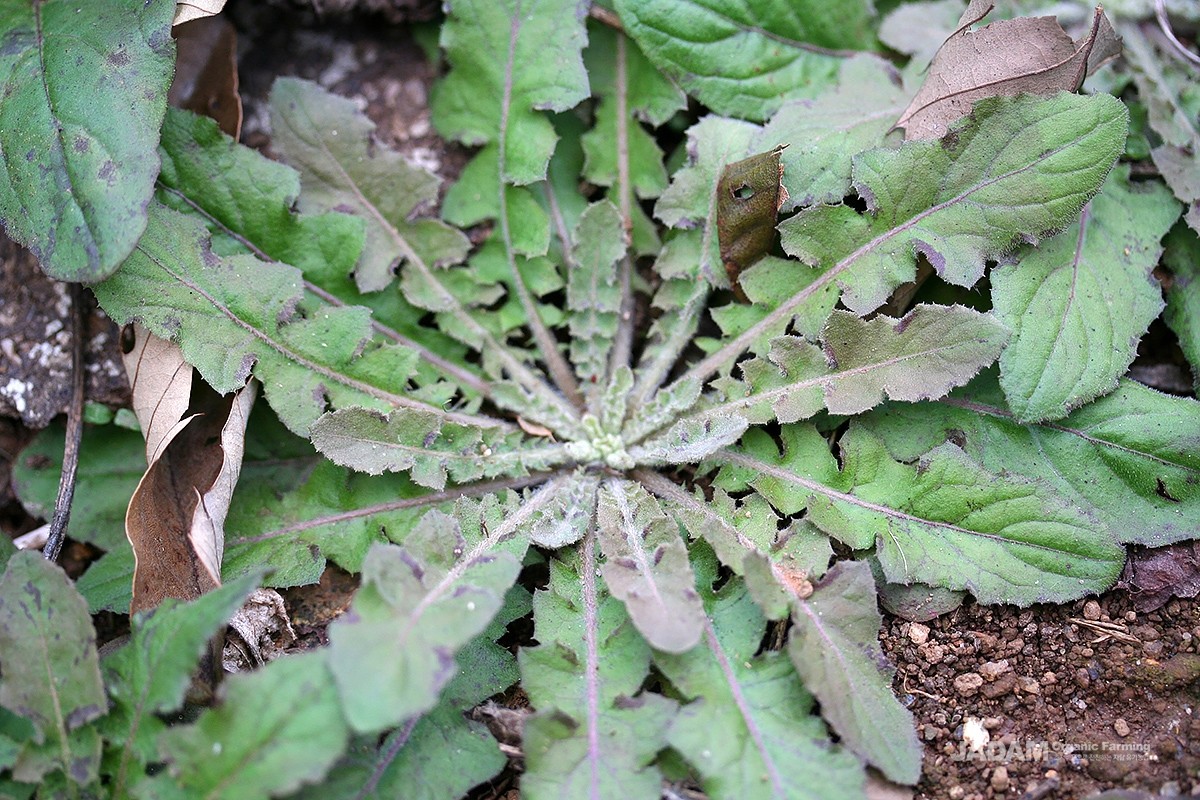
Oriental false hawksbeard (Youngia japonica) is a winter annual plant belonging to the Asteraceae family. It commonly grows in sunny fields or along roadsides. In autumn, basal leaves emerge and spread out in a rosette shape, resembling a cushion, to survive the winter. These leaves are lobed, similar to those of a dandelion or radish. They typically have a reddish tint and are covered in soft hairs, which are adaptations to withstand the cold and maximize absorption of limited winter sunlight.
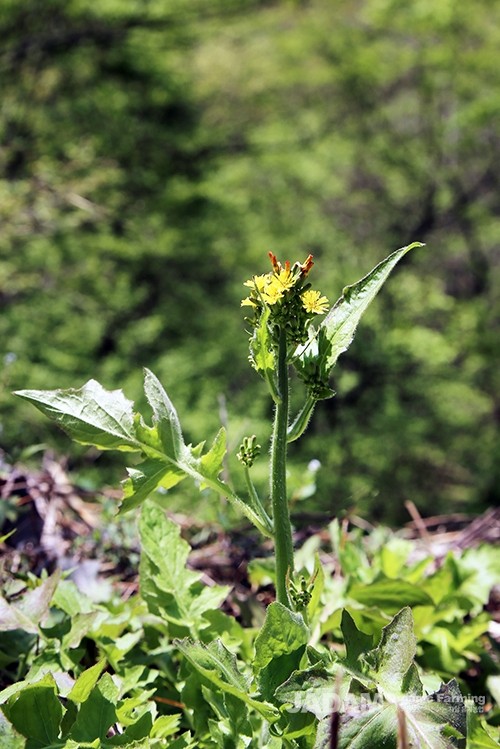
When spring arrives, a single stem usually rises straight up from the root. Under good nutritional conditions, this stem can soar to nearly 1 meter in height. The lower part of the stem may have one to four small leaves, though sometimes these are absent. The stem is hollow, making it easily broken; when damaged, it exudes a white milky latex, much like a dandelion or creeping lettuce (Crepidiastrum sonchifolium). The hairs present on the stem gradually disappear as the plant matures.
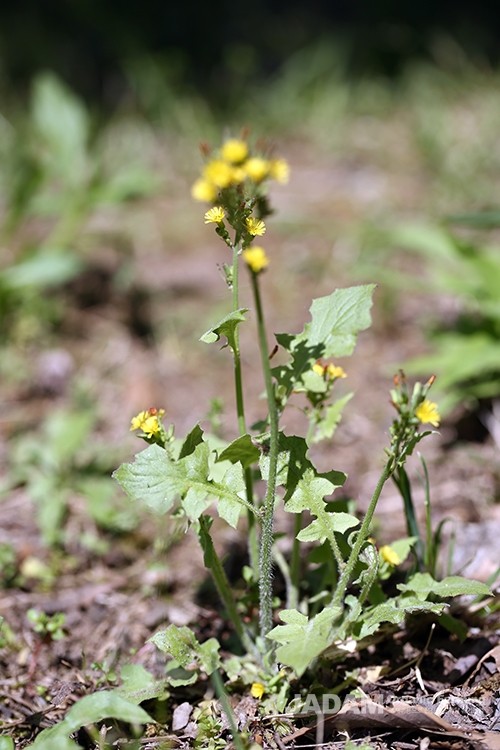
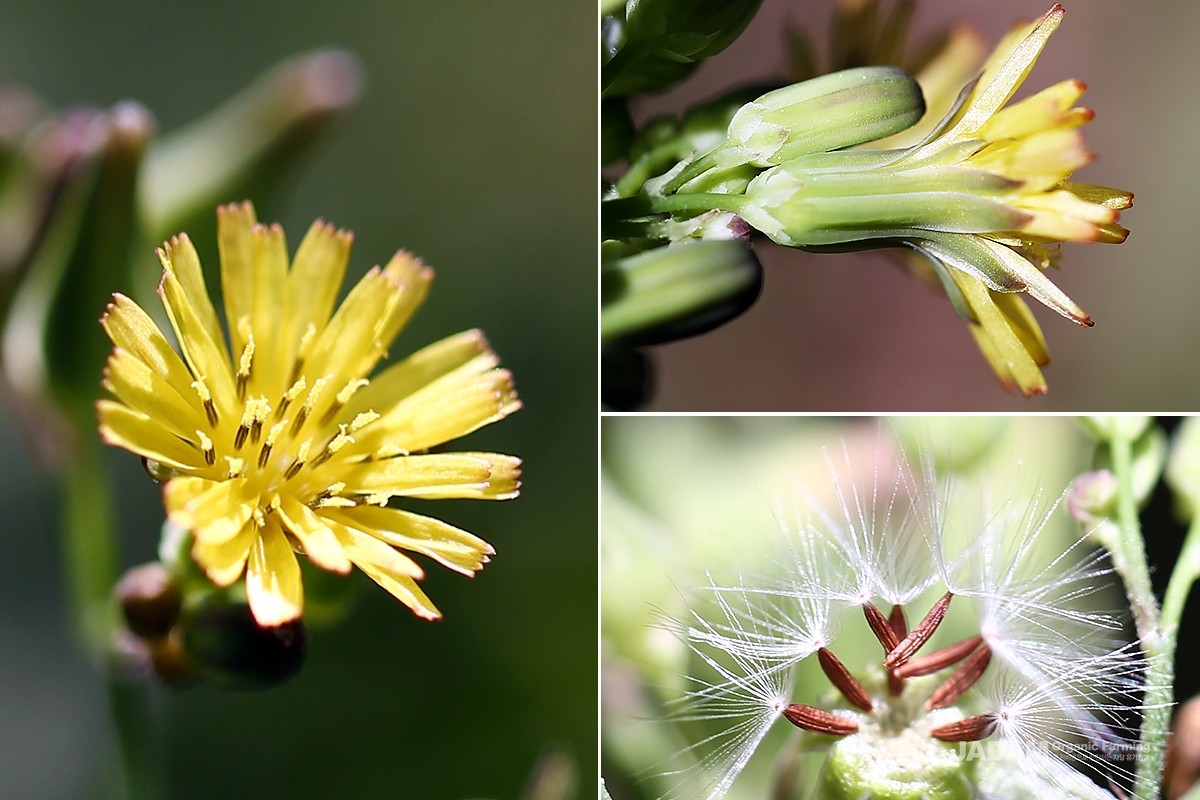
Flower buds form at the tip of the stem, spreading out in an umbrella-shaped cluster (corymb). In warmer areas, yellow flowers begin to bloom as early as late April. Although they are head-like flowers (capitulum) typical of the Asteraceae family, they are quite small, about the size of a pinky fingernail. The flower head consists entirely of ray florets (ligulate flowers). The bracts are arranged in two rows, with eight inner bracts. The flowers close in the evening. The fruit possesses a pappus (tuft of hair), allowing it to fly away on the wind like a spore.
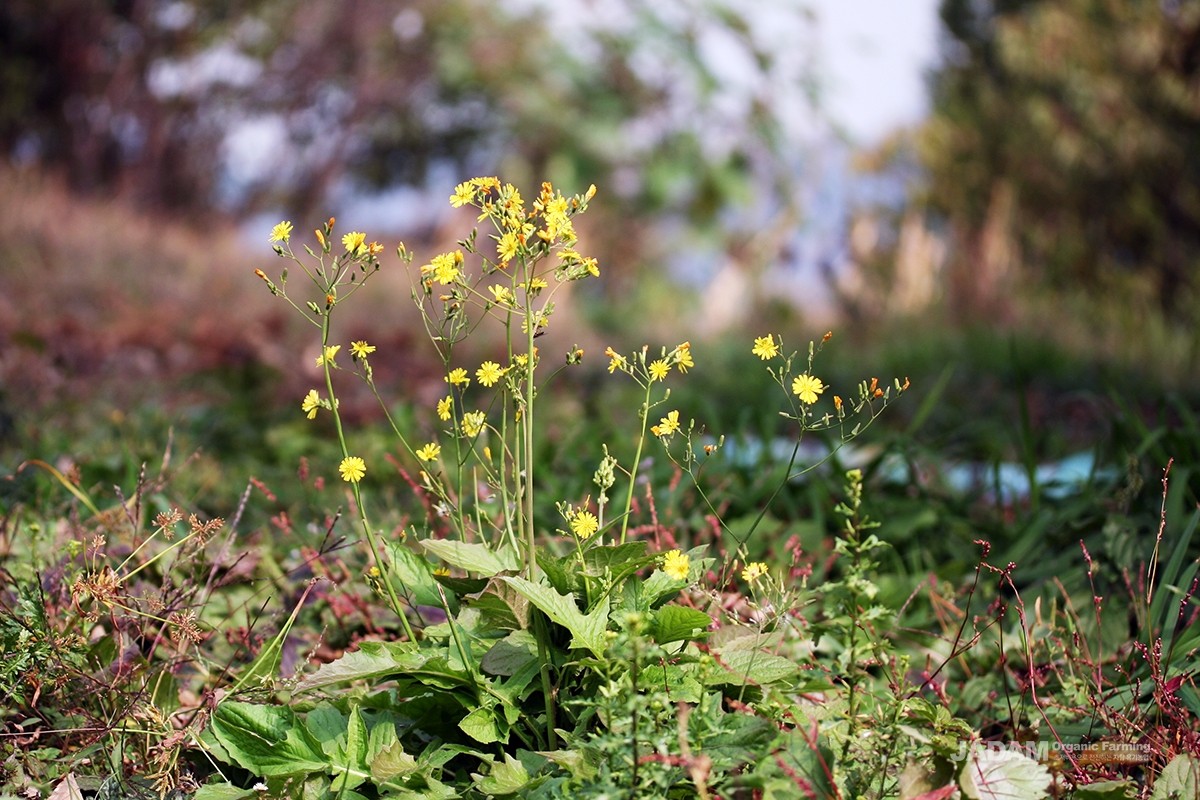
The exact origin of its Korean name, Pporibaengi, is not officially known. However, if one interprets “ppori” as dialect word for a flower bud, and “baengi” as a suffix used to demean specific characteristics (as seen in word like jujeong-baengi for drunkard or ganan-baengi for a pauper), the name likely metaphorically describes the plant’s appearance: a frail stem hoisting up small, insignificant flower buds.
▶ Utilization and Medicinal Properties:
In spring, the plant can be dug up roots and all, parboiled, and eaten as namul (seasoned vegetable side dish) or added to doenjang-guk (soybean paste soup). It has a decent flavor.
Medically, it is known to lower fever, detoxify the body, reduce swelling, and alleviate pain. It is used to treat the common cold, sore throats, mastitis, conjunctivitis, urinary tract infections, leukorrhea, and rheumatic arthritis. The taste is sweet yet bitter, and it has a cool nature.
▶ Control Methods:
Large specimens can grow nearly 1 meter tall. While this is not a significant issue in orchards, it can be problematic in fields or greenhouses. In such cases, it is best to pull them out when they are young or, at the very least, after flowering but before the seeds scatter.
▶ Name Origin and Similar Species:
It is also referred to locally as Pakiogarinamul. It is distinguished from similar species like Yongia sonchifolia (known as Gaeboribbaengi) or Youngia koidzumiana (Geuneulboribbaengi) by its growth habit; the stems of these similar species typically grow lying down (prostrate), whereas the Oriental false hawksbeard grows upright.