

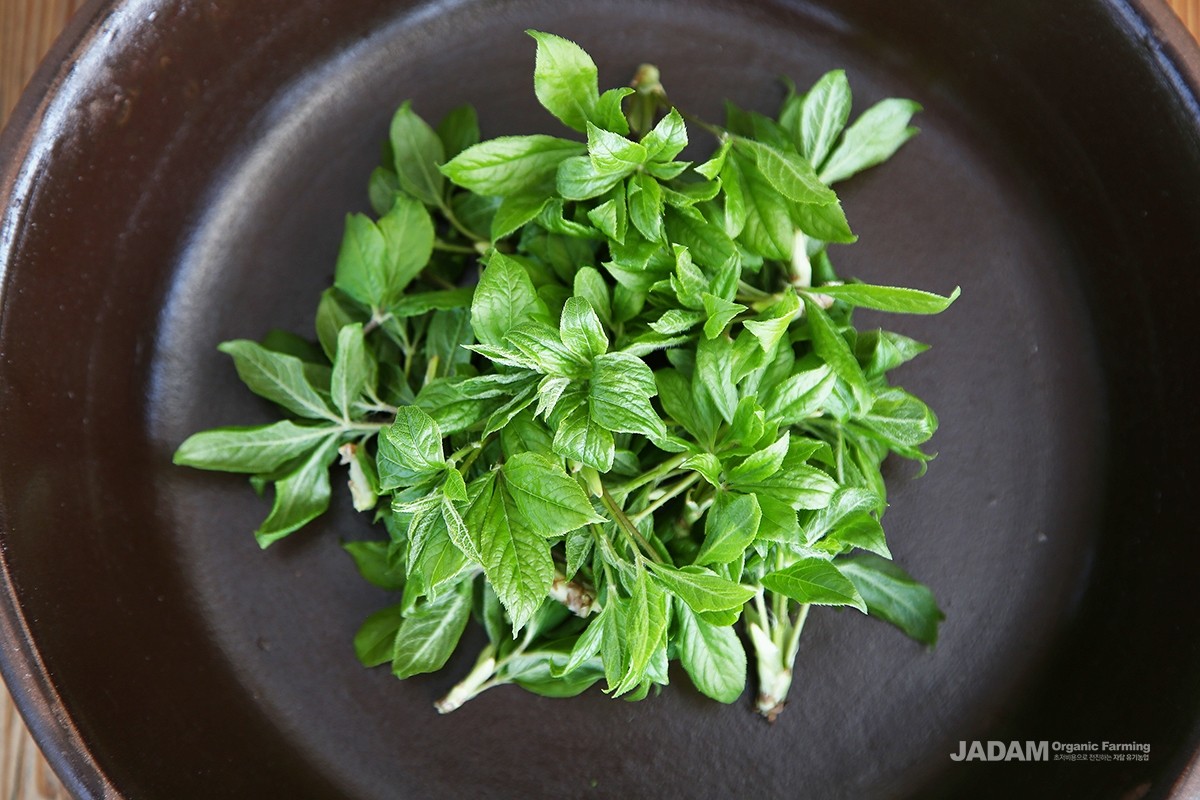
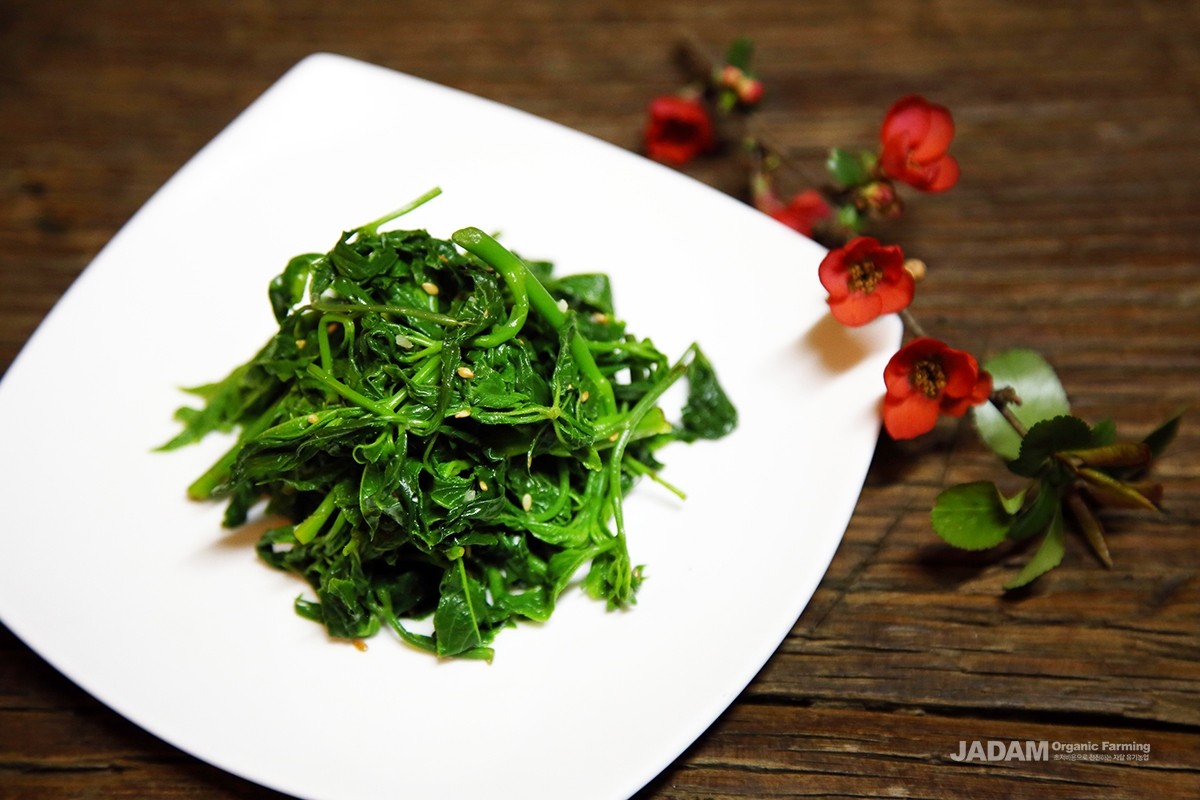
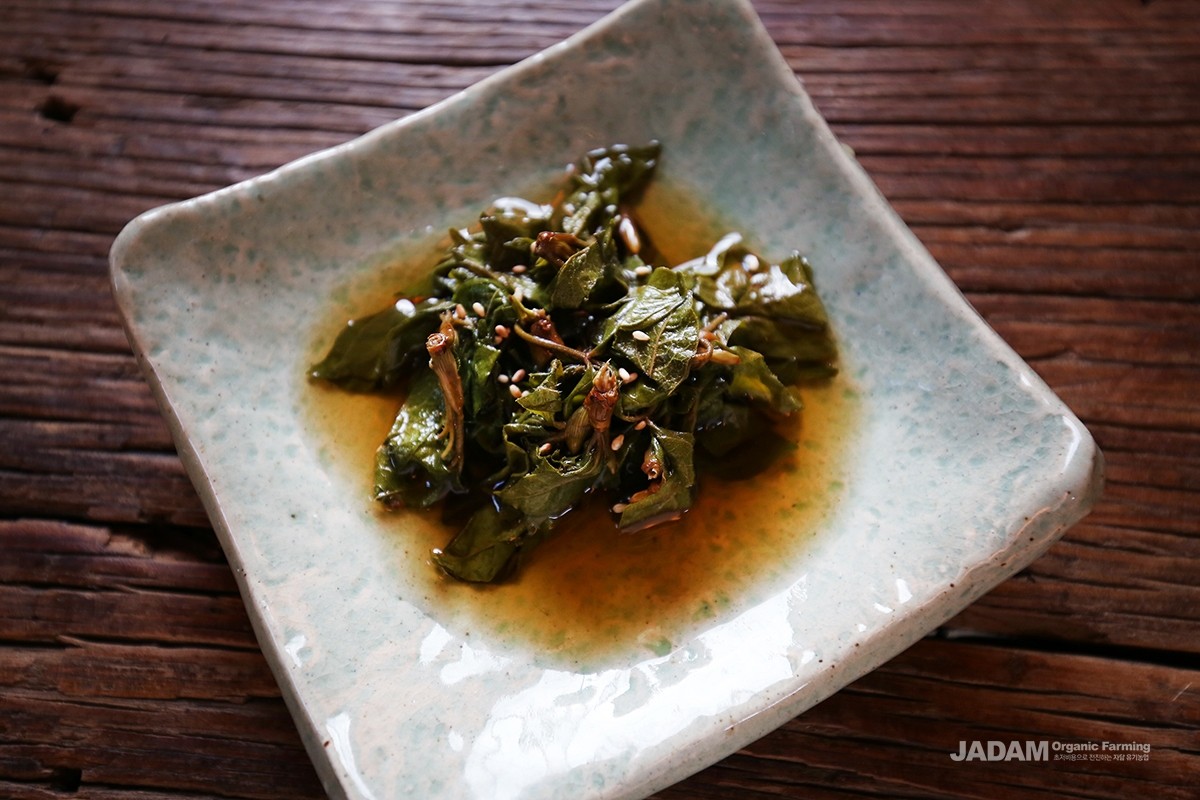
The young leaves are lightly blanched to remove their bitterness and eaten as seasoned vegetables or pickled in soy sauce or chili paste. The leaves and fruits are often mixed with sugar to ake a natural fermented enzyme extract. The dried stems can be boiled with chicken to make herbal broth, or soaked in alcohol and aged into medicinal liquor. It strengthens the heart, lower back, and legs, and is also effective for dampness-related impotence and weak urine flow.
The Siberian ginseng (Eleutherococcus sessiliflorus) grows mainly in shaded mountain regions and can reach up to 3 meters in height. Its branches are smooth and nearly spineless. The leaves are palmately divided into five leaflets, each ovate to elliptic in shape with serrate margins. The underside of the leaves has fine hairs along the midrib, and there are few or no thorns.
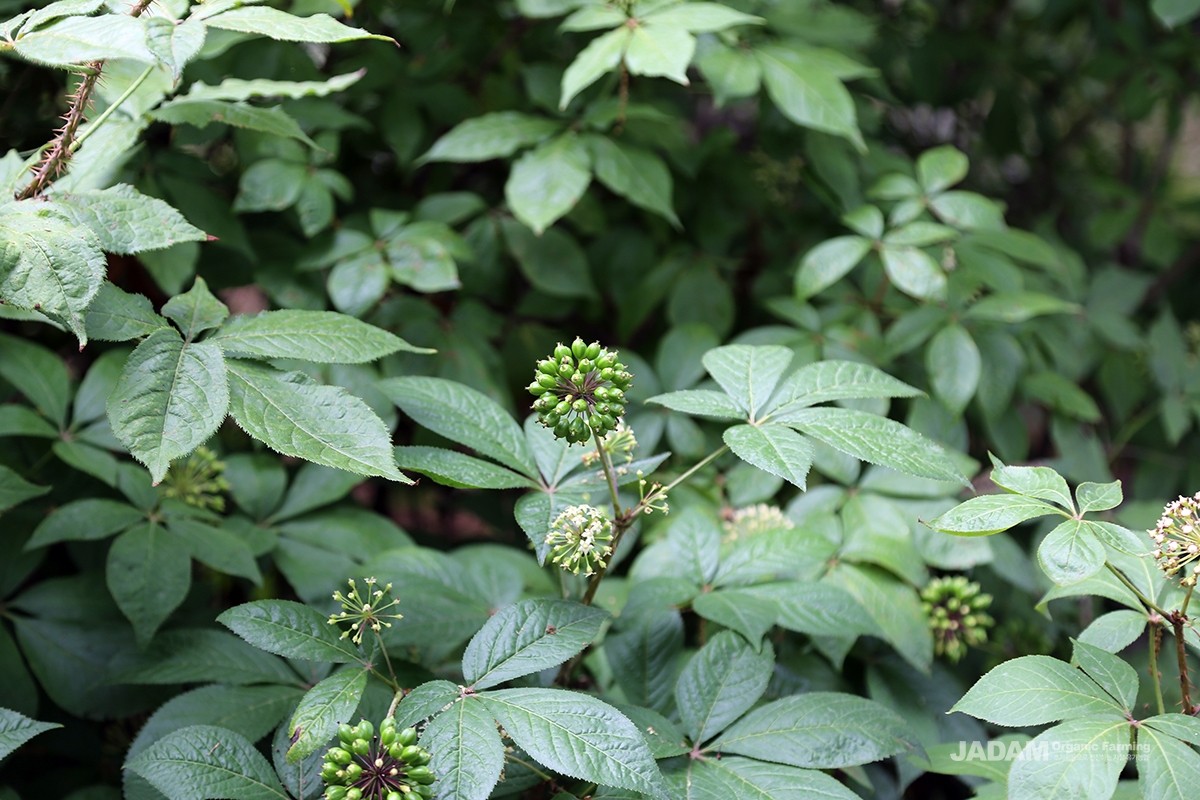
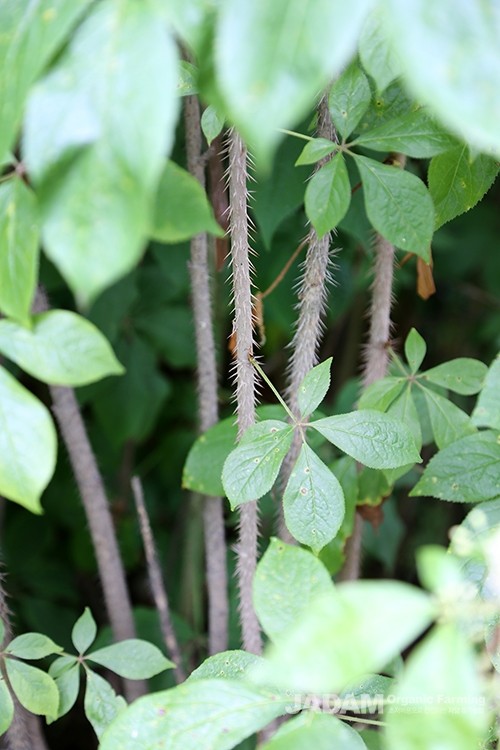
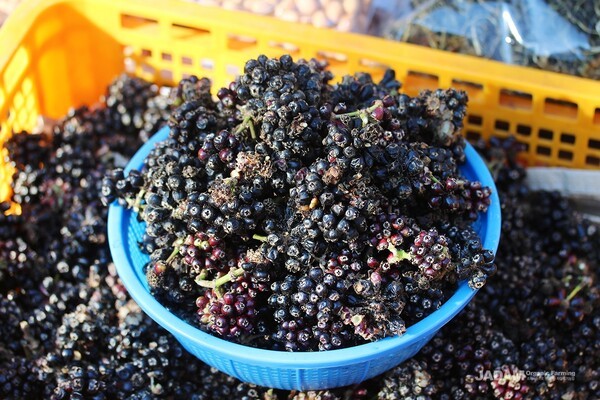
Flowers bloom in summer and are yellowish with a purplish or lilac tint, arranged in globular, branched clusters. Each flower has five petals and a pistil united to the tip. The fruits are spherical and ripen to black from September to October. A closedly related species, Jirisan Siberian ginseng, has small spines on the underside of the leaf midrib and petiole. Spiny Siberian ginseng has long, thin thorns densely covering the entire plant.
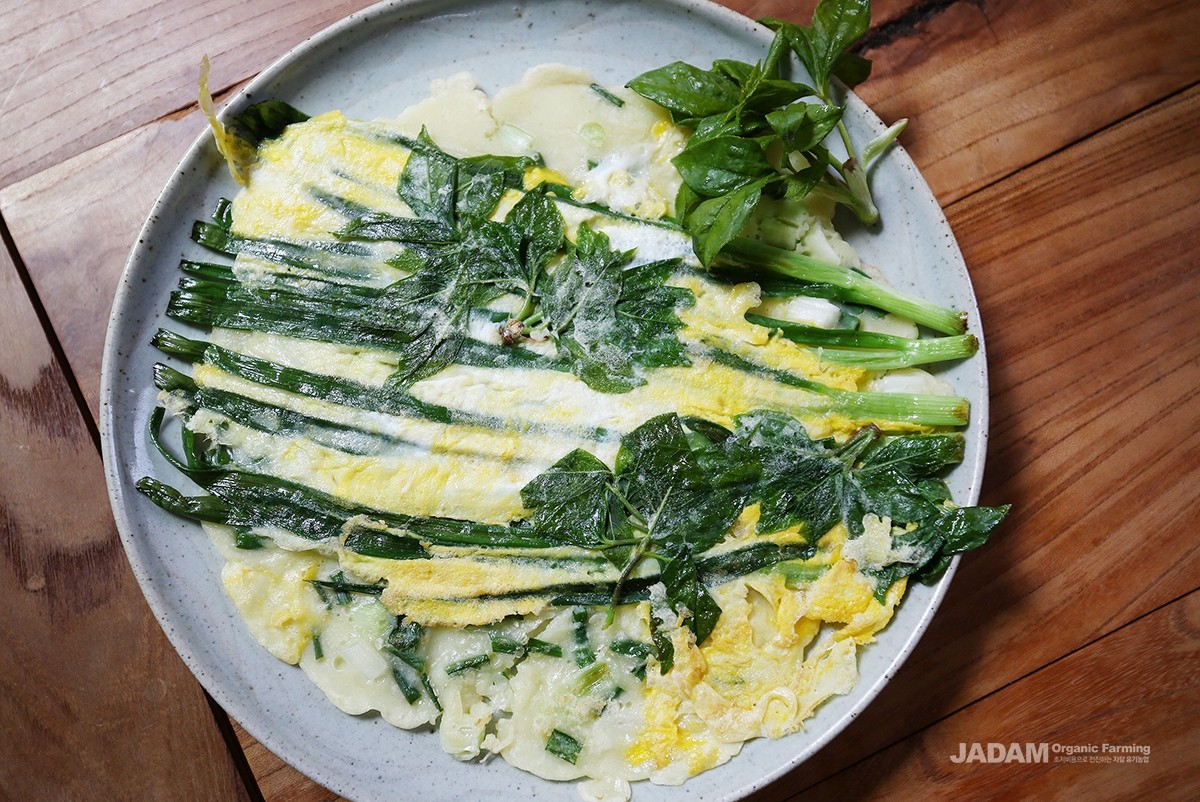
The Siberian ginseng tree is cultivated both as an ornamental plant and for medicinal use. The young leaves are lightly blanched to remove bitterness and eaten as seasoned vegetables or pickled. They can also be dried and eaten later, or cooked as pancakes or tempura. The leaves and fruits are mixed with sugar to make enzyme syrup, while the dried stems are boiled with chicken or soaked in alcohol and aged into tonic liquor. The decoction is sometimes used for brewing herbal wine.
The genus name Acanthopanax come from the Greek words acanthos (“thorn”) and panax (“to cure all disesaes”), meaning “a thorny tree that heals every illness.” The plant dispels wind and dampness, strengthens muscles and bones, promotes blood circulation, and eliminates stagnant blood.
Among the various spiny Siberian ginseng is regarded as the most valuable. It contains high concentrations of isofraxidin and eleutheroside E, compounds known for their sedative, memory-enhancing, and libidorestoring effects. It strengthens the heart, lower back, and legs, and is effective for conditions such as dampness-induced impotence and sluggish urination.
According to the “The Principles and Practice of Eastern Medicine” (Donguibogam), “Its nature is warm, its taste is pungent and bitter, and it is non-toxic. It replenishes vital energy, restores essence, strengthens muscles and bones, and fortifies the will. It treats male importance, female genital itching, lower back and spinal pain, leg weakness and numbness, and joint stiffness.”
To cultivate Siberian ginseng, seedlings are usually planted in late autumn after leaf fall during dormancy. Alternatively, when a mature plant is available, side shoots near the roots can be covered with soil to induce root formation and then separated and transplanted.
[Ways to Enjoy Siberian Ginseng Shoots]
1. Blanch the young leaves to remove bitterness and eat as seasoned vegetables or pickles.
2. Dry the young leaves for later use, or cook as pancakes or tempura.
3. Mix the leaves or fruits with sugar to make enzyme syrup.
4. Boil the dried stems with chicken or soak them in alcohol to make tonic liquor.