

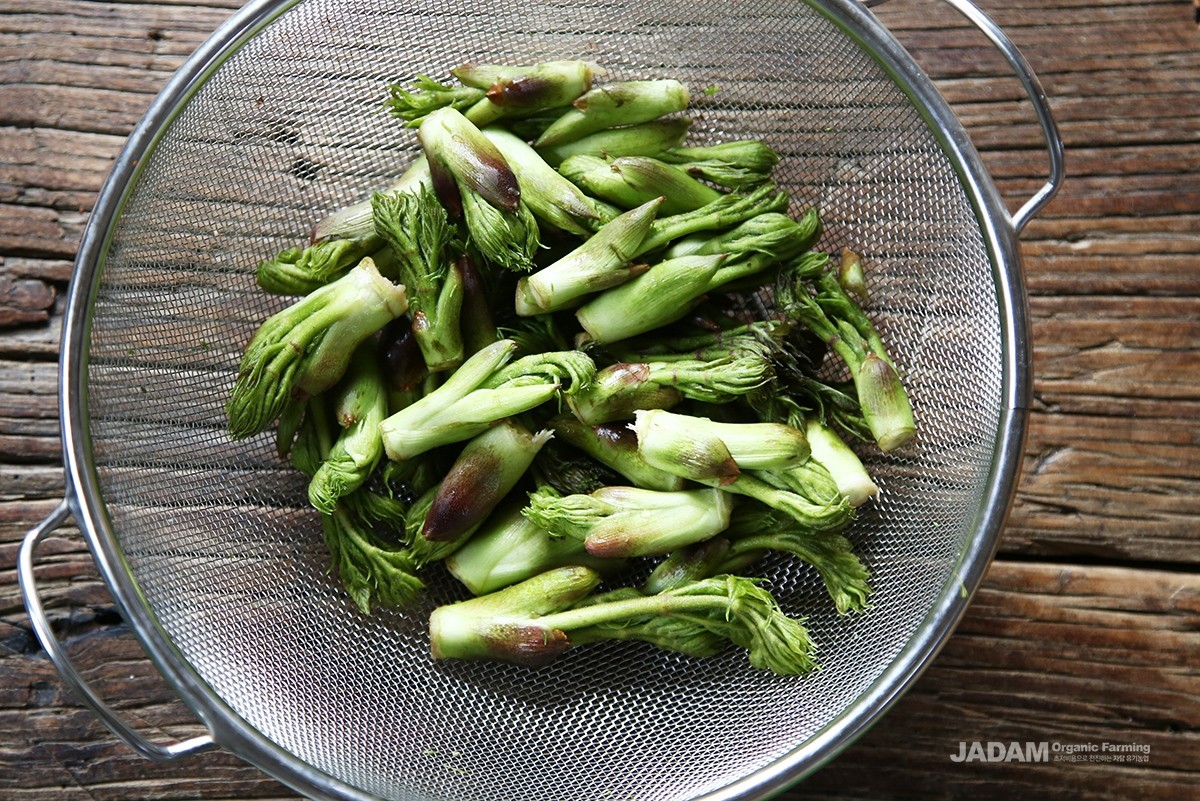
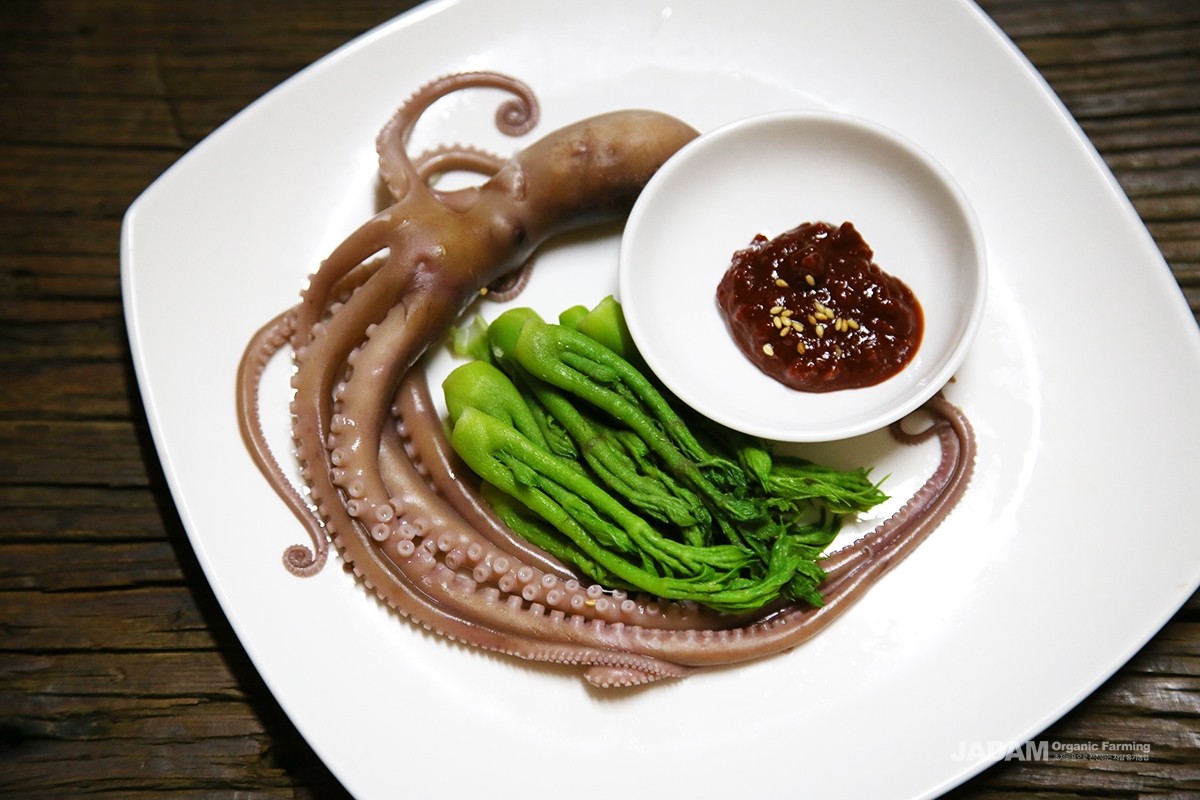
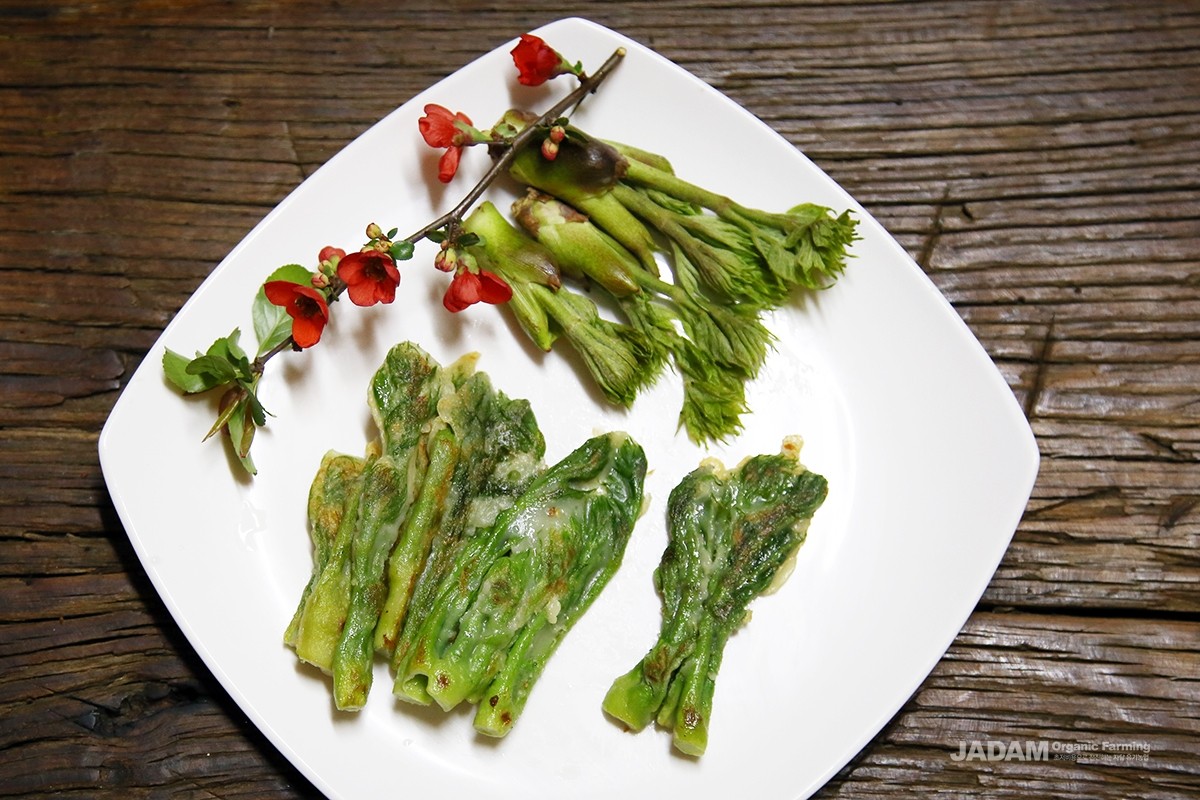
The young shoots are mainly eaten in spring. They are blanched and served with chili-vinegar paste or seasoned as a side dish. Their slightly bitter yet fragrant flavor fills the mouth. They can also be enjoyed as pancakes, tempura, or pickles. The plant is known to invigorate the body, calm the mind, strengthen vitality, nourish the kidneys, dispel wind, and promote blood circulation.
The Japanese angelica tree (Aralia elata) is a deciduous shrub that grows 3 - 5 meters tall, usually found on sunny mountain slopes or in valleys. It is often cultivated near vegetable gardens or at the base of hills to harvest its edible spring shoots. The grayish trunk bears irregular, sharp spines scattered along its surface.
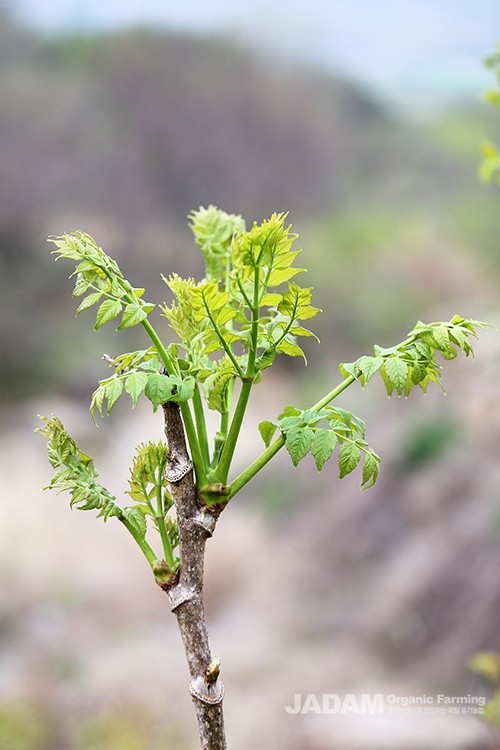
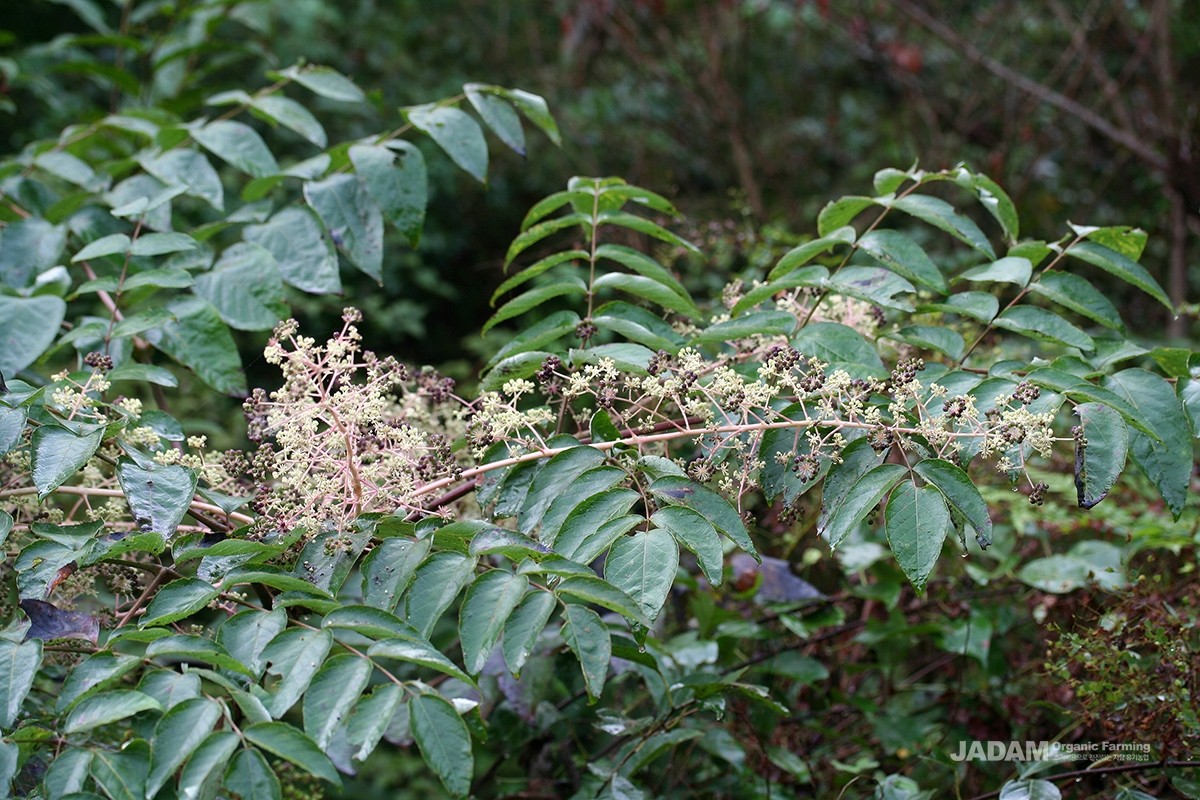
The leaves are alternate and bipinnate, with spines on both the petioles and leaflets. The leaflets are ovate or elliptical, with pointed tips and coarsely serrated margins. In summer, small white flowers bloom in umbrella-shaped clusters. Each flower has five petals, five stamens, and five styles. The fruit ripens to black.
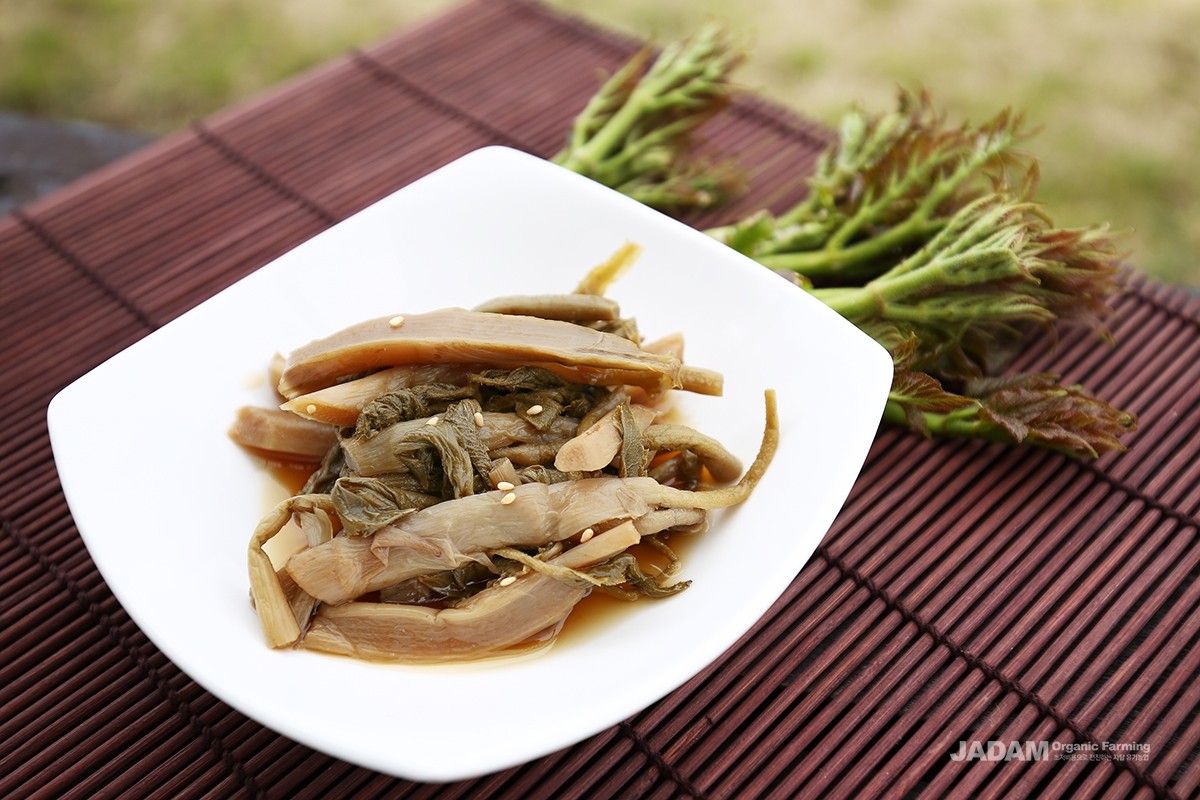
The young shoots are mainly eaten in spring. They are blanched and served with chili-vinegar paste (cho-gochujang) or seasoned as a vegetable side dish. Their slightly bitter yet aromatic flavor fills the mouth. Blanched shoots can also be skewered with beef to make dureup-jeok, a Korean dish made by skewering blanched shoots of the Japanese angelica tree with thin slices or beef, then grilling or pan-frying them. or prepared as pancakes or tempura. They can be preserved in soy sauce or red chili paste to make Korean pickles, or salted and frozen for long-term storage.
Aralia elata is rich in protein, dietary fiber, calcium, iron and vitamins B1, B2, and C. The young shoots contain high levels of amino acids such as leucine, aspartic acid, and glutamic acid. The distinctive bitter taste comes from saponins such as araloside, which are found in abundance, especially in the bark of the roots rather than the stems.
When araloside decompose, they yield compounds such as oleanolic acid, arabinose, glucose, glucuronic acid, choline, and alkaloids. These substances strengthen the heart, promote blood circulation, and stimulate the central nervous system, making them effective against hypotension, headaches, and nervous exhaustion. They also help lower blood sugar and reduce lipid levels in the bloodstream.
In traditional Korean medicine, the dried bark of the root or stem is called chongmokpi (楤木皮). It has a pungent flavor and a neutral nature. It is believed to replenish vital energy (qi), calm the mind, enhance vitality, nourish the kidneys, dispel wind, and promote blood circulations such as hepatitis, indigestion, diuresis, pain relief, astringency, rheumatic arthritis, external bleeding, gastric ulcers, stomach cramps, nephritis, beriberi, edema, diabetes, nervous weakness, importance, and arthritis.
Propagation is usually done by root division. In spring, the roots are dug up, cut into 10 - 15 cm segments, and replanted.
[Ways to Enjoy Japanese Angelica Tree]
1. Blanch and serve with chili-vinegar paste or season as a side dish.
2. Skewer with beef to make Japanese angelica tree, or cook as pancakes
or tempura.
3. Preserve in soy sauce or red chili paste to make Korean pickles (jangajji).
4. Salt or freeze for long-term storage.