

Fruit tree pest, Tree pest
Plum tortrix moth
Order: Lepidoptera
Family: Tortiicidae
▶Scientific name: Rhopobota naevana Hubner
▶Common name: Plum tortrix moth (also known as the black-headed budworm)
▶Wingspan: 12-15mm (adult)
▶Host plants: .), apple (Malus spp.), hawthorn (Crataegus spp.),
photinia (Photinia spp.), and related trees
▶Distribution: Korea, Japan, China, Taiwan, India, Sri Lanka, Russia, and Europe
This is a small grayish-brown moth with dark brown spots on the forewings and an oblique streak along the anterior margin; the pattern varies among individuals. The hindwings are grayish-white, with the outer margins slightly darker. The pupa is spindle-shaped and yellowish-brown.
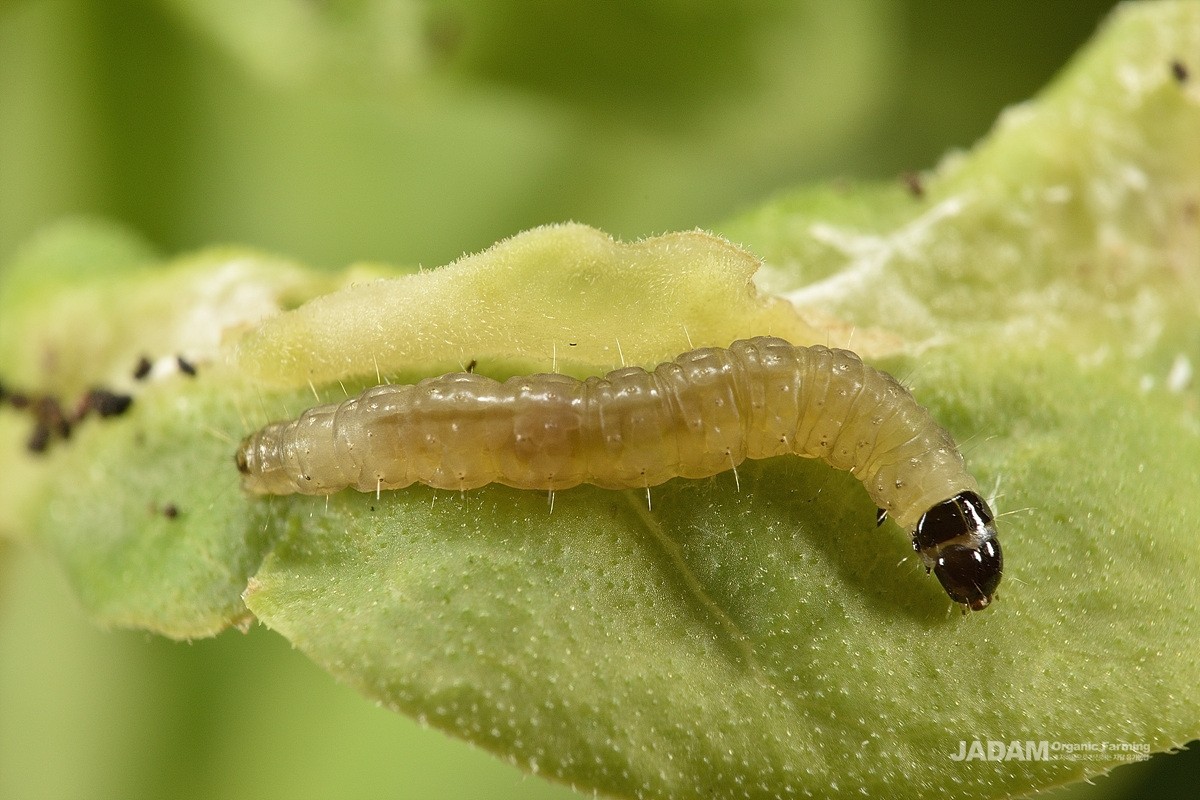
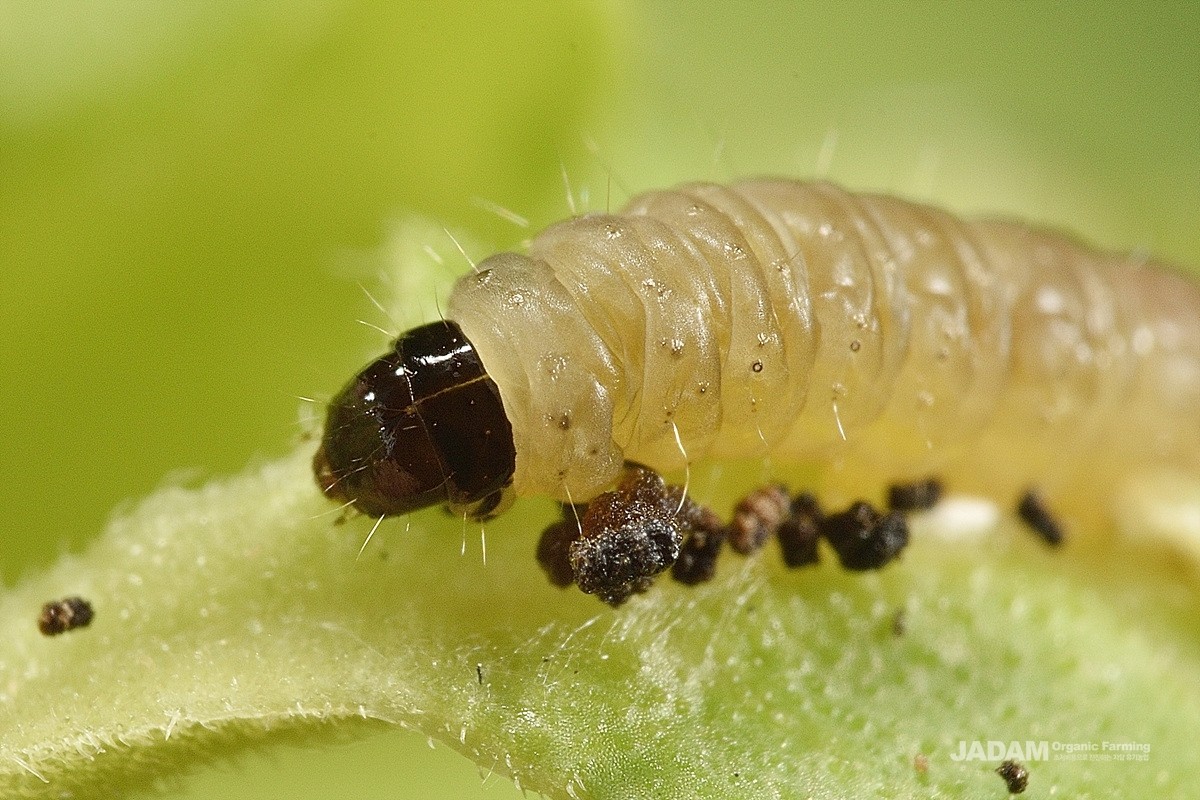
The larva reaches about 10mm in length.The head is black; the young larva is dark green, but as it grows, the color may vary to bright red or pale yellowish-white. The egg is flattened and oval, milky white to reddish-brown, with a transparent shell and tortoise shell-like markings on the surface.
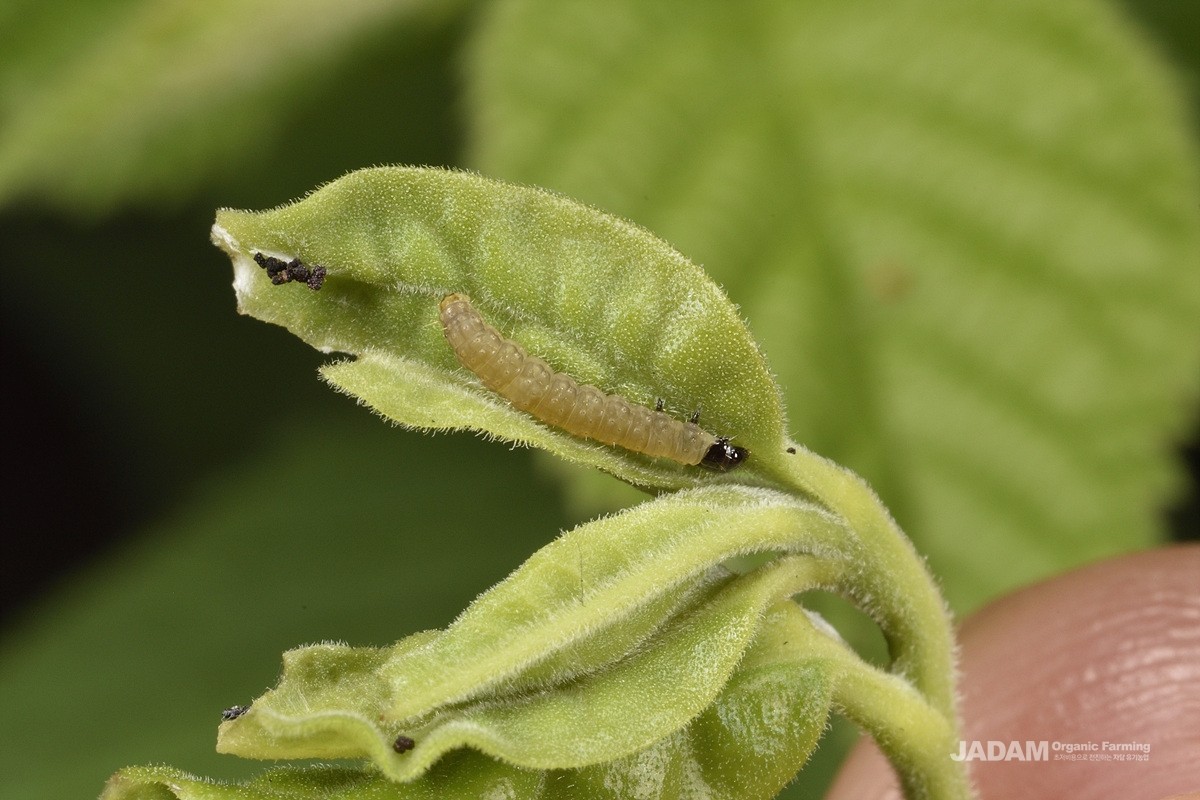
Newly hatched larvae roll the leaf edges inward and feed inside, leaving only the lower epidermis intact. Adults emerge from May to October, producing about five generations per year, resulting in a complex life cycle. Each female lays an average of 22 eggs singly on leaves, twigs, and branches. Mature larvae fold the leaf edges together, spin white cocoons inside, and pupate within them. Damage becomes severe from late July (second to third generation) and reaches its peak from late August to early September (third to fourth generation).
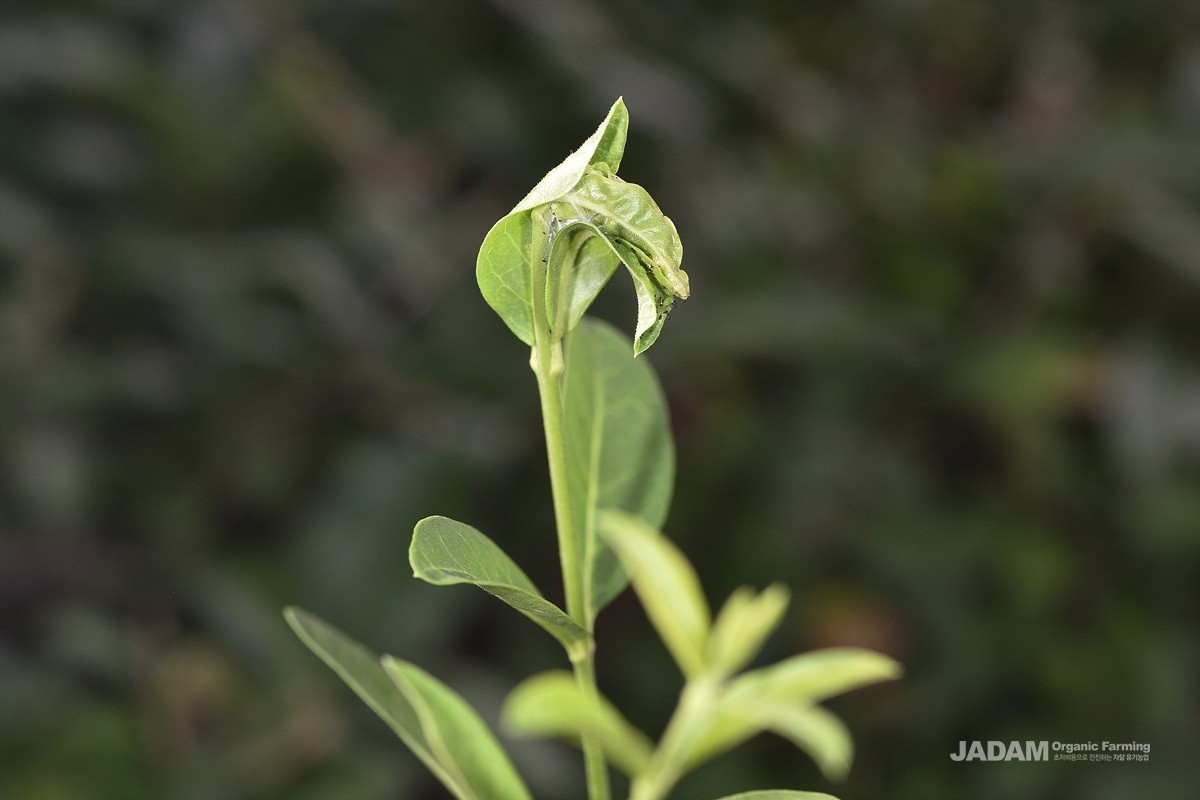
Larvae roll and bind leaves together while feeding on the leaf surface, causing the tissue to turn brown and spoiling the tree’s appearance. The species overwinters as eggs on branches and stems. [Source: Korea National Arboretum]