

The Mystery of Wild Mushrooms (1)
“Love all God’s creations, both the whole and every grain of sand. Love the animals, love the plants, love everything. If you love everything, you will perceive the divine mystery in all things.” - Gyodor Dostoevsky, The Brothers Karamazov
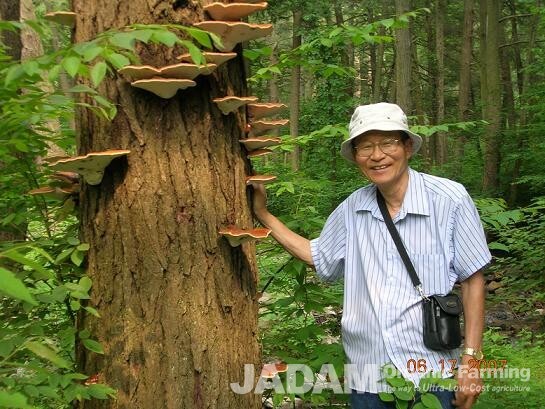
Perhaps I am someone “crazy about mushrooms." How else could I explain spending three days a week in the mountains from early April until December? Sometimes I walk alone in the silent woods for hours, oblivious to bears or snakes. As of 2007, this marks my twenty-second year hunting mushrooms. This fascination began long ago, probably in childhood. I grew up near the foot of Mount Vukak, then known as the Segeomjeong area of Seoul. As a boy I loved wandering alone through the hills and fields.
During the Korean War, my grandmother once handed me a basket and asked me to pick any mushrooms I could find. She sorted the edible ones from the pile I brought home, cooked them for dinner, and fortunately no one got sick. Later I often wished I had learned her way of distinguishing edible from poisonous species. In high school, the three subjects I was confident I could score a perfect 100 on without notice were Korean, English, and biology, the last perhaps already hinting at my future.
Whenever I traveled, plants always drew my attention more than anything else. In 1981, I spent 40 days in Brazil; when I later showed my slides, a friend laughed, “every picture is of trees and flowers, nothing else!” That was true. After the trip I became deeply interested in ecology, the divine harmony of creation. That interest later took form in my life through the study of wild mushrooms.
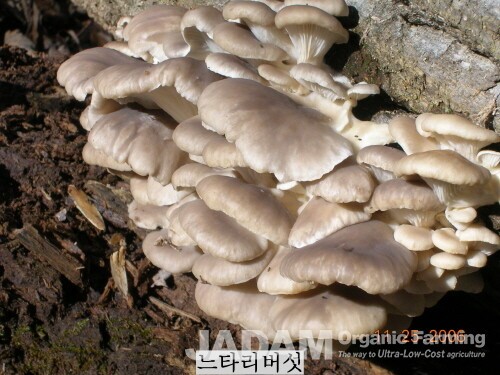
My passion for white fungi began after meeting a young man in Philadelphia in 1985 who cultivated mushrooms professionally. One May day I brought him a large cluster of mushroomsI had picked near my home and asked what they were. He exclaimed, “where did you find such beautiful wild oyster mushrooms?” The single encounter changed everything. I bought books, studied morphology and color, and began collecting, drying and identifying species from the field. After 10 years of self-study I could finally distinguish Amanitas, Russulas, Lactarius, and many others.
By the mid-1990s I produced a 4 hour video documentary of mushrooms across southeastern Pennsylvania and southern New Jersey, and a 3 hours record from northeastern Pennsylvania. Now, truly, mushrooms have taken over my life. A friend once joked, “Dogs only see bones, do you only see mushrooms?” It was true. Even while driving I could spt them in passing or in the rear-view mirror.
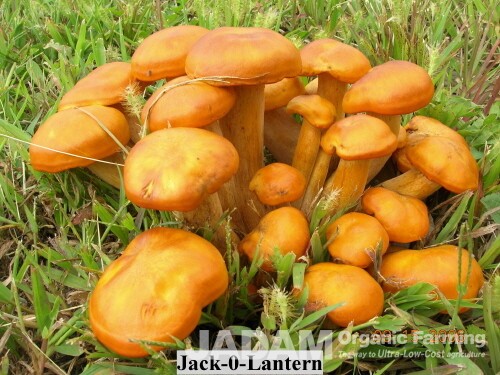
Once, a man in the Pocono Mountains asked me to help him cultivate shiitake mushrooms. He told me that a neighbor had been hospitalized for three days after eating wild mushrooms he believed were Reishi. When I asked about their color, he said, red. I knew immediately, it must have been Omphalotus illudens, the Jack-o’-Lantern mushroom, whose orange glow resembles Halloween pumpkins. It is not deadly but causes severe gastrointestinal distress.
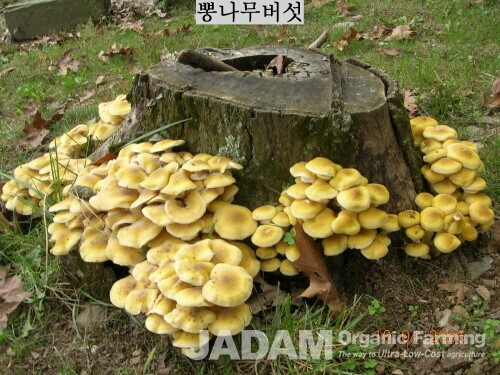
Once another occasion in Germany, while driving from Frankfurt to Cochum, a pastor told me that at a church retreat the congregation had collected and feasted on mushrooms. When I learned the retreat took place in October, I guessed they had eaten Armillaria mellea, the honey mushrooms, a common edible species that fruits abundantly in autumn. Indeed, when shown photos later, my identification was correct. Today, people often call or spend digital photos for help identifying mushrooms. I always advise caution: never eat any wild mushroom unless its identity is absolutely certain.
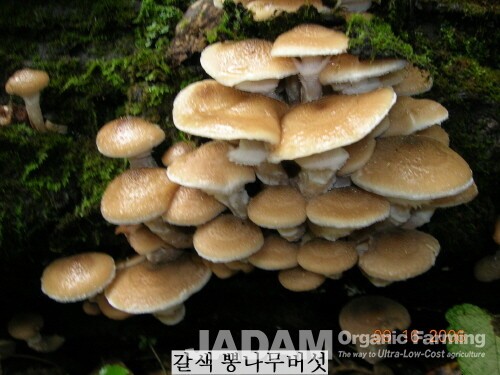
My fascination with mushrooms has filled my life for over twenty years with vitality, hope, and joy. Spiritually speaking, it has been a kind of grace. Without this obsession, how could I have spent so many hours hiking mountain trails, breathing pure forest air, and meditating in stillness? The joy of encountering wild mushrooms is the joy of encountering divine creation itself. Mushrooms are a generous gift of God, varied, mysterious, and beautiful. The deeper I study their hidden world, the more I stand in awe of the Creator’s artistry.
About the author
Jongsoo Choi graduated from Mokwon University, Yonsei University (Theology), the United Graduate School of Theology, and earned his Doctor of Ministry degree from Palmer (formerly Eastern Baptist) Theological Seminary. Hesevered as a pastor in the United Methodist Church in the United States from 1976 until his retirement in 2003 and now lives in harmony with nature. His books include Jesus and Human Liberation, The Winter Tree, Missionary Na Ae-suk: A Life for Korea, and the Spirituality and Art of Van Gogh. He has also translated works such as Faith and Retirement, the Glory of the Elderly is the Grey HEad, The Light of Prayer, HEaling Models for Abusive Men, Pastors for the 21st Century, and Set Jesus Free: Toward a New Christianity for a New Age.