

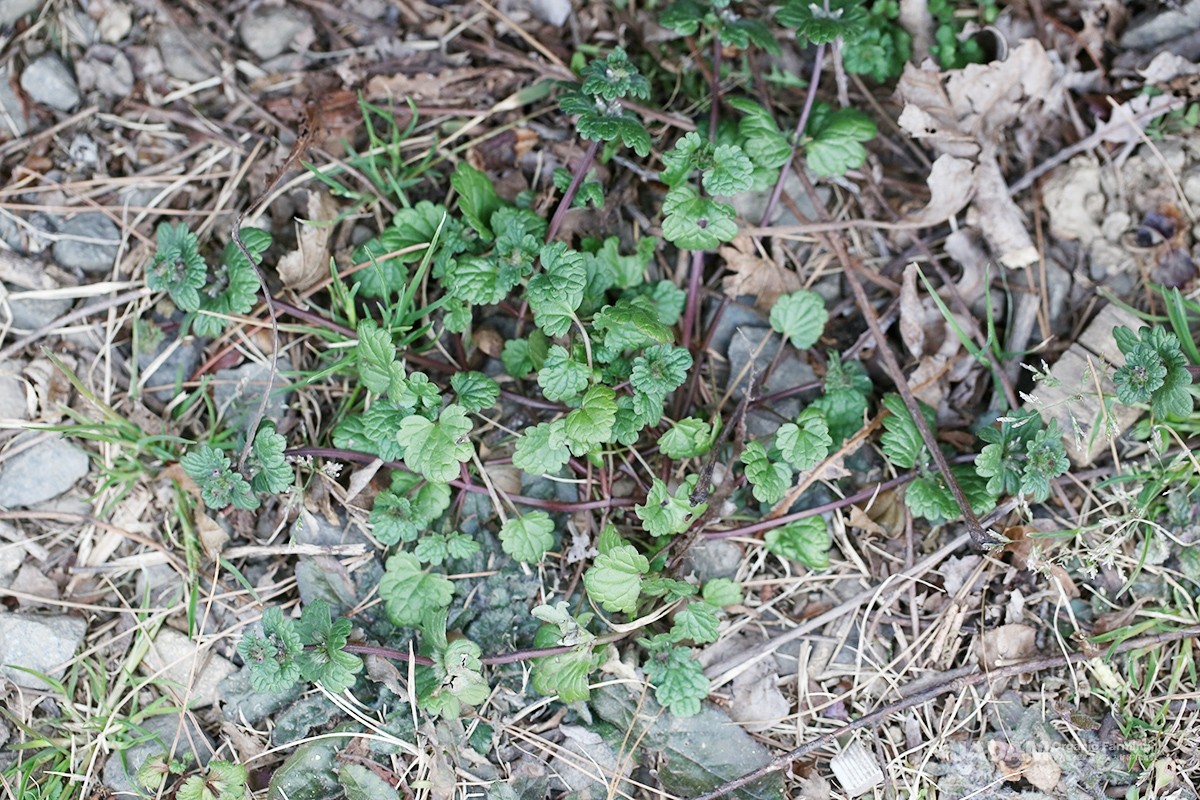
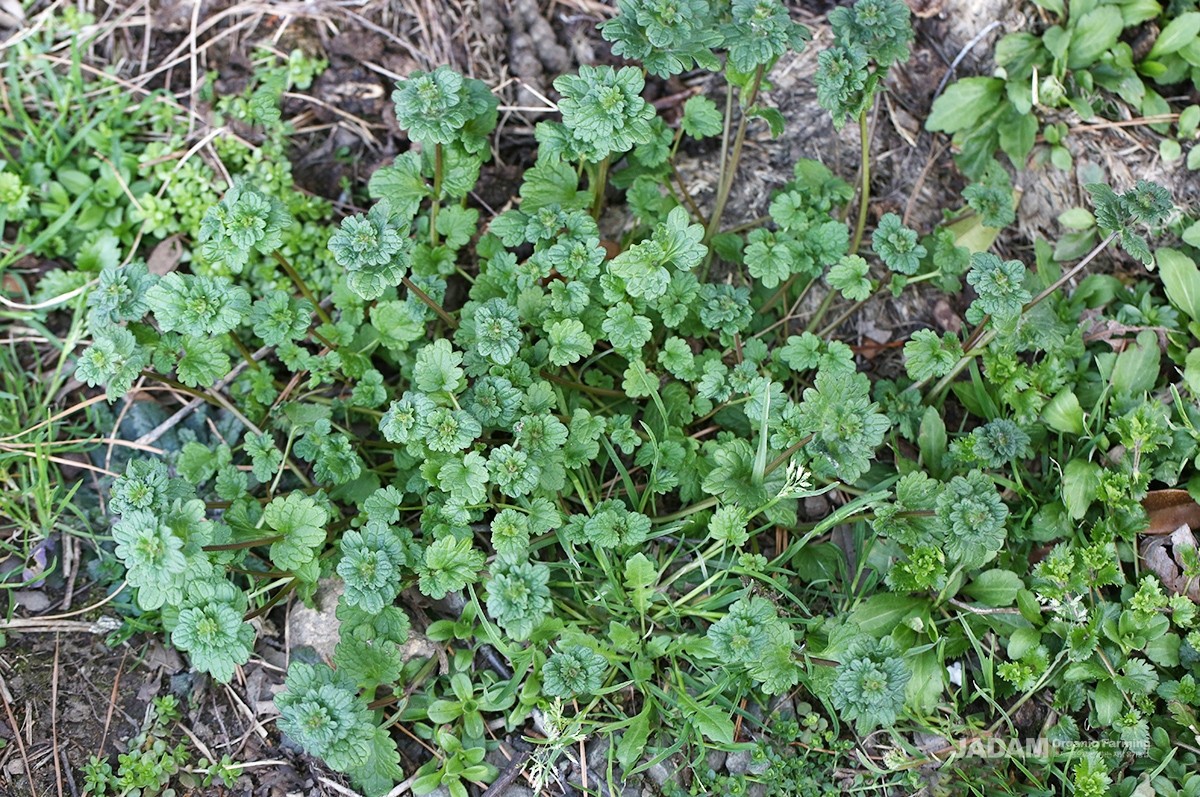
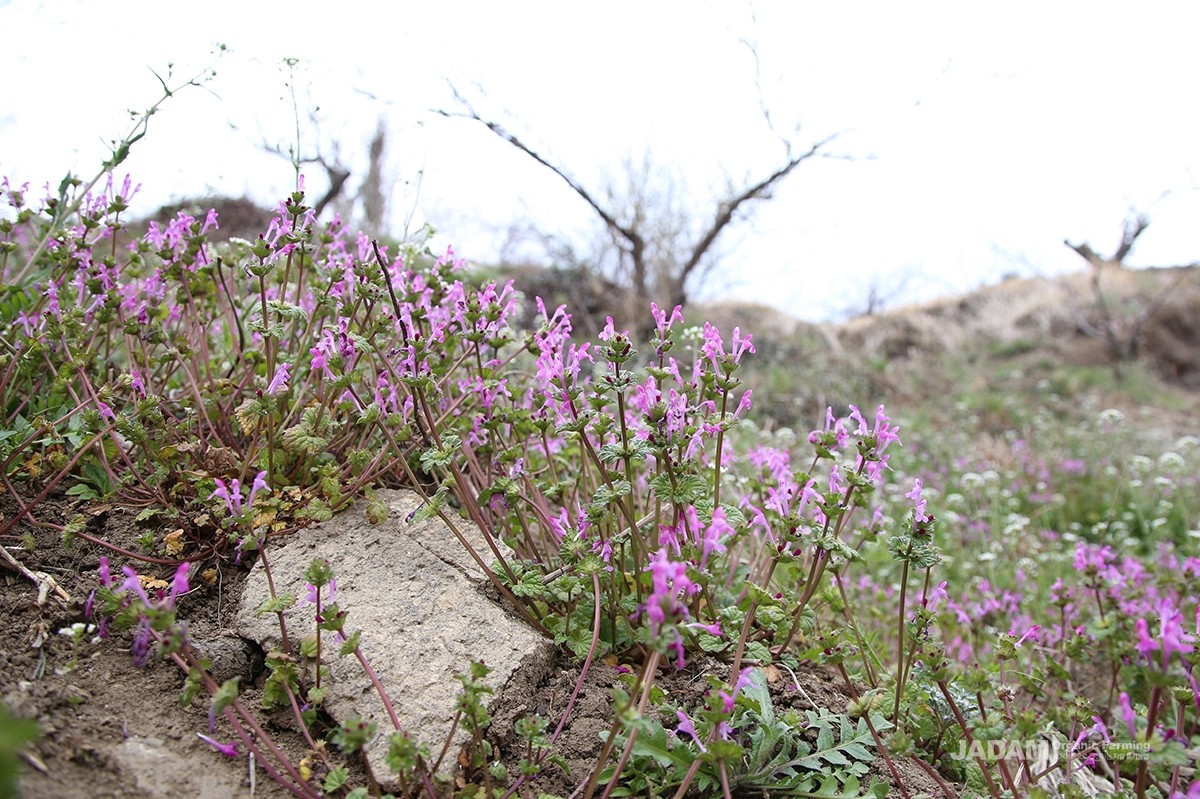
It is a winter annual herb in the mint family that commonly grows in fertile fallow lands, neglected fields, and around cultivated areas. It germinates in autumn, forms a rosette to overwinter, and blooms from early spring.
Henbit Deadnettle prefers rich and slightly moist soils, thriving in sunny and warm areas - even blooming in winter under favorable conditions. Multiple stems arise from the base, each with pairs of opposite leaves arranged in layers at the nodes. The leaves are rounded with blunt serrations along the margin. The upper leaves clasp the stem without petioles, surrounding it completely.
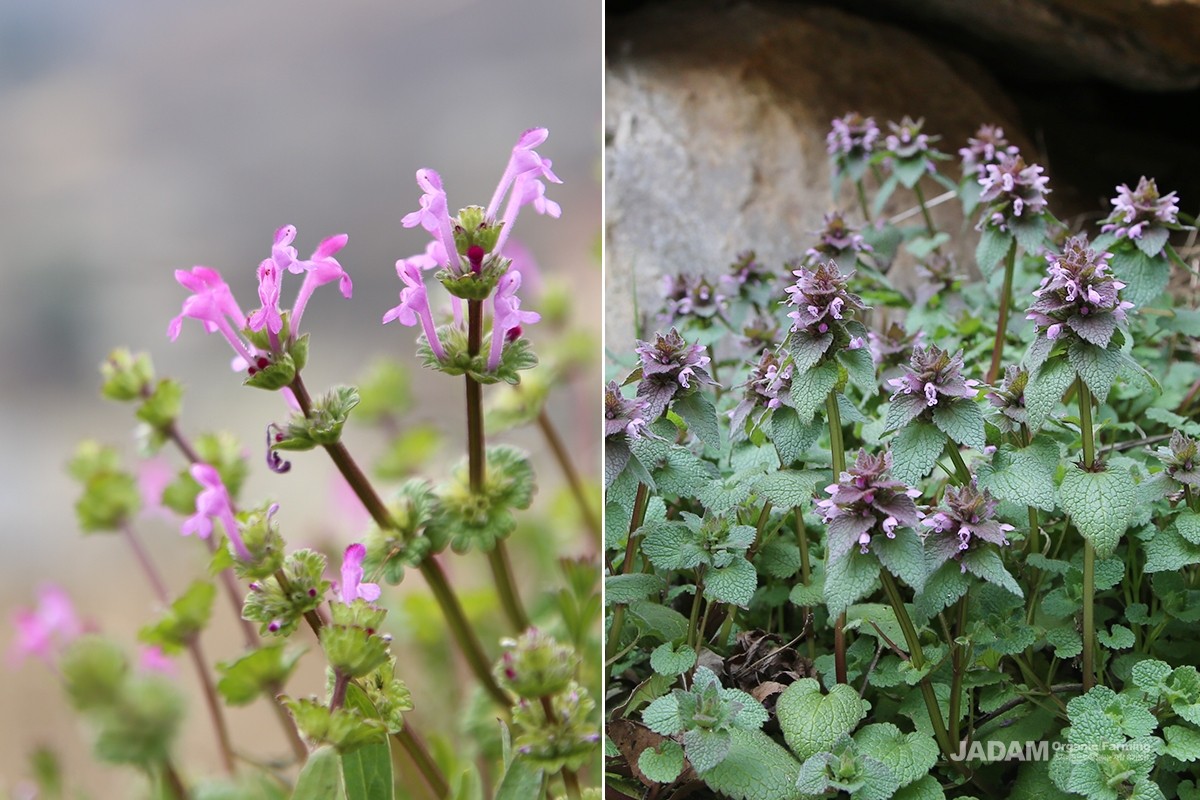
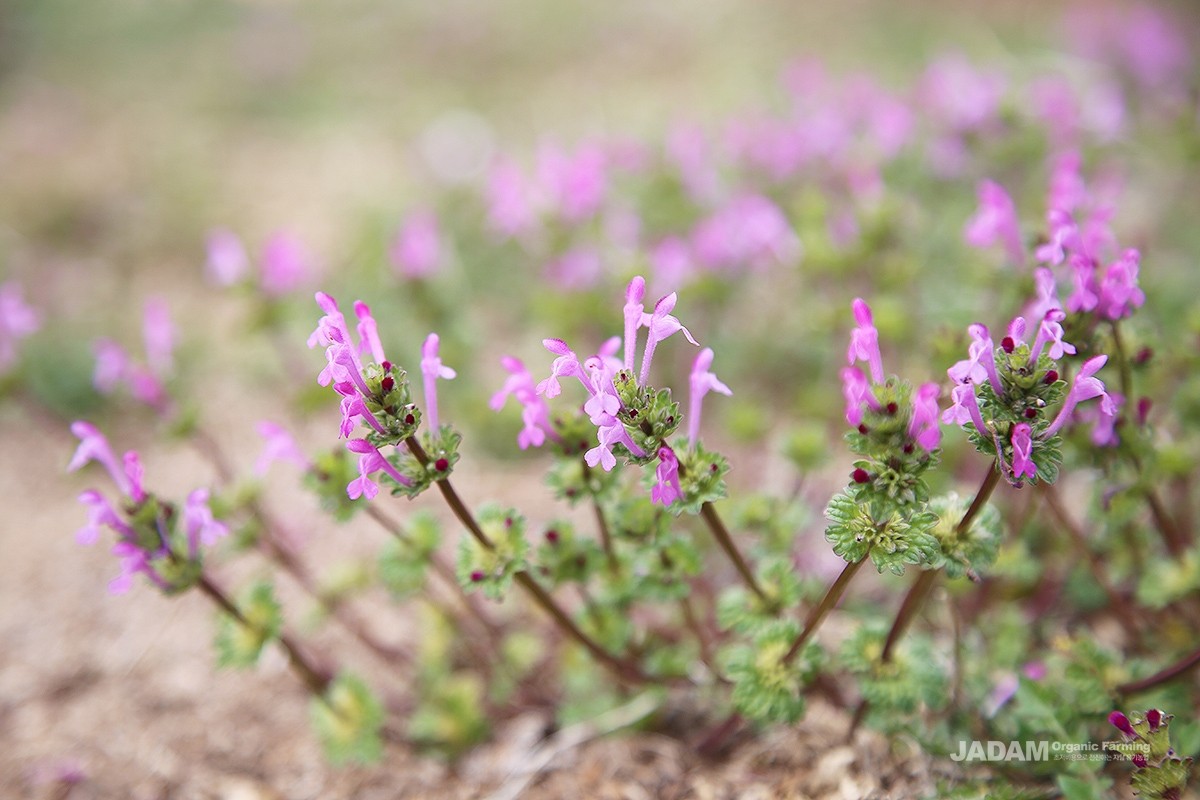
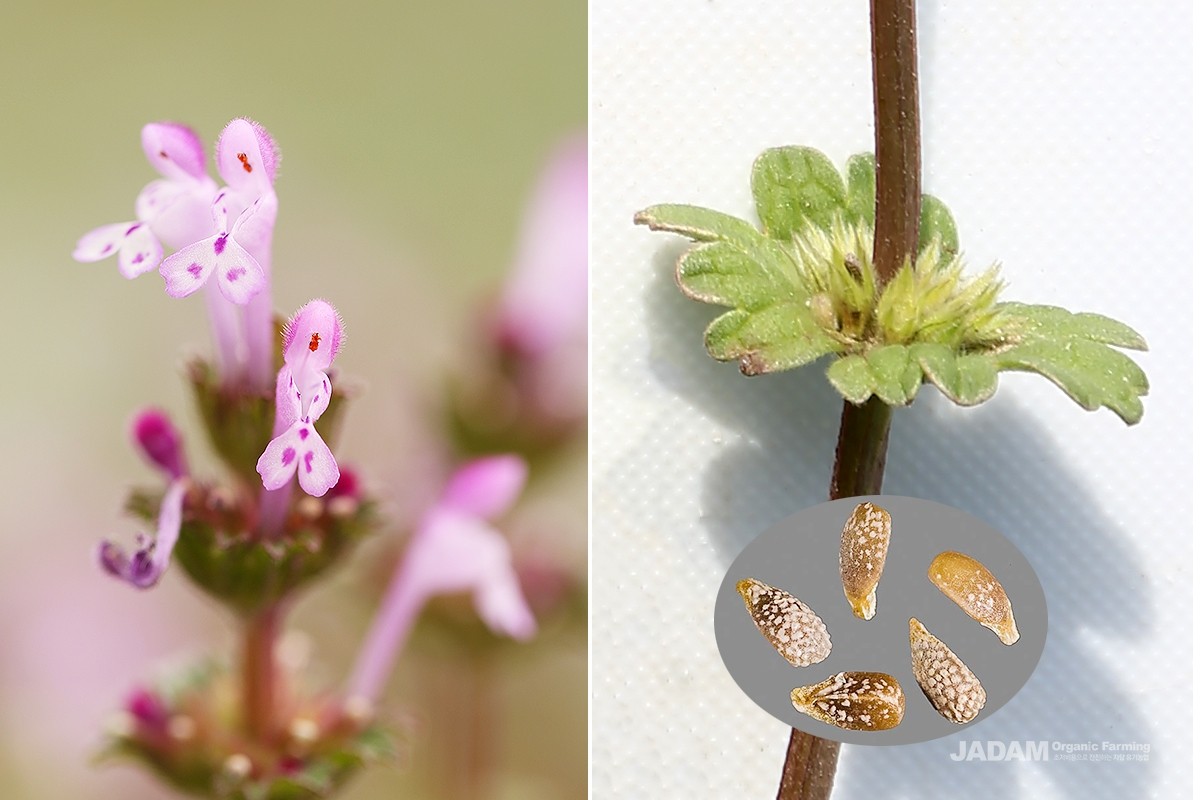
From March to May, reddish-purple flowers bloom in whorls from the leaf axils near the top of the stem. Each flower has a long tubular corolla with an open mouth. The upper lip is hooded and bears four stamens of different lengths that look like eyes, while the lower lip is divided into two lobes with spotted markings, resembling a clown - hence the Korean name Gwangdae -naul.
The flowers constrain abundant nectar. When a bee lands on the lower lip and inserts its head to collect nectar, the stamens above brush pollen onto the bee’s back. In environments where pollinators are absent, the plant may produce cleistogamous (closed) flowers that self-pollinate, ensuring seed production without insect aid.
After fertilization, the flower withers, producing four nutlets within the calyx. The seeds are small, nut-shaped, and covered with white speckles. Each bears an elaiosome, a jelly-like structure rich in fatty acids, amino acids, and glucose, which attracts ants that disperse the seeds. The seeds can remain viable in the soil for up five years, waiting for suitable germination conditions.
▶ Uses and Medicinal Properties:
Before flowering, the tender stems and leaves can be eaten raw or blanched as a seasoned vegetable, or added to soybean paste soup. It promotes blood circulation, relieves stagnation, detoxifies the body, reduces swelling, and alleviates pain. The taste is slightly bitter and pungent, and its nature is warm.
▶ Control Methods
Since it grows only about 30 cm tall, it poses little problem in orchards. However, in fields or greenhouses, it should be pulled out when young or before the flowers wilt and disperse seeds.
▶ Name Origin and Similar Species
Henbit Deadnettet is called Gwangdae-namul (“Clown herb”) in Korean because the whorled flowers around the stem resemble a clown’s face. A similar species is Lamium purpureum (Purple Deadnettle), which has purplish upper leaves and is native to Eurasia.