

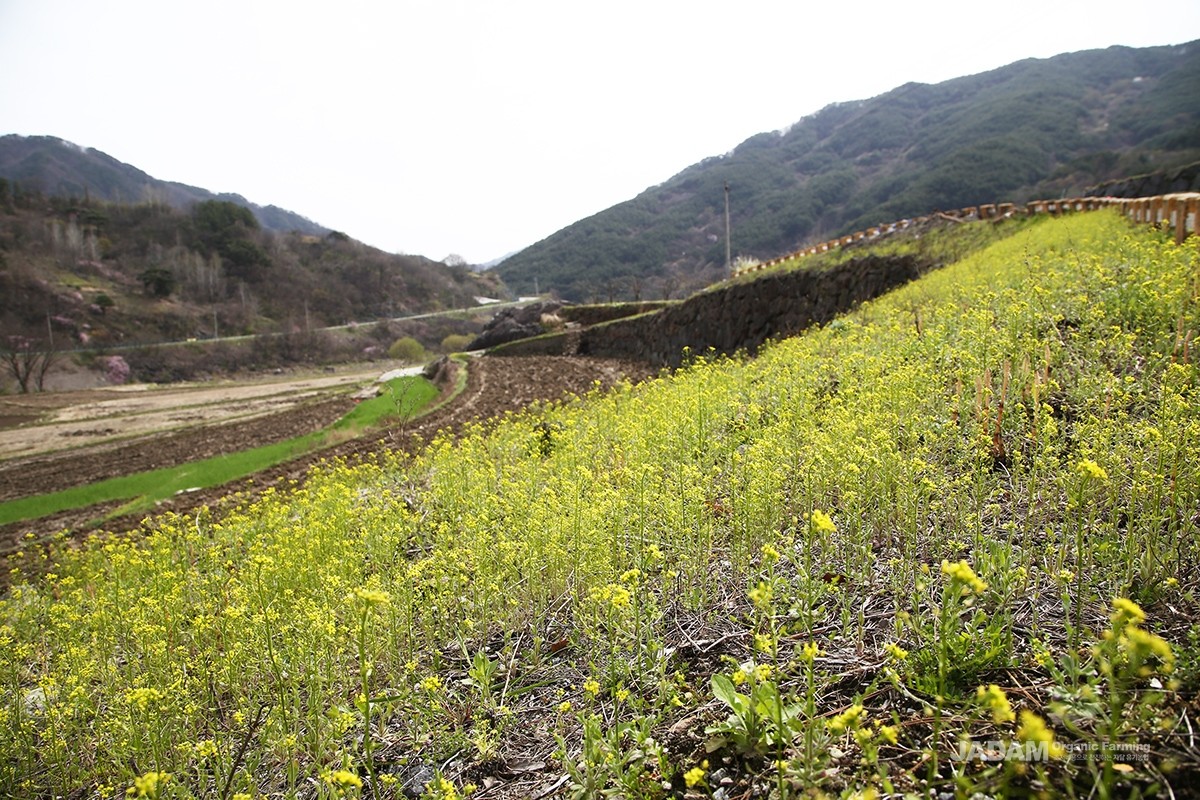
It is a winter annual in the mustard family that commonly grows in sunny fields, orchards, rice paddy edges, and around graves. After overwintering in a rosette form, it produces small yellow flowers in early spring.
Yellow Whitlow-grass (Draba nemorosa) is one of the early spring flowers that color empty fields with yellow and white blossoms, along with shepherd’s purse. From winter to early spring, when it lies close to the ground, it may go unnoticed. But once it sends up tall stems and clusters of small yellow flowers, it looks like an entirely different plant - just as a young mugwort suddenly grows tall and unrecognizable. Although not as showy as rapeseed, the yellow flowers colonies of Yellow Whitlow-grass brighten the rural landscape in spring.
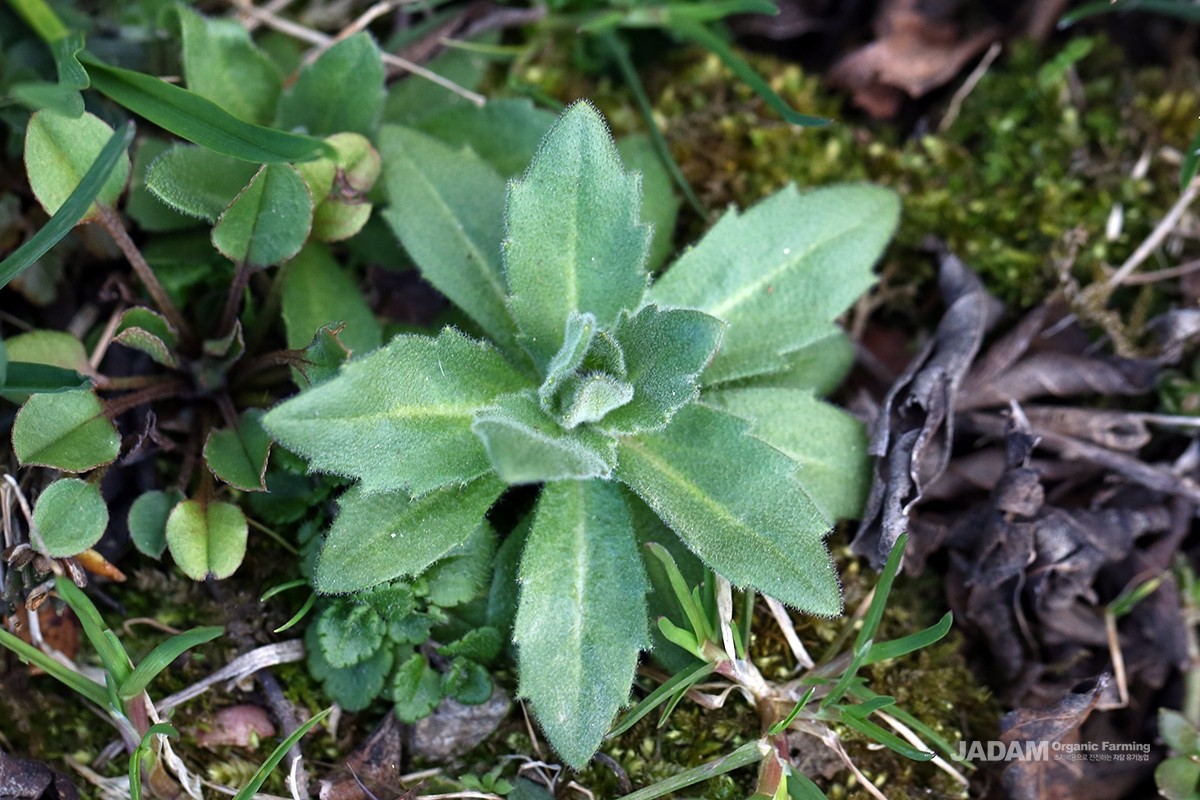
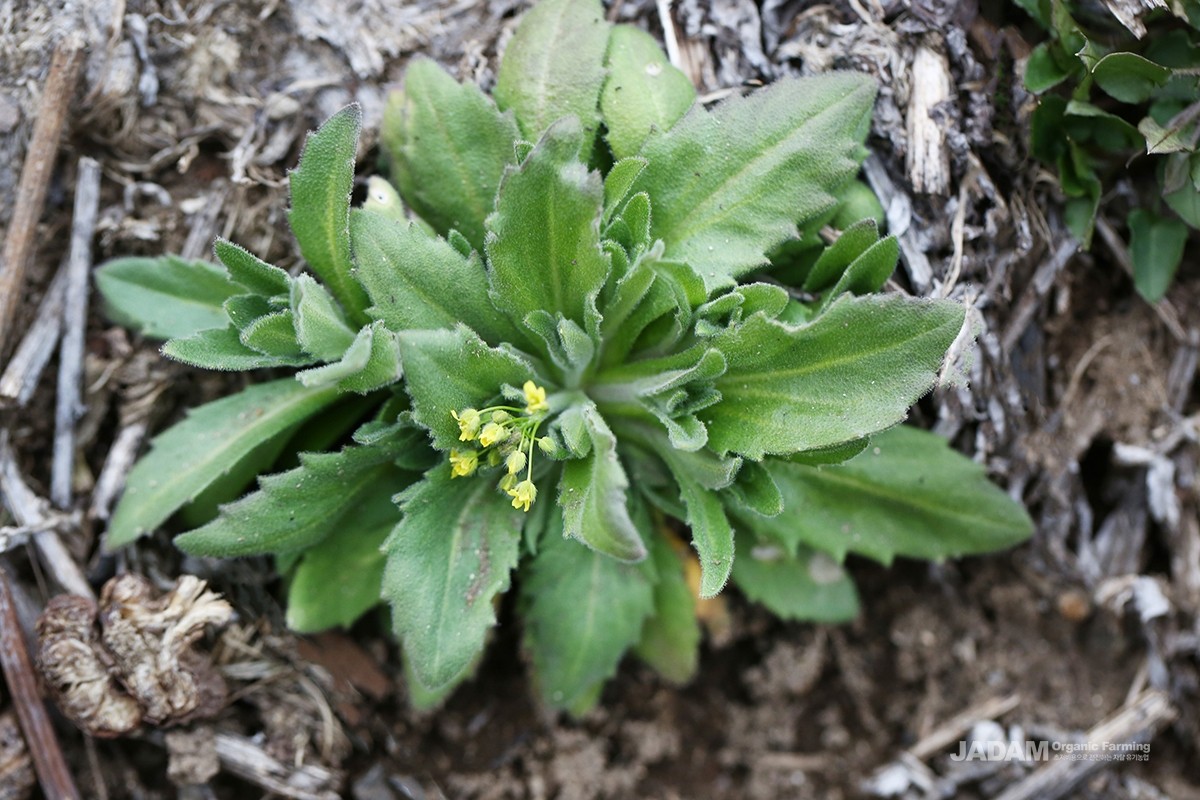
Compared to the popular edible wild herb Shepherd’s purse, Yellow Whitlow-grass has a milder flavor and aroma. Its coarse leaves covered with short, star-shaped hairs also make it less appealing as an edible green, which is why it is sometimes dismissively called “poor shepherd’s purse.” While Shepherd’s purse is often pulled up by people, Yellow Whitlow-grass tends to spread more freely in neglected fields due to indifference.
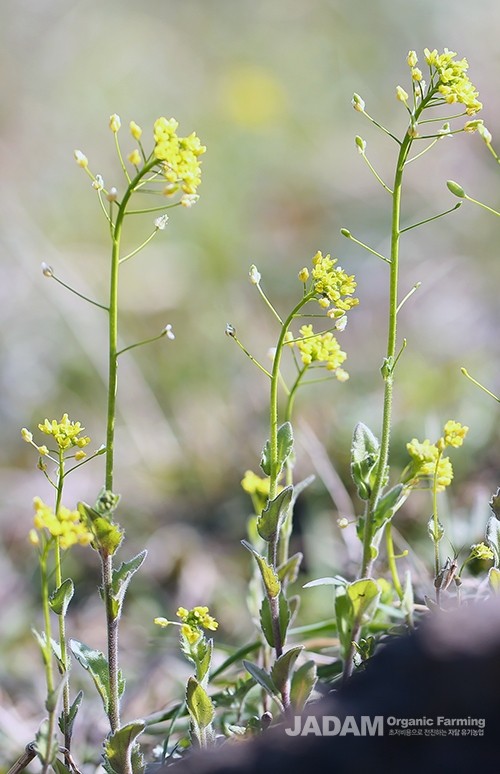
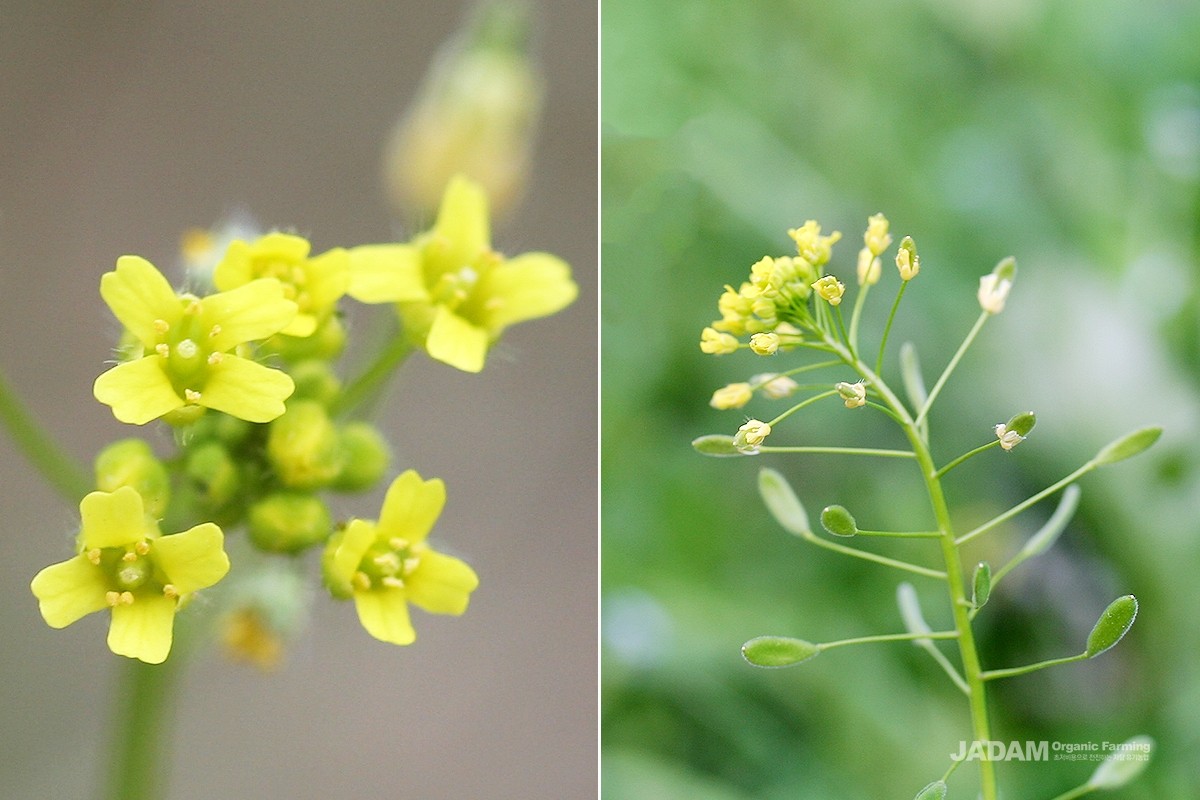
The basal leaves of Draba nemorosa form a small, star-shaped rosette. The leaves are spatulate to oblong, thick, and toothed along the margins. Some individuals bloom even while in the rosette stage, but most send up erect stems topped with racemes of yellow flowers. Each flower has four oval sepals densely covered with hairs, six stamens, and one pistil. The fruit is a flat, elongated pod covered with fine hairs.
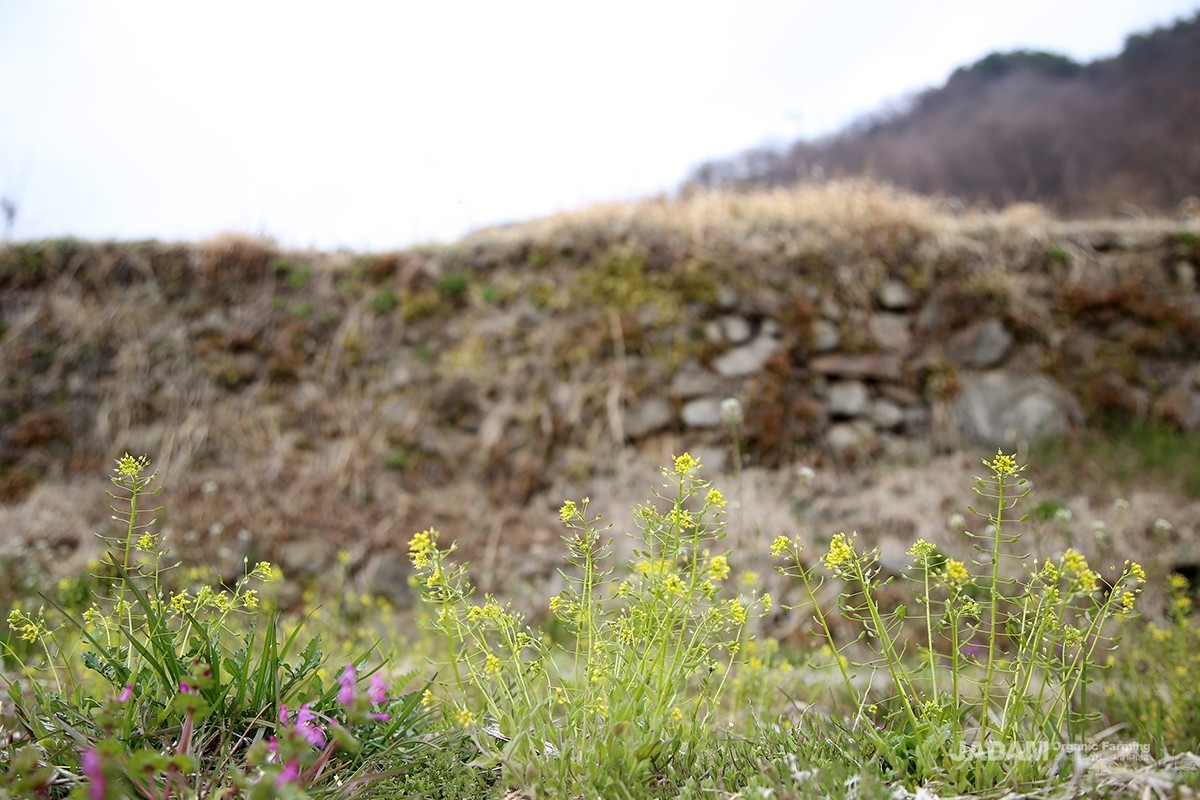
While the fruits of Shepherd’s purse are triangular and fan-shaped, those of Yellow Whitlow-grass resemble musical notes. Unlike the notched fruits of Capsella species, the tips of Draba pods are pointed. In traditional herbal medicine, the seeds of both Draba nemorosa and Descurainia sophia are called “Tinglizi (葶藶子).” The seeds are reddish-brown or dark brown, and under magnification, their surface appears covered with tiny nipple-like projections.
▶ Uses and Medicinal Properties
In spring, the young shoots can be blanched and seasoned as a vegetable, or added to soybean paste soup of stews. The whole plant is boiled and used to treat swelling and skin eruptions. Its seeds, known as “Tinglizi (葶藶子)”, are used for asthma, facial or eye edema, and urinary retention. It is bitter and pungent, with a cooling nature.
▶ Control
Since it is short and does not grow densely, it causes little problem in orchards. However, in vegetable fields or greenhouses, it should be pulled up while young or before the flowers wither and the seeds scatter.
▶ Name Origin and Similar Species
The Korean name “Kkotdaji” (meaning “clustered flowers”) comes from its dense, tightly packed blossoms. It can be distinguished from Shepherd’s purse by its yellow flowers, as most Shepherd’s purse species bear white ones.